Go to todaysautisticmoment.com for the full transcripts
In the first episode of the Summer of Self-Care Series, Dr. Megan Anna Neff and Philip talked about Self-Care: Managing Our Nervous System. During the second installment, Carole Jean Whittington and I talked about Self-Care: Practicing and the power of the Pause. In this episode Dr. Jessica Hicksted and Philip are going to talk about another hot spot for many Autistic Adults called Navigating Trust. Continuing to build upon the two shows from April about boundaries, our boundaries are very important as Autistic Adults decide who they will or will not trust. Autistics must respect their boundaries and practice saying “no,” and being aware of red flags, particularly online. Jessica and Philip will talk about addressing the impact of societal biases, and the need for Autistics to trust their instincts, and seek safe spaces for self-care and support.
Dyslexia Accessible Transcript
Spanish Accessible Transcript
Autocuidado: Cómo gestionar la confianza
German Accessible Transcript
Selbstfürsorge: Vertrauen meistern
French Accessible Transcript
Prendre soin de soi : apprendre à faire confiance
Chinese Accessible Transcript
Transcript
Self-Care: Navigating Trust
August 9th, 2026
Episode Introduction & Preview
Welcome to Today’s Autistic Moment: A Podcast for Autistic Adults by An Autistic Adult. My name is Philip King-Lowe my pronouns are he/him. I am the owner, producer and host and I am an Autistic Adult. Thank you so very much for listening.
In the first episode of the Summer of Self-Care Series, Dr. Megan Anna Neff and I talked about Self-Care: Managing Our Nervous System. During the second installment, Carole Jean Whittington and I talked about Self-Care: Practicing and the power of the Pause. In this episode Dr. Jessica Hicksted and I are going to talk about another hot spot for many Autistic Adults called Navigating Trust. Continuing to build upon the two shows from April about boundaries, our boundaries are very important as Autistic Adults decide who they will or will not trust. Autistics must respect their boundaries and practice saying “no,” and being aware of red flags, particularly online. Jessica and I will talk about addressing the impact of societal biases, and the need for Autistics to trust their instincts, and seek safe spaces for self-care and support.
Come join us for the episode Self-Care: Navigating Trust on Today’s Autistic Moment.
♫♫ Opening Theme Music ♫♫
Segment 1
This first segment of Today’s Autistic Moment is sponsored by The Autism Society of Minnesota, known as AuSM throughout Minnesota’s Autism Community. As Minnesota’s First Autism Resource for more than 50 years, AuSM serves the whole state, the whole spectrum for the whole life. Visit AuSM at ausm.org.
Visit todaysautisticmoment.com to listen to over 120 episodes released since 2021.
Check out the Episode Schedule 2026 to read about upcoming shows, topics, guest information, and program descriptions for season 6.
On the website, you can:
· Learn more about Today’s Autistic Moment.
· Read the guest bios pages.
· Explore the Adult Autism Resources Links Page.
· Visit the Autistic Community Bulletin Board.
· Read the blog.
· Find out about TAM Autistic Consulting Services.
· Sign up for a subscription to get Ad Free Interviews.
· Support Today’s Autistic Moment with a donation.
Every episode, including this one, has a transcript. The transcripts are sponsored by Minnesota Independence College & Community.
You can also read the transcripts right on the website with each episode or download printable versions to help you save ink.
The transcripts have hyperlinks in them for names, organizations and other resources named throughout the show.
The transcripts use a dyslexia-friendly font that are available in English, Spanish, German, French, and Chinese Simplified.
Want more interaction with Today’s Autistic Moment? Follow Today’s Autistic Moment on Facebook including our Community Group Page, LinkedIn, BlueSky, Instagram and Threads. Also follow us on the YouTube Channel @todaysautisticmoment to listen to new episodes of Today’s Autistic Moment and watch Autistic Voices Roundtable Discussions.
Coming up after the first commercial break, Dr. Jessica Hicksted and I will present the conversation Self-Care: Navigating Trust.
♫ Segment Ending Music ♫
Commercial Break I
Podcast Apps
Today’s Autistic Moment can be downloaded and heard on most podcast apps including Apple. Google Play. Breaker. Castbox. Overcast. iHeartRadio. Pocket Casts. RadioPublic. Spotify. TuneIn. Pandora. Amazon Music. Audible. Podcast Addict. Podcast Chaser. If you are looking for the transcripts, go to todaysautisticmoment.com, click on the episode you want to listen to and follow the directions to find the transcripts.
Thank you for listening to Today’s Autistic Moment.
♫Best Care Ad♫
♫MICC Ad♫
♫ Lisa Morgan Consulting Ad ♫
♫Segment Beginning Music♫
Segment 2
Philip King-Lowe
Welcome back.
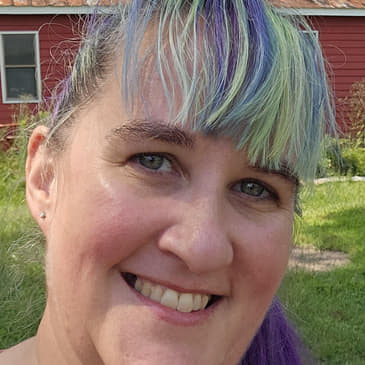
Dr. Jessica Hicksted is an Industrial-Organizational Psychologist, researcher, and advocate specializing in Neurodiversity and invisible disabilities in the workplace. Through Jessica’s Workplace Invisible Disability Experience (WIDE) framework, she explores how stigma, disclosure, advocacy, and workplace culture impact employee experiences. A Neurodivergent professional and research partner of ND Hive, Jessica combines research and lived experience to help organizations build more inclusive environments where individuals can thrive without having to hide who they are.
Please join me as I welcome Dr. Jessica Hicksted.
Dr. Jessica Hicksted. Welcome to Today's Autistic Moment. Thank you for taking time out of your schedule to be with us today.
Dr. Jessica Hicksted
It's a pleasure to be here. Thank you.
Philip King-Lowe
You're welcome. We are going to talk about a subject that by its very mention is a mouthful. The topic today is self-care: navigating trust. Just the words navigating trust is most likely a trigger for many people, for whom have already heard that those words, trust is one of those things that is, you know, I've heard many Autistics say the more I try to trust people, the less I trust them, and they have every right to feel that way. Let me just go on the record for that. Being Autistic, we know how complicated that is, so I am so excited for this conversation, and we really do hope that this gives a lot of Autistics out there who are really struggling with trust to begin to navigate this very complex matter for many of us. Jessica, what important information can we introduce our audience to self-care navigating trust?
Dr. Jessica Hicksted
Yes, it's as you said, a very touchy, difficult subject, and so I did write something on it. It's something I struggle with myself. I think one of the big things, or well, I mean, backed by, you know, all kinds of research, is as Autistics we do struggle with social cues, and as such, we'll take often what people say at face value often can lead us into being taken advantage of, which is not a fun thing to have happen, as I'm sure we have several people in the audience nodding their head on this, and so it's looking at it and remember yourself that even though it is a puzzle to navigate that it's not impossible and there are some things that can help you along the way,
Philip King-Lowe
So, please talk about some of that.
Dr. Jessica Hicksted
So, some of that is definitely knowing your own limits, like understanding what you are capable or not capable or comfortable with, and don't feel pressure to go beyond that. It's okay to say no, and well, even myself, I have a hard time saying no, like it just feels scratchy, the best way I can say it, because having, you know, difficulty in social atmospheres, we want to people please a lot of the time, we want to be accepted, and so it's really learning that no, you can't always say yes. You, you can't go beyond your limits. You will overwhelm yourself and sometimes get in very sticky situations. So, remembering to be aware of your own limits. Another one is, you know, like taking time for yourself, remembering it's important to have regular self-care habits, you know, and have boundaries around that. If you have picked, you know, Wednesday is your day to go for a quiet walk in the park, don't let anything derail that. That is your time, and take it, and it's okay, and it's not being selfish, like self-care is very much needed, and it can help you handle challenging situations. I mean, it doesn't have to be a walk, it can be sitting down, journaling, it can be going, sitting in a cafe. I mean, whatever you choose is your, your healthy habit. Then, like I said, the learning to say no, that, that is like the number one I would say, is like, honestly, practice saying no. Start with little things. If someone's like, "Hey, will you give me a call at noon? No. I don't. I, I'm busy at that time, or you know, you don't even have to give a reason, just no. And people need to start respecting your boundaries, and if someone can't, that may be a time to reevaluate the, you know, relationship there, because your boundaries are so important.
Philip King-Lowe
Yeah, there's another aspect that I would love for us to talk about, and that is that sometimes Autistics can be too trusting too soon.
Dr. Jessica Hicksted
Yes.
Philip King-Lowe
Because we're looking for that someone that we can finally put that trust in, and we're almost impulsive with it.
Dr. Jessica Hicksted
Yes.
Philip King-Lowe
So, and so, and often when we are so quickly to put that trust in someone, it is happens just as quickly that we learn that we should not have.
Dr. Jessica Hicksted
Yes.
Philip King-Lowe
So let's please talk a lot about that, because I'm sure that I, we're not the only Autistics who go through that. I would be surprised if we were.
Dr. Jessica Hicksted
Definitely not, so a lot of that is starting, you know, putting your awareness to red flags. Yes, we, we want to look for the best in people, that's how I say it, because I always do. I want to see the best in people, and I, I am so bad at just be like, oh, they were just in a mood, or oh, like giving them excuses, and it's looking back at no, you know, you need to do what's good for you, and again, that's not a selfish thing to do, because if you're always looking out for others, then you're ignoring yourself, and you need to look out for what's best for you. So I, I've really tried to, and I still fail at this, is working on looking for those red flags in people, and it sucks that you have to look for the red flags, but who else is going to look out for you yourself than you, so yeah, the big one is, you know, anybody that ignores your boundaries. If you have put a boundary down and they just be like, "Oh, that's silly, or, you know, or just walk on you when you said, "No, I can't do that at this time. Oh, yeah, you can, you'll figure it out. It's like, no, I mean, when you're saying those no's, when you're giving that I'm not comfortable with this, if another individual just keeps pushing and pushing, you've got to really be like, oh wait, wait, you know why they then they're not having my interest at heart, like they're just in it for themselves, because they want to walk on that boundary. Yeah, so that's really important to watch for anyone who's consistently, you know, ignoring or dismissing or disrespecting you. And be aware of that, and don't give them excuses, like you just need to be aware of that. Yeah, yeah, and it's hard, and it takes practice, and it's going to take lots of practice. Another one is like inconsistencies and stories, and I know we're really good at watching patterns. Watch for those, and again, don't give an excuse if you're just like, 'Oh, they just got confused.' No, if you see a pattern that their story changes, that you know things just don't add up, you need to re-guess how trustworthy that person may actually be. Right. So it's like we've got a got to remove ourselves from that people pleasing, wanting to belong, because in doing that we're hurting ourselves.
Philip King-Lowe
Right.
Dr. Jessica Hicksted
Another one is over flattery, because we want to be accepted, we want to be loved, we want to belong, and so a lot of individuals that you know see us for that kindness and open heartedness that we are. Will start to take advantage of that and pour on the honey, pour on the lots of compliments, and this and that, and a lot of that is to lower our defenses even further. So it's important to watch out for that, someone being way, way too nice, as much as it feels good to us, we've got to remember to, you know, as I say, kind of ignore that dopamine for a minute and take a look at why, why they're doing that, like, what, what are they trying to, you know, get out of us.
Philip King-Lowe
Yeah. I was, I was hoping you would say something like that. It's one of those things where, where someone is talking in such a way that sounds too good to be true, and like I said, it's such a difficult spot to be in, because you tend to feel like, oh, you finally found somebody who's on your page, and you know, you really want to believe that's where they are, but unfortunately that doesn't necessarily mean that someone really does have your best interest at heart.
Dr. Jessica Hicksted
Yes.
Philip King-Lowe
This is one of those things that happens to a lot of Autistic teenagers who are getting groomed by a predator. Yes. They will often say everything they know that that person wants to hear, and then I mean everything from if I were your mother I would let you do that, I would let you do what she's telling you can't do. If I were your dad, I would let you go out on that date, or I would let you watch that video, or whatever. That's how they groom Autistic people,
Dr. Jessica Hicksted
Yeah.
Philip King-Lowe
And so again, you want to believe that individual because we're looking for someone who sounds like they get it.
Dr. Jessica Hicksted
Yeah, looking for someone that accepts us for who we are and makes us feel welcome, belonged, loved, and I mean, and yes, that it doesn't mean everyone that says nice things is a bad person. It's just you got to work, watch for that overly like meeting everything that you want a true person, like you're gonna, I mean, I even do it with my own friends. It's they're not going to agree with everything you say, and you're going to have discussions, you're going to have disagreements, and you're going to have agreements like that. That's how real relationships go, is you know, it's not always rainbows and sunshine. So if something feels too good to be true, it's most likely is. And so that, that just should ting up that little red flag in you, and you know, use your, you know, use those super skills of seeing patterns, and listen to them. The other one that I find that can be another big red flag is the pressure to act quickly. It's like the oh no, we have to meet now, or oh no, you got to do this now, or oh, if you don't do this, then then I'm, I can't talk to you anymore, like it's like whoa, nothing should be that urgent, because again, that usually will be going against any boundaries you have, because we have to remember, yes, we've got impulsivity against us a lot of the time, but as well we like structure, we like, you know, a good cadence, and sometimes taking a moment to really assess a situation is important, so don't get pressured into things, and anyone that does respect you shouldn't be pressured that if you go, "Hey, let me give me, give me a day to think on that." I mean, even if you know the answer and you're happy with the answer, still say, "Hey, give me a day to think on it, give me a few hours to think on that.” And someone who respects you and is really looking out for you as well will be like, okay, get back to me when you can, you know, they won't have that pressure, and then, oh no, you got to tell me right now. So, that's another big red flag to really watch for, and, and again, it's just it's training yourself to have these responses. Like I said, even if you're, you already knew your answer to a question, you know, give that, oh, hey, give me a day to think about it, like there's nothing wrong in doing that. Another one that I know is a big red flag to look for is a lack of accountability. Someone who's trustworthy will take responsibility for their actions. If you tell them, 'Hey, I'm not comfortable with that, that's really pushing on my boundaries, they'll come back with, oh, I, you know, I'm sorry, I didn't, didn't mean to push you like that, that's, I must be coming off the wrong way. They'll take accountability with, for how they're coming across to you, that's what you know a trustworthy person does. They won't dismiss that as well, right? And someone untrustworthy will, will most more than likely put that back on you, be like, what's your problem?
Philip King-Lowe
Yeah, the other thing, the other thing, other red flag, and it's so difficult to navigate, though, just the red flags, because, like, I say, when you're someone who is exceptionally lonely and you want that somebody to connect with you, you just, yay, I finally found it. And so it's like we almost like ignore, or we don't see them until we learn just how much of a brat they were. You know, it's like you've already invested so much of yourself into this person, or into this relationship, or whatever it was that occurred, then you learn exactly what you should have been paying attention to. You know, we did have that series of discussions during Autistic Advocacy Month about boundaries, and so your boundaries. It's a good idea to take a little bit of time to assess your boundaries, and even make yourself a list of things to watch for, and also just maybe even write down what are some red flags I'm looking for. You know, the thing is, is that you brought up the people pleasing. There's a tendency for many Autistics to set aside their boundaries because they think they're doing a service to another person when in fact they're doing the greatest harm to themselves by doing that. I think I remember watching one of your posts on LinkedIn, and I believe you said there are ways to tell if someone is already gaslighting you, they're tearing your defenses down, and that sort of thing. Could you, well, you've kind of already talked a little bit about that, but can you kind of elaborate on some of that?
Dr. Jessica Hicksted
Yeah, definitely. You've got to be aware of your boundaries. You've got to watch out for anybody trying to isolate you, like that is the big one. If, if you say, 'Hey, let me, let me talk to you, know, let me talk to my mom about this, let me talk to my dad, my brother's sister. You know, if they're like, 'Oh, no, no, what they say, they're not, they don't like you." They take that as a big rig flag. If anyone's trying to discount anyone that you already know is in your circle, definitely don't get pulled in by that. I myself fully admit I've unfortunately fallen to that and gotten to the point of being so isolated I had no one to turn to anymore. And then you get pulled into more of, well, now you've got to trust this person, because they're all you have, and then then the real hurt really starts coming in, and it's, it's a damning situation, because then you know you go from thinking this person's all about you, and then no, they're just using you, but you know you have no way out. So, it's important to keep your circle of friends of like-minded individuals. I know we have tons of communities out there now as we've gotten to voice ourselves better, and we reach out to them, because there's definitely someone else that's gone through what you may be going through, or rethinking on, and reach out and talk to people, and be like, "Hey, I have this going on, what do you guys think?" And listen, they may not say things you want to hear, but they're going to be your greatest sounding board. And so there's some instances I really wish I listened, listened to my sounding board a whole lot quicker than I did. It's don't, don't second guess your gut as much as people say we're not good at reading people, we actually are very good, but they don't like it, so they, they make us believe we're not good.
Philip King-Lowe
Gaslighting.
Dr. Jessica Hicksted
Yes, we're, we're very, you know, yeah, a lot of people out there believe Autistics have no empathy. I'm like, no, I think we're so empathetic, people don't even understand the level of empathy we have.
Philip King-Lowe
I agree with that.
Dr. Jessica Hicksted
I know. There's been situations I've haven't even been near a friend, and I just felt something was going on, and I call, I'm like, hey, what's going on with you? And they were like, how the heck did you know? And that's happened more than one time. It's so we need to stop doubting ourselves and our own feelings and our own gut. Don't tell you who you are, like that it's okay to be too much if they can't handle you're too much, they're not the person for you,
Philip King-Lowe
This is just a reminder for a lot of Autistics whom we are often gaslighted and or being kind of looked for on social media, or whatever. Beware of anyone who asks for your address. Beware of anyone who asks for your email address upon talking to you directly, your phone number, credit card information, bank account information. Someone who says, oh, by the way, if you give me your bank account, I'll give you $10,000 or something like that. That is somebody who is your, who is a predator, who's looking to, you know, spam you or scam you, you know, beware of anybody who, you know, you know, this includes when you're getting emails and that kind of thing. Lots of times you'll get emails that look like they're coming from a particular business, but if you open up that email and you see in the email address that it's from someone with this long email address, that, but it's not coming from the actual company. You need to put that in your spam box, and that sort of thing, because you know, like we've been saying, it's really easy for us to believe that someone is just being so nice and so accommodating, but most likely they have a goal of causing you real trouble. You know, as far as a lot of groomers, for example, they know, you know, they may have studied what Autism is, or what Autistic people do, so they're going to know exactly how to again make you lower your defenses and just surrender yourself to whatever they give you. And it's too bad that we have to be like this, because you know, like I say, many of us feel so isolated, but someone who is almost too agreeable and too they are too much of what you might even be expecting. Most likely the person that is communicating with you is not serving your purposes, but their own. Now, there can be that one time when someone will be, and you know that's something you pursue, that's something you work hard to, you know, just establish regular communication, you look for what's consistent versus what's not. You look for things like, you know, if you're meeting another Neurodivergent person, this is another one that I think we have to talk about before we go to our break, but there are Autistic people who will, we're looking for another Autistic person to be very close to, but sometimes that doesn't always mean that that's the right person for us, because we don't always know what their triggers versus their soothers are, and we don't always know if this is going to be a good match. So you know anything that sounds like it's about to be that dream come true in a matter of 15 minutes, you know, rather than surrender everything to them, you need to say, okay, we'll talk again tomorrow, or whatever, and you know, sort of get it, but be very careful, because not everybody is going to be your best friend. So, go ahead, talk about that. Then we'll go to our break.
Dr. Jessica Hicksted
Yeah, definitely, you yeah. Don't, don't just put your guard down just because someone else is a fellow Neurodivergent, because, yeah, we don't know how they were raised, how you know how they handle things, and such. So, even, even at that, you need to still be making sure your boundaries are there, making sure you're watching for red flags, and you know, making sure you're keeping yourself level headed about the situation, because you know, and listen to your gut, like remembering those three things is really something that I mean, it's hard, because yeah, we want, we want that acceptance, we want that connection, but the connection will come even in time, not everything has to happen at once, and yes, we want that, I know we want it, we want it now. I had a good friend put that out to me, actually, just the other day, he was like, he's like, you, you want things, and you just, you just get them and do it, and I'm like, yeah, he's like, you know, maybe sometimes take a few days to think about it, like, yeah, and that, that's when there's a good person in your life, when they like make you think, like, not, not just feed into the thing, you know, things that make us go bubbly, I guess. You could say, yes, is like, yeah, it's okay to slow down, it's okay to think things through. It things do come in time, if they're meant to happen, they will happen. It doesn't have to be right now. It doesn't have to be, you know, you don't have to put aside your own feelings, beliefs to have them happen, happen. So, yeah, it's okay to take a breather.
Philip King-Lowe
Coming up after this next commercial break, Dr. Hicksted and I will talk about how Autistics are thriving through managing our nervous system by our recognition of patterns, empathy, and listening to your body when it tells you that something is not right.
♫ Segment Ending Music ♫
Commercial Break II
♫ Looking Forward Life Coaching Ad ♫
♫ Actually Autistic Coach Collective Ad ♫
TAM Support Ad
Today’s Autistic Moment is a podcast where Autistic Adults from all walks of life are talking to each other. Each guest and conversation is with an Autistic Adult sharing what many Autistic Adults are feeling in this moment. Today’s Autistic Moment is telling Autistic Adults that you are perfect just as you are. You don’t need to change. You don’t need to be cured. All Autistic Adults really need is to hear how others like us are meeting the challenges of our lives.
Today’s Autistic Moment needs your contributions to bring you the conversations you are hearing on the podcast.
Support Today’s Autistic Moment in any of the following ways.
· Make a one-time donation through the Ko-fi icon when you tap on Support Today's Autistic Moment on todaysautisticmoment.com
· Subscribe monthly via Patreon.
· Purchase items from Today’s Autistic Moment’s Logo Shop.
· Share Today’s Autistic Moment with your family, friends, coworkers and others through social media and/or by telling others about us.
· If you own a business and/or work with an organization that supports Autistic intersectional individuals by encouraging them to live with pride in who they are, advertising opportunities to support Today’s Autistic Moment are available. Please send an email to todaysautisticmoment@gmail.com for more information.
Donations are not tax-deductible but help keep Today’s Autistic Moment as a safe space.
Thank you for supporting Today’s Autistic Moment.
♫Segment Beginning Music♫
Segment 3
Welcome back. In the last segment Dr. Jessica Hicksted and I talked a lot about boundaries and knowing our strengths to help us navigate trust. We are going to talk about those in a little more detail that helps us thrive as we determine who we trust and who we do not trust.
Philip King-Lowe
I would like us to move into my question about where do we see Autistics thriving in terms of self-care navigating trust?
Dr. Jessica Hicksted
So the big thing we thrive on, and I think I touched on before, is our ability to see patterns, and we see them well. The thing is, we need to listen to that we are seeing patterns. So, I mean, hone in on that skill, use it. We are very, very good at, and that empathy. If you get that little bit of ick just because things are being said how you want, or are going on, don't, don't ignore that ick feeling. Like it's there for a reason, you know. Don't ignore that you're seeing a pattern, even though that you know actions speak louder than words, really, and so use, use that, your ability to see those patterns, and listen to it. And again it can be an uncomfortable thing, because yes, we want that acceptance and that belonging and that that fairy tale, you know, to go to be happening, but you know you got to be true to yourself. And that's that is a difficult subject for a lot of us Autistic people, because we've been taught our whole life to mask, to fit in, to belong, but it's okay to be weird, it's okay to have different thoughts than other people, it's okay to not accept things, it's okay to say no, like, and you know, so listen to what your stomach is telling you, to what your body is telling you, to how I mean, how I say sometimes, like just how my skin feels, like I know we process things differently, and each of us do, like listen to those little things that your body tells you. It may not necessarily be in your mind, it may be in how your skin feels, how your pulse feels, how you know if you're getting, are you getting a headache, are you hungry, listen to those little things, and you know, hone in on those different skills that you know we've been gifted with, and don't ignore them. I mean, a lot of society has told us that these skills we have are false, are not real. Yes, we do have some pretty amazing skills, and when we hone into them, like, we can see through a lot of bs.
Philip King-Lowe
Last month I interviewed Dr. Megan Anna Neff, and we spoke about managing our nervous system, and one of the things that we talked about is our window of tolerance, and so what I also want to add here is that one of the ways Autistics thrive in our nervous system is by persistence. Yes, you know, and that paying attention to who is actually pushing your window of tolerance beyond its limit, that's a fairly good indication that something is wrong. When you tell somebody you're, you say your boundaries, but also your limits. Look, I can't meet you on this day because I need to safe space, and they're constantly pushing that window of tolerance that you know they got to insist, oh no, you don't need that right now, you need a straight company, and again, you, you know, you want to respond pleasantly, but quite frankly, you have to manage your boundaries, you have to not let that person trick you out of taking care of yourself, and you know, if you're at that point where you cannot take any more stimulation into your brain and you're shutting down, well, then you need to take care of that. And so you know there are people who mean well, or as Lisa Morgan likes to say they're well intentioned, but there are those who inflict unintentional harm, and you need to be able to tell that person, look, this is not working. Now I want to say, let's talk about one place, actually, that Autistics are very good at is that if you feel like you're threatened, you, you know, listen to that, if that's what you're feeling. Number one, number two, if you are feeling that way, do not justify the other person's actions. That's one of those places where we fall into, we want to, we want to say, "oh, that person's just having a rough day, they're yelling at me, I'm scared, but so what?" No, if that person is yelling at you and making you feel that uncomfortable, no, it's not you. It's something they have to take care of themselves. Don't let anybody tell you, "look, you just have to put up with me, because" whatever that reason may be, you do have the right to remove yourself from the pathway of someone who is harming you. That's, you know, our people pleasing comes from trauma, because we want that affirmation, but a lot of times people will again, it may or may not be intentional, it may be because they've got their own mental health issues that they have to address, but the longer you leave yourself in their path to abuse you because they're not taking care of themselves, the less good you're actually doing that other person and you're doing even more harm to yourself. What do you think of that?
Dr. Jessica Hicksted
Yeah, definitely. I mean, it can go both ways. I mean, that it could be, you know, underneath a good person, but, like you said, their own traumas could be getting in the way of things, and that's not good for either person. There is a portion of healing on both sides that need to happen, and you two people can't always heal together, and it's important to realize that you know it's not good for either party, so hey, it's better for us now. You know, we need to part ways, and you know things may happen down the line, meet up again, and be great friends, but at the same time you can't pull each other down. So, yeah, listening to the that nervous system, not putting up with things, I mean, even ourselves, like when we.. I mean, I know myself, if I get totally overwhelmed, my voice can raise, I can get pretty threatening looking. I'm a very tall girl, and so, yeah, it's being aware of your own, like you said, your own limits, you can't push yourself over those and become that, because it's not, it's not healthy, not healthy in any situation, whether it's a work situation, a friend situation, a relationship situation, like you've got to keep your nervous system level. Because, yeah, becoming overwhelmed, I know myself, then my verbal skills go down, it can go downhill fast, and it's not comfortable, not comfortable for anyone, myself or anyone around me. So, yeah, it's no, it like said, you got to know your boundaries, you got to know your limits. And you can't let anyone push those, because that's not healthy, and if someone comes in saying, "Oh, that's just those fancy new words being over stimulated, like it's like, "No, that's a real thing.”
Philip King-Lowe
Exactly, that's probably your one of your red flags that you need to pay attention to. Yeah, definitely.
Dr. Jessica Hicksted
That's that red flag of anyone trying to, you know, minimize your situation. If you tell someone, 'Hey, I'm getting overstimulated,’ a person that has more care than their own benefit at heart will be like, 'Oh, okay, I'm sorry, I pushed you. Do you need some time. How can I help you?' I mean, they will, they will come back like that. They won't come back telling you, "Oh, you're just, you're just making up excuses," like they won't put it back on you. That again, that's, you know, that's gaslighting. And it's not healthy.
Philip King-Lowe
No. No. I'd like to take this time also to talk about our intersectional communities, because of how much a lot of our intersectional communities, communities of color and our LGBTQ people, and you know, there's so much talk about health and human services, just backtracking on so many things about Autistic people, and that sort of thing. It is that's one of those things that really is building a lot of distrust in people. I mean, a lot of Autistics who may be in socioeconomic spots, they can't really afford their own homes, so therefore they're living with somebody who may be telling them, look, maybe your Autism is a result of someone having taken acetaminophen, or you got your, you know, your measles vaccine, or whatever, that is so very difficult. We are having multiple attacks against transgender people. You know, "there are only two genders, so if you're saying that you are gender non-conforming, then you know you have a misunderstanding." We're surrounded by people like that because our government is creating those atmospheres where we can't trust even our own family right now, it's so very heartbreaking and so very difficult. What are your thoughts about navigating trust in those situations, and what we might do for ourselves? Especially if we're in a situation where we just can't move, we can't, you know, you can't change your situation because of your socioeconomic situation. Go ahead, please.
Dr. Jessica Hicksted
Yeah, it, that does make things very sticky, and it's trying to find that community of where you're at, or, or going to online, I mean, there are a ton of online commutes for every intersectionality out there, and wonderful people that will sit and listen, and give this, you know, even just give that ear to listen to. And it's important to be able to find those, and again, you gotta, you gotta watch, because there's some communities that may, on the outward appearance, that they're positive for you, so don't get your boundaries, don't red flags, you know, use those to find the true communities. I mean, speak to, you know other people and say, hey, who do you go talk to? What communities are out there? I'm pretty sure you've got a list of them. I know I've seen it before, so I mean, look to that, and it's yeah, a lot of times we feel so alone and we want to just reach out to someone, but yeah, you know, find, find some, find someone trusting that says, oh, hey, you know, this community you can trust, you can, you can lean on them, they're there, and I mean, that is the beauty of our technological age these days, is even if you're stuck in a state that may damn every belief you have, there is still this wonderful thing of online and people you can reach out that that will listen to you and be your support, even from a distance. So, definitely, yeah, it's like it, it's heartbreaking that that's where we're at these days. I could say a million things on it, but yeah, it's we've gotten so far away from, you know, we're all people, we're all the same inside. We're just in an atmosphere that the more, the more we're kept, as you know, at ends with each other, it's the less chance of us rising up and being strong, and that's my belief on what's going on in this world, and so we need to find our communities where we can rise up and be strong and eventually hopefully things will flip around and we'll all come together and right the crap that's going on.
Philip King-Lowe
Yeah. Yeah.
Dr. Jessica Hicksted
Until then find your communities, yeah, use your red flags and boundaries and instincts to make sure it's a good community and lean on them.
Philip King-Lowe
Coming up in this final segment, Dr. Hicksted and I will talk about how living into who we are can help us with trust, and some recommended resources. You will this and Today’s Autistic Community Bulletin Board when we return after the final commercial break.
♫ Segment Ending Music ♫
Commercial Break III
TAM Autistic Consulting Services Ad
TAM Autistic Consultation Services is an opportunity for Autistic Adults to meet with me to get some information about Autism, the Autistic community and find resources that are helpful. Being Autistic myself, I understand what it is like to suddenly find yourself in a place where you need to talk to someone with your shared experience to navigate a world that was not made for Autistic individuals.
TAM Autistic Consulting Services are not therapy or legal advice.
Go to todaysautisticmoment.com and read about TAM Autistic Consulting Services. If interested, please fill out the intake form and make an appointment so we can begin working together.
♫ ITI Assistive Technology Ad ♫
Future Shows
The fourth Annual Summer of Self-Care Series will conclude on August 23rd. Cheryl Cowen and I will present Self-Care: The Autistic Caregiver. Cheryl and I will discuss the challenges and strategies for Autistic caregivers. We will emphasize the importance of self-care to prevent burnout, advocating for individualized routines and support systems. Cheryl will highlight the need for Autistic caregivers to anticipate and manage triggers, set boundaries and seek help when needed. We will also discuss the difficulties of navigating the health care system and the importance of advocacy and clear communication.
On September 13th, Dr. Angela Kingdon from the Autistic Culture Podcast will be my guest for The Thriving Autistic Culture. Dr. Angela will emphasize the importance of understanding the Autistic culture which has 10 pillars, including bottom-up processing and justice sensitivity. We will mention the contributions of many Autistic individuals who have impacted history and built upon the culture that is driven by diversity.
Remember to visit the Episode Schedule 2026 Page on todaysautisticmoment.com for more details.
Thank you for listening to Today’s Autistic Moment.
♫Segment Beginning Music♫
Segment 4
Philip King-Lowe
There's another aspect I'd like to give to this that follows what Jessica has been saying, and that is, listen to your inner eternal truth. What I mean is that if you've been feeling like, hey, there really isn't anything wrong with me, I'm just myself, this is who I am. Listen to that. And don't just assume that what you're being told that is negative about you is true. If you believe that you are a transgender person who is that particular person, you know you were born male presenting, but you're really a female. Listen to that and proclaim and acclaim that, proclaim that, affirm that in yourself. And there are therapists out there who will help you do that, if you can find them, and I know that can always be a challenging thing, but there are people out there who can support you. But most important of all, if that's who you believe you are, then you have to give that to yourself. If you don't, then waiting for someone else to "provide for you what's already within yourself," then it's going to be harder for you to live with yourself in that identity. So, another way of saying this is if you believe that you are who you are, and whatever anyone else might tell you, you are who you are, and you have every reason to believe that person is true, that person is real, that person is wonderful as you are. And so I know it's hard to find safe spaces these days, but the one safe space you need right now is yourself. You are a safe space, and you have to maintain that for yourself.
Dr. Jessica Hicksted
Yeah, I think a lot of going on that, it's important to believe yourself, and you don't have to prove that to anyone. And I think a lot of, especially the younger generation, gets caught up in that, that they feel, oh, I have to go on social media, I have to prove this is who I am, which ends up can be very damaging, because we know the trolls out there. The people just that just want to throw hate, even if they, you know, just because they want to, and you don't, you don't have to go out there and prove you don't have to go out there and you know flaunt yourself to feel accepted, like your accept, except wow, if I could talk, being accepted starts with yourself, like, and you really need to look in and believe and trust and know who you are, and who cares what anyone else thinks? Like that's yeah, that you're gonna run into a lot of that trust issues if you put yourself out there to try to be believed, like you're not gonna make anyone else believe what you can't believe yourself.
Philip King-Lowe
I agree with that. As part of wrapping up this topic, which is our conversation has been so marvelous here. Let's talk about helping Autistic individuals find some resources about this. You have a guide that you put together. Can you please talk about that?
Dr. Jessica Hicksted
Yeah, I wrote the guide. It's out on LinkedIn, so it can come up pretty easily, I believe. And I, you know, go over a little more in depth what we've talked about today. Just the reminders and, you know, points of how to watch for those red flags, how to know you have, you know, put your boundaries out there. So, yeah, feel free to go that. I, I also highly recommend a group that I'm big part of, ND Hive. They are wonderful support, have daily live, what do we call it? Co-working, I can't remember, we call it double body doubling, and such. And an app we just built that helps you check in with yourself, and you know it keeps track and helps you watch, you know, where you are each day, and you can see your progress, or you know where you may need to work on things, and some great counseling and great therapists that are available, so there I would definitely recommend to check that out if you want.
Philip King-Lowe
What is the title of the guide you've made?
Dr. Jessica Hicksted
It's called Navigating Trust: A Guide for the Neurodivergent Community.
Philip King-Lowe
Excellent. What is the name of the app that you've created?
Dr. Jessica Hicksted
It is, you can find it at ndhive.com. The actual app, like for the phone, is still being released, but there is the full website app that we have built the information there. And it's amazing. Here I am with my PhD, and believe me, I go there for my help too.
Philip King-Lowe
If you will, please send that to me. I will put that on my Adult Autism Resources Links Page.
Dr. Jessica Hicksted
Awesome, will do. Yeah, we, we do work heavily in the, in the AuDHD space as well, which a lot of us are getting diagnosed as that now.
Philip King-Lowe
Well, Dr. Jessica Hicksted, thank you so very much for this exceptional conversation today. I am pleased so much with the information that we've shared today. I believe our audience will benefit greatly. So, thank you so much for being here today.
Dr. Jessica Hicksted
I am happy to be here. However, I can help going through my own struggles. I know I'm not alone, and if I remember anyone out there listening, you're not alone. We, we all go through this, and there are people that will stand in your corner and trust and believe in you and help you through it.
Transcribed by https://otter.ai
Sign up for a subscription to Ad Free Interviews on todaysautisticmoment.com. The subscription is only $12.00 a month or $144.00 for a whole year. Once you buy the subscription, you can click on any show where you see the logo for Today’s Autistic Moment Ad Free Interviews to hear only the interview without interruption, segmentation and music. You can listen to all Ad Free Interviews going back to July 2025 and all upcoming shows.
Today’s Autistic Community Bulletin Board
All these events and many others such as sensory friendly concerts, art activities and museum information links are available on
todaysautisticmoment.com/bulletinboard.
The Adult Coffee Club for Autistic Adults in Minnesota are held on the second Tuesday of every month (weather permitting) at Dogwood Coffee located at 2700 University Ave W. Suite 100 in St. Paul, Minnesota. The Zip Code for your GPS is 55114. The Adult Coffee Clubs will begin at 3:00pm to 5:00pm on August 11th. September 8th. October 13th. November 10th. December 8th.
Understanding Autism virtual classes are offered by The Autism Society of Minnesota. The next classes will be on August 10th, 12-1pm. September 14th, 6-7pm. October 12th, 10-11am. November 9th, 12-1pm. December 14th, 6-7pm.
On September 10th, beginning at 9-11:30am, Abbie Wells-Herzog will present a workshop at The Autism Society of Minnesota entitled A Realist’s Guide to Employment Supports.
Join the fun at AuSM’s 9th annual Jigsaw Puzzle Competition! Held on October 3rd, beginning at 8:30am to 3:30pm in the iconic Huntington Bank Rotunda at the Mall of America or online on Zoom. The Mall of America is located at 60 E. Broadway, Bloomington, MN 55425.
AuSM is accepting applications for speakers now through November 6th for the Annual Minnesota Autism Conference in 2027. They are seeking speakers for subjects like AAC and Communication. Ableism. Aging. AuDHD. Current climate for disability issues. Dating. Executive Functioning. Guardianship. Grief. Gender. LGBTQIA, and more.
Go to ausm.org to learn more about these and other social and recreational programs, educational events, counseling services and support groups at The Autism Society of Minnesota.
MNeurodivergent is a social club rooted in a vision of bringing Neurodivergent Minnesotans together to build meaningful connections. Its core principle is to foster an environment where all are treated with dignity and respect regardless of ability or preferences. Go to their website mneurodivergent.org for more information, become a member, volunteer and attend their events.
Be sure to check out the events at Queermunity. Events include finding out about local LGBTQIA+ resources for those who have relocated to the Twin Cities on the 4th Wednesday of every month. Trans Health Insurance Enrollment. Fruit Salad Queer Open Mic on the fourth Thursday of every month. Crafting and Game Night on Fridays at 4pm to 8pm. Beats and Breath Yoga Based Movement Class every Saturday at 11am. Go to their website at queermunitymn.com to learn more about Queermunity and their many events.
Today’s Autistic Moment is here because of the generosity of supporters and sponsors. Go to todaysautisticmoment.com and select Support Today’s Autistic Moment to donate.
If you have questions about Today’s Autistic Moment, please send an email to todaysautisticmoment@gmail.com.
Thank you for listening to Today’s Autistic Moment: A Podcast for Autistic Adults by An Autistic Adult.
May you have an Autistically Amazing day.
♫ Closing Background Music with credits ♫
All of the guests meet with me on Zoom to record the interviews. The interview transcripts are provided by Otter. The podcast is prepared and edited on WavePad Masters Edition by NCH Software. The podcast is published by Spotify for Podcasters. The music that you hear is licensed to Today’s Autistic Moment by premiumbeat.com
