Go to todaysautisticmoment.com for the transcripts.
What are boundaries? Do Autistics know what our boundaries are? How do Autistics communicate with others as to what their boundaries are? How do our caregivers who may not be Autistic communicate their boundaries to us? Whom do we really harm when we do not maintain our boundaries?
Becca Lory Hector talks with Philip to answer these questions and many others about our boundaries, and our responsibilities for our boundaries.
Dyslexia Accessible Transcript
Autistic Advocacy Month: Our Boundaries, Our Responsibilities
Spanish Accessible Transcript
German Accessible Transcript
Monat der Interessenvertretung für Autisten: Unsere Grenzen. Unsere Verantwortung.
French Accessible Transcript
Mois de la défense des droits des personnes autistes : Nos limites. Nos responsabilités.
Chinese Simplified Accessible Transcript
Transcript
Autistic Advocacy Month: Our Boundaries. Our Responsibilities
April 12th, 2026
Introduction and Episode Preview
Welcome to Today’s Autistic Moment: A Podcast for Autistic Adults by An Autistic Adult. My name is Philip King-Lowe. I am the owner, producer and host and I am an Autistic Adult. Thank you so very much for listening.
As we kick off the first Autistic Advocacy Month, Becca Lory Hector and I are going to talk about Our Boundaries, Our Responsibilities today. What are boundaries? What are our responsibilities for our boundaries? What should we do when someone in our lives consistently disrespects our boundaries? Whom do we really harm when we allow others to disrespect our boundaries? Becca Lory Hector and I will discuss these and many other questions.
Come join us as we discuss Our Boundaries. Our Responsibilities on Today’s Autistic Moment.
♫♫ Opening Theme Music ♫♫
This first segment of Today’s Autistic Moment is sponsored by The Autism Society of Minnesota, known as AuSM throughout Minnesota’s Autism Community. As Minnesota’s First Autism Resource for more than 50 years, AuSM serves the whole state, the whole spectrum for the whole life. Visit AuSM at ausm.org.
In addition to the wonderful guests and conversations on Today’s Autistic Moment, you can find many more resources.
Visit todaysautisticmoment.com to listen to over 120 episodes released since 2021.
Check out the Episode Schedule 2026 to see upcoming topics, guest information, and program descriptions for season 6.
On the website, you can:
· Learn more about Today’s Autistic Moment.
· Read the guest bios pages.
· Explore the Adult Autism Resources Links Page.
· Visit the Autistic Community Bulletin Board.
· Read the blog.
· Find out about TAM Autistic Consulting Services.
· Sign up for a subscription to get Ad Free Interviews.
· Support Today’s Autistic Moment with a donation.
Every episode, including this one, has a transcript. The transcripts are sponsored by Minnesota Independence College & Community.
You can read the transcripts right on the website or download printable versions to help you save ink.
The transcripts have hyperlinks in them for names, organizations and other resources named throughout the show that you can access to see if they are helpful to you.
The transcripts use a dyslexia-friendly font that are available in English, Spanish, German, French, and Chinese Simplified.
Want more interaction with Today’s Autistic Moment? Follow Today’s Autistic Moment on Facebook including our Community Group Page, LinkedIn, BlueSky, Instagram and Threads. Also follow us on the YouTube Channel @todaysautisticmoment to watch Autistic Voices Roundtable Discussions. New Episodes will be coming up in 2026.
Autistic Advocacy Month is off to a great start. There are conversations happening on LinkedIn. Go to the calendar of events using the hyperlink autisticadvocacymonth on this transcript to find something that you will want to participate in. Go to the Autistic Advocacy Page on todaysautisticmoment.com to watch a video where I talked with A.J. Locashio on Brainbow Media about why we are doing Autistic Advocacy Month.
I am so excited to tell you all about an upcoming business partnership of Today’s Autistic Moment with Queermunity. Queermunity is an AuDHD Queer owned establishment in Minneapolis. Co-founders Hilary Otey and Kayla Barth have used their experiences with queer places that were not designed with Neurodivergents in mind, and created their business to offer Neurodivergent Queer Minnesotans a space that was made just for them. It is difficult for me to put words to my own experience when I had a midafternoon lunch at Queermunity just a couple weeks ago, because it was so incredible. I saw a soundproof divider with some woofers above them to be sure reverberation is kept at a minimum so that all conversations would be kept private between the people engaged in them. There was no overwhelming loud music. They have meeting rooms for rent, that can also be used as quiet spaces if they are needed. There are a few lounge areas that are carpeted where people can study. The lounge areas have sofas, with chairs, coffee tables, and book cases. There are working stations for rent. Gender neutral restrooms. A game area. A small library. Visit their website for Queermunity to view all of the opportunities for community building and finding great friendships. There is a hyperlink in this transcript for the website.
In June, Today’s Autistic Moment is planning to host a live broadcast for Queermunity’s Pride event called Quiet Riot. Their staff will also join me for an episode of Today’s Autistic Moment entitled Maintaining Safe Autistic Queer Spaces. Keep listening to Today’s Autistic Moment as more information will be coming up soon.
Coming up after this first commercial break, Becca Lory Hector and I will discuss Our Boundaries. Our Responsibilities.
♫ Segment Ending Music ♫
Commercial Break I
Podcast Apps
Today’s Autistic Moment can be downloaded and heard on most podcast apps including Apple. Google Play. Breaker. Castbox. Overcast. iHeartRadio. Pocket Casts. RadioPublic. Spotify. TuneIn. Pandora. Amazon Music. Audible. Podcast Addict. Podcast Chaser. If you are looking for the transcripts, go to todaysautisticmoment.com, click on the episode you want to listen to and follow the directions to find the transcripts.
Thank you for listening to Today’s Autistic Moment.
♫ Looking Forward Life Coaching Ad ♫
♫ ITI Assistive Technology Ad ♫
♫Segment Beginning Music♫
Segment 2
Philip King-Lowe (He/Him/His)
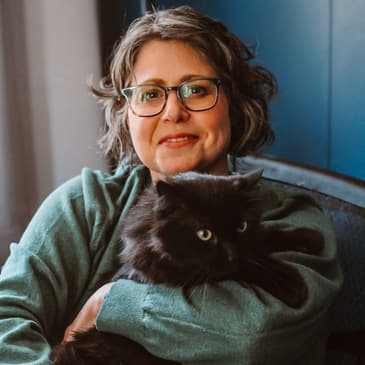
Becca Lory Hector is a passionate seasoned Autistic and disability advocate, consultant, researcher, and author with a career dedicated to supporting and educating about Autism in adulthood. Based in Maine, Becca focuses on living an active, positive life, and brings that same energy to all of her work. Becca has created tools and resources that empowers others to embrace their authentic selves and live fulfilling lives. As an openly Autistic adult, Becca pours her experience into her writing and teaching. Becca Lory Hector is the author of the book, Always Bring Your Sunglasses: And Other Stories from a Life of Sensory and Social Invalidation. Please join me as we welcome Becca Lory Hector back to Today’s Autistic Moment.
Philip King-Lowe (He/Him/His)
Becca Lory Hector, welcome back to Today's Autistic Moment. How are you doing today?
Becca Lory Hector (she/her)
I'm doing well. I'm excited to be back.
Philip King-Lowe (He/Him/His)
Yeah, definitely, this is going to be exciting. I think, because you and I have had some conversations behind the scenes getting ready for this, and we are now in Autistic Advocacy Month, the very first of it, and this is an exciting part to be in. So to help the audience understand why we're doing boundaries. Your boundaries are very important to your advocacy as an Autistic person. Your boundaries are important because they are your opportunity to do the first part of that advocacy, which is taking care of yourself. And managing your boundaries, of course, includes things like turning off your social media, because we know the month of April is news heavy now, and also social media is just compounded this time of the year. You're seeing posts and surveys and questionnaires, which I know you've been answering some of our questionnaires. And the thing is, it's loaded with things that can be destructive, you know, and we also tend to take a lot of that on ourselves, which we don't need to, and that's why we're really talking about boundaries here. And the thing is, is a lot of us do live with neurotypical individuals who may have various opinions about what being Autistic means, including those that aren't supported by a lot of the nonsense that is going around these days. But we do tend to internalize those and so the reason we're talking about our boundaries and our responsibilities here is to help our audience and even ourselves, Becca and me too, to define what those boundaries are and what our responsibilities are to those boundaries. And this is going to be so important. And you know, even to the point of when you're communicating about yourself, you set the boundaries as to what's you're going to listen to, what you're not going to listen to, what you're going to absorb, what you're not going to absorb. And especially where there is so much internalized ableism that goes on in the month of April, the boundaries that we're talking about are going to give you some help to figure out how to avoid that or take care of that. So that's why we're doing this important show, and we want to thank everybody who has taken part in the Autistic Advocacy Month Episode Questionnaire, and Becca Lory Hector and I are going to talk about some of those responses. So Becca, let's start with let's give a definition or two about what a boundary is. Go ahead
Becca Lory Hector (she/her)
A boundary, to me, when I think about a boundary, is something that we create, right? And what it does is it communicates to people, right, how it is that we want to be treated. That is the job of a boundary. It. And when I give you that definition, I very carefully give it to you, right? It's not a judgment statement, right? It doesn't come it's not a good thing or a bad thing. I'm not putting any of that around it. The definition of a boundary is just that the way to communicate right, what it is that is allowable behavior around you, and what is not right, what you like and don't like, all of those things, however you want to look at it. And it can sort of separate, you know, your personal space and your feelings and your responsibilities from other people. We want to make sure that we're doing that it helps really just set limits about how you expect to be treated, right? It's not supposed to, though, limit you right from the outside, and you don't want to hide or mask, right? It's not being mean or selfish. These are all the things that people kind of tell us around boundaries. They serve a purpose, right? And they are not there to punish other people. That is not their job,
Philip King-Lowe (He/Him/His)
Well, it just so happens that I just came upon a from Autistically, and this is from the Aucademy, a definition of boundaries that I think it are good. "Boundaries are rules and limitations that you set up to protect yourself, physically, mentally, emotionally, boundaries can be placed with family, friends, colleagues, etc." My own understanding of what boundaries are, and this may differ from other people, but this is where mine has come. A boundary is something that I create around myself. I created around myself to do my self-care, however that self-care, whatever shape that may take, it is a boundary I create around myself. When I create a boundary, I am going to set some set up some supports so that I can manage my boundary. Let me take an example. Let's say I'm going to say I'm going to do my own self-care. I'm going to take an hour from four to five o'clock in the afternoon. I will not be texting; I will not be receiving phone calls. I will be going in a place in my own home, and I will be closing the door. So what are the things that I'm going to do to secure my boundary? I am going to turn off all of the notifications for messages. I'm going to turn off all of the apps, the notifications for the apps on my phone, because I know that if I see them during my self-care, I'm going to look over and I'm going to see them, I'm going to open it up, and before I know it, I have, you know, not protected the limits of my boundary, Okay? And this is where our I think our responsibility, we have to secure those boundaries around ourselves. And I've been having some interesting conversations about boundaries. So bear with me everybody. When someone says to me, let's say somebody is setting a boundary around themselves, and they communicate what that boundary is to me, if that person says, this is my boundary, you keep it. My reply to that is, no, that's not my boundary. That's your boundary. You keep it. That's yours. Okay. When someone sets a boundary around themselves, my responsibility is to set the right boundary around myself so that I will protect I will respect the other person's person, other person's boundaries. If I do not do that, then I can't really respect the other person's boundaries. That's been my perspective over the past month. So I'm going to let Becca respond to that, and then I'm going to let Becca, you know, maybe talk about what that might mean for her. Go ahead.
Becca Lory Hector (she/her)
Becca, could you just kind of clarify for me the question that you're asking?
Philip King-Lowe (He/Him/His)
Okay, Sure. In other words, taking what I just said, What is your response to it and or might you have a your own way of saying a similar thing? Or do you have something different to say, whatever that is.
Becca Lory Hector (she/her)
Around kind of holding boundaries and that kind of thing?
Philip King-Lowe (He/Him/His)
Of around the boundaries, being around yourself about your responsibility for structure around it, sure? What do you think?
Becca Lory Hector (she/her)
Okay, so to me, it's really particular. Boundaries are something that have to be self-initiated, right? They don't come from the outside world. They come from inside you, right? And so one of the things that we saw in the in our little survey that we did was that a lot of folks don't know what their boundaries are, right? So the first thing about boundaries is you have to decide what they are for yourself. You have to ask yourself where you need to create some of that space, right, or where you need to create limits. You have to decide of those things, which ones are most important, right? And that's where we start to begin to set boundaries. Because if you yourself don't know, right? That means you're either setting boundaries based on someone else's information, or you're not setting boundaries at all, right? So that's really to me, like the very beginning of it is to understand it comes from inside. You can't go to some supermarket and purchase boundaries and unwrap them at home. That's not how it works. You have to look inside to figure out where your boundaries are being crossed. They're also not permanent. That's the great thing about boundaries. They are constantly in flux. Right? As your life changes, as you change day to day, your boundaries have to kind of move around with you. Sometimes we get rid of old boundaries and add new ones. Sometimes we just kind of shift up a boundary a little bit, right? But we have to have our boundaries be responsive to what's also happening in our lives, right? So there's that component of all of that. But everything that I'm talking about, as you can hear, is about you being responsible for your boundaries, right? The only time that other people enter into this space of talking about boundaries is when they bump into one of yours, right? So now we find ourselves in a situation where you have set a boundary, you've done all the homework. You've done, you've decided what's important, you've set the boundary, you've communicated the boundary, right? And somebody comes and bumps right up your boundary, right? They call you after 10pm or they don't text when you know when they're leaving the house on their way to pick you up, or they don't, whatever your little thing it is, right? Or big thing that it is, it happens, right? And this is where people seem to get confused. They seem to go, oh, well, you bumped into my boundary. You're supposed to respect it. That's your job to the other person to respect it. But that's not how boundaries work. Boundaries are not only ours to create, but ours to protect. So when someone goes knocking on your boundary, it is not the responsibility of that other person to know your boundary ahead of time, to memorize it. They're allowed to make mistakes. They're allowed to do it on purpose. Your job is to say, nope, nope. You can't get through here. Nope. That's not allowed, not even if you ask nicely, not even if you put on lipstick when you ask, and not even if you bring me ice cream not eat, right? No. This is my boundary, right? And boundaries stop working when we don't protect them when we don't commit to them and stay consistent. If people hit our boundaries and sometimes we hold them and sometimes we don't, they are always going to be trying to get through your boundaries, right? However, if you are consistently holding them strong and protecting them, that person will eventually get the message that they can't do that right. And when somebody doesn't get that message, your response is to remove access. That's what we do, right? If somebody hits our boundary and we say no and we hold it and they do it a second time or a third time, we get to say, You know what, if you can't respect my boundaries, then I don't have to give you access to me, right, right? And so what you can hear from all of this language is, even though we would hope, when we set boundaries, the people out in the world would respect it, it's not their responsibility to maintain our boundaries. That's on us. It's not their responsibility to set the boundaries. It's also not even their responsibility to kind of memorize your boundaries or know your boundaries. It's only their responsibility to take care of themselves and their needs, and it's your job to take care of yourself and your needs, right, right? And so that's kind of where we have to kind of think about things, and that comes from a space of valuing self, right? We're trying to protect self and use our own energy for ourselves and the people that respect us. So that's kind of how I look at that approach.
Philip King-Lowe (He/Him/His)
Let me try different, different approach. Sometimes, if someone, let's say, interrupts your boundary. Let's say they're interrupting your self-care time. Yep, and you respond to them. You may have without thinking about it, already surrendered your boundary to them.
Becca Lory Hector (she/her)
I get what you're saying, right?
Philip King-Lowe (He/Him/His)
It's one of those things that, oh, how do I put this? It's the catch 22 I guess you know when someone walks in on you say, during your self-care time, if someone walks in and interrupts your self-care time, and you reply to them, and that person knows that's what will happen, you may have unintentionally, already given them the permission to interrupt your boundary.
Becca Lory Hector (she/her)
You did, right? You didn't protect your boundary at all, right?
Philip King-Lowe (He/Him/His)
Right. And so I'm chuckling, because it's one of those things that you may not have thought about it that way. You may not have even realized that, but in a way, you've already given them the permission, right?
Becca Lory Hector (she/her)
It's exactly, we're exactly saying the same thing, which is that, if you know, sometimes people are going to try, they're going to try to get their needs met in their own time, right? And it's not that there is necessarily, you know, that they're trying to be mean. They're just, that's their nature, right? And they're going to go back. And it's our job in those moments that when someone interrupts our self-care time, we don't answer their question. Instead, we say, I'm not going to answer right now, because this is my right, and we reset the boundary and we reiterate it. We don't compromise, because that compromise and boundaries sets a precedent, just like a legal precedent, right? It sets a precedent in their brain that oh, but there are exceptions to that rule, right? And what we don't want to do is in, especially in the boundaries that mean the most to us is ever make exceptions to those rules, right? Yeah, except in a state of an emergency, obviously, we don't want anybody to die. But you know, we want to stay strong in them, because the stronger we it's it is another way to build a habit and to create habits, right, and that only happens with replication. And the more you hold your boundaries and the more you protect them right, and hold on to them and stay consistent and are committed to them, right, the easier that gets for you. That just get keeps getting easier, right? You know, all maintaining boundaries is so hard, maybe the first time you do it, the second time it's easier, the third time it's easier than that, and easier and easier and easier and easier, right? And on the opposite end, when you remain consistent, it gets harder for the person who's trying to break your boundaries, and harder and harder and harder and harder and harder until they have to find some other way, or they have to respect your boundary. And so what we want to do is create those habits for ourselves and for the people around us, right? And when we compromise in there and we're like, oh, I'll just answer their question, oh, the ketchup is in on the right side of the fridge, right? Right? We've broken the boundary. Yeah, you know, we can't get it back. And so that, you know, the thing about them is we have to spend the time to know what's important, why it's important, how come we're protecting it, and then we have to do it like our lives depend upon it. Because, yeah, yeah, right. It's how we avoid burnout, it's how we don't go into shutdown, it's how we don't have overload, it's how we maintain emotional stability, right, right? So it is that for us.
Philip King-Lowe
Right.
After the next commercial break, Becca Lory Hector and I will talk about burnout from letting our boundaries be disrespected because Autistics are people pleasers. We will also talk about answers to the questionnaire about boundaries being our responsibility, or are they a community effort? We will answer these questions and more when we return.
♫ Segment Ending Music ♫
Commercial Break II
♫ Actually Autistic Coach Collective Ad ♫
♫Best Care Ad♫
♫MICC Ad♫
TAM Support Ad
There are many podcasts you can listen to these days about Autism, children with Autism and what Shannon Des Roches Rosa calls the "Autism grievance parent industrial complex.” Today’s Autistic Moment is celebrating Autistic Advocacy Month by presenting a podcast where an Autistic Adult hosts Autistic Adults so that our stories are told and heard.
In the coming months there will be opportunities for Autistics to be interactive with the podcast as we will talk about building Autistic communities, friendships, upholding our dignity as Autistic Queer people, maintain safe Autistic Queer Spaces, talk about practicing the pause, created a path towards trust, caregiving and so much more. And we will be expanding our network.
Today’s Autistic Moment needs your contributions to continue our way forward for the Autistic Adult intersectional communities.
Support Today’s Autistic Moment in any of the following ways.
· Make a one-time donation through the Ko-fi icon when you tap on Support Today's Autistic Moment on todaysautisticmoment.com
· Subscribe monthly via Patreon.
· Purchase items at Today’s Autistic Moment’s Logo Shop.
· Share Today’s Autistic Moment with your family, friends, coworkers and others through social media and/or by telling others about us.
Donations are not tax-deductible but help keep Today’s Autistic Moment as a safe space.
Thank you for supporting Today’s Autistic Moment.
♫Segment Beginning Music♫
Segment 3
Philip King-Lowe (He/Him/His)
Welcome back. Before the commercial break, Becca and I were talking about boundaries being self-initiated and what our responsibilities are to those boundaries. We ended the last segment by explaining what can happen when we don’t maintain our boundaries and keep allowing others to disrespect them intentionally or unintentionally. Now we are going to talk about why Autistics tend to not hold their boundaries in place because we are people pleasers.
Philip King-Lowe (He/Him/His)
You just said something about burnout and that kind of thing. In that same survey from Autastic Galaxy, and again, this is kind of done by Kent and Medway Mental Health from the UK. But why are boundaries important? Is the question, and their answer is, "Autistic people can often be taken advantage of due to people pleasing and because they think they don't have the ability or authority to say no. This leads to increased anxieties and overwhelms due to over extending oneself, especially if not able to keep up and demands self-care is important and boundaries are healthy." Now here's one of the problems I keep chuckling with this, Becca, but in a way, sometimes, well, I shouldn't say this, Autistics are people pleasers. It's just a fact of being Autistic.
Becca Lory Hector (she/her)
Its a trauma response actually.
Philip King-Lowe (He/Him/His)
It is. But
Becca Lory Hector (she/her)
We all, I mean, there's, you know, this is a topic that I think is really connected to boundaries,
Philip King-Lowe (He/Him/His)
Actually, yeah, absolutely.
Becca Lory Hector (she/her)
So, yeah, continue. I'm sorry.
Philip King-Lowe (He/Him/His)
No, that's okay. But this is an image I have in my head right now. I have this image of somebody who's about to lock their door, okay? And to I mean doors and locks are a boundary, okay, so the person who's going to implement the boundary opens up the door and steps outside to tell that person you may not come in here. The part that's hard here is that you are telling the other person, I am going to do my self-care or I'm going to do something to take care of myself, whatever that is. And you're telling them, please do not come in and interrupt my boundary. The problem here is you're telling that with the door open, yes, you know. So while you're telling them what your boundary is, you've already left the door open, which means they're just going to slide in.
Becca Lory Hector (she/her)
Well, there's a difference. There's a difference between, you know. So what sound what you're describing feels a little extreme to me, because most people, if you say to them, right, like, I'm going in my room to have some quiet time to read, to do whatever, and I'm closing the door. Most people, that's good enough for most like, that's it, right? We don't have to lock on top of it. We don't have to do it. We don't have to put a sign out the door. We don't have to, and they're certainly not trying to physically rush past us to get into this room, right? So what we're really talking about is the way that we choose to communicate our boundaries to people, yeah, and how to do that, well, right? And you are not in control of how that person responds to your boundaries. Let me say that very loudly. So if you put up a boundary that is healthy, you communicate it kindly and respectfully, you give people ample warning they've understood right, and that person still is breaking your boundaries right? We have an issue, and it needs to be addressed. We can't just walk away from it. We have to make sure we're addressing it right? We want to make sure that we don't set boundaries and then expect people to, by osmosis, know what our boundaries are, right? We want to communicate them. We want to make sure it's all clear. And once we have done that work, it is now on that person, and it is their responsibility to decide how they put how they respond to our boundaries, if they like it or don't like it, if they're mad or sad or hungry or whatever, right? That's on them, and our only responsibility is maintaining our boundary, right? So we have to, like kind of put that all into place. But you mentioned people pleasing, which I feel I must talk about, because I think it is the piece that keeps most people away, not just Autistic people, everyone away from boundaries, like this idea that it's mean to set a boundary, or that it's selfish to set a boundary, or cruel to set a boundary, or you don't love a person if you set a boundary, right? We put a lot of negative connotations around that. But what I and so what happens for folks that are people pleasers, right? So that they don't want to set boundaries, because it feels a lot like saying no, and it feels a lot like you might be disappointing people, right? And that is but what I want to tell you is people pleasing, in and of itself, is already a trauma response, right? People will become people pleasers are doing it to maintain the comfort level in a room, to maintain other people's responses, right? All of those things in order to maintain safety, and that comes from having experienced trauma where when you've expressed your needs and wants, right, you've had negative repercussions. So that's where that people pleasing comes from. So when you start to set boundaries, if you are someone who comes from a people pleasing place, this is going to be a big conflict for you, right? And so we need to really think about that people pleasing component as we create boundaries, because it's a habit, just like boundaries are a habit, right? But they are opposing forces. And so we need to think about where is that people pleasing coming from, right? And how can we adjust for it, right? There are other things that make us struggle with boundaries. Besides people pleasing, like some of us have terrible modeling around boundaries. Maybe we had parents or grandparents that had no boundaries, or had really terrible boundaries, or didn't communicate their boundaries at all, right? And so that can make it difficult. Sometimes we don't really know what we're going for in our lives. We haven't thought about our purpose or our values and our priorities, and so it's unclear in our lives. And so it becomes hard to set boundaries. We don't really know what we're trying to build, right? And then, of course, for Autistics, all over the place, Autistics, but for other people too, our social conditioning, that fear of being judged or seen as selfish, right, is also something that can make boundaries really, really complicated. So there are lots of reasons why it's hard to set boundaries and complicated to set boundaries, but once you start doing it, it gets easier and easier and easier again, and you start to feel better, and then you're like, Hold on, I feel better. I don't care if someone's mad at me, because I feel better, right? And it shifts that whole perspective so important that people pleasing thing to really take into account when you're thinking about boundaries.
Philip King-Lowe (He/Him/His)
Yeah, we have two very interesting responses to our survey, our questionnaire, that is interesting. We had 14 responses, and one of those questions was, whose responsibility are our boundaries? 64.3% of those said, my boundaries take teamwork. I need to communicate them clearly, and the other person needs to respect them. The smallest group, which was 35.7% so said my boundaries are my responsibility. What are your thoughts about that?
Becca Lory Hector (she/her)
My thoughts on that are that 35% or whatever it is, they're on to something right? This, the idea that it's teamwork, right needs is something we need to kind of adjust about. Because I try, I started to explain a little bit about how it's our job to create our boundaries and to protect our boundaries, and when somebody bumps into our boundaries, it's our job to hold them strong. It is not our responsibility for how they feel about our boundaries, right? And so the idea that they have to respect them, right? You can't make somebody respect them. You can't force that upon somebody, but what you can do is hold your boundary, and if they don't like it, right, we remove access. Access changes. Either they leave because they're not happy, or you say you're really driving me crazy. And no, you can't have that. And so I'm removing myself from this situation, right? And so no matter how we look at it, those boundaries are our responsibility. We cannot we would love. We should surround ourselves with people who respect our boundaries? Yes, we should look to find those people, but we cannot hang our hat on other people's responses to our boundaries. Right? We need to make sure that no matter how somebody responds to our boundaries, they're still important to us, and we still need to protect them, and if that person doesn't get it, they don't get access to us, right, right? And it's still, so it's still, it's really always our responsibility,
Philip King-Lowe (He/Him/His)
See, one of the things that, one of my issues, that I want to talk about from my own perspective, if I don't protect and maintain my own boundaries. It is going to be very difficult for me to respect someone else's. I say that because I've made some mistakes over the past five, six months in which I surrendered my boundaries to someone I should not have. And therefore I was not able to completely hear and respect theirs. Yeah, yep, because subconsciously, I had created a space for me that suggests, since I've given up my boundaries to you, you should do the same for me. This was due to an error I made. And quite frankly, the problem that happens is that if you do not protect your boundaries, the biggest person that you are dishonoring is yourself okay? And consequently, you have also done a terrible disservice to the other person. Yes. Because you've let them again, this can be unintentionally okay. We're not saying that anybody intends to do this again. It comes from that trauma response of people pleasing. Okay. You want to be able to respond to someone's needs. And may I say that is a great act of compassion, one that we should not downplay at the same time, when, again, this is me, and this may not be the experience of someone else, but this is my experience. When I did not protect my boundary, I allowed that person into a lot of parts of my life that they didn't belong there. And right, yeah, right. And consequently, it wound up doing a terrible disservice to the other person who needed me to help them with what I was helping them with. And so and so this is where I need to say something because one of my questions was in the in the questionnaire, when I think of a boundary now, as a result of this experience I've had, I think of it this way, when a flight attendant gives safety instructions, they tell you to put your own oxygen mask on before helping anyone else. Boundaries can work the same way. Yep, you need to set and protect your boundaries first, then you can help someone else understand theirs. I asked, Do you agree with this oxygen mask idea? 78% of those who answered this questionnaire agreed with me, only 28.4% disagreed. And we want to emphasize that doesn't mean that the 24 21.4% you know, there may be another element to this, but that's how I think of them. Please respond to all that, Becca.
Becca Lory Hector (she/her)
Sure. So yes, this is a I want to go back a little bit first though, because you said so much. And so first, I want to say kudos to you as a human being for having this little growth moment, right? Where you're reassessing what you know and think about boundaries. That's exactly what I was talking about, right? Like life is going to come at you and you have to adjust accordingly, right? And now you think about boundaries a little bit differently. Maybe you're stricter with them, maybe you're whatever, but it was a lesson in what happens when we're not committed to our boundaries, right? When we're not consistent with them, right? So kudos to recognizing that, because that's a self-awareness that most people don't have, right? So if we can get there as human beings, we're already in a better place when we're self-aware. Okay, second of all, you touched on something which I'm going to give a name to, and that's resentment, right? When you expect that someone respects you so they will respect your boundaries and they don't. And then they continue to do that. It feels like you're getting run over by a truck over and over and over again. So what ends up happening is you feel eventually like, you know what? I kind of want to run a you over by a truck one time or two, right? And so we start kind of not respecting their boundaries back, right? And that comes out of this resentment piece right? Now, if we had held our boundaries from the get-go, we don't even create the space for that resentment right to build up. So I want to talk about that piece, because that happened in there too, right in that conversation. This oxygen mask thing is a great analogy. It's really similar to the you can't pour from an empty cup analogy, right? The idea with boundaries is they're there as part of your self-care plan. Boundaries are part of all of the things that you do to take care of yourself. Exactly. Taking care of self is our responsibility. Once we are done taking care of self, if we have extra lying around, we can then give, start giving it away to other people. But you can't know that you that you have extra oxygen to give out unless you've taken the oxygen you need first, and then you give away your extra. If everybody didn't take what they needed and just gave away to everybody else, right? People, we would be constantly imbalanced. Instead, if everybody takes what they need and then gives out their extra, right, everyone's taken care of and sometimes bonus. So, right? And so what we want to be thinking about in that idea is your boundaries help you keep your cup full, right. Your boundaries help you to keep the oxygen happening, right? That's what their job is. They're part of it, just like showering and your sleep and your nutrition and all of those things. That's part of the maintenance of your meat suit or your boundaries, right? So that's how I think about the analogy. In reference to boundaries, they are part of the puzzle that keeps my cup full.
Coming up in the next segment, Becca and I will explain why we need to give ourselves and others a little grace if keeping boundaries is extra complicated right now. Today’s Autistic Community Bulletin Board will follow.
♫ Segment Ending Music ♫
Commercial Break III
TAM Autistic Consulting Services Ad
Did someone just inform you that you have Autism? Are you wondering what the difference is of what being Autistic, and being a person with Autism means? Maybe what you need is help finding life coaches, crisis support, education, and connecting with the Autistic community. I can help you with these and other questions you may have.
TAM Autistic Consultation Services are not therapy or legal advice. My consultation services offers you education supports, with recommendations to people and resources to see if they will work for you. Go to todaysautisticmoment.com and read about TAM Autistic Consulting Services. If interested, please fill out the intake form and make an appointment so we can begin working together.
♫ Lisa Morgan Consulting Ad ♫
Future Shows
The celebration of Autistic Advocacy Month in April continues on April 26th, when Coach Lee Hopkins and I will present the episode Autistic Advocacy Month: Our Boundaries and the Responsibility of Others. Autistics are often stereotyped as not knowing or managing our own boundaries, so others assume that they must take responsibility for our boundaries. Autistics do in fact know what our boundaries are, and we may need some tools for how we communicate what those boundaries are to someone else. What are their responsibilities? Coach Lee Hopkins and I will give you some suggestions as to how Autistics can manage their boundaries and know what the responsibility of others are.
On May 10th, Gaby San Miguel from Minnesota Independence College & Community will join me for the episode Autistics Thriving Through Community Building & Strong Friendships.
On May 24th, Lisa Morgan and I will present Autistics Thriving by Finding Themselves After Grief Management.
Check out the Episode Schedule 2026 on todaysautisticmoment.com for details about these and other upcoming shows.
Thank you for listening to Today’s Autistic Moment.
♫Segment Beginning Music♫
Segment 4
Welcome back. In just a few moments, Becca and I will talk about how the cultural and political climate is making it extra challenging to create, maintain and respect boundaries.
Philip King-Lowe (He/Him/His)
I would like to say something that's been on my mind these past few weeks. If you are finding it more difficult these days to maintain your own boundaries or mean or respect the boundaries of others, I want to tell us all myself to have a little bit of grace upon yourself. I say this because right now, with the way that the US government is handling their boundaries, they are invading all of them. And what that tends to do is to create this terrible atmosphere of distrust, of losing your trust in yourself and in the people around you. And it's, again, it's one of those things. It's a cause and effect matter, because right now, we have a government in place that is invading people’s civil rights, the ability for people to manage their health care, and especially for the Autistic community right now, where there's so much junk aimed at the Autism community that is our government not observing their boundaries terribly well. In fact, they're not even guarding them at all, and because that might create an atmosphere of distrust, because of how that can be so difficult on our psychological health, our mental health, I believe it can create. It can create this fear that no matter what boundary I set, it's not going to be protected. So I feel the need to say, if we're feeling it difficult to maintain our boundaries right now and or we're having some additional trouble respecting others, please give yourself some grace here, and please develop some of your own to protect yourself, from all of this invasion and some of that comes from you maintaining the boundary of you hang on to your own sense of self-respect. You hang on to your own dignity, and don't let anybody take that from you, no matter how hard they try. Because no, our government is not respecting their boundaries, and they certainly are not respecting ours. So our boundary is protecting our own dignity and our own again, self-worth right now and so again. Becca, I just say that because I think it's a very big issue right now.
Becca Lory Hector (she/her)
Yes, it's really now. It's unusual, our new normal, whatever you want to call it, it's a very different time and space, and we've got a lot of negativity floating around in the right in general, right? Lots of anger sadness. Right, lots of boundaries being crossed, lots of trust being broken, right? Lack of respect in general. Right, and what happens when that builds up? Right, is that we all as human beings have cumulatively feel the effect of that, right? So we're all a little bit easier, quicker to anger. We're feeling all a little bit more soul tired, a little bit more exhausted, right? We're trying to keep our heads up, right? But, you know, the economy is, there's lots of things going against us, right? And if we're all collectively feeling that way, no matter where you are in the problem, right? We're all collectively feeling the unrest. And so what happens is we all seek to soothe that somehow, right? And what happens in there is that our boundaries get muffled. Sometimes we, you know, go back to old habits in order to self soothe. Sometimes we look to old company or old, you know, old ways of doing things for that safety and old comfort, right? Better the devil you know than the devil you don't know, right? That kind of thinking. And so it's really easy to let boundaries slip in a time when you are feeling depleted, right? It's hard to fight a war if you haven't eaten your breakfast, right? Like it's that, it's that basic. And so we are all feeling, I think, especially those of us in our community, we're feeling especially targeted this year. And so there's a lot and that interrupts us. It interrupts us in a very physiological way, right? A lot of us are struggling more so with eating and sleeping and really just basic things right now. And so it means for us that we have to almost, I want to say, like, build up a secondary layer of boundaries, or add additional boundaries in right to support us even more. Like, I've been really encouraging people to put boundaries around how much time they spend taking in the news or being on social media or right like, maybe that's not something you have to do most of the time, but when the news looks like it looks right now, it's a really good time to say I'm capping that at two hours, or I'm only looking at BBC, and I don't know, CNN, and that's it. Or, you know, that kind of thing, rather than doom scrolling for hours, because we used to doom scroll because everything on the internet was funny and fun, and we were catching up with each other. And now it's become this other kind of machine that doesn't lend itself to joy, right? And so what we have to do is say, You know what, I'm limiting access it, that stuff doesn't get access to me as much, right? And set another boundary around it. It is. It's a tough time for everyone right now. And you know, it's tough to be kind and nice in a time like this, right? It's hard not to feel angry and sad and depressed and so I think, you know, putting some boundaries around that even feels crazy to you, but set some boundaries around joy. I need at least three hours of joy every week if I don't get it, or if going to do this thing doesn't bring me joy, I'm not doing it anymore, right? Yeah, things like that. There are lots of ways to set boundaries around that and to think about those things in a time like we're kind of living through right now.
Philip King-Lowe (He/Him/His)
Coach Lee Hopkins is a new guest that I'm bringing in for the show on the 26th of April, and we're going to talk about Our Boundaries and The Responsibilities of Others. And I really do think that you all are going to enjoy listening to what Coach Lee has to say.
Becca Lory Hector (she/her)
I'm looking forward to listening to it I can't wait.
Philip King-Lowe (He/Him/His)
Yeah, it's really going to be great.
Becca, thank you so much for being here today. Thank you for all of this, and I always look forward to talking with you, because you do share such excellent information. So once again, thank you so much for this
Becca Lory Hector (she/her)
My pleasure, and I love coming back so you know you can always ask me to.
Philip King-Lowe (He/Him/His)
Definitely thank you.
Transcribed by https://otter.ai
If you listened to my conversation with Becca Lory Hector, and you are thinking, “Hey Philip, I really enjoyed the conversations, but the segmentation, music, and ads were so distracting,” I have a great alternative for you. Sign up for a subscription to Ad Free Interviews on todaysautisticmoment.com. The subscription is only $12.00 a month or $144.00 for a whole year. Once you buy the subscription, you can click on any show where you see the logo for Today’s Autistic Moment Ad Free Interviews to hear only the interview without interruption, segmentation and music. You can listen to all Ad Free Interviews going back to July 2025 and all upcoming shows.
Early in March, I was moved by an episode of Law & Order: Special Victims Unit. The episode is entitled Frequency and it aired on March 5th. Please see the hyperlink in the transcript for information from IMBd. In the episode Frequency a baby monitor picked up the frequency and showed a young boy named Avery Li who had been kidnapped and kept in a cage. It was later discovered that Avery was a nonspeaking Autistic. One of the detectives Jake Griffen played by actor Corey Cott was the only detective who knew how to communicate with Avery over the monitor using nonverbal physical language, such as if he said something that was true, Avery would touch the tip of his nose. If Detective Griffin said something that was not true or correct, Avery would touch his forehead. Through Griffin’s communication with Avery, they were able to find Avery and rescue him from the cage and took him back to his mother. What I loved about that episode was that it showed how a nonspeaking Autistic boy named Avery was able to communicate through simplicity, and a detective who knew how to speak the language was able to rescue Avery. After Avery was returned to his mother, Griffen asked Captain Olivia Benson, played by Mariska Hargitay, “How do you deal with all the darkness?” Captain Benson replied, “We keep telling our stories, no matter how dark they are.” The episode and what Captain Benson said fits in with Autistic Advocacy Month. We need Autistics and our allies to keep telling our stories about how wonderful Autistic people are, and the fantastic contributions they make to our lives. If you use the Peacock app on your ROKU or another means to watch the Frequency episode, I encourage you to do that. I don’t often recommend television shows that portray Autistic people, because they are usually based on the “deficits” used to denigrate them. This program showed an Autistic with higher support needs is able to communicate with someone who understands him. It was the most positive portrayal of Autistic individuals I have seen in a very long time.
Today’s Autistic Community Bulletin Board
All these events and many others such as sensory friendly concerts, art activities and museum information links are available on
todaysautisticmoment.com/bulletinboard.
For more than 30 years, The Autism Society of Minnesota has hosted the Minnesota Autism Conference, which brings together Autistic Adults, caregivers, educators, service providers, therapists, and advocates from across Minnesota and beyond. In 2026, AuSM is making a shift to a virtual, two day format. This change helps lower ticket prices and increases access—with no travel, no hotel costs, less time away from work or caregiving, and more flexibility for how and when you participate. Tickets are now on sale for $149.99. AuSM members get $50 off, but there is another way to save even more money. Autistic Minnesotans can request the scholarship rate, which is just $74.99. Since scholarships are funded by AuSM’s donors, they are not available to people outside of Minnesota. The scholarship rate is available to all Minnesotan Autistics including those marginalized by race, gender, sexuality, and more.
The Adult Coffee Club for Autistic Adults in Minnesota are held on the second Tuesday of every month (weather permitting) at Dogwood Coffee located at 2700 University Ave W. Suite 100 in St. Paul, Minnesota. The Zip Code for your GPS is 55114. The Adult Coffee Clubs will begin at 3:00pm to 5:00pm. There will be no Coffee Club in April. Coffee Clubs will resume on May 12th. June 9th. July 14th. August 11th. September 8th. October 13th. November 10th. December 8th.
Understanding Autism virtual classes are offered by The Autism Society of Minnesota. The next classes will be April 13th, 10-11am. May 11th, 12-1pm. June 8th, 6-7pm. July 13th, 10-11am. August 10th, 12-1pm. September 14th, 6-7pm. October12th, 10-11am. November 9th, 12-1pm. December 14th, 6-7pm.
On May 7th, beginning at 6:30pm to 8:30pm, Joyner Emerick will present a workshop at the Autism Society of Minnesota entitled, Autistic House to Home: A Guide to Affirming Home Space.
Save the date May 17th, 2026, beginning at 9am to 12noon for the Steps for Autism. The Steps for Autism will be at The Roc at the St. Louis Park Rec Center located at 3700 Monterey Drive, St. Louis Park, MN 55416. This is an outdoor event in the covered hockey rink behind the Rec Center. There will be fun and inclusive events, a resource fair, a flash dash and sensory walk, costumed characters and community building opportunities.
Go to ausm.org to the Education menu option to download the Summer Programs Catalog 2026 to learn about these and other social and recreational programs, educational events, counseling services and support groups at The Autism Society of Minnesota.
MNeurodivergent is a social club rooted in a vision of bringing Neurodivergent Minnesotans together to build meaningful connections. Its core principle is to foster an environment where all are treated with dignity and respect regardless of ability or preferences. Go to their website mneurodivergent.org for more information, become a member, volunteer and attend their events.
Today’s Autistic Moment is here because of the generosity of supporters and sponsors. Go to todaysautisticmoment.com and select Support Today’s Autistic Moment to donate.
If you have questions about Today’s Autistic Moment, please send an email to todaysautisticmoment@gmail.com.
Thank you for listening to Today’s Autistic Moment: A Podcast for Autistic Adults by An Autistic Adult.
May you have an Autistically Amazing day.
♫ Closing Background Music with credits ♫
All of the guests meet with me on Zoom to record the interviews. The interview transcripts are provided by Otter. The podcast is prepared and edited on WavePad Masters Edition by NCH Software. The podcast is published by Spotify for Podcasters. The music that you hear is licensed to Today’s Autistic Moment by premiumbeat.com
