Go to todaysautisticmoment.com for the transcripts.
Dr. Megan Anna Neff and Philip talk about what the nervous system is and what it does. Megan talks about the autonomic nervous system, fight, flight and freeze. The window of tolerance and what hyper arousal and hypo arousal means. This informative conversation will answer many of your questions about what is happening in your nervous system with some advice for self-care to manage your daily life.
Dyslexia Accessible Transcript
Self-Care: Managing Your Nervous System
Spanish Accessible Transcript
Autocuidado: Cómo gestionar nuestro sistema nervioso
German Accessible Transcript
Selbstfürsorge: Unser Nervensystem im Griff
French Accessible Transcript
Prendre soin de soi : gérer son système nerveux
Chinese Simplified Accessible Transcript
Transcript
Self-Care: Managing Our Nervous System
July 12th, 2026
Episode Introduction & Preview
Welcome to Today’s Autistic Moment: A Podcast for Autistic Adults by An Autistic Adult. My name is Philip King-Lowe my pronouns are he/him. I am the owner, producer and host and I am an Autistic Adult. Thank you so very much for listening.
The nervous system is an Autistic’s main source informing us about what is going on with our sensory processing and anxiety to help us decide what we will do to manage our lives. Dr. Megan Anna Neff is here to explain our autonomic nervous system, including the fight-flight and freeze responses and the concept of the window of tolerance. Megan will discuss the importance of self-care, such as body awareness and sensory curation, and the impact of chronic pain and that the social stigma that the intersectional Autistic communities experience increases stress on the nervous system.
Come join us for the episode Self-Care: Managing Our Nervous System on Today’s Autistic Moment.
♫♫ Opening Theme Music ♫♫
Segment 1
This first segment of Today’s Autistic Moment is sponsored by The Autism Society of Minnesota, known as AuSM throughout Minnesota’s Autism Community. As Minnesota’s First Autism Resource for more than 50 years, AuSM serves the whole state, the whole spectrum for the whole life. Visit AuSM at ausm.org.
In addition to the wonderful guests and conversations on Today’s Autistic Moment, you can find many more resources.
Visit todaysautisticmoment.com to listen to over 120 episodes released since 2021.
Check out the Episode Schedule 2026 to see upcoming shows, topics, guest information, and program descriptions for season 6.
On the website, you can:
· Learn more about Today’s Autistic Moment.
· Read the guest bios pages.
· Explore the Adult Autism Resources Links Page.
· Visit the Autistic Community Bulletin Board.
· Read the blog.
· Find out about TAM Autistic Consulting Services.
· Sign up for a subscription to get Ad Free Interviews.
· Support Today’s Autistic Moment with a donation.
Every episode, including this one, has a transcript. The transcripts are sponsored by Minnesota Independence College & Community.
You can read the transcripts right on the website or download printable versions to help you save ink.
The transcripts have hyperlinks in them for names, organizations and other resources named throughout the show that you can access to see if they are helpful to you.
The transcripts use a dyslexia-friendly font that are available in English, Spanish, German, French, and Chinese Simplified.
Want more interaction with Today’s Autistic Moment? Follow Today’s Autistic Moment on Facebook including our Community Group Page, LinkedIn, BlueSky, Instagram and Threads. Also follow us on the YouTube Channel @todaysautisticmoment to listen to new episodes of Today’s Autistic Moment and watch Autistic Voices Roundtable Discussions.
As of July 1st, we are celebrating Disability Pride Month. Just about everyone knows that June is LGBTQIA+ Pride Month. Autistics and organizations that pay attention know that Autistic Pride happens during June. July arrives and disability advocacy groups put up the Disability Pride flag images all over the social media networks. Hardly anyone notices July as Disability Pride Month. Honestly, I too am guilty of not knowing about Disability Pride Month until a few years ago. Thirty six years ago in 1990 the Americans with Disabilities Act became the law. It is my personal opinion that while the ADA was a monumental beginning, it has become inadequate to provide supports for disabled individuals. There are too many ways for employers and business owners to loophole their way out of the requirements of the ADA. While the ADA is supposed to protect the rights of disabled people, nothing really shields them from the health care markets that provide mobility, communication aids, and essential equipment disabled people need at astronomical prices that few can afford without healthcare assistance. Yet the programs that provide financial assistance for disabled individuals to obtain what they need keep getting cut because something else is more important. When it comes to making buildings and programs accessible for disabled people, they are usually kept to the minimum so as not to take attention away from able bodied and able minded individuals who have the means to afford things like education and don’t need accessible restrooms, doors or elevators.
Now a days, our government’s work to weaken protection for people with disabilities is blatant. A year ago, the department of labor established guidelines to make it more difficult for disabled people to get jobs. This year, someone in the current administration made a statement that the historic Olmstead vs. L.C. decision in 1999 that made mandatory institutionalization for disabled people illegal, was not the intention of the ADA, and therefore should be repealed. Another move was the Office of Special Education and Rehabilitative Services was moved from the Department of Education to the Health and Human Services was done to suggest that people with disabilities are some kind of public health problem. What is not being said is that all of this is being done by those who stand to make billions of dollars in profit from further disenfranchising disabled people to the mercies of a capitalist society that benefits from industrialized stigmatization.
There is no better time for everyone to recognize July as Disability Pride Month by advocating for fairness, equality and equity for disabled individuals across the country. Disabled people do not need pity. We need people to listen to the experiences of disabled people, and their caregivers to advocate by your voices, votes, talents to call for a world the respects the dignity and autonomy for disabled people. Now is the time for you to speak out, write blogs or letters to the editors of your local newspapers, and show your support for disabled people. This is the best way for you to make Disability Pride Month a success for those who need it most.
Coming up after this first commercial break, Dr. Megan Anna Neff will join me to talk about Self-Care: Managing Your Nervous System.
♫ Segment Ending Music ♫
Commercial Break I
Podcast Apps
Today’s Autistic Moment can be downloaded and heard on most podcast apps including Apple. Google Play. Breaker. Castbox. Overcast. iHeartRadio. Pocket Casts. RadioPublic. Spotify. TuneIn. Pandora. Amazon Music. Audible. Podcast Addict. Podcast Chaser. If you are looking for the transcripts, go to todaysautisticmoment.com, click on the episode you want to listen to and follow the directions to find the transcripts.
Thank you for listening to Today’s Autistic Moment.
♫Best Care Ad♫
♫MICC Ad♫
♫ Lisa Morgan Consulting Ad ♫
♫Segment Beginning Music♫
Segment 2
Welcome back everyone.
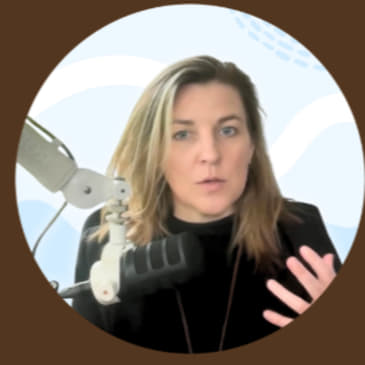
Dr. Megan Anna Neff (she/they) is an AuDHD clinical psychologist, as well as the author of Self-Care for Autistic People, The Autistic Burnout Workbook, and the forthcoming AuDHD Unlocked (Spring 2027). Megan is the founder of Neurodivergent Insights, the business behind her education, training, clinical writing, and the NDI YouTube Channel. Grounded in the blend of clinical insight, research, and lived AuDHD experience, NDI translates complex Neurodivergent experiences into accessible, compassionate, and affirming resources for adults, clinicians and helping professionals worldwide.
Please join me as I welcome Dr. Megan Anna Neff to Today’s Autistic Moment.
Philip King-Lowe
Dr. Megan Anna Neff. Welcome to Today's Autistic Moment. It is such an honor to have you here today. I've seen your book and read it. It is extraordinary. So, welcome. I'm so glad you're taking time to be with us today.
Dr. Megan Anna Neff
Thank you. It's an honor to be here, and to be a part of the work that you're doing, and the series you're doing. So, thank you so much for having me.
Philip King-Lowe
You're welcome. Well, we're now in the summertime, and for many Autistic people, the summertime brings a lot of challenges to our nervous systems. For some of us, the heat and humidity depresses us. For many of us, there's a lot more people outside. There's you know, loud motorcycles going by us, there's you know lots of outdoor activities, lots of people around, and just a lot of things going on, and so many of us Autistics in these summer months, our nervous systems are really being taxed, and so there's a lot to be done to take care of our nervous system. So, Dr. Megan Anna Neff and I are going to present you with Self-Care: Managing Your Nervous System. So, Megan, what important information can we give to our audience about managing our nervous systems?
Dr. Megan Anna Neff
So, okay, so yes to start with some fundamentals of what the nervous system even is, because this is a term that we probably, we're starting to see a lot people to kind of use the term casually, so there's a lot that goes into our nervous system, it's kind of, you know, it's the command center of our of our bodies and how we move through the world. Often when we're talking about nervous system regulation, we're talking about a very specific part of the nervous system, something called the autonomic nervous system, and I think that word itself is actually important, because I think some of us can have shame about the reactions we've had, like I know, for me, I've always had a really extreme startle response, so like in middle school kids, especially boys, actually love to trigger that, because it was like so amusing to see my startle response, which was actually my nervous system having an automatic response to unexpected stimuli, or even some of the like emotional or sensory meltdowns we have, some of that is happening at a level that is, you know, outside of our conscious control. So, even just the name of this part of the nervous system, I think, can be helpful. So, so this is the part of the nervous system that's in charge of things like, you know, our breathing and our heartbeat, and how we're responding to our environment, and it's, it's evolved and designed to protect us. Now, modern society has changed a lot, while the nervous system and the anatomy of the human body has not yet caught up. So, if we think about, you know, the classic example, and folks are maybe familiar to this, but is to talk about things like the fight and flight response. So, if we were, you know, back in hunter-gatherer times, and we ran into a tiger, our body would flip into a stressed state, and this is all controlled through the autonomic system, and that's really protective, so it might go into fight-flight, that's what we call hyper arousal, and a lot of Autistic folks spend a bit of time in a hyper arousal state, so this is where things like our pupils will dilate, so that we can actually take in more information to kind of gage the threat, our heartbeat will be, will beat faster, blood will divert from, like, our digestive tract to our limbs and muscles, so that we can be stronger and faster. We'll get, like, a nice, you know, kind of increase in cortisol and hormones that again are going to give us more energy, and this is again super protective, if we're actually in danger, it's not as protective if we are trying to just navigate maybe a test and we're all of a sudden now shaky and like restless and have cortisol, or if we're trying to navigate small talk in a crowded space and all of a sudden our body is signaling that we're, we're in threat, so that's one of the places the body goes when it's in threat mode. Another place that it can go that's less commonly talked about is hypo arousal, and that's a sort of like shutdown. A very extreme version of this is sometimes talked about as the freeze response, so when an animal might, it's sometimes called like play dead, but a freeze response is it's a little bit more nuanced than that, it's the body will kind of shut reduce signals coming in, like pain signals coming in and other signals coming in as a way to kind of like guess prepare for death, so that sounds so extreme, but that's the very, very extreme version, that's the freeze response, hypo arousal. I think about it more like the way I experience it. It's like my brain has decided we're just not going to take in more input right now, so it's kind of a shutdown, foggy feel. It can sometimes be like on the dissociative spectrum. Dissociation is a very wide spectrum. It doesn't always mean losing time and space, so like for me, and then I started experiencing this in childhood, like anytime I go in a grocery store, I remember telling my mom, like, I feel like I'm in a dream, and it was I was in a shutdown hypo-arousal state, which maps onto also being a sensory shutdown, so that's another place our nervous systems can go when we're in stress. And then when we're in neither of those places, this is what Dr. Daniel Siegel calls our window of tolerance. It's when we're in a regulated place. Sometimes, in some theories of the nervous system, they associate this with the social part of ourselves. I have some problems with that as an Autistic person, so I think my favorite definition I've heard of it is that that's our, like, our window of authentic engagement, where we can authentically engage, whether it's with our interests or whether it's with another human. So this is when we're in our window of tolerance, it means our nervous system is regulated, we can take in incoming stressors and respond to it without flipping into one of those stress states. Autistic people, we tend to have a more narrow window of tolerance, and part of that might be due to, like, the wiring of our nervous system, but also all of the things we're navigating, you know, our sensory systems connected to our nervous system, so sensory irritants can also flip this into a stress state, and then all the things you mentioned about summer, those can too. So, I'll pause there, but that's kind of the hopefully that sets the framework for what the nervous system is and what we're talking about when we talk about self-care in the nervous system.
Philip King-Lowe
Yeah, thank you for all of that. That's, that's important. I'd like us to talk a bit to Autistics who experience alexithymia, where they don't know what they feel. They may be aware that something's different, but they can't identify what that might be. So, when we're talking about self-care, managing our nervous systems. What are some of your recommendations as to what Autistics who are experiencing their alexithymia trying to process what their nervous systems might be saying?
Dr. Megan Anna Neff
Yeah, I love this question. So, yes, I am alexithymic. It's I've been something I've been actively working on, so I would say I'm probably more mild to moderate alexithymic at this point. And I think it's going to look different for everyone, but the way I often think about this is like, know your tells. So, for me, I'm, I'm tend to be pretty analytical. I feel like I understand my emotions through, like, through my mind, through kind of analyzing and then making theories and testing them out. It's going to look a bit different for everyone, but you know, an exercise that I like to do, and it can be a bit tedious, but it's, I'm not sure folks are familiar with, but sometimes there's like these like emotional thermometers, like one to 10, or stress thermometers, one to 10, which is a really hard exercise if you're alexithymic. It's like, like, what a 10 would be when you're very, very stressed out. So, one exercise I like to do is to think through the one to 10, but beyond emotions, because a lot of us won't have access to, like, oh yeah, I'm at a five and I'm creeping up to a six, but to pay attention to, like, to actually do the exercise of, okay, I know when I'm at a 10, like, for me, I know my narratives, I start having my thoughts, I start having are really, they get really narrow, they get really stressed, they get really negative, both about myself, but also the world. When I'm starting to get, you know, into that 6 7 8 9, I'm starting to ruminate a lot more. So, for me, that's a tall, like, oh, I'm getting into a stress state. Physicality would be another one, like pacing and stimming more. And I know stimming can be a source of joy, but there can also be like a stressful kind of stim, and so maybe there's some physicality that folks start doing at a certain point. Maybe their sensory soothers we reach for at different levels, and so it's kind of the decoding of what are my tells. And then, and it's going to be different for everyone, like for me it is very much noticing my narratives, and that's my tell, and it being okay that we don't have access, like the way the world talks about knowing if you're stressed or not, that might not align for us, and so it's okay if you knowing how you're stressed looks different than it does for kind of the majority of people or the way it's often talked about in culture.
Philip King-Lowe
Yeah. Some other ideas is to you might notice that your breathing is becoming more labored, you might notice that you're a little shorter with some people around you than you might otherwise be. You might notice that you're unable to even participate in a lot of conversations because your brain is just too full to put, you know, to use the metaphor, your spoons are gone. Quite frankly, you can't do anything until you rest, and I know that I've had my days when just, just listening to someone is very difficult. I can't really hear them, because my nervous system is overcharged, so I need to let myself have some time to rest, whether it's sleep or just being in a different space, or whatever that be, so that I can get myself to a space where I can maybe listen when somebody is saying something. I know that we once lived in an apartment where there was the air conditioner, did not work terribly well. We had people, neighbors who were extremely loud pretty much all the time, and the sounding board, the sounding proofing wasn't very good, and so I would be stressed out by the time I got to the end of the day, and I'm lying there, I can't even hear anything at that point, my brain is just done, and so it can be difficult because we obviously want to hear what somebody we love and care about says, but we just can't do that. Yeah, and you know, it could be because of, you know, I live with physical pain. I have days when my pain is just such that the pain is I'm trying to manage my response to the pain, and that's taking up a good amount of sensory tension for me, so....
Dr. Megan Anna Neff
Yes.
Philip King-Lowe
I'm having to balance what I can take in versus what I can't base on how my pain might be feeling on a particular day, so you know there can be multiple reasons why our nervous systems are feeling overwhelmed.
Dr. Megan Anna Neff
So many reasons, so and I mean there's times I talk about this, and there's Autistic folks who are like, what's the window of tolerance? Because there's, there's so, it's so narrow for them, and they're managing things like, like chronic pain, and all these things that, that so much of life is spent in that space of a stress state, right? There's so much of what you said that I love that the word capacity was coming to my mind as you were talking, if that's another great measure of, like, what's my capacity, and cog that I so deeply know what you're talking about. One year, it's like, I just can't take anything more in, like, I think that's such a, that's such a strong tell about stress. I also, so I, I've lived, it's, it's ebbed and flowed. I'm thankfully in a good season with it, but with chronic.. I've lived with chronic pain for the last 13 years, and it's interesting. Autistic folks, it seems that we're more prone to conditions that lead to things like chronic pain. And that is such.. like, and I.. it's so interesting. I know it, because in my training, and because I've worked with chronic pain, like I theoretically know, like this is a huge tax on the nervous system, but then I've also had the lived experience of I recently had a medical procedure that helped to block out the pain for a period of time, and I was like, oh my goodness, I have so much capacity back, because I'm just.. I'm not constantly bracing, or every time I walk or move or stand up, am I like thinking about how to move my body to protect my body, and so there's things like chronic pain, where I think we can be caring so much and not realizing how much it's taxing the nervous system. I love the way you put that.
Philip King-Lowe
Yeah, yeah. Well, you know, I had a period of time where I was hypo sensitive to the pain. It was there, and I was uncomfortable, but I had no idea how much. And then suddenly, within the period of a month, that changed dramatically, and I was just.. it was unavoidable. I knew it. I felt it. It was really intense. And it was explained to me that my sensory processing had everything to do with that, you know. It just flipped over on its side, and so I mean, the pain was horrific. Now I was able to get some aquatic therapy, which relieved a lot of that, and I know a lot of Autistics that water, no way, not getting near it, don't ask, and that sort of thing, and then you know, but I do have moments when pain is more. It's, it's more intense versus other times, and when living with pain, one of those things that's very difficult to explain, I guess, is that whether you're sleeping or you're woken or sitting or standing or whatever, that pain is always there. There's no, there's no really turning it off. You might take a pain reliever to help it, but that doesn't mean the pain isn't still there somewhere. So you basically have to map your day out and sort of have this plan in your mind. If I'm feeling pain today, that's going to mean I need more help with making meals, pouring coffee, or just need someone to make a meal, because quite frankly, I can't. I couldn't think about doing that again, you know, today, but and we also know a great number of Autistics live with fibromyalgia, that's a big matter. In fact, I just read an article, and I'm sorry, I don't know where, but that it's believed that because fibromyalgia is so connected to the nervous system, the sensory processing of how the body processes that stress, that it's a pretty good bet that the fibromyalgia is deeply affected by how we are dealing with our nervous systems, constant changes. What are your thoughts about that?
Dr. Megan Anna Neff
First, I'm not, I'm not a specialist in this. I was on a podcast, though, with someone who is a specialist in fibromyalgia, and reached out because, because he was starting to see, he was like, "Wait, a lot of my patients are Autistic or ADHD. So I definitely, and I've read similar things about the connection, and it makes sense to me, it, it just, it intuitively makes a lot of sense to me that there'd be a connection there. I am hesitant to speak on it, because it's kind of outside my knowledge range, but I, I think, and I think there's so many down river things like that. Like, I really like the work of Dr. Hauser at All Brains Belong. They talk about all of the things, and how they're all connected, and this experience, and this was definitely my experience of just having this constellation of health things, and then in learning I was Autistic, and realizing, like, actually, yeah, there's a lot going on in our bodies that can confuse medical providers, and so then it's also many of us have this experience of trying to advocate for our health and not getting answers or getting invalidating answers. So I think there's so much about the Autistic body and nervous system that we're just starting to understand, and about vulnerabilities we have, and then, especially, you know, put our sensory processing, our nervous system into environments, into misaligned environments, and then we're trying to navigate them. I think the chronic toll that takes on us, that there's a, our stress load our bodies are carrying are so deeply significant, you know. There's this idea, and I'm really drawn to it, even if I can't always pronounce it right. The canaries in the coal mine idea of, like, I think many of us, like, we are pointing society to the fact that, like, we're creating these systems and these structures and these rhythms that aren't actually like a bit habitable or healthy for humans, and we're showing the signs first, because some of our bodies, the way we carry that stress load.
Philip King-Lowe
Coming up after this next commercial break, Megan will talk about how Autistics thrive by managing their nervous system through their persistence, authenticity, and by doing our self-care in a time when we are feeling like our right to exist is threatened.
♫ Segment Ending Music ♫
Commercial Break II
♫ Looking Forward Life Coaching Ad ♫
♫ Queermunity Ad♫
TAM Support Ad
Today’s Autistic Moment is a podcast where Autistic Adults hear other Autistic Adults share their expertise through exceptional research combined with actual lived experience. Autistic people are looking for validation and affirming conversations. Autistics are leaders in advocacy by changing the systems that dehumanize us. Today’s Autistic Moment is a space for Autistics to thrive by the guests who know where they are, and give suggestions as to where we may go from here.
Today’s Autistic Moment needs your contributions to continue sharing the stories of the Autistic Adult intersectional communities.
Support Today’s Autistic Moment in any of the following ways.
· Make a one-time donation through the Ko-fi icon when you tap on Support Today's Autistic Moment on todaysautisticmoment.com
· Subscribe monthly via Patreon.
· Purchase items from Today’s Autistic Moment’s Logo Shop.
· Share Today’s Autistic Moment with your family, friends, coworkers and others through social media and/or by telling others about us.
· If you own a business and/or work with an organization that supports Autistic intersectional individuals by encouraging them to live with pride in who they are, advertising opportunities to support Today’s Autistic Moment are available. Please send an email to todaysautisticmoment@gmail.com for more information.
Donations are not tax-deductible but help keep Today’s Autistic Moment as a safe space.
Thank you for supporting Today’s Autistic Moment.
♫Segment Beginning Music♫
Segment 3
Welcome back.
During the last segment, Dr. Megan Anna Neff gave us a lot of basic information about what our nervous system is, what it does, and in particular the challenges for Autistics to manage it. We spoke about the role alexithymia plays with interpreting what our nervous system may be telling us about our window of tolerance. Now Megan and I are going to talk about Autistics thriving by our persistence, insistence on authenticity and self-care.
Philip King-Lowe
I like to say that one of the messages that we need to be saying very clearly is that Autism is physical. It's not just neurological, it's physical, and that's what many medical professionals don't, don't get. There is a physical side of being Autistic.
Dr. Megan Anna Neff
Absolutely.
Philip King-Lowe
That is different than someone who is not.
Dr. Megan Anna Neff
Absolute. I love, I love that you say that, and that is, I think that's the big when I do clinical trainings, that's like that's what I really want providers to understand. Because a lot of people have the kind of tip of the iceberg, like it means you communicate differently. Well, we communicate like part, I mean, there's a few reasons we communicate differently, but part of that is, yeah, put me in a sensory overloading environment, and I'm like, I'm gonna look, I'm gonna be really shut down, and that means communication is gonna be really hard, and transitions are going to be hard. It's so bodily. I think it's in their book. Is This Autism? Dr. Donna Henderson and Dr. Sarah Wayland talk about Autism as a distinct nervous system, and that was the first time I'd heard it captured that way, and I was like, yes, it is, it is, it is bodily, and it shows up neurologically, but it is absolutely our bodies, yeah.
Philip King-Lowe
Yeah. A few years ago, I went to multiple neurologists, and then finally back to my psychiatrist, who was a neurologist before he became a psychiatrist, and he is trained in Autism issues. But I have developed a mind to body coordination issue, where I have days when my brain will have to talk to my body for quite a while before I'm ready to move. And it was suggested, and this is the answer I've got, that the AuDHD in me is contributing to that, as well as aging and pain, and all these various things that are now working, and just to say that, you know, where a lot of us Autistics, we have these co-occurring realities going on, it does take its toll on how the brain processes stress and how that communicates to our body and what our response to that is going to be. And as you pointed out, a lot of the medical establishment just doesn't understand things like that, so we are often put to the task of having to do some of our own guesswork to really understand ourselves.
Dr. Megan Anna Neff
I'm amazed and in awe, it's part of, yeah, what I'm kind of in awe of when I'm spending time in our community is like, and I also, it's awe and appreciation and grief that folks have to, but people become such good detectives of their lives and of medical things, and the grief in that is it's often out of desperation, and the fact that it's hard to access these resources, but the awe is in like that, the creativity that goes into that, the drive that goes into that, the curiosity that goes into that.
Philip King-Lowe
Where do you see Autistics thriving and not just surviving when it comes to managing our nervous systems?
Dr. Megan Anna Neff
I'm gonna say some things, and I don't know that the people would say I feel like I'm thriving in this, but I want to.. there's something about that word I want to hold on to, and I would say maybe the thriving shows up not in their felt experience, because I think even if we do a lot of the right things, it's still like we might not feel like we're thriving but getting by, but I think the thriving is in like, again, that back to that that persistence of like the day in and the day out of showing up. So I'm actually I'm in middle of writing my next book, and as part of it, I'm doing these large community surveys of AuDHD folks, and I've been so moved by like reading people's responses, but there we did a survey on emotions, and obviously emotions are very connected to the nervous system, and asking, so what actually helps. So one of the biggest things that helped were folks who talked about things like doing, doing more body-based awareness, which I always like to. To you know, scaffold that of that can feel really intrusive and confusing when we're first starting out, but of the emotion tools that people talked about, a lot of people talked about doing that decoding work, that detective work of either starting with body signals and sometimes walking through like a structured body scan, so that's where, and if someone has chronic pain, they actually should be really careful about how they do this, but starting with the toes and going up to the head of like identifying with non-evaluative words, like kind of what the body is experiencing, and then making some connections about that, so you know, maybe, and so non-evaluative words would be like maybe squishy or tingly or tight, you know, tight, rather than kind of good or bad, so that was one of the skills people talked about a lot that that helped with their emotions and also their nervous system with some somatic and body-based work, but doing it in a way that felt Autistic, friendly, and accessible. I also think when people are being really creative and hot, and when they have the ability and the access and the privilege to be designing their space to be really kind of creative curators of their environments from a sensory perspective and actually leaning into like what kinds of movements soothe me what kind of sounds what kinds of lights and that's where I see a lot of Autistic creativity is and how we think about the space that we occupy when we have the ability and the privilege to be able to curate that, so that would be another place I see thriving, as in curating the sensory spaces, and then there's just so much creative adaptations that people have found or are creating, and so I would say the thriving is in that creative problem solving that a lot of us do.
Philip King-Lowe
I do like to spend time talking about our intersectional identities that are part of who we are as Autistic people. Especially, you know, communities of color, multiply Neurodivergent people, Autistics, and we say ADHD, dyslexia, dyspraxia, bipolar, PTSD, all the numbers of things, and I'm drawn back to something that Dr. Devon Price mentioned, Autistics are among the first to say no, I will not be used as someone's tool of oppression. I feel that one of those places where Autistics thrive is that if we know that someone is not speaking the truth, we will enter into some kind of space where we reclaim that truth about ourselves, and that can be so very important for managing our nervous systems.
Dr. Megan Anna Neff
I think sometimes the way I think about this is like, like that a lot of Autistic people are deeply drawn to authenticity, and like, in so many ways, right? Like, even authentic sensory, but also authentic emotions, right? Like, I think a lot of us feel the incongruency when someone's like, "I'm not angry, I'm not anxious," but like, we clearly are, like, we feel that, and it's very distressing for us. Authenticity in how humans relate, like how humans relate, how systems relate. So I absolutely love how you've wrapped that into that's part of how Autistics thrive. It's also a cost our nervous system carries, but that we are, we are very.. I think authenticity helps us feel safe. And we really struggle when we're in environments where either we're encountering a lot of inauthenticity or incongruence, or where it forces us to live in authentic, inauthentically to our values. I'm going to go back a little bit, because I think the intersectional question is so important when we start talking about, well, everything, but especially the nervous system. Of earlier in the conversation, I talked about stress load, and there's different things that can impact the stress load that any single body is carrying, like chronic pain, but also if you think about navigating the society, and if you're in, you know, we're in the US context, if you're navigating this society as a black or brown or queer or trans person, the amount of stress that you're carrying is so much higher, because the amount of threats from society, from systems, is so much higher. The amount of invalidation that a person navigates is so much higher, and invalidation is something that activates our threat response. If we, if you want to help lower someone's threat response, one of the quickest things you can do is to validate them, and so the amount of stress load our bodies are carrying are not equal. I know, like, the way the reason I'm able to be a public Autistic is largely because of my intersecting privileges, that not all of my identities are privileged, but I'm white and I have high education, and I had enough economic stability to start my own business, and those privileges buffer, like they provide so much buffer for my more vulnerable, Autistic, chronically pained body. So, when we talk about nervous system and nervous system thriving, absolutely, it's so important, it's intersectional, and that it's also like looking at how is that body navigating, what systems is that body navigating.
Philip King-Lowe
Definitely. I know that my heart is really close right now to our transgender friends, who so many of our Autistic community is transgender, whether that be non-binary or has any other gender label, where they're just threatened by statements and laws and bills and court cases, and you know a lot of them are afraid to even talk about some of what's happening in our politics, for fear that it will make things worse, you know that kind of thing is very taxing on a nervous system. An Autistic Neurodivergent nervous system that is already past its limits. Just having that inner conversation to say no, I know this is wrong, but I'm not going to live my own life with myself as if what they're saying is true, and so that means a lot of internal resistance, but it just goes back to the fact that there's a lot of self-care in maintaining one's nervous system, where there's the activities that are creating the conflict within our nervous systems, and then there's the management of our self- care to not allow us to give in to that kind of threat, and you know, I just have to think that even as a gay person, I know how taxing it can be on me, and our trans communities right now are going through what so many of us went through when anti-gay marriage bills, were being passed where day after day they're seeing this anti-trans campaign that's just sealing everywhere, and you know from an Autistic point of view that that's just got to be it really is very disheartening. And so you know, and all the white supremacy for our community of color.
Dr. Megan Anna Neff
I have felt so torn this year of like self, the concept of self-care feels I can see it two ways, it can both feel so, so not enough, so empty when we're looking at these systemic systems that are threatening identity and humanity, and then on the flip side, when on my more hopeful days, I can see self-care is like this radical way of protesting, and by protesting I mean, like protesting systems that want to dehumanize, of like, I will not let you take my humanity, and there's been a few, like, a few anchoring things I've found that certainly don't solve everything we're navigating, but that I think are kind of anchors of self-care or hope, and one is I heard someone ask or say, like, like, where, where do I find my power in this moment? Like, because it's so easy, and I've gone through waves of, I can get very hyper fixated on the news, and I notice in those moments, my body becomes very threat mode. I become very reactive. I, I, I start losing touch with the things that make me and with the things that make me human. And so, so maybe the question is, so maybe the question of, like, how do I have my power in this moment? It might be advocacy related. It also might not be, and that's okay. And for a lot of Autistic people, when they don't have the spoons or the safety to advocate, I think we can feel guilty on that. Maybe the power is I'm choosing to hold on to my humanity, or I'm choosing to not give you mental real estate right now. I'm gonna go, I'm gonna go, you know, be in my, in my trans joy, rather than then having you be in my head, and also have the real estate in my head, so moments of how do I hold on to myself, how do I hold on to my humanity, how do I have power in this? I also like, and again, this, I think, this is, if I'm not careful, this can, this can be, this can be said from a place of privilege, and then it can be abused in a place of privilege, but thinking through what we are taking in, and for some folks, especially if we are prone to get hyper fixated and to doom scroll, to be thinking through like how we're digesting information, how it's coming to us, how much time and energy we're spending on that, paying attention to what that does to our body, and is it, is it actually helping us in our advocacy efforts? Like, I think you know, digging our head in the sand and ignoring it. I'm not suggesting that I don't think that's a solution, but I think thinking through how we're taking in this information. A lot of news headlines is designed to hijack our nervous system, and so if we're taking that in over and over and over, is that helping us hold on to our humanity? Is this, is it helping us do the advocacy that we need to be doing in this moment?
Philip King-Lowe
Just a reminder to those who are listening, who are wondering what else you can do. Remember what Becca Lory Hector, and I have said on multiple occasions, you do not have to. I like the word that Megan said, doom scroll. You don't have to scroll through every single newspaper article or social media post, and you don't have to be absorbing that for all that time. Turn it off. Log out if you have to, for a while. You need to manage your own stress level, how much your nervous system is taking in by just saying no. Right now, I'm not doing that, and just find something else to do that makes you happy, that really, you know, brings you some joy, whether that be your favorite stimming or painting, or I don't know, game playing, whatever it is. Do it, so because I really like the word that Megan used here about, don't give your real estate away. Who have the right to hold on to it? You don't have to sell it. Okay, you know that. You know the thing is, is that you can own yourself here and never let anybody just take that from you without your saying no, even if you can't necessarily say it. You know, physically or in this present moment, you can always, at least internally, say, "No, I'm not giving this person that kind of power over me. And you know that's where you're drawing your boundaries can be.
Dr. Megan Anna Neff
And I think for some Autistic folks it can feel like, but I have to be in the loop, or I have to be doing something. One swap I made earlier this year, and it was so good for my humanity and my mental health, was I could tell I was in a hyper fixated state of listening to podcasts and doing all the things that were hijacking my nervous system, but I was like, okay, obviously I care, but I want to swap out what kind of content, so I swapped that out, and I read Emergent Strategy by Adrienne Maree Brown. I really, really appreciate their work. It is hope-filled, and it is about systemic change, and it doesn't need to be their work, although I do recommend them for folks who are interested in community and movements, but it's.. it was a swap. I was still able to stay kind of in the like part of what I was wanting, which was how do I connect with what's going on in a meaningful way, but I swapped what wasn't serving me for something that actually made me feel hopeful and empowered. So, I think there can also be these swaps we do if someone's struggling with that, of like, well, I can't just ignore it. It's like, okay, but is there something you can be taking in? And for me, it was like reading a physical book, and that too, I think, was really part of the soothing.
Coming up after this next commercial break, Dr. Megan Anna Neff will talk about her books, podcast, and share other important resources. Today’s Autistic Community Bulletin Board will follow.
♫ Segment Ending Music ♫
Commercial Break III
♫ Actually Autistic Coach Collective Ad ♫
TAM Autistic Consulting Services Ad
TAM Autistic Consultation Services is an opportunity for Autistic Adults to meet with me to get some information about Autism, the Autistic community and find resources that are helpful. Being Autistic myself, I understand what it is like to suddenly find yourself in a place where you need to talk to someone with your shared experience to navigate a world that was not made for Autistic individuals.
TAM Autistic Consulting Services are not therapy or legal advice.
Go to todaysautisticmoment.com and read about TAM Autistic Consulting Services. If interested, please fill out the intake form and make an appointment so we can begin working together.
♫ ITI Assistive Technology Ad ♫
Future Shows
The fourth Annual Summer of Self-Care Series continues on July 26th, Carole Jean-Whittington will be my guest for the episode Self-Care: Practicing the Pause. In a time when Autistics are stressed by emails, notices, ableism, negative messaging; practicing the pause allows us to reclaim our joy and our sense of agency. Carole Jean-Whittington and I will talk about why you need to practice the pause with some suggestions for you to communicate your needs.
On August 9th, Dr. Jessica Hicksted will be my guest for Self-Care: Navigating Trust. Trust is a word for many Autistic Adults that carries a lot of trauma because of all of the people in our world that we cannot trust. Whether it is our relatives, a romantic relationship, or the kinds of people we engage with online, Autistics can navigate trust by our boundaries, our sense of authenticity and the strengths of Autism to navigate real relationships and let go of unhealthy ones. Join Jessica and I for an in depth conversation on August 9th.
On August 23rd, Cheryl Cowen and I will present Self-Care: The Autistic Caregiver.
Remember to visit the Episode Schedule 2026 Page on todaysautisticmoment.com for more details.
Thank you for listening to Today’s Autistic Moment.
♫Segment Beginning Music♫
Segment 4
Philip King-Lowe
Megan, where can we help Autistic individuals to find resources about managing our nervous system? Let's start with, if you have not seen Dr. Megan Anna Neff's book, Self-Care for Autistic People, that's definitely a resource I recommend. You can order it hard copy, but you can also order it like if you use Kindle.
Dr. Megan Anna Neff
Kindle. Yep, yeah, version available.
Philip King-Lowe
First of all, talk a little bit about the book itself, and then talk about some other resources that you might recommend.
Dr. Megan Anna Neff
Yeah, so, so, so the book walks through kind of different categories of self-care, and one of them is sensory, and then another one is has to do with the body, and I do bring in some nervous system things in there. There's also a card deck that just released this year, so if a book is kind of too much, the card deck takes a lot of the same ideas in there, and then I added a bit to that as well. There's also the Autistic Burnout Workbook, and there's a whole chapter on the nervous system. But I also have a lot of free resources, so if you go to neurodivergentinsights.com I have it's kind of lengthy, but a full-length article on the Autistic and ADHD nervous system, where I, and that there's some visuals to kind of orient, we also have some visual guides for people who are more visually oriented about what the nervous system is, so we also have lots of free resources about the nervous system up on our website, and I would say that anything, anything related to sensory wellness, so Autism Level Up, they have a bunch of great free resources on their website, and I really like the Regulator 2.0 which, like, walks through each of the sensory systems and invites some gentle curiosity. I think doing something like that can be a great way of increasing awareness of our sensory system, which is going to support our nervous system, so that'd be another resource that comes to mind.
Philip King-Lowe
Yeah, and you have a podcast, or you've had a podcast, talk about that please.
Dr. Megan Anna Neff
Oh, yes. And Divergent Conversations, especially for folks who are autistic and ADHD, Divergent Conversations is a podcast I co-host with Patrick Casale. So Patrick and I are both AuDHD therapists, and so we talk a lot about the AuDHD experience. We do have a series on Autistic burnout, and we also have a few episodes on health, and so those might be some helpful points. Faces for folks wanting to learn a bit, a bit more, and Dr. Mel Houser, who I mentioned earlier, has guested on our podcast a couple of times, and we've got some great conversations with them.
Philip King-Lowe
Dr. Megan Anna Neff, thank you so much for being a guest on Today's Autistic Moment. Your work is brilliant, and what I really like about the Self-Care for Autistic People is that the entries in there are short, that you don't have to read a whole lot of everything. I know some of us who are AuDHD, that are limited amount of what we can read in a sitting can be challenging, but the good part about this book is it's done in short little chapters, so that you can take your time with it. Megan, thank you so much for being with us today, and sharing all this valuable information, and your work is again outstanding. So, I encourage everybody to look you up, and find out more about what you do. So, thank you again, so much for being here.
Dr. Megan Anna Neff
Thank you so much for having me. I really appreciate it.
Transcribed by https://otter.ai
Sign up for a subscription to Ad Free Interviews on todaysautisticmoment.com. The subscription is only $12.00 a month or $144.00 for a whole year. Once you buy the subscription, you can click on any show where you see the logo for Today’s Autistic Moment Ad Free Interviews to hear only the interview without interruption, segmentation and music. You can listen to all Ad Free Interviews going back to July 2025 and all upcoming shows.
Today’s Autistic Community Bulletin Board
All these events and many others such as sensory friendly concerts, art activities and museum information links are available on
todaysautisticmoment.com/bulletinboard.
The Adult Coffee Club for Autistic Adults in Minnesota are held on the second Tuesday of every month (weather permitting) at Dogwood Coffee located at 2700 University Ave W. Suite 100 in St. Paul, Minnesota. The Zip Code for your GPS is 55114. The Adult Coffee Clubs will begin at 3:00pm to 5:00pm on July 14th. August 11th. September 8th. October 13th. November 10th. December 8th.
Understanding Autism virtual classes are offered by The Autism Society of Minnesota. The next classes will be July 13th, 10-11am. August 10th, 12-1pm. September 14th, 6-7pm. October 12th, 10-11am. November 9th, 12-1pm. December 14th, 6-7pm.
Want to provide better support for Autistic people-and feel confident doing it? AuSM’s Autism Direct Support Certification program is a deep-dive training series designed for direct care professionals, but open to anyone who truly wants to understand Autism and put that understanding into action. This is not a one-size-fits-all training. You’ll explore real world challenges and gain tools that you can apply right away-grounded in evidence-based practices and a Neurodiversity-affirming mindset. Register for upcoming sessions on July 17th, 24th, and 31st: 9:30am to 12:30pm.
On August 6th, beginning at 9am to 12pm, Jillian Nelson and Zephyr James will present a workshop at The Autism Society of Minnesota entitled: Finding Yourself Beneath the Mask: Tools, Experiments, and Everyday Masking Strategies for Unmasking.
On September 10th, beginning at 9-11:30am, Abbie Wells-Herzog will present a workshop at The Autism Society of Minnesota entitled A Realist’s Guide to Employment Supports.
Go to ausm.org to learn more about these and other social and recreational programs, educational events, counseling services and support groups at The Autism Society of Minnesota.
MNeurodivergent is a social club rooted in a vision of bringing Neurodivergent Minnesotans together to build meaningful connections. Its core principle is to foster an environment where all are treated with dignity and respect regardless of ability or preferences. Go to their website mneurodivergent.org for more information, become a member, volunteer and attend their events.
I also encourage my listeners to also look at queermunitymn.com for all of the events at Queermunity that supports Neurodivergent Queer individuals.
Today’s Autistic Moment is here because of the generosity of supporters and sponsors. Go to todaysautisticmoment.com and select Support Today’s Autistic Moment to donate.
If you have questions about Today’s Autistic Moment, please send an email to todaysautisticmoment@gmail.com.
Thank you for listening to Today’s Autistic Moment: A Podcast for Autistic Adults by An Autistic Adult.
May you have an Autistically Amazing day.
♫ Closing Background Music with credits ♫
All of the guests meet with me on Zoom to record the interviews. The interview transcripts are provided by Otter. The podcast is prepared and edited on WavePad Masters Edition by NCH Software. The podcast is published by Spotify for Podcasters. The music that you hear is licensed to Today’s Autistic Moment by premiumbeat.com
