Go to todaysautisticmoment.com for the complete transcripts.
Are you an Autistic Adult who found yourself as a caregiver for someone you love? Whether you were planning to be someone else’s caregiver or were suddenly thrust into it because someone you are close to suddenly got ill and needed extra care; your routines are totally disrupted. You are having to arrange doctor appointments, help with medications, communicating with health professionals. It is overwhelming and maximizing your nervous system’s window of tolerance. Cheryl Cowen is Autistic, a nurse, a professional and personal caregiver. Cheryl and Philip will discuss strategies for Autistic caregivers, share personal stories, how to manage triggers, set boundaries and seek help when needed.
Dyslexia Accessible Transcript
Self-Care: The Autistic Caregivers
Spanish Accessible Transcript
Autocuidado: Los cuidadores de personas autistas
German Accessible Transcript
Selbstfürsorge: Die pflegenden Angehörigen von Autisten
French Accessible Transcript
Prendre soin de soi : Les aidants de personnes autistes
Chinese Simplified Accessible Transcript
Transcript
Self-Care: The Autistic Caregivers
August 23rd, 2026
Episode Introduction & Preview
Welcome to Today’s Autistic Moment: A Podcast for Autistic Adults by An Autistic Adult. My name is Philip King-Lowe my pronouns are he/him. I am the owner, producer and host and I am an Autistic Adult. Thank you so very much for listening.
Are you an Autistic Adult who found yourself as a caregiver for someone you love? Whether you were planning to be someone else’s caregiver or were suddenly thrust into it because someone you are close to suddenly got ill and needed extra care; your routines are totally disrupted. You are having to arrange doctor appointments, help with medications, communicating with health professionals. It is overwhelming and maximizing your nervous system’s window of tolerance. Cheryl Cowen is Autistic, a nurse, a professional and personal caregiver. Cheryl and I will discuss strategies for Autistic caregivers, share personal stories, how to manage triggers, set boundaries and seek help when needed.
Come join us for the episode Self-Care: The Autistic Caregivers on Today’s Autistic Moment.
♫♫ Opening Theme Music ♫♫
Segment 1
This first segment of Today’s Autistic Moment is sponsored by The Autism Society of Minnesota, known as AuSM throughout Minnesota’s Autism Community. As Minnesota’s First Autism Resource for more than 50 years, AuSM serves the whole state, the whole spectrum for the whole life. Visit AuSM at ausm.org.
Visit todaysautisticmoment.com to listen to over 120 episodes released since 2021.
Check out the Episode Schedule 2026 to read about upcoming shows, topics, guest information, and program descriptions for season 6.
On the website, you can:
· Learn more about Today’s Autistic Moment.
· Read the guest bios pages.
· Explore the Adult Autism Resources Links Page.
· Visit the Autistic Community Bulletin Board.
· Read the blog.
· Find out about TAM Autistic Consulting Services.
· Sign up for a subscription to get Ad Free Interviews.
· Support Today’s Autistic Moment with a donation.
Every episode, including this one, has a transcript. The transcripts are sponsored by Minnesota Independence College & Community.
You can also read the transcripts right on the website with each episode or download printable versions to help you save ink.
The transcripts have hyperlinks in them for names, organizations and other resources named throughout the show.
The transcripts use a dyslexia-friendly font that are available in English, Spanish, German, French, and Chinese Simplified.
Want more interaction with Today’s Autistic Moment? Follow Today’s Autistic Moment on Facebook including our Community Group Page, LinkedIn, BlueSky, Instagram and Threads. Also follow us on the YouTube Channel @todaysautisticmoment to listen to new episodes of Today’s Autistic Moment and watch Autistic Voices Roundtable Discussions.
Coming up after the first commercial break, segment two will be longer than normal because Cheryl Cowen and I will talk about the changes in routine, sensory issues, looking for social support networks, when Autistics become caregivers. The information is so complete that you will not want to miss what we have to say about Self-Care: The Autistic Caregivers.
♫ Segment Ending Music ♫
Commercial Break I
Podcast Apps
Today’s Autistic Moment can be downloaded and heard on most podcast apps including Apple. Google Play. Breaker. Castbox. Overcast. iHeartRadio. Pocket Casts. RadioPublic. Spotify. TuneIn. Pandora. Amazon Music. Audible. Podcast Addict. Podcast Chaser. If you are looking for the transcripts, go to todaysautisticmoment.com, click on the episode you want to listen to and follow the directions to find the transcripts.
Thank you for listening to Today’s Autistic Moment.
♫Best Care Ad♫
♫MICC Ad♫
♫ Lisa Morgan Consulting Ad ♫
♫Segment Beginning Music♫
Segment 2
Philip King-Lowe
Welcome back.
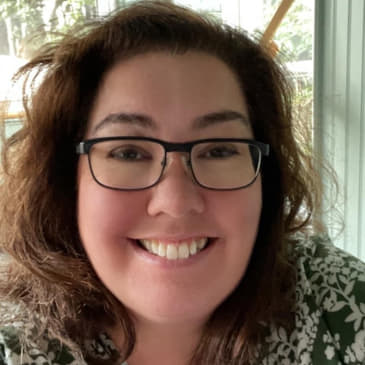
Cheryl Cowen has been a Licensed Practical Nurse for 25 years and currently a staff educator specializing in elderly care, supporting caregivers in understanding the roles and responsibilities as well as developing their unique contributions in the service of others. Additionally, Cheryl has a consulting business with a focus on supporting healthcare leaders and caregivers in developing their best practices in serving the elder community. Cheryl has been a personal caregiver for her parents who require continual support for ten years. Cheryl is a recently diagnosed Autistic person and is especially interested in lending her experiences to others who find themselves in caregiving roles unexpectedly or suddenly, who need guidance on how to best identify their own self-care needs to avoid burnout.
Please join me as I welcome Cheryl Cowen.
Philip King-Lowe
Cheryl Cowen, welcome to Today's Autistic Moment. It is a pleasure to have you on the show. So thank you for being here.
Cheryl Cowen
Thank you, Philip, for the opportunity to discuss this important topic with you. I appreciate being here.
Philip King-Lowe
Well, we're going to really talk about another important topic to close out our Summer of Self-Care Series. In the first one in July, we had Dr. Megan Anna Neff, who spoke about self-care managing our nervous system, and then we had Cheryl Jean Whittington talk about practicing and the power of the pause, and then we had Dr. Jessica Hickstead, who was here to talk about navigating trust. This last installment of the Summer of Self-Care Series for 2026, we are going to be talking about Self-Care: The Autistic Caregiver, and the first three shows for the Summer of Self- Care Series is important. And so, why are we having one show about Autistic caregivers? That might be a question that somebody asks, because when you're put into that place, whether voluntarily or not, whether something sudden or planned for; as an Autistic caregiver, it's going to push all of those buttons about managing your nervous system, trying to practice a pause, get a bit of a rest, or be able to breathe and refocus yourselves. And it's also going to really do a number on if you're trying to navigate trust, because we have a healthcare system that just is not trustworthy. We have lots of things going on, but as an Autistic caregiver, there are so many different things that can impact our lives, and so Cheryl Cowen is going to talk about being an Autistic caregiver, what that's like, and how to meet some of the challenges that can come from that. Cheryl, what important information can we introduce our audience to this topic of Self-Care: The Autistic Caregiver?
Cheryl Cowen
Well, I think the best place to start is to acknowledge, you know, that the role of any caregiver is a challenging one. Just as a foundational statement, right there. So, I mean, we have been understanding as a caregiver that where we're going to put someone else's needs before our own, and so that, as an Autistic person, then puts us at that really difficult intersection of caregiver and watching out for someone else's needs as well as our own. So self- care is so individualized, and so for us that identify as Autistic, we really need to craft extra caution in how we're going to set up how we care for another person, so we don't lose ourselves as the caregiver or as that Autistic person who needs to care for themselves. So, I think one of the most important things that we can think about is, as you mentioned already, some people choose to be a caregiver. I am professionally, I'm a nurse, so I'm a caregiver by profession, and I have extensive training in that. But also, I think most importantly, you pointed out that some people come upon being a caregiver unexpectedly. They're kind of thrust into that role, and that you don't prepare for, or someone hasn't prepared you for that. So I'd like to talk a little bit about some of the pitfalls about what may come up during that care giving experience, and one of the things we talk about in healthcare is caregiver burnout, which I believe many Autistic people hopefully already have a frame of reference for related to their own Autistic burnout tendencies. So they mirror each other, but much more carefully as an Autistic person, the caregiver burnout can exacerbate and accelerate the Autistic burnout. So, from a caregiver burnout standpoint, you know increased isolation if you're caring for a family member, increased emotional labor. These are some of the causes of a caregiver burnout, and what that burnout looks like, just from a quick overview level, is some fatigue emotionally and physically. You know, so maybe some irritability and hopelessness, resentment, some loss of interest in personal well-being, and all of those things said, we get into an Autistic burnout caused by a caregiver burnout, and now we're talking about increased demand on our sensory overload. Unexpected changes are happening, and then that exhaustion and mental and physical burnout just becomes so much more intense. You know, and then we risk loss of skills, regression, and all of those things that come along with it. So again, just to recap, we can see how like that Autistic caregiver it means managing a very unique intersection of sensory and emotional and physical demands that significantly increases our risk for that burnout. So the way that I like to set up caregiving. I mentioned as a professional, I'm a nurse, but I'm also a family caregiver to two elderly parents who are chronically ill. And one of the things that I have to think of ahead of time is how I set up routines. So that I can manage physical tasks and emotional tasks with some intentional breaks in between. I'll give you a personal example. I physically care for a mother who requires some personal care and grooming and bathing, and it's a quite a physical task to get accomplished. And so, what I tend to do is to build into my structure and routine. It's a specific day that I choose to do it. I give myself some space the day before or maybe the morning of to do setup, and then I go off and I do something for myself, something to care for myself. I have set up the system. I'm fortunate to live with my mom, so we share a personal space, a bathroom, and so to protect my own executive functioning and my own needs, I have set up so that her personal space also has my grooming tools and my self-care tools, so that I don't lose myself and lose my own personal care in putting her needs first. After such a physical task as bathing her, the physical exhaustion sets in. So I am very intentionally set up a schedule where I will do something less physically demanding for the time period after that shower. I won't immediately clean up and do laundry and wash down the shower and all that. I will sit and fold towels, or fold laundry, or fill pill boxes, or something like that. So I'm very intentional at looking at the tasks that need to be done, and then, without just going through the motions, making sure that I stop and do something that gives me a little bit of a break in between. So I would say that's the key takeaway. Number one is to kind of look at the bigger picture, ask for some support and help from others that may know the routine. If you're privileged to have someone help you, and break down those things so that there is kind of some peaks and valleys where you can build in the rest that you might not get if you don't think about it ahead of time. I was just going to say some of the other things to think ahead about if you're not been a caregiver before is what you may come up against is some of the sensory overloads, so noises, smells, sounds. You know, I what comes to mind to me is you know lights and things like that. So crafting the area where you're going to kind of work with your caregiving to support this person is again to look at those what might seem like little things, but dimming lights, overhead lights, and putting on lamps or music if it's helpful and supportive to you in the background. That you know tends to be a flow. I tend to play meditation music in the background when I need to do tasks, and it's that's something helpful to me personally. So again, I just want to emphasize thinking of the things that are supportive and helpful to you, and then matching those with those tasks to hopefully kind of lessen the burden of those sensory overloads.
Philip King-Lowe
Yeah, yeah, I can speak because about 10 12 years ago, I found myself having to care for my mother, and I remember how there was this immediate change. Everything was different. You know, this is something that I found when you're thrust into a caregiver situation, you get a rush of adrenaline to basically make sure that the needs of that individual are taken care of, and that can be extremely difficult. So it's important that when you find yourself in a caregiver situation, that as best as possible you set up for yourself a supportive network. Whether that be another adult who can, I'm sorry, another member of your family who may be able to kind of stand in once in a while, while you take a nap. It may necessarily be somebody who can look after that person if you need to go for a walk for a while. It may just be having somebody around you to be a good sounding board, so that when you are feeling overwhelmed, you can talk to somebody and just get it out of your system. I was fortunate to have someone in the doctor's office who helped me, you know, learn how to find the resources that my mother was going to need. Who was also there to hear me say things like, "I don't know how to deal with this system that's making it extra hard for my mom to get her medical insurance that she's going to need for living in an assisted living, and also just all these various things that she was going to need." And this person was just there to say, "Oh, I understand." And then she, this person, would give me a reference. You know, maybe look into this for her." You know, and then you know, when the time came that I had to really put my mother through hospice because she was going to die. I mean, that was one of those things that was just a tremendous amount of help for me. I do happen to believe that hospice workers cannot possibly be overappreciated. You know, I mean, the people that I worked with were invaluable. So, making sure that you set up some kind of support network is going to be really important. Also, it's going to be important for you to be sure you set some boundaries for yourself about, "hey, right now I'm going to do this for you, but I'm going to be doing this for a little while, and just do the very best you can." There's a lot of emotional pressure on you, either from the person you're caring for, or just you feel a lot of pressure upon yourself to make sure you do certain things right away, and you're going to have those moments where your executive functioning just isn't going to let you do it. And just emphasize if that is where you are, it's okay to be there. But again, you may you will want to have some kind of supportive network around you, in case you do find yourself. So, feel free to add to any of that, Cheryl.
Cheryl Cowen
I think that's such an incredibly important point to make. Diving in headfirst and figuring it all out is something definitely that resonated with me when you said that. You know, I'm gonna figure this out and I'm gonna fix it and lose yourself very quickly in that process, making someone else's life as quality as possible. And what it brought to mind was in the moments when you do have a quiet moment, and you're thinking about what if I had some support? What could they do? Because that's hard to come up with for any caregiver in the moment when someone says, "How can I be helpful?" or "What do you need?" Well, I, you know, I don't know what I need. I'm handling it. So what I try to think about is, in the quiet moments when we do think about, geez, these tasks that need to be done, which don't need to be done by us personally, let me write them down. I personally need to put things in notebooks so I don't forget. And one of the things, one of the systems I set up very early on in caring for my parents was I have a supportive family member who was willing when there was a like an acute or a crisis going on where everyone wanted to be updated and have like what's the latest happening here that was especially exhausting to me to try to keep everyone up to date, and they meant well, but it was just the worst. And so I had a family member who was willing to be the one point person where I would give them a periodic update if it was relevant, and they would disseminate that information, kind of like through a phone tree. And that person was kind of like my helped me with that boundary and was the bulldog in the sense, no, no, you come to me for information. Do not even reach out to say, hey, I'm thinking of you, because even that small message or text can be mentally exhausting to someone who's overthinking and saying, oh, should I respond, or how are they going to feel about me not responding? And so, my sister is my person who does that for me, and it's made an incredible difference in not feeling guilty about informing other people, which for me was a huge help. And also you mentioned Philip, the you know the professionals that you'll find in some of the clinics and offices in my area in the Northeast. We have community organizations such as aging groups and things like that where you can call, and you will often find someone who, if you just say this is new to me, it's a new experience. I've been tasked with this paperwork or this application, and I need someone to help me navigate this. And oftentimes, you'll find someone who will at least, if they can't help you themselves, direct you to someone who can. We've all been in situations where we just get in a loop, as you mentioned at the top here. We're in a system that is not designed to be supportive of anyone, and so myself being a professional caregiver and knowing a lot about this system still does not shield me from being on the phone in a conversation in this loop where I just feel like I'm not getting the help and the support and we're not moving things forward. I'm not getting the answers that I need, and so just knowing that as an Autistic person, if you feel like you're getting nowhere and you need to be a little bit more assertive and ask for the next person on the chain of command, you know, just very professionally saying, "I think there's more to this. I'd like to speak to someone and just and get a little bit further, and whether I need information or I need support or I need a resource that maybe that person you're speaking to is unaware of or not prepared enough, and if the instinct feels right that you need to push that, then I would certainly encourage people to do so. Sometimes I've actually had to just hang up, take a breath, do something else, and go back to it at another time and start over because it can be so frustrating. And we can sometimes take that on as a personal failure, like we're not understanding and they're not understanding me, but the system alone-I've navigated with a lot of elderly people, and it's just so frustrating that they don't understand the newest technology that's required to. So that's another piece is not to get into a spiral of frustration when the unfortunately the system is really designed that way. It's I sometimes I often hear people say I feel like it's designed so that we give up and don't push forward to get the answers that we need.
Philip King-Lowe
Yeah, yeah, no, I know exactly what you mean. I do not know about other states. I only know that here in Minnesota, we have what we call Disability Hub. It's ah, it's offered by the state of Minnesota, and it's a number that can be called if you're a disabled person. You can call that number, talk to someone with what's going on, and they will answer questions. If they cannot answer their question, especially if you're calling about an elderly need, there's also the you know the aging office that basically does the same kind of thing, but can advise you about aging issues. But that network is really, really helpful for things like how do I navigate my county's, you know, support systems? How do I, you know, who do I ask these questions to? And in some cases, here in Minnesota, the person at Disability Hub will actually get on the phone between me and somebody at the place where we're looking for, and that person will know to ask questions that I might not, and help me get to the answer I need. Now I know not every state is fortunate to have something like that, but if you do have something like that, you know, reach out to that source, and sometimes, as you said, if someone can't get you that resource, they may point you to someone who can. Now, I'm going to be honest and say that not everybody you reach out to is necessarily going to know how to interact with you as Autistic person. That can be the other layer that's just very like it is exhausting and it's it can really burn somebody out. But the thing is, is that you know as best as you can to keep reaching out for what you need to do, and sometimes you need you know I need about a day to kind of process what you've told me. So could I possibly call back? And you know, sometimes they'll say yes, and they'll remind you may get a completely different person on the other end, but it does work. One of the other things that I would point out is that even in those moments when you might stop for a little while, I when I was taking care of my mother, I would find myself stopping, and my brain would keep circling back to the things I've done for my mother, the things she might need, and if I wasn't careful, I would find myself just getting up and taking care of those things. Sometimes you just need to write them down and say you'll do this at this time, that at that time, and just set for yourself a schedule of any kind like that. I mean, it's a lot to take on, and it's a lot to take care of throughout a day or even a week, you know. And especially when you got to deal with the fact that your loved one that you're caring for is dying, let me tell you that is a very difficult thing to do. I mean, you have to navigate how you feel, and you have to navigate the people, and you know sometimes you're fortunate enough to have a really good support system. And I will say that hospice people, they're trained to be sympathetic to you at that point in time. They're not going to tell you ought to be doing this. They're going to give advice, and it you know you'll have to really you know work with them or tell them, hey, this isn't what I need right now. They can be really good at just letting you know, okay, that's fine. We don't have to do that. You know, that's one of those things that I found. But boy, it can really be stressful. And let me just say, if you do find yourself being stressed out, if you do find yourself burned out or something like that, it doesn't mean that you've done anything wrong. What it means is that the tasks in front of you are so demanding that you just feel like I need some me time, and it can be challenging to find that mean time when you got when you got somebody who's all over you for you know they want this right now. They're not going to wait. You better do this right now because whatever. But sometimes you do have to set a boundary. You say, "I will get this for you at 1 o'clock. It's now 12 noon. I'm taking a lunch break, and I'll be back soon. You really have to do things like that, and like I say, sometimes it's not easy. So give your thoughts to that, Cheryl, if you like.
Cheryl Cowen
Absolutely, another very valid, excellent point. One of the things that I definitely want to emphasize is that we need to establish very clear transitions mentally and physically about when we are a caregiver to that person and when it's our time again. So, to just add to all that you the suggestions you just made, setting up a practice which kind of indicates this is now I'm transitioning from you know being the caregiver of mom or whoever it is. For me personally, I will use a very specific meditation. I will go to a very specific space in my home. I may accompany that with a cup of tea to say this is the end of the evening. It's now Cheryl time instead of very much what you said, going to another room and starting my own tasks, but then revisiting all of the things that I could go get done right now that I didn't do, and then just perseverating on that, and again backtracking. Some things that I've used in the past too, or if it's you know available or something that resonates, is I'll do some positive affirmations where I'll acknowledge, you know, you've done everything you can today, Cheryl. Talk to myself in the third person and say it's your time. “You know, you've cared for her today. You did a great job. You've it's this is this is the stop point for today, and we'll pick it up again tomorrow.” And just verbally saying it out loud to myself is giving myself permission to then move on to my own tasks and my own self-care. So I would say that is probably the most important self-care boundary that you can set is that those transitions and knowing, and again, we get pulled back unexpectedly for things. But if we have this setup of knowing when these transitions can happen, and like you said, carving out a lunch period where you physically take yourself away from the situation for a bit, and as any caregiver, you know, giving a reasonable, I'll be back in an hour, and I will do that at that time. Certainly, they as people who need to be cared for have a sense of urgency. That's all they've got right then and there is you doing those things. So, but when we're consistent as we are to go back and make sure that those things are done, then that should ease their hurriedness about things that can make us feel a little bit guilty and get pulled back in.
Philip King-Lowe
Yeah, yeah. I found myself having to tell myself, or even have a family member telling me that you are doing everything you personally can, humanly can, to do the best caregiving for your loved one. You know, after my mother died, my sister was constantly telling me that you did everything you humanly could for this person, and you did it well. I mean, I remember after my mother died, I went for my first doctor's appointment, and I was sitting with someone who really helped me with referrals and that kind of thing, and she said to me, "You were you're a good son to have taken care of her like you were," and I have to say, it started to make me cry. In fact, I was crying in that appointment because it was the first time I had been in that place since the last appointment with my mother. So I was really having a hard time, you know, grieving that. And they were very, very kind about it. So, but yeah, I mean, like I say, you do the best you can, and sometimes, wow, it can really be stressful, you know. Especially if you've got somebody who's got memory care issues, which my mother had some memory care issues. It was very taxing, and every now and then, I just had to say, "Mom, I can't do this for you right now. I will take care of it, and but you know she could be very insistent, so we did the best we could. But yeah, you need that reminder. You're doing everything you humanly can, short of turning yourself into a mechanical somebody. You know what I mean, you know. But it's just one of those things where you you've done you're doing everything you humanly can for that person, and there's going to be times when something they want is just something you just can't do.
Cheryl Cowen
So I acknowledge that wholeheartedly. Again, being dually being a professional caregiver, where you know there's a there's an end to the shift, and someone picks up the responsibility, and then being this unique situation where you are it, you're everything, and the letdown that we feel we're giving them because we can't meet every need in that moment, and then you know, and resonates with me with your emotional connection to it, and I and I so grateful that you had the experience of hospice, not an area of specialty myself, but I do work alongside hospice caregivers, and for anyone listening that has not had an experience with hospice, Philip mentioned earlier, they have just a plethora of support-not just a nurse at the bedside or maybe a nurse nurse's aide, but they have clergy and they have social workers and they have grief counselors and oftentimes hospice organizations will follow you, the caregiver or the family member for up to a year plus a month, at least the hospices that I've had experience with, and have support groups and know how that process of grief can go on for a very long time. And so acknowledging that that emotional piece of it comes into it, and you don't have space away from that person if you're especially if you're living with them or doing everything for them is incredibly emotional, and I'm so grateful for your experience, Philip. That that someone recognized that and told you those things. As I often hear myself or other caregivers, especially with elders and elders with cognitive issues like a dementia or other chronic illnesses, people will often say, "Don't know how you do everything you do, and the answer the answer to that is, "Well, I don't know how I'm doing it either," because every day is quite a struggle. And I, and again, with my own mindset, feeling like I know 1000 things in the back of my mind I should be doing in addition to that, it never really feels like enough, and that's where I think we can we can really kind of lose ourselves is because it's not done, which we like to check the boxes. We like to know that everything's in order and that it's correct and done to the best that it can be for our loved one, so those supports definitely are paramount.
Coming up in segment three, Cheryl and I will talk about who you can reach out to who is Autistic who can support you when you encounter unintentional harm by well-meaning people. We will talk about how our uniqueness as Autistic individuals can be our strength to do what we have to in a caregiver situation, such as being patient listeners and not rushing social interactions. All of this and more after the next commercial break.
♫ Segment Ending Music ♫
Commercial Break II
♫ Looking Forward Life Coaching Ad ♫
♫ Actually Autistic Coach Collective Ad ♫
TAM Support Ad
Today’s Autistic Moment is a podcast where Autistic Adults from all walks of life are talking to each other. Each guest and conversation is with an Autistic Adult sharing what many Autistic Adults are feeling in this moment. Today’s Autistic Moment is telling Autistic Adults that you are perfect just as you are. You don’t need to change. You don’t need to be cured. All Autistic Adults really need is to hear how others like us are thriving in our lives.
Today’s Autistic Moment needs your contributions to bring you the conversations you are hearing on the podcast.
Support Today’s Autistic Moment in any of the following ways.
· Make a one-time donation through the Ko-fi icon when you tap on Support Today's Autistic Moment on todaysautisticmoment.com
· Subscribe monthly via Patreon.
· Purchase items from Today’s Autistic Moment’s Logo Shop.
· Share Today’s Autistic Moment with your family, friends, coworkers and others through social media and/or by telling others about us.
· If you own a business and/or work with an organization that supports Autistic intersectional individuals by encouraging them to live with pride in who they are, advertising opportunities to support Today’s Autistic Moment and your business or organization are available. Please send an email to todaysautisticmoment@gmail.com for more information.
Donations are not tax-deductible but help keep Today’s Autistic Moment as a safe space.
Thank you for supporting Today’s Autistic Moment.
♫Segment Beginning Music♫
Segment 3
Welcome back. Cheryl and I had a very long conversation during segment 2 about Autistics doing their own self-care when they find themselves as a caregiver for someone else. We talked about how Autistics need encouragement to know that they are doing everything humanly possible to take care of their loved ones. We spoke about how the changes in routine, sensory needs, and boundaries are so important so they don’t get burned out. Now Cheryl and I are going to talk about the strengths that Autistics have to thrive as caregivers and how to find their way through the challenges.
Philip King-Lowe
Both Cheryl and I know our great friend Lisa Morgan, who often talks about unintentional harm from well-meaning people. That's like one of her themes. I'd like to be able to tell you that you won't, if you're Autistic, you won't get some unintentional harm. But unfortunately, I can't tell you that because you will, but you know that's one of those things again where you just need the people to support you on the other end. And let me add that if you find yourself in something like that, I do know that our dear friend Lisa Morgan and the staff there at Autism Crisis Support will definitely be a good a good sounding board for you, but you know again, it's just going to be one of those things where you're going to talk to some people, and you know if you tell them you're in stress, they might not believe you, you know that sort of thing. But yeah, you are going to face those moments when someone's gonna say something that's just not gonna make sense, and the more you want direct answers, the more generalized they're gonna be. And believe me, I hate I hate when people do that. It's an Autistic thing. But yeah, I mean it's just one of those things where some people just do not understand, and you know like I say, those things are not going to fix themselves in an instant.
Cheryl Cowen
Very much so, and again, being at this intersection of being a professional caregiver, so seeing this as a professional at the bedside, I have the unique experience of being a staff educator. I work in long-term care, so I have the ability to educate and support caregivers that are going to be at the bedside, supporting residents themselves, patients, and family members. And a lot of the conversations, it's a, it's very much a passion of mine, is to bridge the gap in communication. When healthcare professionals, unfortunately, are delivering information, they're usually delivering it very just matter of fact. And for us to presume, on the other side, if we're in in the role of a family or the patient ourselves to presume that they know everything about this topic, well they might, but they don't know us personally or our loved one the way that we know them, and so our input is very valuable and our ability to understand how that information you're giving me from the healthcare provider to the loved one or the caregiver. I want to ensure that we as Autistic individuals feel confident in continuing to ask for clarification. You know, and whether we feel comfortable disclosing why we need clarification or not, that's up to us as individuals. But saying I need to further understand how this is going to work, what is the most important thing for me to do first? I have a notebook. I want to write it down so I don't forget. And just being that. And again, when you come up against someone who seems hurried or is not giving you the information that you need, then what I would suggest is, you know, when will you have time, or when will someone have five minutes to sit with me one on one, away from all of this distraction and the noises, so that I can understand. Should I send an email? Should I leave you a voicemail? How can we communicate? And so I'm, I'm trying my, from my professional standpoint, to have people fully understand that the delivery of information is a task, but the connection to the people, and that this goes into what you spoke about earlier, is the trust. So when someone has validated that they have indeed heard me, and maybe actually even say, "I don't know the answer to that, but that's a great question. We should figure it out together.” That right there will build trust for me. I try to make it very obvious when I am in the caregiver role with my parents at another healthcare provider. I don't often disclose that I'm a nurse or I'm in healthcare because I want the delivery to be as a family member and a and a caregiver, I'm in a different role at that point. I may understand all of the jargon, but I want you to connect with me not as a professional, but as a person experiencing this from an emotional standpoint. And I think that's what I also make the very point to professional caregivers is that we do this 24/7 around the clock as a job. So a lot of what we do is just that it's what we do every day, and we have the same a lot of the similar experiences every day. Whereas you come across a patient or a family, this is their first experience. This is the first time your mother is at end of life. You know, this is not something you've ever experienced before. I may have supported 1000s of people in that process, but for you, it's new, and for you, this is the most important moment in time. So
Philip King-Lowe
Where do you see Autistics thriving and not just surviving as caregivers?
Cheryl Cowen
I love this question. I was so excited to answer this question because I, again, believe, even though I'm late diagnosed, newly diagnosed in my 50s, having been a professional caregiver my whole life, some of our characteristics that kind of make us unique as an Autistic individual. I believe, personally and professionally, make us the best caregivers, and that is attributed to things like our sensory awareness. You know, where just the subtle changes in environment that might affect the patient, so anticipating those needs of it's too loud in here. Maybe the person has progressed to the point where they're no longer verbal, but I'm going to notice that it's too cold in here, or it's too loud, or the lights are too bright, the noises. We're just natural advocates for those types of things as well, and so also with that sensory awareness, noticing changes in that patient or in that loved one as well, and just knowing it's different for them. And you might not know exactly what that means for the illness, but you know that it's significant. The fact that some of us, you know, really deep dive into that specialized knowledge, we're gonna we're gonna figure out and learn everything about this condition and how best we want to know how best can we care for them, how can we support it holistically? And again, being an advocate, we are those people that are going to ask those providers for clarification. That maybe other people just gloss over or don't ask, but we are going to get to the root of things, and maybe we're going to force them to start thinking a different way because maybe there is a different way that they haven't done yet. I think also that ability for some of us in high crisis to be calm. So, you know, when there's an emergency or something that's very acutely going on, a crisis or an emergency, we can think logically of what the steps are that we need to do to get through this time, and emotionally, maybe we'll process it after the fact. So we tend to kind of take over in those kinds of situations where other people might get hung up in their emotions in that moment and freeze. We can keep a clear head during an event that's going on. And also, we're incredibly patient listeners. You know, we don't rush social interactions, so the patient themselves, the family member themselves, can be heard.
Philip King-Lowe
I'd like to share a more personal experience I had while taking care of my mother that was very difficult, and this occurred five six days before she died. The assisted living facility where my mother was became very difficult because my mother insisted she did not want to go to any emergency rooms. She did not want any more, you know, medications or anything like that. She just wanted to go. And the assisted living facility was not willing to honor her wishes. They actually were going to force me to call an ambulance to take her to an emergency room to have her committed to you know 24/7 nursing care. And I remember when that happened. I contacted the social worker for my mother's hospice situation, and she said they can't do that. That's going against your mother's your mother's wishes. And boy, was she a great help at that moment. The social worker, because she got on the phone with several people and said, "You cannot do this because this is not what she wants. And we finally had to move her to a hospice location because of how difficult it was getting. And not only were they having difficulties talking to the owners and administrators of the assisted living facility. We were also having it difficult to tell my mother that unfortunately we had to move her, and so that was one of those points where I had to reach in and just totally put myself aside, but talk with my mother very openly, and I said, "Do you remember when we were growing up that you always said that when your time came, you did not want to be on any respirators, you did not want to be, you know, kept going. You just wanted to go. Well, unfortunately, this facility is not going to respect that wish, so we need to put you in another location that will honor that wish of yours." So that was actually the thing that finally convinced her. Okay, move me, you know. But that was a very difficult circumstance, and sometimes you just might wind up in that. Sometimes the administrators are only interested in their money and protecting their own, you know? But you know, I mean, we really had to had to do some very fancy, you know, for lack of a better word, fancy footwork to basically get her to a place that would honor her wishes, and it turned out to be the best thing we did because the hospice care, as I said, was way more sympathetic and way more understanding than the folks at that assisted living facility. And now that I think back to that moment, it was my Autistic memory-the memory that remembers everything, literally-to finally tell my mother, "Do you remember when this is what you said to us?” And then I was able to calmly convince her we needed to put her somewhere where her honor, her wishes, could be honored? So that's a personal story coming from me, and boy, you know, I really had some hard times that week. I was like, I really don't want my mother to go, but that's what she wants. That those are moments when you really do have to do some hard thinking. I'd like to tell you it's easy, but it's not. And you ultimately have to make the decision to do what they want in a situation like that. So that's a personal story of my own. Go ahead and talk, talk, Cheryl.
Cheryl Cowen
That story just epitomizes all of the reasons why, as an Autistic individual, we're such great caregivers. To put all of that together in that moment, to know to reach out to someone who had been supportive, and to have that recall of why this would make sense to your mom at this most you know pivotal moment at the end of her life, where you wanted her to be comfortable and supported in you as well, and keeping calm in that crisis-that's a crisis situation. I mean, someone doesn't typically want to. And having listened to her, and again, her comfort came first, and her safety and her wishes, which is all we can do, right? As advocates, is we in the professional, from the professional side here, I and as a personal caregiver, I have always tried to, because I've seen these types of situations a lot in my career. Tried to encourage families. It's such a difficult conversation, but fortunately, your mom had the wherewithal to share with you earlier on in life, what she would and would not want, whatever sparked that conversation, thank goodness for it. And we need to have more of those conversations so that, especially ourselves as Autistic caregivers, don't end up ruminating on did we make the right decision. If we have the information ahead of time, you know. I personally have had those conversations with both my parents, and I will very confidently say. And there are mechanisms which you can help them document what their wishes are too. But, but more so to note personally and internally, I am doing what my loved one would want in this situation, and I can feel good in knowing that I've made that happen. However, it needed to. So I applaud you for being able to do that in such difficult circumstances.
Philip King-Lowe
Actually, you just said something in regard to this that I want us to really strongly emphasize with our audience. While the person that you let's say you're not caring for that person in the caregiver role yet, as much as possible, you do want to have those conversations before you arrive there, because let me tell you, when the moment finally gets there, you don't have any time, any mental space to say, "Oh, what would you like me to do?" I tell you, you know it's like one of those things where oh boy it's like all you all you can really think of is just making sure you take care of what this person's needs are. So if you happen to be in a family where you've got brothers and sisters and you guys can talk, do it do it while you can, and just make sure you know who's going to do what and or you know, just be aware of things like that because, like I say, I remember being thrust into that moment, and I said, "Oh boy, what am I gonna do?" And that sort of thing. So just, just to your benefit, have those conversations early, and just make sure you write things down or put things in the right memory stock or whatever you do, but yeah, it's very important to have those conversations earlier. You know, I mean, after my mother was put in independent living, my husband Jason and I went out for breakfast with his parents, and it was hard to do it. But I did say to him, my husband, I said, "let me tell you something. You and your sisters need to have a conversation about what you're going to do if this when this happens to them," you know. And I said, and then I realized what I said. I said, "I'm sorry, I didn't mean to embarrass you. They said, "No, I'm glad you said it.” You know, it's like one of those things where, you know, they knew exactly what I meant.
Cheryl Cowen
I can't stress enough. Thank you for bringing that the attention to that that it deserves because I can't stress enough. Again, how many families I have seen over the years that never had the conversation that it was, and it might be a cultural issue. It might, you know, the person you're caregiving for might have been, you know, resistant to it over the years. I brought it up every year. I hosted Thanksgiving, so every year I brought it up and handed out the. We have a form that's called the five wishes, and just have these conversations. And some people feel like it's taboo that you're jinxing something, but I like to be very clear because it was very eye opening to some people what the versions of what end of life people were imagining, like oh, I never thought that that's how you would think about how you want the end of your life to go, and those decisions that you would make, and knowing in our state, you know, when you appoint someone as your proxy, when you can no longer speak for yourself, ensuring that that person is going to emotionally be able to carry out your wishes because I've seen so many families that don't have the conversation that you just said, Philip is so important. Please let everyone understand and know, mom or dad has appointed this, you know, person because they are going to be able to make the decisions that I've had, my sister and I split those responsibilities, and we each have a closer relationship with one parent than the other. So we've kind of flipped who's first as a proxy and who's not, so that we know our emotional attachment is not going to muddy the decisions we have to make. We're just anticipating that. What if? So yeah, you can't have enough conversations with people about just until it becomes comfortable enough that you know these are the wishes. Because I've seen all too often at the bedside at end of life, what ends up happening is not the honoring of the family member, maybe they're on hospice, but it's the it's the discourse between family members. That's not what mom would have wanted, or this is what you know. I think we should do, and it becomes about everyone else and not about the person who should be honored in that moment for their wishes. Which again, going back to your personal story, really is the most important piece. You know, give them what they wanted.
Philip King-Lowe
Coming up after the final commercial break Cheryl will share some resources for you to look for and we will talk about grief for the caregiver. Today’s Autistic Community Bulletin Board will follow.
♫ Segment Ending Music ♫
Commercial Break III
TAM Autistic Consulting Services Ad
TAM Autistic Consultation Services is an opportunity for Autistic Adults to meet with me to get some information about Autism, the Autistic community and find resources that are helpful. Being Autistic myself, I understand what it is like to suddenly find yourself in a place where you need to talk to someone with your shared experience to navigate a world that was not made for Autistic individuals.
TAM Autistic Consulting Services are not therapy or legal advice.
Go to todaysautisticmoment.com and read about TAM Autistic Consulting Services. If interested, please fill out the intake form and make an appointment so we can begin working together.
♫ ITI Assistive Technology Ad ♫
Future Shows
On September 13th, Dr. Angela Kingdon from the Autistic Culture Podcast will be my guest for The Thriving Autistic Culture. Dr. Angela will emphasize the importance of understanding the Autistic culture which has 10 pillars, including bottom-up processing and justice sensitivity. We will mention the contributions of many Autistic individuals who have impacted history and built upon the culture that is driven by diversity.
Remember to visit the Episode Schedule 2026 Page on todaysautisticmoment.com for details and updates.
Thank you for listening to Today’s Autistic Moment.
♫Segment Beginning Music♫
Segment 4
Philip King-Lowe
Cheryl, do you have any recommendations for resources that might be very helpful for Autistics who are caregivers.
Cheryl Cowen
Sure, as we can probably imagine, there when you look for resources on this very specific topic, you can find a lot of resources about caregivers and caregiver burnout, but not very specifically an Autistic person who is the caregiver. Even if you search in that manner, you will end up with resources that are a caregiver caring for someone who is Autistic. There is a nonprofit called the National Alliance for Caregiving. It's a they're dedicated to family caregiving, advocacy, health and wellness. They do a lot of research and policy, and trying to change the narrative for caregivers. They are. They have a campaign right now. It's called Caregiving Portraits, where you can share your story. There are stories of very diversified cultures and people of color, and I intend on putting my story in there at some point. I've put it on a to-do list to kind of bring some awareness at that national level that we are a population that needs to be considered in how we receive resources as caregivers and being Autistic people. Another resource I found which you mentioned Lisa Morgan earlier, but autismandgrief.org is a great resource. You know, we talked a lot today about hospice and end of life, and you know, you may not be caring for someone who's in that stage of life right now, but I think an important conversation is also to consider grief it's an ongoing process while someone is still alive, but they're not the person you once knew them to be. They're no longer your caregiver. If it's a parent that was someone that you went to and was your support system, and now the roles have flipped, it can be a very long, unfortunate process of grieving something that once was.
Philip King-Lowe
Yeah, in fact, I have often pointed out that that is probably a grieving process for the caregiver that they just may never have thought about. Because I can tell you, like I say, from caring for my mother, that the thing that was so very difficult is that mother was already leaving, even though she hadn't left. You know, I mean, that I knew for you know, for example, one of the signs that I knew that something was different was when I went back home to the family home where we grew up, and I saw, looked around, and I saw, oh my God! I don't. My mother could have easily been Autistic and had OCD because that woman kept that house spotlessly clean for the longest time, and I saw spiderwebs hanging from the ceiling, my mother just never would have tolerated that, you know. So, I mean, some of that, yeah. Later on, I understood that was kind of the beginning of some real changes for mother, you know. So, so as you begin to realize things like that, you can find yourself in that space. Oh my word, that's not mom anymore, you know, and that's like one of the first parts. It's like, oh my God, I'm caring for this woman, and I don't even remember. I don't even know who she is anymore. It can that can very difficult part of caregiving and taking you through the grief process you may be experiencing, and you know we certainly don't want to forget to mention the Autistic caregivers who wind up caring for their spouses at younger ages. I've known my people like in that kind of a role that is very difficult to be in, and I think I think just we're saying that you know the advice that we're giving for others you can apply it to your situation too. Cheryl has given you some good resources, and Cheryl's going to pass along a few more to me, and I'm going to make sure that you get access to them. So, Cheryl Cowen, thank you so much for being with us on Today's Autistic Moment to have this outstanding conversations. And once again, if you have any questions, I'm sure if you reach out to Cheryl, she will be happy to you know give you some advice or resources. Cheryl, how can someone reach out to you?
Cheryl Cowen
I actually have a website, and I think you can probably link it in the notes. But it is ltcnursingconsultants.com. I can be reached there. You can email me there, connect, send me a message there, and that would be the best way to reach me directly for any questions or thoughts. And I not built in yet, but I think I'm going to put up probably some frequently asked questions about this topic on the website and add that in.
Philip King-Lowe
Yeah. Once again, thank you, Cheryl, for being with us today, and what a great conversation. So I'm sure we will be talking to you again soon.
Transcribed by https://otter.ai
Sign up for a subscription to Ad Free Interviews on todaysautisticmoment.com. The subscription is only $12.00 a month or $144.00 for a whole year. Once you buy the subscription, you can click on any show where you see the logo for Today’s Autistic Moment Ad Free Interviews to hear only the interview without interruption, segmentation and music. You can listen to all Ad Free Interviews going back to July 2025 and all upcoming shows.
Today’s Autistic Community Bulletin Board
All these events and many others such as sensory friendly concerts, art activities and museum information links are available on
todaysautisticmoment.com/bulletinboard.
The Adult Coffee Club for Autistic Adults in Minnesota are held on the second Tuesday of every month (weather permitting) at Dogwood Coffee located at 2700 University Ave W. Suite 100 in St. Paul, Minnesota. The Zip Code for your GPS is 55114. The Adult Coffee Clubs will begin at 3:00pm to 5:00pm on September 8th. October 13th. November 10th. December 8th.
Understanding Autism virtual classes are offered by The Autism Society of Minnesota. The next classes will be on September 14th, 6-7pm. October 12th, 10-11am. November 9th, 12-1pm. December 14th, 6-7pm.
On September 10th, beginning at 9-11:30am, Abbie Wells-Herzog will present a workshop at The Autism Society of Minnesota entitled A Realist’s Guide to Employment Supports.
Join the fun at AuSM’s 9th annual Jigsaw Puzzle Competition! Held on October 3rd, beginning at 8:30am to 3:30pm in the iconic Huntington Bank Rotunda at the Mall of America or online on Zoom. The Mall of America is located at 60 E. Broadway, Bloomington, MN 55425.
AuSM is accepting applications for speakers now through November 6th for the Annual Minnesota Autism Conference in 2027. They are seeking speakers for subjects like AAC and Communication. Ableism. Aging. AuDHD. Current climate for disability issues. Dating. Executive Functioning. Guardianship. Grief. Gender. LGBTQIA, and more.
Go to ausm.org to learn more about these and other social and recreational programs, educational events, counseling services and support groups at The Autism Society of Minnesota.
MNeurodivergent is a social club rooted in a vision of bringing Neurodivergent Minnesotans together to build meaningful connections. Its core principle is to foster an environment where all are treated with dignity and respect regardless of ability or preferences. Go to their website mneurodivergent.org for more information, become a member, volunteer and attend their events.
Register today for MICC’s Annual Independence 5K Run/1-Mile Walk on October 10th, 2026, at Donaldson Park in Richfield! This is more than just a race—it’s a powerful community gathering to support MICC’s mission to educate and guide Autistic and Neurodivergent adults in creating and sustaining the lives they want to live. From competitive runners to casual walkers, enthusiastic cheerleaders to dedicated volunteers, everyone plays a vital part in this family friendly event. Whether you’re racing for a personal best or cheering from the sidelines, your involvement helps amplify Autistic and Neurodivergent voices, foster acceptance, and support lifelong independence. Bring your friends and family, lace up your sneakers, and be part of this most impactful MICC Independence 5K yet! Learn more and register at micc.org/events.
Be sure to check out the events at Queermunity. Events include finding out about local LGBTQIA+ resources for those who have relocated to the Twin Cities on the 4th Wednesday of every month. Trans Health Insurance Enrollment. Fruit Salad Queer Open Mic on the fourth Thursday of every month. Crafting and Game Night on Fridays at 4pm to 8pm. Beats and Breath Yoga Based Movement Class every Saturday at 11am. Go to their website at queermunitymn.com to learn more about Queermunity and their many events.
Today’s Autistic Moment is here because of the generosity of supporters and sponsors. Go to todaysautisticmoment.com and select Support Today’s Autistic Moment to donate.
If you have questions about Today’s Autistic Moment, please send an email to todaysautisticmoment@gmail.com.
Thank you for listening to Today’s Autistic Moment: A Podcast for Autistic Adults by An Autistic Adult.
May you have an Autistically Amazing day.
♫ Closing Background Music with credits ♫
All of the guests meet with me on Zoom to record the interviews. The interview transcripts are provided by Otter. The podcast is prepared and edited on WavePad Masters Edition by NCH Software. The podcast is published by Spotify for Podcasters. The music that you hear is licensed to Today’s Autistic Moment by premiumbeat.com
