Go to todaysautisticmoment.com for the transcripts.
One therapy option for Autistics is Occupational Therapy. Lizzi Duffy will talk about the work she does as an Occupational Therapist. Lizzi and her coworkers help Autistics with tasks like brushing their teeth, managing executive functioning, and finding community. Lizzi and Philip will talk about their work that helps Autistics advocate for themselves and more.
Dyslexia Accessible Transcript
Thriving Autistic Occupational Therapy
Spanish Accessible Transcript
Terapia ocupacional para el desarrollo pleno del autismo
German Accessible Transcript
Erfolgreiche Ergotherapie für Autisten
French Accessible Transcript
Ergothérapie pour personnes autistes épanouies
Chinese Accessible Transcript
Scroll below to follow the transcript from here.
vvvvvvvvvvv
Transcript
Thriving Autistic Occupational Therapy
November 29th, 2026
Episode Introduction & Preview
Welcome everyone to Today’s Autistic Moment, a Podcast for Autistic Adults by An Autistic Adult. My name is Philip King-Lowe, my pronouns are he/him. I am the owner, producer and host, and I am an Autistic Adult. Thank you so very much for joining us today.
One therapy option for Autistics is Occupational Therapy. Lizzi Duffy will talk about the work she does as an Occupational Therapist. Lizzi and her coworkers help Autistics with tasks like brushing their teeth, managing executive functioning, and finding community. Lizzi and I will talk about their work that helps Autistics advocate for themselves and more.
Come join us for the episode Thriving Autistic Occupational Therapy on Today’s Autistic Moment.
♫♫ Opening Theme Music ♫♫
Segment 1
This first segment of Today’s Autistic Moment is sponsored by The Autism Society of Minnesota, known as AuSM throughout Minnesota’s Autism Community. As Minnesota’s First Autism Resource for more than 50 years, AuSM serves the whole state, the whole spectrum for the whole life. Visit AuSM at ausm.org.
Visit todaysautisticmoment.com to listen to over 142 episodes released since 2021.
Check out the Episode Schedule 2026 to read about upcoming shows, topics, guests, and program descriptions for season 6.
On the website, you can:
· Learn more about Today’s Autistic Moment.
· Read the guest bios pages.
· Explore the Adult Autism Resources Links Page.
· Visit the Autistic Community Bulletin Board.
· Read the blog.
· Find out about TAM Autistic Consulting Services.
· Sign up for a subscription to get Ad Free Interviews.
· Support Today’s Autistic Moment with a donation.
Every episode, including this one, has a transcript. The transcripts are sponsored by Minnesota Independence College & Community.
You can also read the transcripts right on the website with each episode or download printable versions to help you save ink.
The transcripts have hyperlinks in them for names, organizations and other resources named throughout the show.
The transcripts use a dyslexia-friendly font are available in English, Spanish, German, French, and Chinese Simplified.
Want more interactions with Today’s Autistic Moment? Follow Today’s Autistic Moment on Facebook including our Community Group Page, LinkedIn, BlueSky, Instagram and Threads. Also follow us on the YouTube Channel @todaysautisticmoment to listen to new episodes of Today’s Autistic Moment and watch Autistic Voices Roundtable Discussions.
After this first commercial break Lizzi Duffy will talk about Thriving Autistic Occupational Therapy.
♫ Segment Ending Music ♫
Commercial Break I
Podcast Apps
Today’s Autistic Moment can be downloaded and heard on most podcast apps including Apple. Google Play. Breaker. Castbox. Overcast. iHeartRadio. Pocket Casts. RadioPublic. Spotify. TuneIn. Pandora. Amazon Music. Audible. Podcast Addict. Podcast Chaser. If you are looking for the transcripts, go to todaysautisticmoment.com, click on the episode you want to listen to and follow the directions to find the transcripts.
Thank you for listening to Today’s Autistic Moment.
♫ ITI Assistive Technology Ad ♫
♫Best Care Ad♫
♫MICC Ad 2♫
♫Segment Beginning Music♫
Segment 2
Philip King-Lowe
Welcome back.
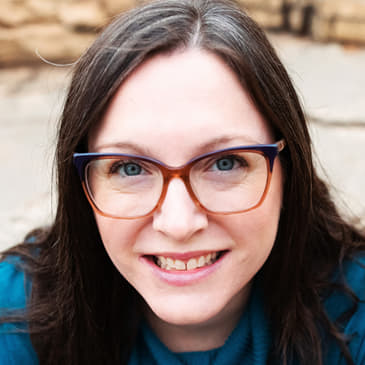
Lizzi is an AuDHD (Autistic and ADHD) Occupational Therapist since 2008. Lizzi is President of MnNEAT, and is co-owner at Roots and Wings Therapeutic Services, LLC. Lizzi serves Neurodivergent people in their homes and in the community across the lifespan. Lizzi is passionate about inclusion, authenticity, and accessibility for everyone. Lizzi also currently serves on the Autistic Mentorship Program Community Access Board.
Please join me as we welcome Lizzi Duffy.
Philip King-Lowe
Lizzi Duffy, welcome to Today's Autistic Moment. Thank you for taking time out of your busy schedule to be with us. So welcome. It's glad to have you here.
Lizzi Duffy, MS, OTR/L (she/her)
Yeah, thank you so much for having me.
Philip King-Lowe
Lizzy Duffy, we are going to talk together about a topic that I have wanted to discuss on Today's Autistic Moment for a long time, because I do feel like with the therapies that are out there to help Autistic individuals, there is not enough conversations about how occupational therapy can really be helpful. We know that they search out all kinds of therapies, some that we're not mentioning here because we want to focus on occupational therapy for Autistic people, and this is what we want to focus on. And I'm so glad we're having this conversation.
Lizzi Duffy
Yeah, I am too. A little background on me is that I am an Autistic occupational therapist, and I was late diagnosed when I was 39, and I've been an occupational therapist since 2008, and I think many people haven't even heard of occupational therapy, or they may have a like a really little understanding of what occupational therapy is, and especially when it comes around the idea of occupational therapy for adults. I think a lot of the focus is on like rehabilitation. So, if you have a shoulder injury or you know have a stroke or something like that, that's what we picture for occupational therapy. But you know, we occupational therapists work in all sorts of different settings, such as schools, hospitals, clinics, and in the community. And we work with people of all ages. And I think a lot of our audience are probably more familiar with pediatric occupational therapy for Autistics because of talking about sensory processing and things of that nature, and then also a lot of Autistic kiddos will have occupational therapy in schools, but I'd like to describe occupational therapy in a broader sense. And the way I like to describe it is that we work with our clients to be able to do the things they need and want to do with as much autonomy, ease, and comfort as possible, and taking it a step further as a neurodiversity-affirming occupational therapist, we will generally use a strength-based approach, and this means that we work with your strengths to help you do the things that you need and want to do. We are not going to try to change who you are, or try to make you look more Neuronormative, or to fit in more with our society's social expectations. So, we aren't going to try to stop you from stimming, for example, we would work with how your brain learns best, how you communicate naturally, and how your body uses sensory information. And while we take a strength-based approach, we also identify barriers and challenges that make things that you need or want to do challenging. So, we work with you to change the environment and the activity to better match your needs. We also work to help you find services and supports and tools like assistive technology that can make these activities better match your needs, and so that feels really like vague. I think so. I want to give an example, and it's an example that I've come across for a lot of Autistic people, both kids and adults. It doesn't matter what age. Many of us have difficulty brushing our teeth, and for many of us, the sensory aspects of brushing our teeth may feel overwhelming. I know it does for me. We also may have difficulty remembering to brush our teeth, or maybe brushing our teeth thoroughly is a challenge. So, like two minutes of brushing is just way too challenging. Or maybe brushing our teeth in the morning feels easier than brushing our teeth in the evening, or vice versa. Also, brushing our teeth may feel boring, or maybe it feels too complicated. Maybe there's too many steps, too many choices you have to make. Sometimes we have chronic pain, fatigue, hypermobility, and brushing our teeth could actually be painful or overly tiring. And so, when we're thinking about brushing our teeth and making it easier and more comfortable for us, I like to really think about four things. And if we think about these four things and how we could address those areas, we can often come up with solutions that help us do brushing our teeth or anything with more autonomy, comfort, and ease. So, the first thing I like to think about is well, I like to think about the person, their environment, the activity itself and the expectations around the activity or ourselves. So, when we think about tooth brushing, we know that there are a lot of sensory aspects for tooth brushing. So, the way the toothbrush feels in our mouth, maybe the foaminess of the toothpaste. Sometimes I gag really easily if I go too far back in my mouth. Sometimes the taste of the toothpaste is really overwhelming.
Lizzi Duffy
Let's say the person we're working with shares that they feel overwhelmed in the mornings with how much they have to do to get ready for school or work, and the steps needed, and the time it takes to brush their teeth well, just does not seem to fit into their morning routine. They also state that they have difficulty waking up in the morning, and their roommate is often pretty noisy and tries to have conversations with them in the morning, so they get distracted. They also share a bathroom with their roommate, so it's difficult to actually get in there and get it done. They state that at night, toothbrushing is also difficult because their joints and their hands and their jaw feel painful from using these throughout the day, and grasping a regular toothbrush just is hard. It's painful, and so is squeezing the toothpaste tube. And then their jaw also has pain, and keeping their mouth open for the recommended two minutes is just too painful. So, thinking about all of this, as we support the person, we want to think about what can we do to make that sensory overwhelm less. So, we think about things like low foam toothpaste, or trying a different type of toothbrush. So, they have toothpaste tablets that are usually less foamy. They have three-sided toothbrushes. They have full-mouth toothbrushes. They have electric toothbrushes, standard toothbrushes. There's all sorts of different things that we could try. There's also different flavors of toothpaste, and so thinking about these sensory changes that we could think about, there are lots of ways that we could modify or make that sensory experience a little bit more easy or comfortable for the person, and then like also thinking about the person, like with their joint pain and the. We can think about like the toothpaste tablets have a screw top lid instead of having to squeeze the bottle. We can think of more ergonomic toothbrushes, so toothbrushes that might be thicker and easier to hold on to. The full mouth toothbrush also allows someone to brush their teeth without having to move the toothbrush around their mouth, and it also helps you brush your teeth for much shorter periods of time. So, there's lots of ways we can think about supporting those person needs, and then, then I like to really think about the environment. Like brushing our teeth is pretty boring in most of us.
Lizzi Duffi, MS, OTR/L (she/her)
Our bathroom is just kind of bland. There might be smells in the bathroom. There might be not much space in the bathroom, so we could think about maybe we can brush our teeth in the kitchen, and maybe we could play some soothing music or less soothing music. It could be like your favorite like jam session. You can also think about watching a video while you're brushing your teeth. Some ways of just making that experience less boring and more engaging and changing that environment can make a big difference. And then that third area of really thinking about the activity Itself.
Lizzi Duffy, MS, OTR/L (she/her)
So, if brushing your teeth takes too many steps, we could try gum with xylitol. So, they make gum that's got the chemical xylitol in it, and that helps reduce that bacteria in your mouth, and also, it helps clean your teeth. So instead of having all those steps to complete in the morning, you pop in a piece of gum, and it may not be as thorough as brushing your teeth, but it is accomplishing the same goals of keeping your mouth clean. We can also think about the same thing of having like a three-sided or whole mouth toothbrush that just makes the activity shorter or easier to do. I don't have to move the toothbrush around my mouth since the toothbrush cleans all sides of your mouth at one time. You don't have to brush for the full two minutes because I can't brush for two minutes. I will gag. And so, all of these things, when we think about that activity, we can change those things. So how long it takes, how hard it is, how many steps? If we can make that easier, it just makes the task more doable.
Philip King-Lowe
I like what you're talking about because many years ago I had to have all of my teeth out, and then they gave me a set of dentures that were just so uncomfortable and caused a lot of pain in my gums because that's among the things you know. As you adjust to them, you might feel that. Now, for anybody else, that might not feel too bad, but for me it was really, really bad. So, I have to tell you that I chose just not to have teeth in my mouth at all. I just stick to eating soft food, softer foods, and that sort of thing, because the whole thing just wasn't working for me. Have you ever come across any occupational therapy where somebody just doesn't do dentures? You know, are you familiar with what I'm talking about?
Lizzi Duffy, MS, OTR/L
Yeah, I think there's a lot of I would say, especially some of the non-speaking Autistics who have a really hard time even being able to communicate pain. For example, a lot of times they'll end up with really significant, like needing to get a lot of their teeth removed, for example, and it's really difficult sometimes for any Autistic person to be able to tolerate a retainer, for example, or dentures. And so, when that becomes the case. I think we also need to be. I've tried like try to bring up the idea that hey, teeth are important, but a lot of times we can live an enjoyable and full life without teeth. Like you said, eating soft foods, and when you think about a lot of Autistic people, we already prefer those softer foods, and so I think a lot of times that also goes into that idea of expectations, like
Philip King-Lowe
Right
Lizzi Duff, MS, OTR/L (she/her)
Society expects that you have teeth.
Philip King-Lowe
Yeah.
Lizzi Duffy, MS, OTR/L (she/her)
And we ourselves might expect, like, in order for me to be accepted, I need to have teeth, or in order for me to be able to eat, I need to have teeth, and we have to really think about that and the overall quality of life for the person.
Philip King-Lowe
You and I have been fortunate to listen to Kelly Mahler, who talks about interoception. Can you talk any at any length about how occupational therapy helps with that interoception? Can you talk about any of that?
Lizzi Duffy, MS, OTR/L (she/her)
Yeah, I think first for people who don't aren't familiar with the term interoception, it's really the sense of your internal senses, so it's how your body feels, and so it can be the sense of needing to go to the bathroom or being hungry or full. It can also be the sense of, boy, am I angry? I'm in danger. I'm frustrated. I, you know, all of these different internal senses. And for Autistic people, we tend to have differences in our inter and interoception. So, we don't always sense pain the same way. We don't always notice that our bladder is full until it's about to burst, and so we're only prone towards like urinary tract infections and things like that. So, occupational therapy tends to work on helping people be able to just even identify those signals, and so when I first started working with my clients on this, we would do body experiments. So, a good body experiment that I like to try is we're going to rub our hands together for 15 seconds, and so I'm gonna do it. And if you want to, you can, and the listeners can. But if so, I'll count to 15: 1-234-567-8910, 1112, 1314, 15, and so we do this body experiment, and I'll ask, okay, what, what, how do your hands feel now? And these body experiments are designed, and this is using Kelly Mahler's her like framework and materials. They're designed to bring out like a pretty powerful feeling, so that we should be able to notice that. And most of the body experiments that I do, I notice something. So, like this one, the majority of people are gonna say my hands feel hot, or they might be like good, or I don't know. I get that answer a lot, and so then her curriculum has like pictures of examples that you could use, but what we do is we first are just working on can we notice these signals in our body?
Philip King-Lowe
Right.
Lizzi Duffy, MS, OTR/L (she/her)
And when we do, after we're able to start reliably noticing these body signals, then we're able to start interpreting those signals. So, what does it mean when my heart rate is fast, my face feels hot, and my hands are clenched? So, we start, or what? What does it mean when I feel pressure in my lower abdomen? It could mean a lot of different things. So, this that next step is really interpreting those signals, and then the final step is working towards taking action on those signals, so a lot of these things, to an outsider looking in, or as I even describe this, seems like a simple thing that should be easy to learn, but it usually takes a long time, and even myself as an occupational therapist who works on this with others, I still have differences in my interception. So, while I have improved my ability to notice my signals and interpret and take actions on them, I still tend to wait too long to go to the bathroom, for example, or I still tend to misinterpret pain signals. And so then, as an occupational therapist, we're working on improving those skills, but also coming up with accommodations and supports to help us be able to navigate our lives knowing that these things are challenging. I might be like, all right, I know that I tend to forget to eat because I don't notice I'm hungry until I'm shaky. I might make sure that in my routine, I have the support some place to eat as often as I need to, and it may be something as simple as an alarm, or it could be I always have snacks on me. It could be a lot of different ways of working on that, but that is a really important skill that occupational therapists can both work on but also support in a way that just ensures that our needs are met.
Philip King-Lowe
Yeah. Yeah. I know one individual who can wake up and just go until it's like 4o'clock in the afternoon, and he realizes he hasn't eaten a thing yet. you know. So, so, you know, one of the things I kind of started doing is reminding him, you know, have you eaten today? That sort of thing. But yeah, I mean, we see lots of examples of that, and then as far as chronic pain is concerned, not only is that a matter of interoception, it's also a matter of proprioception.
Philip King-Lowe
Coming up after this next commercial break, Lizzi and I will discuss how Autistics are thriving by finding community as occupational therapy assists with getting their needs met.
♫Segment Ending Music ♫
Commercial Break II
♫ Lisa Morgan Consulting Ad ♫
♫ Looking Forward Life Coaching Ad ♫
♫ Gymnarctos Studios Ad ♫
Book an Appointment with Gymnacrtos Studios.
TAM Support Ad
Today’s Autistic Moment has had a fantastic sixth season. My guests and I have talked about Autistics Thriving, and not Just Surviving in a time when Autistics are stigmatized more than ever before through pseudo-science and misinformation. During this season, the guests and I have been speaking out about what our challenges are, and how we are still thriving by just being ourselves and using the strengths of Autism to impact the Autistic intersectional communities.
In 2027, Today’s Autistic Moment will caveat to Robust Autistic Intersectional Advocacy.
Today’s Autistic Moment needs your contributions to be successful in helping our Autistic communities advocate and bring actual change.
Please support Today’s Autistic Moment in any of the following ways.
· Make a one-time donation through the Ko-fi icon when you tap on Support Today's Autistic Moment on todaysautisticmoment.com
· Subscribe monthly via Patreon.
· Purchase items from Today’s Autistic Moment’s Logo Shop.
· Share Today’s Autistic Moment with your family, friends, coworkers and others through social media and/or by telling others about us.
· If you own a business and/or work with an organization that supports Autistic intersectional individuals by encouraging them to live with pride in who they are, advertising opportunities to support Today’s Autistic Moment and your business or organization are available. Please send an email to todaysautisticmoment@gmail.com for more information.
Donations are not tax-deductible but help keep Today’s Autistic Moment as a safe space.
Thank you for supporting Today’s Autistic Moment.
♫Segment Beginning Music♫
Segment 3
Philip King-Lowe
Welcome back.
During the previous segment Lizzi talked about how occupational therapy helps Autistics with interoception for daily tasks and how to make them less stressful. In this segment, Lizzi and I will talk about Autistics thriving because occupational therapy helps so they can concentrate on doing things they like to do.
Philip King-Lowe
Where do you see Autistics thriving in occupational therapy?
Lizzi Duffy, MS, OTR/L (she/her)
I really, I think, for many Autistics, it can feel like we are just surviving if we're focusing just on things like brushing our teeth. But if we're able to do those things that we need to do for survival, like brushing our teeth with greater ease and comfort, that gives us more capacity for using that energy for something that is fulfilling for us or enjoyable. And so, a big part of occupational therapy is also really looking at: can we help people access services for tasks that might be too challenging, or that make it too difficult for you to have that energy to do the things that you really want to do that are most important for you and for your quality of life. And so, that's another aspect of OT is making those tasks easier or more comfortable. So, we're gaining capacity, or we're helping find those services for things. So, it could be helping our clients be able to access the waiver, for example, and then I think a truly affirming occupational therapy is looking beyond even these aspects of our lives but looking at building community.
Philip King-Lowe
Right.
Lizzi Duffy, MS, OTR/L (she/her)
What does community look like for that person? Because even though social engagement can be stressful, the right social engagement really helps us thrive. And so, being able to figure out how can we help our clients access camps or groups or taking a class on ceramics or whatever it is that helps them build that community, be able to find some enjoyment in life, and then also making referrals to other services, helping them get the resources, like through a waiver, for example, to have help with meal delivery or housekeeping or you know laundry, all of things like that, like this, that can be a huge part of occupational therapy. And then I think a lot of what OT can do by supporting building community is by really looking at not only can this person get to this event or class or engage in the community, but are they able to do that with accommodations in place? Does the event accept their accommodations? Does the event have accommodations? Can we look at prior to attending the event that the person has transportation set up, that they know what to expect at the event, that they have someone to call if things are not going well and they want to leave? Do they know have recourses to continue going to that event if they like it? Like all of those things are really important. So, coming up with supports like checklists or helping set up the necessary rides, all sorts of things like that can really be an important part of really being able to engage in your community in a meaningful way.
Philip King-Lowe
Yeah.
Lizzi Duffy, MS, OTR/L (she/her)
And then that second piece of advocacy with different events, like making sure does this event really work for including this person, and how do we ensure that we advocate for our clients' needs within those settings? And so sometimes that does mean some advocacy work and education, and I think those things are really important too.
Philip King-Lowe
Yeah. Can you talk a little bit about how occupational therapy works for a lot of our intersectional communities?
Lizzi Duffy, MS, OTR/L (she/her)
Yeah, I think the thing that's challenging for any sort of healthcare system is that for intersectional communities there are a lot of barriers to access, and I think what's really important is for occupational therapists to do the work of really making relationships in communities and building trust within communities, and then also I think on a more systemic level, occupational therapy programs doing a better job of recruiting people with multiple intersectionalities. But when you are working with an occupational therapist, I think it's really important that you notice if your occupational therapist is showing cultural humility, and some cues to that are: Do they approach you with curiosity? Do they actually spend time listening to you?
Philip King-Lowe
Right.
Lizzi Duffy, MS, OTR/L (she/her)
Do they do what they can to minimize those power dynamics? Many therapists will come in and act, especially in the medical model, act like the experts and tell you this is what you need to do and how you do it. Here's how you use this tool, but they don't sit and listen and learn from their client.
Philip King-Lowe
Right.
Lizzi Duffy, MS, OTR/L (she/her)
And I think also, does your therapist honor all forms of communication? Are they are they paying attention to your cues of comfort or discomfort? And as an Autistic occupational therapist, I struggle with that sometimes. So, none of us are going to be perfect, but I think you're going to have a feeling or a sense with your therapist whether or not they're open and willing to learn and unlearn things. I think if they show effort in building their understanding of your culture outside of the session. So, like an example would be if they recognize a holiday that you might be celebrating, or they understand that you don't eat pork, or things like that. Like those things, I think show that there's an effort being made on the part of the therapist to learn outside of your session more about cultural differences, and so I think that's the important part: is are they coming to the session as the expert, or are they coming to the session to support your voice in your decisions in how your session looks, and so I think it's a hard thing to navigate. But those are cues I think that show that your therapist is a safer therapist to work with.
Philip King-Lowe
Yeah, and let's say the therapists say may not be so trained with a particular community. Are they willing to learn from even this client you're working with about what their needs are? And is the therapist taking that seriously, or are they just gaslighting and moving on to something that they think they should be able to do? Like for example, a lot of Black Autistics might actually talk louder than even somebody who's Autistic and talks loud, because their culture is such that many of them will talk a little louder, you know, and a little more direct, you know. And let's say, you know, let's say if the client is Latino or if the client is, you know, of a different of a different with a completely different language at all? Do they have the ability to talk with a person in this language? You know, it's a very touchy area, and another one that is very challenging is our Aging Autistic Adults to understand that the Autistic brain and body are going to age differently. There's obvious chemicals in the brain that are changing. There are things in the body that are changing, and the psychological makeup is changing. And so, what we want to communicate to occupational therapists, and also, we want to communicate to people who are considering occupational therapy for the communities that may be underrepresented, some of that's going to be more challenging. And you know, there's always there's someone out there for others, but there's nothing out there for me. That is that is a genuine concern. You know, because, for example, some communities are less able to access healthcare than another one to pay for it. You know, and that that kind of thing. I mean, it can really be a difficult thing. And let me say, as the owner of Today's Autistic Moment, they should not be that difficult, but they are. And someone from some of these other intersectional identities are experiencing stresses that are very difficult. And while you know psychotherapy is helpful for some of that, it's the actual living life and putting, putting life in an order that's going to move it towards some kind of you know happiness or productivity. So that can be very challenging, and but it's important to bring out that there's a lot to be learned about many of these communities that are also Autistic, including multiply Neurodivergent individuals. That's another thing that we have going on. So, feel free to respond to that if you'd like.
Lizzi Duffy, MS, OTR/L (she/her)
Yeah, I agree. I think part of it is the systems, but I think also, like I said, the majority of occupational therapists are going to be white women, and there's a problem with that. And there are very clear reasons behind that because the system in which you become an occupational therapist is not inclusive and so work needs to be done. Advocacy needs to be done, much beyond just, but I think that work begins with ourselves. And as an occupational therapist, really working on addressing your own biases, spending time to expand your lens as much as you can, and I think with social media we're able to do that much easier if we can access, for example, Non-Speaking Autistic Advocates, and we seek out Black Autistic Advocates, and we look at Deaf Autistic Advocates and all of these different things. If we can widen our worldview outside of our sessions, and then approach with curiosity, and I think moving away from that medical model, and really thinking about that power dynamic, is extremely important. It’s important also, like for me, I like to work on building communities, building relationships with other communities and other organizations that serve multiply marginalized communities, so we start to learn and understand from them what is important, and I think that goes back to disability justice principles of leadership of those most impacted, and so I think that's where we need to move as a profession is really putting those principles into practice and thinking about how do we take steps towards that? And then how do we use our privilege to amplify those voices? And I think that's a really big topic and a difficult topic. But I think for occupational therapists too, if you're in private practice and you're not billing insurance, and only people who can afford private pay can afford your services, that's not affirming, and it's not it's not inclusive. It's denying access to those who need it most, and so the systems for billing and being able to bill insurance is extremely complicated, so there's so many barriers that exist when we think of access and inclusion and all of those things.
Philip King-Lowe
Coming up after this final commercial break, Lizzy will tell us about Roots and Wings Therapeutic Services and other resources that may be helpful. Today’s Autistic Community Bulletin Board will follow.
♫ Segment Ending Music ♫
Commercial Break III
♫ MICC Ad ♫
TAM Autistic Consulting Services Ad
TAM Autistic Consulting Services offers Autistic Adults a supportive opportunity to meet me, ask questions, learn more about Autism and the Autistic community, and explore resources that may be helpful.
As an Autistic person myself, I understand how overwhelming it can feel to need support while navigating a world that is often not designed with Autistic people in mind. These consultations provide a space to speak with someone who has shared lived experience and can provide information, understanding, and practical resource guidance.
TAM Autistic Consulting Services is not therapy, mental-health treatment, or legal advice.
To learn more, visit todaysautisticmoment.com. If interested, please fill out the intake form and make an appointment so we can begin working together.
♫ Actually Autistic Coach Collective Ad ♫
Future Shows
The final show for season 6 will be on December 13th, Eric Garcia will be my guest for Autistics Thriving in 2026. In this final show for 2026, Eric Garcia and I will talk about how Autistics have been thriving this year. We will give examples that show the strengths of Autistics as we are thriving and creating community.
On January 10th, 2027, Yenn Purkis will be my guest to introduce the season theme, Robust Autistic Intersectional Advocacy. We will talk about why this theme is so important and what it can mean as we all move into a new year.
The Episode Schedule Page for 2027 will soon be added to todaysautisticmoment.com.
Thank you for listening to Today’s Autistic Moment.
♫Segment Beginning Music♫
Segment 4
Philip King-Lowe
Can you talk about the resources out there, and I especially want you to talk about Roots and Wings Minnesota. That's been one of your big projects, hasn't it?
Lizzi Duffy, MS, OTR/L (she/her)
Yeah. So, I'm co-owner with Michelle Pettit of Roots and Wings Therapeutic Services, and we are a private practice occupational therapy provider that serves people across the lifespan in their homes and in their community. So, we tend to see people in the home. We might see them at their day program. We might see them in a park or at a grocery store, all sorts of different places, and we're in network with all the major insurance companies, with the caveat that a lot of the insurance companies have very complicated plans. We may not be able to bill for every plan because of narrow networks and things like that. So, I like to say that because we do our part to try to check people's insurance coverage before starting services, but we also encourage the client who's considering it to call their insurance provider. And we do a lot of advocacy with the state to try to address some of these access barriers because narrow networks shouldn't. Narrow networks are a big barrier, and for so many people. And so, and even when we look at like the insurance companies that manage medical assistance, especially in the last two years, has really impacted people's ability to access care with the providers they want. So, I say that as a caveat. But we formed Roots and Wings because both of us are Neurodivergent, we saw a huge need for affirming services for people across the lifespan. Often, pediatric occupational therapy will address things like sensory processing and executive functioning, and all of those kind of areas, but once you hit the adult age, the options for occupational therapy are mostly rehab focused. So, if you injure your shoulder, you can get occupational therapy. And so, there's this huge need. We also realize through our years of practice that oftentimes the things that we would do in a clinic setting did not carry over to the home setting. We started working in people's homes, we could see why. You
have executive functioning challenges and chronic pain and chronic fatigue, if you're like me, you're going to have piles of mail on your kitchen counters. So, making a meal is now much more difficult, and so, going into people's homes, I think, has been a very powerful way of really addressing those barriers and understanding the needs of our clients. And so, I think for us as a practice, and I think we have 12 therapists right now. We really want to continue being able to serve people in their homes and in the community because of how being able to modify the environment or the activity, for example, in real time. How powerful that is! Right. And then being able to help people access a waiver, for example, how powerful that is. And so, and those things are typically not done in a clinic setting or aren't done as easily.
Philip King-Lowe
Tell us about some other resources you recommend.
Lizzi Duffy, MS, OTR/L (she/her)
So, there is a book that I helped write some of the chapters and like case studies in. It's a very long title, but there is a neurodiversity affirming book for occupational therapists, and people can buy it. There's a Link to Bryden Carlson Giving's website, which is neurodivergentnexus.com. He is an occupational therapist that works in the schools in Minnesota, and he's an excellent resource. For people, and his website is an excellent resource for people. Minnesota in general has a lot of cool people and resources for neuro affirming services. But then also there's the Therapist Neurodiversity Collective. They have a lot of the person who founded it is a speech therapist, but they provide education and advocacy for speech, OT, PT, mental health, and their website can be really, really helpful if you're trying to find an affirming provider. And then it's also helpful if you're looking for resources to help advocate for yourself or your child. They have like really good infographics, for example. And so, I highly recommend if you're looking for an affirming provider to check them out and to look at their resources. And then I also am founder and president of Minnesota Neurodivergent Education Advocacy and Therapy Services, and it's really a passion project. But we do some advocacy work and a lot of Trainings within Minnesota to help educate professionals and educators on neurodiversity affirming services, and we do provide, like I said, some advocacy work, but since we are a smaller organization, our capacity can fluctuate from time to time. But I think we offer some good resources too, and I'll put that in the chat, but it's www.mnneat.org. And then, of course, we talked about Kelly Mahler. Yes, amazing free resources and some custom, but she's got amazing information.
Philip King-Lowe
Her work on interception is outstanding. Well, Lizz, thank you so much for being with us on Today's Autistic Moment and providing all this very valuable information and the work that you do. And I'm just so happy that we've had this conversation and maybe helped many who are listening to this to know that with all of the therapies out there that are not neuro affirming, that occupational therapy can in fact be very neuro affirming when it's done and understood by those who are Autistic, and you know that we offer a lot of information that you know that Autistic and other intersectional folks can access. So, thank you so much for this.
Lizzi Duffy, MS, OTR/L (she/her)
Yeah, thank you so much for having me on. It was an honor, and I appreciate the work that you do too, for because I think your work also helps build community in such a meaningful way for so many. So, all of this requires all of us using our strengths in ways that make a difference so.
Philip King-Lowe
You're welcome. Thank you so much for that compliment. I need them every now and then. LOL
Transcribed by https://otter.ai
Sign up for a subscription to get Ad Free Interviews on todaysautisticmoment.com. The subscription is only $12.00 a month or $144.00 for a whole year. Once you buy the subscription, you can click on any show where you see the logo for Today’s Autistic Moment Ad Free Interviews to hear only the interview without interruption, segmentation and music. You can listen to all Ad Free Interviews going back to July 2025 and all upcoming shows.
Today’s Autistic Community Bulletin Board
All these events and many others such as sensory friendly concerts, art activities and museum information links are available on
todaysautisticmoment.com/bulletinboard.
The Adult Coffee Club for Autistic Adults in Minnesota are held on the second Tuesday of every month (weather permitting) at Dogwood Coffee located at 2700 University Ave W. Suite 100 in St. Paul, Minnesota. The Zip Code for your GPS is 55114. The Adult Coffee Clubs will begin at 3:00pm to 5:00pm on December 8th.
Understanding Autism virtual classes are offered by The Autism Society of Minnesota. The next class will be on December 14th, 6-7pm.
On December 3rd, beginning at 9am to 12pm, there will be a workshop at The Autism Society of Minnesota entitled: Just Talk to Me: Setting and Respecting Boundaries within Relationships. Kendrick Hogue will be the presenter.
Go to ausm.org to learn about these and other social and recreational programs, educational events, counseling services and support groups at The Autism Society of Minnesota.
MNeurodivergent is a social club rooted in a vision of bringing Neurodivergent Minnesotans together to build meaningful connections. Its core principle is to foster an environment where all are treated with dignity and respect regardless of ability or preferences. Go to their website mneurodivergent.org for more information, become a member, volunteer and attend their events.
Be sure to check out the events at Queermunity. Events include finding out about local LGBTQIA+ resources for those who have relocated to the Twin Cities on the 4th Wednesday of every month. Trans Health Insurance Enrollment. Fruit Salad Queer Open Mic on the fourth Thursday of every month. Crafting and Game Night on Fridays at 4pm to 8pm. Beats and Breath Yoga Based Movement Class every Saturday at 11am. Go to their website at queermunitymn.com to learn more about Queermunity and their many events.
Today’s Autistic Moment is here because of the generosity of supporters and sponsors. Go to todaysautisticmoment.com and select Support Today’s Autistic Moment to donate.
If you have questions about Today’s Autistic Moment, please send an email to todaysautisticmoment@gmail.com.
Thank you for listening to Today’s Autistic Moment: A Podcast for Autistic Adults by An Autistic Adult.
May you have an Autistically Amazing day.
♫ Closing Background Music with credits ♫
All of the guests meet with me on Zoom to record the interviews. The interview transcripts are provided by Otter. The podcast is prepared and edited on WavePad Masters Edition by NCH Software. The podcast is published by Spotify for Podcasters. The music that you hear is licensed to Today’s Autistic Moment by premiumbeat.com
