Go to todaysautisticmoment.com for the transcripts.
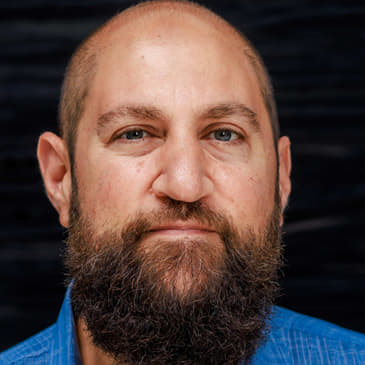
Autistic Entrepreneur, Jonathan Domsky owner of Untangled Coaching: Coaching Programs for Entrepreneurs, talks with Philip to share how he built an inclusive business for intersectional Autistic people and others. Jonathan will offer ideas for Autistic people who want to build meaningful, sustainable businesses around their around their special interests, strengths, and individual needs.
Dyslexia Accessible Transcript
Thriving Autistic Entrepreneurship
Spanish Accessible Transcript
Emprendimiento exitoso para personas autistas
German Accessible Transcript
Erfolgreiches autistisches Unternehmertum
French Accessible Transcript
Entrepreneuriat autistique florissant
Chinese Simplified Accessible Transcript
Transcript
Thriving Autistic Entrepreneurship
September 27th, 2026
Episode Introduction & Preview
Welcome to Today’s Autistic Moment: A Podcast for Autistic Adults by An Autistic Adult. My name is Philip King-Lowe my pronouns are he/him. I am the owner, producer and host and I am an Autistic Adult. Thank you so very much for listening.
Autistic Entrepreneur, Jonathan Domsky owner of Untangled Coaching: Coaching Programs for Entrepreneurs, will share how he built an inclusive business for intersectional Autistic people and others. Jonathan will offer ideas for Autistic people who want to build meaningful, sustainable businesses around their around their special interests, strengths, and individual needs.
Come join us for the episode Thriving Autistic Entrepreneurship on Today’s Autistic Moment.
♫♫ Opening Theme Music ♫♫
Segment 1
This first segment of Today’s Autistic Moment is sponsored by The Autism Society of Minnesota, known as AuSM throughout Minnesota’s Autism Community. As Minnesota’s First Autism Resource for more than 50 years, AuSM serves the whole state, the whole spectrum for the whole life. Visit AuSM at ausm.org.
Visit todaysautisticmoment.com to listen to over 120 episodes released since 2021.
Check out the Episode Schedule 2026 to read about upcoming shows, topics, guest information, and program descriptions for season 6.
On the website, you can:
· Learn more about Today’s Autistic Moment.
· Read the guest bios pages.
· Explore the Adult Autism Resources Links Page.
· Visit the Autistic Community Bulletin Board.
· Read the blog.
· Find out about TAM Autistic Consulting Services.
· Sign up for a subscription to get Ad Free Interviews.
· Support Today’s Autistic Moment with a donation.
Every episode, including this one, has a transcript. The transcripts are sponsored by Minnesota Independence College & Community.
You can also read the transcripts right on the website with each episode or download printable versions to help you save ink.
The transcripts have hyperlinks in them for names, organizations and other resources named throughout the show.
The transcripts use a dyslexia-friendly font that are available in English, Spanish, German, French, and Chinese Simplified.
Want more interaction with Today’s Autistic Moment? Follow Today’s Autistic Moment on Facebook including our Community Group Page, LinkedIn, BlueSky, Instagram and Threads. Also follow us on the YouTube Channel @todaysautisticmoment to listen to new episodes of Today’s Autistic Moment and watch Autistic Voices Roundtable Discussions.
I want to highlight one of my sponsors. Best Care MN has been a sponsor of Today’s Autistic Moment since the podcast began in 2021. The company offers Personal Care Assistants, homemaking and other important services. Your friend or family member can be your paid PCA and Best Care makes sure that your PCA is trained and certified by directing them through the channels to be ready to serve you. My own support services are managed by what Minnesota calls Consumer Directed Community Supports, also called CDCS. Raina Marti and the good folks at Best Care provide the Financial Management Services (FMS) for my CDCS plan. They make sure that those who work for me complete all the necessary paperwork, provide the time card portals, and make sure that my employees are paid on time. Raina and her team are the best with client communication. Raina is willing to explain how to use the portal to understand how to lock approve my employee’s hours so that they are paid promptly. If you live in Minnesota and are on a CDCS plan, and your current FMS isn’t listening to you, or giving you timely responses to your emails, taking forever to pay invoices, switch to Best Care’s Financial Management Services. When they ask how you learned about Best Care’s Financial Management Services, tell them you heard Philip highly recommend them on Today’s Autistic Moment.
Coming up after the first commercial break, Jonathan Domsky will join me to talk about Thriving Autistic Entrepreneurship.
♫ Segment Ending Music ♫
Commercial Break I
Podcast Apps
Today’s Autistic Moment can be downloaded and heard on most podcast apps including Apple. Google Play. Breaker. Castbox. Overcast. iHeartRadio. Pocket Casts. RadioPublic. Spotify. TuneIn. Pandora. Amazon Music. Audible. Podcast Addict. Podcast Chaser. If you are looking for the transcripts, go to todaysautisticmoment.com, click on the episode you want to listen to and follow the directions to find the transcripts.
Thank you for listening to Today’s Autistic Moment.
♫ ITI Assistive Technology Ad ♫
♫Best Care Ad♫
♫MICC Ad♫
♫Segment Beginning Music♫
Segment 2
Philip King-Lowe
Welcome back.
Jonathan Domsky works with successful entrepreneurs who have always known that they think differently. Many of the founders he coaches are intense, analytical, and highly pattern-driven-leaders who have built impressive companies but feel that the traditional playbook for leadership doesn’t quite fit. At 24 years old, Jonathan co-founded a brand of fun, practical, and unique children’s products called Kidorable. If you had asked Jonathan then, or the 2+ decades he served as President, ‘Are you passionate about Kidorable?” he would have said unequivocally yes. If you had asked Jonathan, ‘Does selling fun, practical, unique children’s accessories make your heart sing?,’ he would have given a different answer. The thread that untangled all the others was an aspect of his daily work at Kidorable that he did love. A love that’s not shared by most people in businesses is admittedly unusual, but was both the signal and the spark that sent Jonathan down the proper path. Jonathan frequently speaks and appears on podcasts about leadership, entrepreneurship, and designing businesses that fit the minds behind them. Jonathan is the host of The Pattern-Seeking Entrepreneur Podcast, conversations with founders whose minds don’t work on default settings.
Please join me as I welcome Jonathan Domski.
Philip King-Lowe
Jonathan Domsky, welcome to Today's Autistic Moment. It is a pleasure to have you here today. Thank you and welcome.
Jonathan Domsky
I'm delighted to be here, Philip. There's nowhere else I'd rather be right now than talking with you about this stuff. Let's get started.
Philip King-Lowe
Thank you. Wow. Okay. All right. So, Jonathan and I are going to talk about Autistic Entrepreneurship. And I happen to be an Autistic Entrepreneur that started Today's Autistic Moment, and I'm ever so glad that I did. And over the past six seasons, you have heard from many individuals who started some kind of business either by what they do, some kind of you know coaching or you know authorship that they're authoring books or they started organizations or anything like that. Those are examples of Autistic Entrepreneurship, and so it's a good thing we're having this conversation today because there are many Autistics who have a lot of ideas of things they might like to do, but they don't know quite frankly how to get started. So, Jonathan and I are going to present you with Autistic Entrepreneurship, what it is, how to do it, maybe some ideas, and also help you understand that you can be, you can create a business, you can create something that's going to work for the Autistic Neurodivergent mind. That's very possible, and so you know we're here to kind of talk you through that. So, Jonathan, what important information can we introduce our audience to this topic of Autistic Entrepreneurship?
Jonathan Domsky
Yeah. So, Philip, first, I just want everyone to understand that the vast majority of entrepreneurs are Neurodiverse. When you think differently than other people, you don't want to work for someone else, and you see opportunities in the marketplace that other people miss. And even more important than that, from a lifestyle perspective, as entrepreneurs, we have so much agency over our environments, our relationships, our strategies. You know, if you don't like your team, let's talk about who hired all these idiots. Like you have so much control. Good luck doing that. If you work for a bank, you know, going in and telling your boss that you don't like your team, whether it's sensory sensitivities, whether it's just wanting to do things your way, as an entrepreneur, you get to make those choices, and like I said, the at least 70% of entrepreneurs are Neurodiverse, and the most impactful entrepreneurs of our time-they're-they're all Autistic. Mark Zuckerberg, Steve Jobs, Bill Gates-all Autistic, not just in tech. Somehow, there's no data, there's no research data around Autism specifically and entrepreneurship in terms of the numbers. But for every other flavor of Neurodiversion, you know, five to 8% of the population has ADHD. 50% of entrepreneurs have ADHD. 5% of the population is dyslexic. Between a third and half of entrepreneurs are dyslexic. 1% of the population is bipolar. 11% of entrepreneurs are bipolar. My Autism has had a profound impact on how I run my company long before I had language to describe it, and I'd be happy to share some of the stories around that.
Philip King-Lowe
Many of the people who have invented businesses are Autistic. You know Jonathan just named a few. I mean, we have many, you know, television movie stars over the years who are Autistic. Some we know about, some we don't. You know, it's very possible the ADHD part. Yeah, that's true. The AuDHD, which is Autistic and ADHD, is very true. Some of the best writers that you can think of are probably Neurodivergent in one way or another, and you know, yet they’ve managed to inspire people with their writing. I mean, Emily Dickinson was Autistic, and she is, you know, one of the most outstanding writers that we know.
Jonathan Domsky
Yeah, beautiful.
Philip King-Lowe
One of the points that we want to make here is that the secret to discovering what you want to do with your entrepreneurship, with starting your own, is to begin with those things that bring you joy, that bring you a sense of enjoyment, that makes you feel like you. It may be something that you're already hyper focused on, and that's what you can build something off of.
Jonathan Domsky
I just want to share an example. So, in my old company, Kidorable, it was fun, practical, unique children's accessories. If you've ever seen umbrellas or rainbows boots, like frogs and ladybugs, that was us. My wife and partner in the business was the creative force of the company. She was the designer, but I ran all of operations and sales and marketing, and my special interest is personal growth. I'm always looking at just anything that's not the way that I want it to be, and asking what is that I need to learn, what's the action I need to take in order to get where I want to go, and at Kidorable, we trained everybody on everything. We wrote SOPs on everything. We operationalized the company every day. We would have a 15-minute customer service training meeting, and sometimes our office staff they would complain that like they didn't know how to do something, and it occurred to me one day: there's only so many things that go wrong in a company. Let's just make a list of all of them, and then let's come up together. What's the best way to do it? So with these daily customer service training meetings, and it took us six months, just every day, slow and steady for six months. The first two days we brainstormed just what's everything that could go wrong. Well, UPS lost the package; it wasn't our fault, but it's still something we need to deal with. Or someone ordered a dozen frog umbrellas. We shipped a dozen ladybug umbrellas. Whatever it is, what do we do? How do we respond? Took two days to come up with the list. There were about 70 items, and then every day for the next six months, we took one or two of them, and we said, "Okay, UPS lost the package. It's not our fault, but you know our customer is upset. What do we do? And Anna would say that she thinks we should do this, and Jennifer would say that she thinks we should do that. And then I'd say, "All right, what do you guys think? What's the best way to do this now? And we'd all agree. No, I'd write it down, codify it, systematize it, and at the end of this process, everyone was so much happier in their jobs. They were so much more effective because they just knew what was the right thing to do. It takes a very Autistic brain to have that steadiness to systematize these things. Or I talk to my salespeople, and I'd say, "Well, how do you do what you do with customers? And it would always say, Ah, it's really more art than science. You can't really document it. And I would just say, Try me, like just you know, walk me through it. And I'd say, Oh, it sounds like subconsciously you're making this decision. And they'd say, Like, Oh, yeah, yeah, that's exactly what I'm doing. And that's how we built our sales training module. And then we just we would train people every year, and there's two ways to grow your business. One is to go out there and sell, and for you as the entrepreneur to grow your business, or the way that I did it is I would grow my people, and then my people would grow my business. You know another story. 2009, I got my first 360 review. I was working with a coach, and they interview all the people around you. You know your partners and your, you know your people on your management team, everyone who works with you, and they ask you a long questionnaire about you know what it's like to work with you. What are your strengths? What are your weaknesses? And I got this review back, and I just couldn't believe it. I just assumed it was wrong because I learned that the people I worked with misinterpreted so many of my actions. I'm attracted to patterns. I'm attracted to inconsistencies, and things that work are boring to me. So, if you worked for if you worked a month on a project, and it was 99% perfect, I would spend 10 seconds acknowledging the 10 the 99% that was perfect, and I'd spend an hour talking about the 1% that could be improved. Because why would you waste time talking about on things that are already perfect? You know, if you have a mustard stain on your shirt, Philip, I'm not going to tell you great job keeping 99 of your shirt clean. I'm going to say, hey, there's a mustard stain. Let's do something about that. And it really demotivated my staff. So I was working with a coach. He gave me one of the best pieces of advice I've ever got. He said, "How could I take responsibility for the way that other people receive me? How could I take responsibility for the way that other people receive me? And that's when I learned to frame all my intentions, just to tell people in advance why I was doing what I was doing. You know, if you tell an employee, "Hey, Philip, I need you to come to my office. We need to talk. You're probably not going to think. I bet he's going to tell me what a great job I'm doing, and he's going to give me a raise. Like you're probably going to think like, oh, I'm in trouble or I'm going to be fired, something like that. So I just tell people, hey, Philip, I'd love for you to come to my office. I want to talk about that project that we're doing next week. And then there's no fear. I wrote a working with Jonathan SOP standard operating procedure, that I would give to every single new employee, and I just explained all the things that I knew that I did that rubbed people the wrong way or that they misinterpreted, and I would tell them if you want to get if you have a new idea, and you want me to be supportive of it, you need to tell me that you know how we normally do things, because otherwise I'm just going to assume that you didn't understand it, and I won't listen to your new idea. Who wouldn't want an instruction manual for their boss or their employees or their spouse? I was just tell people how I think and how to get the best out of me and what it means when I ask questions and stuff like that.
Philip King-Lowe
I think we need to also talk about. For Autistics that might like to start a business, we already talked about starting with your special interests, but some of the other steps involve things like developing a business plan, and you know, and that sort of thing. When I wanted to start Today's Autistic Moment, I was fortunate to have the assistance of the Minnesota Department of Rehabilitation Services, or VOC Rehab, we sometimes call it. And when I told them that I was interested in doing something about Autistic Adults, it was suggested to do a podcast, and then they put me in touch with someone who could help me come up with what is this business going to do? How do we create a business plan so that it can be submitted, so that I could actually get the grant to start the project. How do you recommend people to do that? Maybe they don't have a resource like I had. Maybe they just don't know what to do. I mean, someone's gonna might be asking “what's a business plan?” Some might be asking, "How do you start a business plan? I mean, what goes into something like that?
Jonathan Domsky
Yeah. So the most important thing for any entrepreneur to understand is that you don't have to do it alone, and you don't have to be well-rounded. You don't need to know how to do everything. You need to have a team. You need people. You need a partner. You need friends who are able to fill in some of your rough edges. And we happen to live in a moment, Philip, that it's never been easier to be an entrepreneur to do all these things. With the power that all of us have in our pockets and on our desktops with AI. Anything you don't know how to do, just ask Claude, ask ChatGPT. How do I set up a business? How do I fill out this form? And it'll do so much of the work for you. Or find a partner. Find someone who is good at what you're not good at. You know, my partner in my business. Every. I was bad at, she was great at, and everything that she was bad at, I was great at, and by being able to just split the responsibilities according to our strengths, it just made everything so much easier. Plus, you just have someone to talk to work all this stuff out with you. I would also say a lot of people feel that they have to have everything ready. They have to know everything before they start, and it's completely backwards. All of my friends are all of my friends are entrepreneurs. We were having dinner together in April, but about 10 of us, and we someone asked a question like, "When did you know that you were going to be an entrepreneur? Like, how did you start your business?” And I have a very unusual story. My entrepreneurial journey started with a love story that I just wanted to spend time with my wife. But almost everyone else around the table, they knew from an early age. You know, one woman she said when she was eight, her father told her that she was unemployable, that she would never be able to get a job with someone because she just always has to do stuff, you know, her own way. But the job description of an entrepreneur is to figure it out. Like that's the biggest difference between being an entrepreneur and having a job. With a job, you have the gift of your quarterly or your annual review, and you have a boss to tell you what to do and to tell you where you need to improve, what you need to you know figure out. As an entrepreneur, you don't have that. Your job is to figure it out yourself. And if you wait until you know everything before you start, you will never start. There's a quote that I love by the Goethe, the writer. Whatever you can do or dream, you can begin it. Boldness has a genius, power, and magic in it. Life's a curriculum perfectly designed. This is me now. Life is a curriculum perfectly designed to work out your purpose. Just start, and life will tell you what you need to learn. You know, just start, make the application, and then it'll ask you for your financials, and you say, "Oh crap! How do I get? How do I do my financials? And then you'll learn how to put your financials together, especially with the help of Claude or Chat or something like that. One more thing I would add: all of us have people who believe in us. All of us have people who want us to be successful, whether it's friends, family, colleagues. When I started my coaching business six and a half years ago, I made a list of the people that I knew who believed in me, who wanted me to be successful, and I just called them all, one at a time, and I said, "Hey, you know, I'm starting this new business. I'm going to be a business and life coach working with entrepreneurs, you know, helping them discover what they were born for, and you know how to design systems and strategies and relationships environments to for the way that they think. Do you know anyone who would be interested? You know who would benefit from an introduction? And I made up those calls, and when I finished those calls, I had three clients, and that's how I started my business. I didn't know anything about the business of coaching when I started, but I called the people I knew. I made a list of the successful coaches I admired, and called all them up and I interviewed them. And they were very generous, and they told me what I needed to know to get started. And then, of course, you know, I worked and I made my mistakes, and I and I did it. But people who are further ahead of you on this path, they tend to be very generous. And when they meet a when they meet a sincere seeker, they're happy to take a little time and give them some wisdom, give them an introduction, point them in the right direction.
Coming up after the next commercial break, Jonathan will talk about Autistic Entrepreneurs thriving by creating businesses where you don’t fight who you are. Autistics find accommodations for themselves based on their needs when they start their own business. When Autistics connect with people who meet us where we are, in creating a business, we thrive and make our work successful. We will also discuss how creating accommodations for others makes a better workplace environment for everyone.
♫ Segment Ending Music ♫
Commercial Break II
♫ Lisa Morgan Consulting Ad ♫
♫ Looking Forward Life Coaching Ad ♫
TAM Support Ad
Today’s Autistic Moment is a podcast where Autistic Adults from all walks of life come together to talk, share experiences, and support one another. Every guest is an Autistic Adult sharing thoughts, challenges, accomplishments, and perspectives that reflect what many of us are feeling right now.
Our message is simple: You are perfect as you are. You do not need to change who you are, and you do not need to be cured. What Autistic Adults need is to hear from other Autistic people who are living full, meaningful, and thriving lives.
Your contribution helps made these conversations possible. With your support, Today’s Autistic Moment can continue bringing Autistic voices, stories and community to listeners everywhere.
Support Today’s Autistic Moment in any of the following ways.
· Make a one-time donation through the Ko-fi icon when you tap on Support Today's Autistic Moment on todaysautisticmoment.com
· Subscribe monthly via Patreon.
· Purchase items from Today’s Autistic Moment’s Logo Shop.
· Share Today’s Autistic Moment with your family, friends, coworkers and others through social media and/or by telling others about us.
· If you own a business and/or work with an organization that supports Autistic intersectional individuals by encouraging them to live with pride in who they are, advertising opportunities to support Today’s Autistic Moment and your business or organization are available. Please send an email to todaysautisticmoment@gmail.com for more information.
Donations are not tax-deductible but help keep Today’s Autistic Moment as a safe space.
Thank you for supporting Today’s Autistic Moment.
♫Segment Beginning Music♫
Segment 3
Philip King-Lowe
I'd like us to go to my question about where do you see Autistics thriving as entrepreneurs?
Jonathan Domsky
So the most important thing to understand is that if you build a business that fights who you are, it's going to be exhausting. The sooner you can make accommodations for yourself, the sooner that you can say, you know, that way of doing things. Maybe I read it in a book and it works for a lot of other people, but it just doesn't work for me, and do something else that solves the same problem. The easier it's going to be. So, just a couple examples. You know, my partner in my business, she had a very different communication and problem-solving style than I did. She was intuitive, really fast thinker, and anytime that you would ask her a question about what we should do, she would just say, "This is what we should do," and she didn't do any analysis, and it drives me crazy because I can't think that way.
Philip King-Lowe
Yeah
Jonathan Domsky
I need to look at the facts. I need to define the problem. I need to build a case. I need to test it, and then you know, and then and then make an optimized solution. And she had no patience for it whatsoever. And in the beginning, we had a lot of misunderstandings and tensions figuring out how to work with each other because she had one way that only made sense to her and didn't make any sense to me. And I had my way that I just thought this is the only way that makes sense, and she just didn't have any patience for it, so after you know having some friction for a while, what I started doing is I would define a problem. She would give me her immediate like answer like in a second, and to her credit, like she was a genius. Like often her gut responses were very good, but sometimes they weren't. And I would receive what she said. I would ask her some questions to make sure I understood it, and then I'd say, you know, that's really interesting. Philip, let me think about that for a little bit, and I'm going to get back to you. And then I would get back. Then I would go to my desk, and I would analyze it, and I'd look at the data, and I'd make a case, and if it turned out to be actually a really good idea, which again, good 70% of the time it was, I would just say like, "Oh yeah, yeah, thing that the thing that you said yesterday, like that's great, let's do that." Or if it was just really a terrible idea, I would say like, "I'm thinking about that idea, and you know, there's. I don't think it's going to work as it's currently. I don't think it's going to work as it's currently defined because of this, that, or the other thing." And she was smart. She would see it. She was like, "Oh, of course, yeah, yeah, that's not as a good idea as I thought it was." So, just figuring out how do you need to communicate, how do you solve problems, educating the people around you, or if you can't do that, understand what the differences are, and give yourself an accommodation. Say, all right, I'm just not gonna not gonna answer any questions just because you asked me them right away. I'm gonna receive them. I'm gonna think about them. I'm gonna do my analysis. I'm gonna get back to you. Yeah, another example. I was the only Autistic person in my company, we topped out at 28 employees, and I had I have very low social needs. You know, I'm very happy connecting with someone during a meeting. You know, but our staff they needed social time, they needed to go out afterwards, they needed to blow off steam, they needed to have the kind of social interaction, and I knew that they needed it, and I didn't, so I delegated it. I chose one of our administrative assistants, who was very social, very outgoing, and I put her in charge of our biweekly lunch meetings. We would cater and we'd celebrate birthdays, and we'd celebrate anniversaries, and sing Happy Birthday and Happy Anniversary, all that sort of stuff. And she would organize it all. I would have lunch at my desk, and then five minutes before everybody else finished eating, I would go in and I'd say hi to everybody, and then we'd have a you know a meeting that I'd lead about you know what's happening, what's happening next in the company, and we'd celebrate people's birthdays and anniversaries. And when it was their work anniversary, I would you know give a little speech about how happy I was. You know how grateful I am that they're part of the company and what I appreciate about them. And in systematizing those things, I was able to give them exactly what they needed without compromising what I need. Because when you work against yourself, it's annoying.
Jonathan Domsky
I worked from home for the last 17 years, and it's you know I used to go to the work go to the office every single day for a full day, but I used to travel back and forth to China a couple times a year, usually for between one and four months, and every time I'd come back, I would ask, so you know, like what happened this last, you know, since I was gone, they just wish I would have been here, you know, in case something happened to make a decision or whatever, and they would tell me, and I would tighten up our SOPs, our standard operating procedures. I would train more, so that the next time it happened, they'd be able to handle it without me. And in I think it was 2012, 2013. Came back from a four month trip, and you know I gathered everyone together, and I'm like, so like, what do you wish I was here for this last four months that just would have made your work easier, less stressed? And they all kind of looked around and shrugged their shoulders, and they said nothing. And then I said, well, I'm kind of wondering why I'm coming into the office every day, then, and that's when I started working from home. Now I just come into the office once a week for face-to-face meetings. The more that you could design your environments, your strategies, your relationships to fit the way you think, the more that you'll thrive and get the most work out of you and the people around you.
Philip King-Lowe
Yeah, I always like to be sure that we're including a lot of the intersectional identities of who we are. Yeah, you know, we have systems that already make it challenging for Autistic Adults to do many of the things that we're talking about. But when you include our communities of color, LGBTQIA+ individuals, you know, individuals who are multiply Neurodivergent, which we've already been talking about that, that can add a lot more stress to your system. Yeah, and sometimes even finding people within your own community where your intersection is part of your life, you can find it difficult to communicate, find partners, find people who will work with you. That can all always be a challenge. One of the things to look for when you're part of intersectional communities, as well as being Autistic, is who are the people that you do seem to connect with, and what sorts of energy do they supply? You might you know, like someone might share something that a special interest of yours, you know, or when you're talking about your special interest, this person seems to listen. You might also go you know, there's someone you have a particular problem with, and that can always be kind of questionable. But where would you recommend that that some people start and give some examples here?
Jonathan Domsky
The first thing is just to pay attention to the individual humans who are working with you, and ask what are their needs, what do they need to thrive, what's important to them, what are their objectives, and just a few simple examples. You know, in this was 2005. This was long before there was gay marriage or anything like that in our country, and we had a gay designer, and as he was interviewing for a company, and he asked if we had partner benefits for you know for health insurance, and I never considered it before. Just it was never on my radar. Just said it'd never come up, and I thought my first answer was like, "Well, no, we don't. But then I thought about it, and I'm like, "Well, maybe we should," because he was a good designer, and I wanted to hire him, and I didn't want you know our lack of health insurance for you know his partner to be a reason that he couldn't work with us. So we changed the policy to you know to accommodate him. It was never something I thought about before. It was never something that was an issue for any of our employees, but it was an issue for him. So we made it. So we made a change to the policy, and we expanded it. We had at our company, you know, we had 10 days of PTO paid time off that you know no one could use any time for any reason. We always took the week off between Christmas and New Year's because there just wasn't a lot to go on going on that that week, and we had we had a just you know the standard seven paid holidays you know Christmas New Year's you know Memorial Day Labor Day etc. Thanksgiving and one day one of our African American employees wanted to take off Marla the King's birthday they were having a church event and they just you know they didn't have any PTO accrued, and I just thought you know this is an important day for them, and it's just they're not going to give everybody off for Martin Luther King's birthday because you know not everybody celebrates like that didn't make sense to me, but why should this person be penalized you know having to take a day off and not getting a day pay a day of pay because they have a special holiday? You know I had another, I had a Polish Catholic employee who always wanted to take off Good Friday. You know, Jewish employees, you know, who wanted to take off Rosh Hashanah or Yom Kippur or something like that. So we added a floating cultural holiday. You know, everybody has one extra day just to use for a day that's important to them, and some people used it for Martin Luther King's birthday. Some used it the day after Thanksgiving. Didn't care when I never questioned, but it was just one more easy thing for us to do that made everyone feel that they belonged, no matter what their background, no matter what was important to them. They knew that we supported them. Yeah. Answer your question. When it comes to other flavors of Neurodivergent, and it doesn't matter if it's Autism or ADHD or dyslexia, Dyspraxia, bipolar, like any of these things, the traits themselves are neutral. They're neither positive nor negative. They're all dependent context, and in the wrong context, it's an affliction, and when properly channeled and harnessed, it can be a gift. And if we could just design our systems, our relationships, our strategies, our environments to fit the way that we think, then it's so easy to gracefully sidestep these issues, or to transcend them. You know, our warehouse manager was a very capable Polish woman, but you know she was definitely ADHD, and she didn't have a lot of formal education. She just wasn't comfortable around computers, but it was hard. She was incredibly capable. Like didn't matter what you threw at her. Like she always got it done that day, but she wasn't great at planning ahead. It just wasn't, you know, it wasn't part of her skill set. And we had a system of quarterly strategic planning meetings where senior leadership team would meet. We'd set the goals for the quarter, and then the week after that quarterly meeting, every manager had to come with their department goals that supported the company goals, with milestones, so that we could keep each other accountable, and it was just really hard for her because she wasn't like she was great at day to day management. It was really hard for her to plan out and think ahead, and she wasn't great at with typing in computers because you know English was her second language. So I assigned our office manager to just meet with her for a couple hours and to talk it out, and our warehouse manager, she was great at talking about it, so she would just say what she was going to do, and our office manager would just take the notes and write it up, and then that was the accommodation for her that we were able to fit, get the most out of her because she was so capable, just wasn't good at this one thing that her company needed, so we gave someone else. We assigned someone else to support her, and that happened 1000 times in different ways. We would just see what people needed. I mean, if someone's not good at their job, that's a different question. But our warehouse manager was great at her job. She was still. She just wasn't good at this one thing, so we gave her what she needed to thrive.
Philip King-Lowe
Yeah. On the chance that someone isn't able to do a particular job, are you able to maybe explore other options within the company for them?
Jonathan Domsky
Often, it's not always possible, but it depends why they're not good at their job. You know, if it's not if they're not a good cultural fit, I think if they don't believe in our values, they don't believe in our purpose, then it's you know it doesn't matter. You know, they like we once hired a national sales manager, best salesperson I ever worked with, but he was just like a bull in a China shop. Like nobody liked him. He, you know, we used at our at our company we used to train people on everything. It was very nurturing, a very supportive place. He set his he set his desk up with his back to the to the door because, you know, he said it helped him focus and work, and it increased the social cost of someone knocking on his door because it was so obvious they were interrupting him. And like, yeah, that worked for him, but that was just we have an open door policy. Like, it was it was just very much against our culture. You know, we used to give major accounts to our up and coming salespeople to teach them so they could grow, and he's like, "That's dumb. Like, I'll take on all of our your major accounts. I'm a better salesperson, and you don't have to pay me commission.” So, like, from one perspective, like it made sense, but it just violated every one of our values, and you know, we just had to get rid of him as soon as possible. But there's other examples where you know there were we've had people in the office, you know, doing data entry administrative support. That maybe they didn't have the attention to detail that we needed for that, but they were just so good with people, so we moved them into customer service or sales. Yeah. So whenever it's there's a real cost to the company, to the individual to morale. Whenever you let someone go, and it's always best to find a way to find a place for them to truly thrive. But if they can't thrive it's better to free them up for a for an organization where they will than to find a way where they can...
Philip King-Lowe
It's just that some Autistic individuals work well in a situation where they don't have to be managed too much, and one where they don't have to deal with the public in certain ways. So to you and other employers, I encourage you to see what you can do about that. You know the fact that he didn’t want to face the doorway. That might have meant something that okay, maybe we need to find you something else to do, similar thing, but just not in the same order. You know that's my thing. You do the best you can.
Jonathan Domsky
Yeah, essential to this person's job was nurturing and training staff, and he doesn't have any interest in it. But to your point, you know, there's a wonderful organization, literally just three blocks from where I live. It's called the Spirit Tech, and they have mentoring and apprenticeship programs for Autistic Adults. I have a good friend who owns a warehousing business, and they do kitting, know, they you know do some assembly work, and he's hired I think five people to this organization. He says he's they're the best employees he’s ever had. All they want to do, like I don't I don't want to talk to anybody. You know these are these are normally level two people. They don't want to talk to anybody. They just want to do their work, and he says they're three times more efficient than anyone else. And in the beginning, when he hired them, you know he'd come. You know he likes to manage by walking around. Then he come and he talked to them, and he could just tell that they were a little bit annoyed, like they didn't want to talk to him. They just wanted to do the work, and eventually just he let them be. And they're some of his most valuable employees, and they're perfect for this job, and it's a job that's otherwise really hard for them to fill because most neurotypical people just can't do that repetitive task all day. But people who hired loves it.
Philip King-Lowe
I love the mind that you're bringing to this because there's so many employers that are not so accommodating. I want to take my audience back to my first season, May of 2021, when I interviewed Samuel J. Levine for the episode Autistic Adults: Justice in Employment. And if you go back and you listen to that particular episode, you are liable to hear him say that one of the things that would change for a lot of employers who are not so kind and also accommodating for Autistic Adults, is to also seek out the strengths and abilities that someone has, and let them use and really invest in those so that the company can actually thrive because of the again the skills and strengths that they have. And here we have an Autistic entrepreneur here, Jonathan, who is doing just that. And look how that changes the entire chemistry of a workplace. And we have so many. Let me just finish. We have so many folks in the world of hiring and managing, terminating, and resume reading, and all that-that are just so insistent that every employee has to match up to these things. And you know what Jonathan is describing, and what many of the people that you've heard from on Today's Autistic Moment know you don't have to do everything exactly right. You can do things your way. What I love about being self-employed, I get to make up my own schedule. I get to invent my projects and talk it through with people like on LinkedIn and say I've got this idea. What do you think? You know, I've got lots of ways that I can do my job without letting it get become too stressful. And if I do find something being stressful, I can always take a couple of days off. Just be careful about how I set up my meetings and everything. If I need to take a day or two, or a few days to just recollect myself, then I do it. As your own entrepreneur, you get to set things up the way that works for you, and it doesn't have to match what neurotypical standards are. It doesn't have to be, you know. I'm out to make a million bucks, although we'd all love to be able to do that. But you get to decide what works for you and make it work your way. And you know, if that's how it happens, that's how it happens. So do enjoy that sort of thing, and indeed make it part of your routine, part of your life, part of your work life.
Jonathan Domsky
Yeah, I agree with everything you said, Philip, and I want to just build on a couple things you said a couple minutes ago.
Philip King-Lowe
Sure.
Jonathan Domsky
When you focus on your weaknesses, you get really strong weaknesses, but they'll never become strengths. When you focus on what people can do instead of what you can't, what they can't do, you get the most out of them. And you know, you said that well, like I'm a nice guy. You know that I was trying to give people what they need. I mean, I'm a good person. I try to be a good person, be empathetic for people. But when you're running a business, this isn't about being nice. Like the stories that I shared, the guy I hired was a really great designer, and I wouldn't have been able to hire him if I didn't offer his partner benefits. Like that wasn't being nice. That was just paying attention. You know, my staff-they needed more social interaction than I did with each other. It wasn't nice that we had company meetings every other week that were catered and you know had lunch parties and stuff like that. It's what they needed in our company. People didn't quit. It was the for over 90% of the people who worked with us. It was the best job they'd ever had, and this just good business, getting the most out of people. You know, it was just good business for my partner helping her solve her solve problems her way instead of making her do it my way, and then I found a workaround so that it served both of us. It's not about being nice; it's about being smart, paying attention to what people need, and then giving it to them so that everybody benefits.
Coming up after this final commercial break, Jonathan will talk about his coaching business as a great resource for Autistic Entrepreneurs. Today’s Autistic Community Bulletin Board will follow.
♫ Segment Ending Music ♫
Commercial Break III
TAM Autistic Consulting Services Ad
TAM Autistic Consulting Services offers Autistic Adults a supportive opportunity to meet with me, ask questions, learn more about Autism and the Autistic community, and explore resources that may be helpful.
As an Autistic person myself, I understand how overwhelming it can feel to need support while navigating a world that is often not designed with Autistic people in mind. These consultations provide a space to speak with someone who has shared lived experience and can provide information, understanding, and practical resource guidance.
TAM Autistic Consulting Services is not therapy, mental-health treatment, or legal advice.
To learn more, visit todaysautisticmoment.com. If interested, please fill out the intake form and make an appointment so we can begin working together.
♫ Actually Autistic Coach Collective Ad ♫
Future Shows
On October 11th, Wally Glascoff a graduate from Minnesota Independence College & Community and I will present AuDHD in the Workplace. In recognition of Disability Employment Month, Wally will talk with me about his work as a pharmacy technician at a hospital. Wally, an AuDHD individual fills prescriptions including setting up IV’s. Wally will share how he manages his sensory needs in a fast paced environment.
On October 25th, Speckles Bruder and I will present the episode Autistics Thriving in Transitions. Speckles joins us as a graduate from Minnesota Independence College & Community. Speckles will tell us about the experience of transitioning from living at home to being a student at MICC. Changes in routine, including living with other students, going to class was a big step. Now Speckles has been transitioning to being on her own, owning a town home, working at Crayola at the Mall of America. Speckles will talk about meeting people, to create real friendships, and thriving through her time of transition.
Remember to visit the Episode Schedule 2026 Page on todaysautisticmoment.com for details and updates.
Thank you for listening to Today’s Autistic Moment.
♫Segment Beginning Music♫
Segment 4
Philip King-Lowe
Where can we help Autistic individuals find resources regarding Autistic Entrepreneurship?
Jonathan Domsky
Yeah. So I'd be delighted if anyone came to my website www.untangled-coaching.com. Don't forget the dash. There's all sorts of resources there. You could follow me on LinkedIn. Post three times a week, talking about just these different traits and how to channel them, harness them to be gifts, or to design around them so that you could gracefully sidestep them or even transcend them. You could see me on LinkedIn. Just search for Jonathan Domsky. I'm the only one. A free gift for listeners. You know, such an important part of starting a business is just the steadiness of you know once you have a plan, following it every day. And if you go to my website, I have a free guide. It's called my relaunch guide that just shows you how to form habits that stick for starting a business or anything else. Just www.untangled-coaching.com/relaunch-r-e-l-a-u-n-c-h. Get that free guide there. Yeah, and then just go online, read all sorts of people who you know write articles about their Autistic story. There's a wonderful book called The Autistic Millionaire that I enjoyed. I got a lot out of about a former Microsoft employee who you know started his own software business. I'd recommend that one. But the most important thing is just to get started, like with a little bit of imagination and hard work, you could build a business around something that you really care about. You know, especially your special interests, whether it's the process or the subject, and ask for help. Your friends, your family, people who want you to be successful.
Philip King-Lowe
Jonathan Domsky. Thank you so much for this conversation of Autistic Entrepreneurship on Today's Autistic Moment. Your points are well taken, and I'm sure that many in our audience will be relieved to hear some of the information you've shared, as well as some of the possibilities that are available to them. So thank you for being here today, sir, and we certainly look forward to seeing you again.
Jonathan Domsky
I enjoyed it, Philip. I love the good that you did.
Philip King-Lowe
Thank you.
Transcribed by https://otter.ai
Sign up for a subscription to Ad Free Interviews on todaysautisticmoment.com. The subscription is only $12.00 a month or $144.00 for a whole year. Once you buy the subscription, you can click on any show where you see the logo for Today’s Autistic Moment Ad Free Interviews to hear only the interview without interruption, segmentation and music. You can listen to all Ad Free Interviews going back to July 2025 and all upcoming shows.
Today’s Autistic Community Bulletin Board
All these events and many others such as sensory friendly concerts, art activities and museum information links are available on
todaysautisticmoment.com/bulletinboard.
The Adult Coffee Club for Autistic Adults in Minnesota are held on the second Tuesday of every month (weather permitting) at Dogwood Coffee located at 2700 University Ave W. Suite 100 in St. Paul, Minnesota. The Zip Code for your GPS is 55114. The Adult Coffee Clubs will begin at 3:00pm to 5:00pm on October 13th. November 10th. December 8th.
Understanding Autism virtual classes are offered by The Autism Society of Minnesota. The next classes will be on October 12th, 10-11am. November 9th, 12-1pm. December 14th, 6-7pm.
RSVP for a Rooted Workshop Series, entitled Conversations Centering on Black Families and Autism. Rooted is a four part workshop series designed to create a welcoming space where Black parents and caregivers of Autistic children can connect, learn, and grow together. Through meaningful conversations led by Black parents, professionals, and community leaders, the series explores the experiences of raising an Autistic child while navigating the intersection of race, culture and disability. Go to AuSM’s website for more details.
Register now to attend The Autistic Community Summit on November 7th, beginning at 9:30am to 3:00pm at Inver Hills Community College or Online. The college is located at 2500 8th, St. E. Inver Grove Heights, MN. The zip code for your GPS is 55076
AuSM is accepting applications for speakers now through November 6th for the Annual Minnesota Autism Conference in 2027. They are seeking speakers for subjects like AAC and Communication. Ableism. Aging. AuDHD. Current climate for disability issues. Dating. Executive Functioning. Guardianship. Grief. Gender. LGBTQIA, and more.
Go to ausm.org to learn about these and other social and recreational programs, educational events, counseling services and support groups at The Autism Society of Minnesota.
MNeurodivergent is a social club rooted in a vision of bringing Neurodivergent Minnesotans together to build meaningful connections. Its core principle is to foster an environment where all are treated with dignity and respect regardless of ability or preferences. Go to their website mneurodivergent.org for more information, become a member, volunteer and attend their events.
Register today for MICC’s Annual Independence 5K Run/1-Mile Walk on October 10th, 2026, at Donaldson Park in Richfield! This is more than just a race—it’s a powerful community gathering to support MICC’s mission to educate and guide Autistic and Neurodivergent adults in creating and sustaining the lives they want to live. From competitive runners to casual walkers, enthusiastic cheerleaders to dedicated volunteers, everyone plays a vital part in this family friendly event. Whether you’re racing for a personal best or cheering from the sidelines, your involvement helps amplify Autistic and Neurodivergent voices, foster acceptance, and support lifelong independence. Bring your friends and family, lace up your sneakers, and be part of this most impactful MICC Independence 5K yet! Learn more and register at micc.org/events.
Be sure to check out the events at Queermunity. Events include finding out about local LGBTQIA+ resources for those who have relocated to the Twin Cities on the 4th Wednesday of every month. Trans Health Insurance Enrollment. Fruit Salad Queer Open Mic on the fourth Thursday of every month. Crafting and Game Night on Fridays at 4pm to 8pm. Beats and Breath Yoga Based Movement Class every Saturday at 11am. Go to their website at queermunitymn.com to learn more about Queermunity and their many events.
Today’s Autistic Moment is here because of the generosity of supporters and sponsors. Go to todaysautisticmoment.com and select Support Today’s Autistic Moment to donate.
If you have questions about Today’s Autistic Moment, please send an email to todaysautisticmoment@gmail.com.
Thank you for listening to Today’s Autistic Moment: A Podcast for Autistic Adults by An Autistic Adult.
May you have an Autistically Amazing day.
♫ Closing Background Music with credits ♫
All of the guests meet with me on Zoom to record the interviews. The interview transcripts are provided by Otter. The podcast is prepared and edited on WavePad Masters Edition by NCH Software. The podcast is published by Spotify for Podcasters. The music that you hear is licensed to Today’s Autistic Moment by premiumbeat.com
