Go to todaysautisticmoment.com for the transcripts.
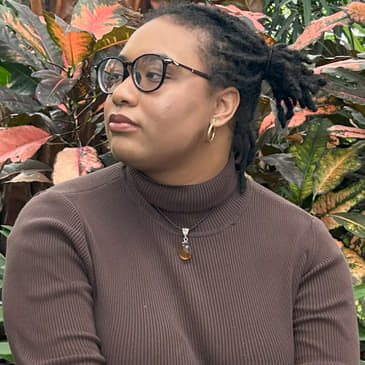
Charlotte Bachelor is going to share her story about growing up in Detroit, Michigan with the intersecting identities of being black and Autistic. Charlotte will talk about the importance of community, allyship and the need for safe spaces that impact discussions about racism and the urgent need for bystander interventions.
Dyslexia Accessible Transcript
Black Autistics Thriving in Urban Settings
Spanish Accessible Transcript
Los autistas negros prosperan en entornos urbanos
German Accessible Transcript
Autisten meistern Krisen erfolgreich
French Accessible Transcript
Des personnes autistes noires qui s'épanouissent en milieu urbain
Chinese Simplified Accessible Transcript
Transcript
Black Autistics Thriving in Urban Settings
February 8th, 2026
Introduction and Episode Preview
Welcome to Today’s Autistic Moment: A Podcast for Autistic Adults by An Autistic Adult. My name is Philip King-Lowe. I am the owner, producer and host and I am an Autistic Adult. Thank you so very much for listening.
Charlotte Bachelor is my guest to talk about Black Autistics Thriving in Urban Settings. Charlotte is going to share her story about growing up in Detroit, Michigan with the intersecting identities of being black and Autistic. Charlotte has faced the challenges of finding support and understanding from professionals and peers due to her intersecting identities. Charlotte will also talk about the importance of community, allyship, and the need for safe spaces that impact discussions about racism and the urgent need for bystander intervention.
Come join us as for Black Autistics Thriving in Urban Settings on Today’s Autistic Moment.
♫♫ Opening Theme Music ♫♫
This first segment of Today’s Autistic Moment is sponsored by The Autism Society of Minnesota, known as AuSM throughout Minnesota’s Autism Community. As Minnesota’s First Autism Resource for more than 50 years, AuSM serves the whole state, the whole spectrum for the whole life. Visit AuSM at ausm.org.
In addition to the wonderful guests and conversations on Today’s Autistic Moment, you can find many more resources.
Visit todaysautisticmoment.com to listen to over 120 episodes released since 2021.
Check out the Episode Schedule 2026 to see upcoming topics, guest information, and program descriptions for season 6.
On the website, you can:
· Learn more about Today’s Autistic Moment.
· Read the Guest Bios.
· Explore the Adult Autism Resources Links Page.
· Visit the Autistic Community Bulletin Board.
· Read the blog.
· Find out about TAM Autistic Consulting Services.
· Sign up for a subscription to get Ad Free Interviews.
· Support Today’s Autistic Moment with a donation.
Every episode, including this one, has a transcript. The transcripts are sponsored by Minnesota Independence College & Community.
You can read the transcripts right on the website or download printable versions to help you save ink.
The transcripts use a dyslexia-friendly font that are available in English, Spanish, German, French, and Chinese Simplified.
Want more interaction with Today’s Autistic Moment? Follow Today’s Autistic Moment on Facebook including our Community Group Page, LinkedIn, BlueSky, Instagram and Threads. Also follow us on the YouTube Channel @todaysautisticmoment to watch Autistic Voices Roundtable Discussions. New Episodes will be coming up in 2026.
After this first commercial break, Charlotte Bachelor will join me to talk about Black Autistics Thriving in Urban Settings.
♫ Segment Ending Music ♫
Commercial Break I
Podcast Apps
Today’s Autistic Moment can be downloaded and heard on most podcast apps including Apple. Google Play. Breaker. Castbox. Overcast. iHeartRadio. Pocket Casts. RadioPublic. Spotify. TuneIn. Pandora. Amazon Music. Audible. Podcast Addict. Podcast Chaser. If you are looking for the transcripts, go to todaysautisticmoment.com, click on the episode you want to listen to and follow the directions to find the transcripts.
Thank you for listening to Today’s Autistic Moment.
♫The Autistic Coach Collective♫
♫Best Care Ad♫
♫MICC Ad♫
Segment 2
♫Segment Beginning Music♫
Philip King-Lowe
I am so excited to welcome Charlotte Bachelor back to Today’s Autistic Moment. Charlotte was on Today’s Autistic Moment to discuss Autistic Goal Setting in September. The conversation was so outstanding, I knew I had to ask her to join us again. Charlotte Bachelor is a late-diagnosed Autistic/ADHD writer and speaker from Detroit, Michigan. Charlotte began documenting her diagnostic journey as a student at Michigan State University where she earned a Bachelor of Arts degree in Professional and Public Writing with a minor in African American and African Studies. Charolette’s work focuses on uplifting the experiences of Black Disabled Women and Girls. Additionally, Charlotte completed the Disability EmpowHer Expressions Group and is a long-term Trainee with the MI-Lend program. Through Charlotte’s powerful storytelling, she shares her unique perspectives to illuminate underrepresented stories and experiences. Please join me now as I welcome Charlotte Bachelor to Today’s Autistic Moment.
Philip King-Lowe
Charlotte bachelor, welcome back to Today's Autistic Moment. I am so excited that you're here. Our conversation in September about goal setting was just fantastic, so I know this is going to be a great conversation today. So welcome back. I'm so glad you're here.
Charlotte Bachelor
Thank you so much for having me again. I'm happy to be here.
Philip King-Lowe
As we are recognizing black history month in February and recognizing at least on Today's Autistic Moment, black Autistics and their contributions to society in terms of Autism and also racism and intersectional cultures and that kind of thing. So that's what this conversation is about today. And I'm sure that your personal experiences of being a Black Autistic woman in urban settings has indeed shaped a lot of your experience. I'm going to begin right away. What important information do you want to give to introduce our audience to what it is like to be a black Autistic thriving in an urban setting?
Charlotte Bachelor
Yeah, so, to start, I think I'll kind of set the scene of where I'm based out of so I am based in Detroit, Michigan, born and raised in Detroit, Michigan. Went to Michigan State up in East Lansing. Grew up and kind of spent my adolescent years in Metro Detroit, but I think I really came into my own once I moved back to Detroit after graduating from college and being able to be in a space where, you know, there are people who look like me, there are Autistic Adults who may or may not share the same experiences I have parents and caregivers and professionals you know, who want to work or who are accustomed to working with Black Autistic individuals. So just to set the scene, I like to tell people that I am black before anything else. I'm black before I'm Autistic, disabled, Neurodivergent. That is the first thing most people notice about me when I enter a room and I can't escape that fact; I can't take off my black skin at the end of the day. So everything I experience, you know, there are some people who are like, well, you know, we don't have to talk about race and Autism. Autism is Autism across the board, which inherently is untrue, because it's a spectrum, but I think, you know, being a black woman has definitely played a large role in how my Autistic traits are perceived, and kind of why it probably took so long for me to get diagnosed. And I think coming back home to Detroit, being around other black women has really kind of helped me find my place in the world. And creating content surrounding um, surrounding the experiences of Black, Autistic women and girls have really helped ground me in my advocacy work.
Philip King-Lowe
What were some of the challenges you found yourself really having to meet?
Charlotte Bachelor
So I would say the biggest challenge, you know, not to be, you know, over simplified is racism, like you know, most of the time when you're looking for, you know, neuropsychic or other evaluators, they're typically not a whole lot of black women. When you go to Autism support groups or things for Autistic Adults, there are typically not a lot of black women. I remember specifically in college, even though I was, you know, on social media, openly, proudly identifying as a disabled person I did not, you know, interact with Council of Students with Disabilities at my school because I knew it was overwhelmingly white, and I had had some micro aggressive incidents with students in that kind of sphere of my college campus. Not to say I have plenty of black and brown women who I know are disabled, who are, you know, my close friends and confidants. But it's hard because it's like, even though we should be able to relate on the aspect of Autism, some people can't understand how race plays into that. And a perfect example of this is I was once on an app designed for Autistic individuals to meet friends and date and whatnot. And I was like, Okay, I've seen a couple ads. Let me download the app and I go to the discussion forum. So there's people talking about movies, TV, video games, whatever. And there's someone in there trying to make a moral justification for chattel slavery. And I was like, this is not the place for me, because there are some things about human there are some things that don't need to be, you know, debated. If you have an interest in learning the history behind that, that's fine, but for people to feel comfortable debating it and trying to make it an issue of semantics, you know? So I already know that a lot of my spaces, I'm going to be the one, the only, or a few. So I try really hard to find spaces with people who either share my lived experience, which black, Autistic women are kind of a subset of a subset, or people who are willing to learn and grow and kind of have a flexible mindset. So I don't deal with racism, I don't deal with microaggressions, and I try not to put myself into positions where, you know, I could feel that my integrity would be compromised, or I feel like I'm going to be talked down upon or gawked at, or be told that I am derailing conversations because, you know, I'm saying that race is a factor.
Philip King-Lowe
Yeah, and it's really interesting, isn't it? Because the disability community and the Autistic community has this phrase, “nothing about us without us,” and yet, when individuals of diverse races get into those spaces, it's interesting how nothing about us, without us, becomes Nothing about us, but that doesn't include you.
Charlotte Bachelor
Yeah, yeah. It's like, well, we're all disabled, so the race stuff, the socioeconomic stuff, the gender stuff, we just, you know, but we can't ignore the intersectional reality that we live in and that there are multiple factors impacting the way people receive care, the treatment they get the type of services they're afforded, how they're treated by healthcare professionals, how they're seen as their peers. And I hate to say this, but someone being Autistic that does not automatically excuse you from being racist. There are a lot of people who think that because they are Autistic, they have a moral high ground, and sure, I want to see the best in everyone, but I've experienced racist Autistic people, and I'm probably not the only black one. I've seen Autistic people be misogynistic and all kinds of other things. So I think it, I think it's less of, you know, Autistic people are people, and they are they can have moral failings, or, you know, or promote injustice in other ways. So I think people really have to examine themselves that like, Yes, you are disabled. You understand what it's like to be marginalized. However, comma, there is also a subset of people, black, American people, who have suffered for a very long time in this country, and there are, you know, consistent systemic barriers dating back to the colonial period on why black people in America are treated the way they are. And unfortunately, it's easier, it's easy to like, understand that, to read that in a textbook, but to really digest that and to maybe realize that, hey, you know, I'm not supporting diverse voices, where I'm not listening to Black Autistic women. I think it's one thing for people to understand, but then actually to display that allyship as a verb is where the real, you know, unlearning, really begins.
Philip King-Lowe
Yeah, and tell me a little bit about some of your urban experiences, about certain parts of even where you are, where even among your black communities, are there other places where it's safer to stim in those places? Are there other places where it's not so safe? Do you have to navigate places where your intersectional identities are safer versus others? Do you find that happening where you are?
Charlotte Bachelor
So I would say it's like anything is time and audience for me, just like a lot of black people learn how to code switch depending on the environment they're in and who's around you, kind of for black Autistic people, masking can be a tool for survival. So if they're, for example, my first job out of college, I don't know if I've told this story on here, but I was outed as being disabled because a supervisor saw something on my personal Instagram page and brought that information to me at work in front of my other colleagues. And mind you, in this case, I was working as a, as a, as a city event coordinator, so I'm doing festivals, large scale, easy, 10, 15, 20,000 people in a weekend. It's a very even if you're not Autistic, it's a it's a lot of moving parts. And so you know, when this person, you know, told me they were like, well, you know, you've been through so much and blah, blah, blah, and we can start doing some stuff for the community. When I shared that I was burning out, or I needed a mental health day, or, hey, this is too much, I was met with. There are no mental health days in sick time, and if you're calling out sick, then there's a problem well you’re getting written up. So eventually I left that job, and I was actually that was the one of the first times I experienced Autistic burnout, and I did not work a full time job until left that job in January of 2024. I didn't work full time again until June of 2024. I had a couple of freelance contracts and was doing a few other things. But it's just like, it's just like anywhere else, there are some people who are willful, willful, willfully ignorant about Autism and disabilities, and even when presented with a disabled person who says, hey, this is what I need, so my needs are met. You know, they refuse it a lot of times, in the circles I run in, which is a lot of special education advocacy and a lot of parent support groups, a lot of people have not met a late, diagnosed Autistic Adult. Most people I know their children were diagnosed kind of at that like two to five range as children. So I remember going to a special education advocacy group and one of the moms saying, you know, I don't mean to sound ignorant, but I didn't know you could be diagnosed as an adult, and oftentimes we're not. You know, black women are not, let's be real. Black women are not the face of late diagnosed Autistic Adults, nine times out of ten. So when I go to these parent groups, I'm actually given a lot of warm reception. It's like, Yeah, let's talk about this. I want my kid to go to college one day. I want my kids to be able to live an interdependent life and do all these things. So when they see me out in the community working, you know, being a young adult that gives them a lot of hope for their young adult, that there are areas of support, and with the right people and the right things in place, they can thrive. So I would say, I honestly, you know, some of my greatest allies who support my work here on the ground are parent advocates. And, you know, parent focus groups, because there aren't a lot of, I would say, groups for young Autistic 20 somethings here in the city. Now that's an initiative I would like to start for young women down the line, but oftentimes I'm with people who maybe are 1015, 20 years my senior. But you know, they share their child, their stories about their child, or loved one, we're able to find some common ground, and from there, we kind of work together and share resources. So I would say here in the city, I have mainly, you know, symbiotic relationships with a lot of groups on the ground, because in Detroit, there aren't a lot of resources for my community. Most parents, if they want resources or assistance with their child. They have to go outside the city limits. So for me, it's, you know, I know I'm kind of a niche of a niche here in the city, but I'm willing to work with people who are willing to, you know, we may not agree, we may not have the same level of knowledge or the same experiences. But what I found is that these parents want to do right by little black boys and black Autistic girls, so they're going to, you know, work together to make that dream happen.
Philip King-Lowe
Yeah, that's exciting. Thank you for sharing that. You know in this time when there is an increase in racism being so accepted. And you know that black Autistics, male or female for this sense of the word, are finding that increased social acceptance of both ableism, racism and people wanting to step back from the advances made by the infrastructure the Autistic community has built. How do you see the black Autistics in your urban area thriving?
Charlotte Bachelor
So one thing I will say is that to push back on what you said, the racism has always been here. Like, as a black Autistic person, like, straight up the first time I got called the N word I was 14 in high school by a fellow classmate who thought it was funny. So for me, the racism has always been here. I mean, people feel more empowered now, but it's always been here in very nasty, little insidious ways that might not get global attention. But I remember being a student at MSU, and black girls were having nooses hung on their dorm doors. This was what, 2018 2019. Oh, my. This is, you know, and mind you, black people only make up about 7% of the MSU student population. This is a school with over 50,000 people. So the racism has always been there. I think people, certain, some people who are not as impacted by racism. It's now in their front door there. It's now in the newspapers. It's now people feel louder and prouder. But for me, it's always been there, and it's always been in the back of my mind, and unfortunately, it is a fact of life. We live in a racist society. So, keeping that in the back of your mind, you know, you learn that at a very, very, you know, young age. And just to kind of go in my family history, my grandfather was a sharecropper in the south. So to give that context of, you know, racism, my grandparents were in their early 20s during the race riots in Detroit. My grandmother was a nursing school so, you know, I don't want to say like that trauma is passed down, but that history isn't so far behind us. We have people who are, you know, living testaments to that. But people, but you How do I say this? You still want to live life. You still want to have friends, have relationships, be a part of a faith community. You know, you still have dreams and goals and aspirations. And I think Black Autistic people have chosen to thrive in spite of what's going on. You know, that's kind that's an act of resistance. People say joy is an act of resistance. It's an act of resistance to say, I want to have a future, and I want to be here in a country that has, you know, essentially spat on your ancestors for the last 250 years. So, I mean, I enter spaces knowing I'm probably going to be the only one, but if I can make a way for someone else, or I might find someone else who feels like they're the only one, and another person and another person, and then we can kind of all come together to make a way for other Black Autistic individuals. And I mean, there are plenty of online spaces, Instagram pages, Facebook groups, conferences. There are many places where we are, even though we might spread out, be spread out geographically. But I mean, the resistance is people are still getting up and going to work every day. They're still protesting in whatever way, they're speaking out in whatever way, they're making art. They're still doing things that make them happy, and they're not just, you know, face down, under the pillow, under the bed, saying it's not going to get better, but I think that that joy as a resistance is innately a part of black culture and black people here in America, given, you know, our history. So I think we continue to live lives, you know, live, I don't want to say average last but, you know, we go to the grocery store, we have friends, we sometimes cry, we sometimes have days where we don't leave the house, but most Autistic black people I see are still getting up and choosing to, you know, speak up for what they believe in, and are still continuing to advocate even in this very precarious time that we live in.
Philip King-Lowe
I always appreciate the full answers you give to my questions. I think they are really great for our audience to hear the whole story, if you will. So thank you so much for your answers. That's so great.
After this next commercial break, Charlotte and I will talk about Black Autistics thriving and not just surviving as the intersectional communities look for allyship. We will make the point that being an ally is a verb that means action as Black Autistics have a target on their backs and require resources to thrive.
♫ Segment Ending Music ♫
Commercial Break II
♫ ITI Assistive Technology Ad ♫
♫Lisa Morgan Consulting Ad♫
TAM Support Ad
In 2026 Today’s Autistic Moment will bring you guests who will highlight how Autistics thrive in these challenging times by recognizing the incredible strengths we have to raise the bar through hard conversations and community building. Stand up for Autistics thriving with your assistance to Today’s Autistic Moment.
Support Today’s Autistic Moment in any of the following ways.
· Make a one-time donation through the Ko-fi icon when you tap on Support Today's Autistic Moment on todaysautisticmoment.com
· Subscribe monthly via Patreon.
· Purchase items at Today’s Autistic Moment’s Logo Shop.
· Share Today’s Autistic Moment with your family, friends, coworkers and others through social media and/or by telling others about us.
Donations are not tax-deductible but help keep Today’s Autistic Moment as a safe space.
Thank you for supporting Today’s Autistic Moment.
♫Segment Beginning Music♫
Segment 3
Welcome back. We are talking with Charlotte Bachelor about Black Autistics Thriving in Urban Settings. Before the break we talked about Charlotte’s experience of living in Detroit, Michigan where her race is in the room before her Autistic identity is. Now we are going to talk about intersectional communities and allyship.
Philip King-Lowe
My theme this year is Autistics thriving, not just surviving. And you've been talking really well about that. In the last two years, I've really been focusing on the intersectional identities that make up who Autistic people are. And you know, these include, of course, our LGBT people. These include multiply Neurodivergent people. We also, which includes PTSD and ADHDers and any other way that our Neurodivergence is mixed, you know. And you know, urban settings can have their pockets of places where things are different. And so, you know, I've heard of others in like I know one Black Autistic man who lives in Chicago, and he literally has to be very careful about what neighborhoods he walks in and how he stims, even among his own people, because it may not be safe for him to do that, or he has to be in a particular place where he can stim, because it's simply not safe for him to do it in another place entirely. I mean, you know, he finds himself in places where everything about him is, as you have said in the past, already there before he opens his mouth. So I mean, he thrives, and yet he does more than thrive. He survives in those spaces by just accepting where who he is, where he is, but also where he has to be to stay safe, which sometimes it's a false sense of security, I know. But you know, we are here in Minneapolis, St Paul, and we have a horrid situation right now where, recent weeks ago, an Autistic woman of color was picked up by ICE who could be clearly heard saying that she is Autistic and has a brain injury. She was on her way to a doctor's appointment. That's the only thing she was doing, and yet, the people who arrested her, the people who commented about her, were all making statements she did something to break the law, which we know is not at all true. And we know that, you know, these are things that Autistic people in urban neighborhoods, really fear these things happening in their communities. You know, and so I guess I'm trying to say, you know, how are the black Autistics in your urban settings dealing with possibilities like that happening?
Charlotte Bachelor
That's a great question. I'm going to take a minute to kind of marinate on that. I think, as a black person you know, interacting with law enforcement, there is always the chance that it could go sideways. Now with the context of what's going on now more than ever. So parents have always had to have conversations, Autistic or not, this is what happens when you get pulled over. I remember being 13 or 14, and at church, we had like a local police officer and a lawyer come in to teach us. You know young black adolescents and adults; this is what happens if you're pulled over. This is what happens if you're stopped. This is how you ask for help, and this is how you make it a "safe encounter", as safe as you know a black person interacting with the police force can be. So I think I know a lot of parents here on the ground, and not only in Detroit, but in metro areas, there are a lot of parent organizations trying to work with law enforcement and local authorities to do trainings and awareness about, you know, people on the Autism Spectrum and some of their stimming behaviors, or, I think now they're even trying to get a special alert system set up so if an Autistic person elopes, and what to do in that situation? If you find someone who's eloped and maybe they're nonverbal or in a shutdown, or, you know, cannot verbally communicate to you what's going on, because elopement is a huge danger for Autistic people. I think, you know, we're doing our best to try to stay safe. I don't want to say safety is safety is not a guarantee as a black person in America, so whatever sense of safety means to someone that's such an individual thing, but I think people are just trying to stay aware of what their rights are. You know, stay together if they're going out and protesting or, you know, acting as legal observers. I think people are trying to stay as safe as possible. And I think that's when bystander intervention comes in for allies, for white allies, for non-black allies. If you're out and something happens, you know, you might need to call for backup. Or if you see someone getting, let's say someone goes to a protest, and you have someone from the opposite side and they're starting something, you might need to hop in the middle of that. Black people already have a target on our back, and this is what I say. Allyship is a verb. It means, sometimes allies will have to do scary things like speaking up in the moment or interjecting in that moment. Like I remember being a teenager at high school and me getting called the N word at the lunch table, and no one said anything. Everyone was laughing and joking like it was normal. And then I had people afterwards. Well, that wasn't right. That wasn't cool. So and So shouldn't have said that. Black people don't need people in their comments and DMS after a tragedy has already happened. There are a million eyes on these situations. We need people willing to act right now and like, I think, referring to the gentleman in your previous anecdote, one of the biggest things My family has taught me Be aware of your surroundings, you know, knowing where you're at, knowing where you are, especially as a young woman, you know, having that sort of safety and awareness about where I go and who I'm with. And you know, I've grown up in Detroit, so I am, you know, for better or worse, you know, used to this environment. So I would say that I have a great, you know, a general idea of, I'm not walking to the gas station by myself at night. That's, that's a no go. Or, you know, let's not stop at this gas station. Let's stop at somewhere else. Or, if a man is calling or costing me. I'm just going to give them a nod, because I know if I verbally go back and forth, that might not end well for me. So there are certain things I feel like a lot of Black Autistic people have been taught by, you know, their family, who have grown up in that situation. A lot of self-awareness, but also in some interactions, there needs to be bystander interventions and allies willing to, you know, kind of step it up and act in real life when they see these acts of racism or microaggressions. And it doesn't even have to be out in the street protesting, if you're in a social group and someone says something inappropriate, or is talking over a black woman, or is, you know, engaging negatively. It doesn't take much to say, hey, that's not cool. Let her finish, or let him finish. Or, you know, I think that's racist, right? Easier said than done. But allyship is not about comfortability. It's about getting uncomfortable in the face of your beliefs. Because black people have to be uncomfortable in America every day of their lives. So, you know, that's just the nature of that.
Philip King-Lowe
Yeah. And speaking for us white people, we're so "comfortable" because we think we're safe period, I mean, and that's one of those things that those of us who are here in the Twin Cities with everything that's going on, we're learning, guess what, we're not necessarily safe, just because anymore. You know, we've seen the kind kinds of horrors that can happen when our community is a target of political, sociological, socio economical, you know, agendas. you know. And you know we're seeing, you know, just a few weeks ago, a seven year old who had found asylum in the US, who happened to be in Minneapolis, was taken and kept as bait for other people of color so that they could arrest them. You know, we're seeing these things played out in our communities. And we've seen, you know, people who are white, who have been dragged out of their homes, they have been kept in places far, far away from us. You know, we even had one person who died while they were in custody. So I think this is a time, and I'm going to say this as gently but as honestly as possible, that we are learning that when one group of people is targeted, no one is really safe. And that's one of those things that I don't know if this will make you laugh or not. Those of us who are not people of color are having to learn about what black people go through, if you will. Because we are now experiencing that, even if it's on a micro, micro moment. We're learning what it means to be targeted just because of who you are. Just because of what family you come from, just because of, you know, what community you just happen to be part whatever the issue. But it feels a little bit like the pandemic. In some cases it was like you will listen and you will learn now, because it affects you too, you know? And while, while that doesn't change everything. It certainly is an educational kind of thing.
Charlotte Bachelor
So it's an educational kind of thing, and it will be interesting to see. You know, who really learns this lesson? Right? Like so many people, I don't want to say have a false sense of safety, but oh, I live in this neighborhood, or I'm in this zip code, or this county, I'm not, you know, I'm not in, you know, geographical community with black and brown people. So that would never happen in my community. That would that, would that never say never. That's all I'm going to say. Violence does not know a zip code. Hatred, bigotry does not know a zip code, a county, a city, a subdivision or a neighborhood. And you know, black and brown people you know have raised the alarm. Have you know said that this is going to happen? And for some people, they thought that they were you older, they were excluded from that, but unfortunately, experiencing bigotry and politically up political upheaval is a group assignment that nobody can opt out of. Everybody is going to face, you know, and I don't say that in like a fear mongering way. But people are going to be impacted. Even if you don't think you're going to be impacted. Everyone is going to be impacted in this kind of way. And I even say this that, um, when the raid started happening, we had sorority sisters. I'm in a multicultural sorority, saying my father's been taken. My fiancé is gone. We have frat brothers who have been taken, who are raising money, people who have legally been in the US gone. Families trying to raise 40, $50,000 to get in front of a judge, to plead their case, gone like that. So it's ignorant to say, well, because I'm whatever identity, this doesn't impact me. Oh, it impacts all of us. And I think the sooner people realize it like it's a very bitter pill to swallow. But this is a group project, and the only way to survive is, you know, we understand that oppression is bad, but understanding, how are we going to go against this? Right? Because being passive is not going to get you anywhere, and not saying that everyone even has the same lanes and political organizing and advocacy. But people quickly have to learn that if you know you have to be willing to stand for something nowadays. Being middle of the road, being neutral, that is not, you know, we're talking life and death here. So I'm glad that you mentioned that, because those are things I have alluded to in my work before. But unfortunately, because I'm a black woman, when I say those types of things, it's fear mongering or being critical or being negative or making everything about race. So sometimes those things, like that thing you just said, it comes better when people hear from people in their community. So I hope your listeners really listen, and if you don't take anything else away from this podcast, that last little five minute clip that is your new reality, and now it is up to you to figure out how to proceed. And I can't tell people how to act. I can provide suggestions, but, um, yeah, it's very scary when you realize privilege can only protect you for so long.
Philip King-Lowe
Right. And no, the thing is, is that we tend to think that it's the big things that create these walls, that create these biases. I happen to think those little jokes that we've learned to accept those little, little things that we just learned to pass off all that was nothing serious, and stuff like that. All of that is building us to these points of time. And you know, and especially for Autistics, Autistic people of color, transgender people right now, this is all not okay. This is not normal. This is not this is not safe for anybody. And so the sooner all of us in the us realize that we do have a responsibility of some kind to each other and that we are, we are, we are, community, no matter where we are, what we do, we really do. When we protect one of us, we are speak out for one of us. We speak out for everybody. However we choose to do that.
After this final commercial break, Charlotte will share some resources for Black Autistic Adults, children and elderly people. After we conclude the interview, Today’s Autistic Bulletin Board will follow.
♫ Segment Ending Music ♫
Commercial Break III
TAM Consulting Services Ad
On February 24th, 2011, a psychologist shared the results of an evaluation I did with him and told me that I had Asperger’s Syndrome. I went through a four year period of feeling relieved, confused, happy, grieving and felt totally lost in my life all at the same time. In 2017, I found The Autism Society of Minnesota and it changed my life. I started learning about Autism, meeting other Autistic people, and discovering the local Autism community. Since then, I have accepted that I am Autistic and the person I am supposed to be.
If you were recently told that you have Autism, you need a consultant who knows how your life is being impacted, so you can connect with the Autistic community to find resources and support.
Go to todaysautisticmoment.com and read about TAM Autistic Consulting Services. If interested, please fill out the intake form and make an appointment so that we can begin working together.
♫ Looking Forward Life Coaching Ad ♫
Future Shows
I am in need of a guest for the episode Black Autistics Thriving in Rural Settings on February 22nd. Urban settings and rural settings are different not just because of geographic location, traffic flow and the size of the population. Black Autistic people experience ableism by the attitudes of those who do not think they should be there because of the issues of race and ableism and how they find resources for supports. If this sounds like a topic you would like to be a guest for, please send an email to todaysautisticmoment@gmail.com.
On the chance that I am unable to find a guest, I will be producing an updated rerun on February 22nd, of the episode Black Autistic Adults: Stop the Whitewashing with my guest Precious Lesley. The Autistic and Disability movements have a saying “Nothing About Us Without Us.” Yet, many Black Autistics have experienced the kind of pushback that suggests that they are not included in those words. Precious Lesley is a Black Autistic Woman who shares her first hand experience to help us hear her out.
The shows for March will be announced on the episode on February 22nd.
Thank you for listening to Today’s Autistic Moment.
♫Segment Beginning Music♫
Segment 4
Philip King-Lowe
Charlotte Bachelor is about to share some resource recommendations for Black Autistics. After that will be Today’s Autistic Community Bulletin Board.
Philip King-Lowe
My final question for you, Charlotte is are there resources that we can help people reach out to, especially black Autistics who may be in urban neighborhoods, who need to find safe spaces, who need you know who need to find those places to help them thrive? Do you have any recommendations that you'd like to give?
Charlotte Bachelor
So because I'm located in Detroit, unfortunately, there's not a million Charlotte's running around across the US, the biggest organization I can think of as Autism and Black. They are having an in person conference in West Palm Beach, Florida, April 17 through the 19th. I've spoken there several times before. The conference will also be live streamed. But they have a great, very small, intimate group. I believe they have a membership organization where they have places where their members can come together share resources, not just for Black Autistic Adults, but for parents, caregivers, special education advocates, teachers, whoever. If you are a Black Autistic person, care for a Black Autistic person, or are an ally to Black Autistic people, they have a ton of great resources, and I've met a ton of great people. Another resource I'm going to recommend, this is specifically, specifically for black Autistic women. The podcast is Black Girl Diagnosed, and it's hosted by a Black Autistic advocate who was diagnosed later in life. She does a ton of great work. I often I feel like she has the thoughts I have. She's able to get them out quicker into social media and into articles quicker than I can, because I don't do advocacy work full time. But please look up Black Girl Diagnosed. If I have to, I will email you her name and you can put it in the show notes, but those are the two biggest things I can think of now. And just, you know, just looking up hashtag black autistic adult on YouTube. Hashtag autistic. I have a YouTube channel called Charlotte Says. I put out YouTube shorts called Bionic Chronicles. It's about being a Black Autistic Woman in America. They're short, little 32nd to a minute long clips, short, little anecdotes from our day. People might find them comforting. It's not a whole deep dive like a podcast. It's not the most academic thing, but it is a way that I share, you know, share and build community. But just if you look up Black Autistic Adults in your area, you'll be surprised with what you'll find. I would reach out to The Arc in your city or your community. The Developmental Disabilities Council in your state might be able to help. There are other organizations. Unfortunately, I wish I had more resources to provide. But, unfortunately, black folks are used to building their own table and building their own communities. So, I'm pretty sure there are probably tens of hundreds of other groups that I might not be aware of that are out there, you know, doing the work.
Philip King-Lowe
Last September, when you were on Today's Autistic Moment last, you spoke of a project that you are part of. Can you share with us how that's going?
Charlotte Bachelor
So, I was on the project just for the promotional period. Um, they are still working, um, out for #autisticoutloud, so please follow their website and Instagram for the most current dates. I heard that there might be a trailer dropping soon for that. Um, but yeah, support, um, #autisticoutloud when that project comes out, because. Um, that project is gonna feature people, Black elders, Black elderly people on the spectrum, all the way down to parents and caregivers and young children. And that's not really a story that's often told. Especially with our Black elders, or Autistic elders in general. But especially Black Autistic people. But I highly encourage you, the webinar series is still up on YouTube, free for everyone to watch. #autisticoutloud, I believe there's a 6 or 7-part webinar. They're about an hour and a half each. Um, they're timeless, they cover, um, employment, education, um mental health and well-being, Black Autistic joy. So, if you're a parent, a caregiver, a self-advocate, an ally, or someone who just wants to learn more, that would be a great place to start. That was really a labor of love with myself. And the Autistic Out Loud team, so I would highly encourage anyone to check out the webinar series, um, while we eagerly await the trailer and the release of the documentary.
Philip King-Lowe
Yeah, that sounds so exciting. I'm so glad that you and the others who put that together are part of that. That resource is always is that resource is already available on the Adult Autism Resources Links Page on todaysautisticmoment.com. Please go there, find that resource and go and see what's going on over there. There's lots of great stuff. So Charlotte bachelor, thank you so very much for taking this time to talk with us. Every time I talk to you, I learned. I learned a lot from you myself. And you know, I work hard to be a listener so that I can learn too. So I want to thank you so much for, you know, helping me understand things better than I do I did before I started my interview. So thank you so much for being here and sharing your stories of your life, your projects, your history and you know, helping us to gain the understanding about what's happening in your life. So thank you so much for this.
Charlotte Bachelor
Thank you for having me once again. I really do appreciate any time I get to come and speak and teach. I'm always receptive to people who are wanting to listen and learn. So thank you.
Philip King-Lowe
You're welcome.
Transcribed by https://otter.ai
Would you like to listen to this conversation with Charlotte Bachelor with no segmentation or ads? Sign up for a subscription to Ad Free Interviews on todaysautisticmoment.com. The subscription is only $12.00 a month or $144.00 for a whole year. Once you buy the subscription, you can click on any show where you see the logo for Today’s Autistic Moment Ad Free Interviews to hear only the interview without interruption, segmentation and music. You can listen to all Ad Free Interviews going back to July 2025 and all upcoming episodes.
Today’s Autistic Community Bulletin Board
All these events and many others such as sensory friendly concerts, art activities and museum information links are available on
todaysautisticmoment.com/bulletinboard.
The Adult Coffee Club for Autistic Adults in Minnesota are held on the second Tuesday of every month (weather permitting) at Dogwood Coffee located at 2700 University Ave W. Suite 100 in St. Paul, Minnesota. The Zip Code for your GPS is 55114. The Adult Coffee Clubs will begin at 4pm to 6pm on February 10th. March 10th. No Coffee Club in April. May 12th. June 9th.
Understanding Autism virtual classes are offered by The Autism Society of Minnesota. The next classes will be February 9th, 12-1pm. March 9th, 6- 7pm. April 13th, 10-11am. May 11th, 12-1pm. June 8th, 6-7pm.
The Autism Society of Minnesota invites you to Family Fun Day at We Rock the Spectrum on Saturday, February 28th, beginning at 9am to 12pm. The event will be at We Rock the Spectrum located at 1020 Discovery Rd #127 Eagan, MN 55121.
Registration is open to attend the Minnesota Virtual Autism Conference April 15th through the 16th, 2026. Register to get access to all conference keynote and breakout sessions, plus access to session recordings for a full month so you can revisit content on your own schedule.
Go to ausm.org to get more information about these and other social and recreational programs, educational events, counseling services and support groups at The Autism Society of Minnesota.
MNeurodivergent is a social club rooted in a vision of bringing Neurodivergent Minnesotans together to build meaningful connections. Its core principle is to foster an environment where all are treated with dignity and respect regardless of ability or preferences. Go to their website mneurodivergent.org for more information, become a member, volunteer and attend their events.
The Autistic Self-Advocacy Network is now accepting applications for the 2026 Autism Campus Inclusion (ACI) Leadership Academy that will be held virtually Monday, July 13th through Sunday, July 19th, 2026. Use the link on this episode’s transcript ASAN 2026 ACI Leadership Academy or go to the Autistic Community Bulletin Board on todaysautisticmoment.com for more information
Today’s Autistic Moment is here because of the generosity of supporters and sponsors. Go to todaysautisticmoment.com and select Support Today’s Autistic Moment to donate.
If you have questions about Today’s Autistic Moment, please send an email to todaysautisticmoment@gmail.com.
Thank you for listening to Today’s Autistic Moment: A Podcast for Autistic Adults by An Autistic Adult.
May you have an Autistically Amazing day.
♫ Closing Background Music with credits ♫
All of the guests meet with me on Zoom to record the interviews. The interview transcripts are provided by Otter. The podcast is prepared and edited on WavePad Masters Edition by NCH Software. The podcast is published by Spotify for Podcasters. The music that you hear is licensed to Today’s Autistic Moment by premiumbeat.com.
