Go to todaysautisticmoment.com for the transcripts.
LaToya Hinton and Philip discuss the healthcare equities that Autistic Women need, but are not getting because they are not available. LaToya will share how she discovered what healthcare equities were needed as part of her self-discovery. LaToya will talk about the healthcare equity panels she has been doing to hear what Autistic Women in various points of their lives mention what they are missing, and the community supports LaToya and others are developing so that Autistic women can talk about finding resources to have those needs met.
Dyslexia Accessible Transcript
Autistic Women Thriving in Healthcare Equities
Spanish Accessible Transcript
Mujeres autistas que prosperan en un entorno de equidad sanitaria
German Accessible Transcript
Autistische Frauen, die im Gesundheitswesen erfolgreich sind
French Accessible Transcript
Femmes autistes qui s'épanouissent dans le secteur de la santé
Chinese Simplified Accessible Transcript
Transcript
Autistic Women Thriving in Healthcare Equities
March 22nd, 2026
Introduction and Episode Preview
Welcome to Today’s Autistic Moment: A Podcast for Autistic Adults by An Autistic Adult. My name is Philip King-Lowe. I am the owner, producer and host and I am an Autistic Adult. Thank you so very much for listening.
In 2022 the World Health Organization reported that while some progress has been made for disabled people to receive healthcare equities, the world is far from realizing this as a basic human right. Many disabled people continue to die early, have poorer health, and experience more limitations than others. LaToya Hinton is my guest speaker who will talk about the healthcare equities that Autistic women are not getting, due to a lack of access to getting a diagnosis and how it can affect their mental health.
Come join us as we discuss Autistic Women Thriving in Healthcare Equities on Today’s Autistic Moment.
♫♫ Opening Theme Music ♫♫
This first segment of Today’s Autistic Moment is sponsored by The Autism Society of Minnesota, known as AuSM throughout Minnesota’s Autism Community. As Minnesota’s First Autism Resource for more than 50 years, AuSM serves the whole state, the whole spectrum for the whole life. Visit AuSM at ausm.org.
In addition to the wonderful guests and conversations on Today’s Autistic Moment, you can find many more resources.
Visit todaysautisticmoment.com to listen to over 120 episodes released since 2021.
Check out the Episode Schedule 2026 to see upcoming topics, guest information, and program descriptions for season 6.
On the website, you can:
· Learn more about Today’s Autistic Moment.
· Read the Guest Bios pages.
· Explore the Adult Autism Resources Links Page.
· Visit the Autistic Community Bulletin Board.
· Read the blog.
· Find out about TAM Autistic Consulting Services.
· Sign up for a subscription to get Ad Free Interviews.
· Support Today’s Autistic Moment with a donation.
Every episode, including this one, has a transcript. The transcripts are sponsored by Minnesota Independence College & Community.
You can read the transcripts right on the website or download printable versions to help you save ink.
The transcripts have hyperlinks in them for names, organizations and other resources named throughout the show that you can access to see if they are helpful to you.
The transcripts use a dyslexia-friendly font that are available in English, Spanish, German, French, and Chinese Simplified.
Want more interaction with Today’s Autistic Moment? Follow Today’s Autistic Moment on Facebook including our Community Group Page, LinkedIn, BlueSky, Instagram and Threads. Also follow us on the YouTube Channel @todaysautisticmoment to watch Autistic Voices Roundtable Discussions. New Episodes will be coming up in 2026.
I want to clarify some things about what we are doing with Autistic Advocacy Month. The Autistic community and our allies have all contributed to making April as Autism Acceptance Month which has helped us build a fantastic infrastructure. We know that many people are still going to celebrate April as Autism Acceptance Month, and we encourage those who will be to do that. There are many Autistic people who have their issues with Autism Acceptance Month, who feel that while acceptance is an important step, it is no longer enough. The actions of Health and Human Services Secretary Robert F. Kennedy, Jr. last April and ever since regarding Autism seems to be aimed at undoing all the work we have done to make Autism Acceptance Month what it is. We are beginning to name April as Autistic Advocacy Month to make the voices of Autistic people heard loud and clear, that we will advocate for keeping our infrastructure and strengthen it. Autistic Advocacy Month is being introduced in April to tell people to “listen to us, include us, and change the systems that harm us.” What the current administration is seeking to do is to invalidate our voices, make us appear too incompetent to be heard and taken seriously, as if Autistic people deserve to be stigmatized. Autistic Advocacy Month is our line in the sand that says, no, you will not destroy our dignity. We will advocate to change these systems that harm us, and take back our territory of knowing ourselves, being proud of who we are, and assert the expertise and power of the Autistic community that belongs to us in the month of April and throughout the year. We know that we will not change things in one month. Autistic Advocacy Month is being introduced to add stronger supports to maintain what we have all achieved to take us into the next level.
After the first commercial break, LaToya Hinton will be my join me to talk about Autistic Women Thriving in Healthcare Equities.
♫ Segment Ending Music ♫
Commercial Break I
Podcast Apps
Today’s Autistic Moment can be downloaded and heard on most podcast apps including Apple. Google Play. Breaker. Castbox. Overcast. iHeartRadio. Pocket Casts. RadioPublic. Spotify. TuneIn. Pandora. Amazon Music. Audible. Podcast Addict. Podcast Chaser. If you are looking for the transcripts, go to todaysautisticmoment.com, click on the episode you want to listen to and follow the directions to find the transcripts.
Thank you for listening to Today’s Autistic Moment.
♫ Looking Forward Life Coaching Ad ♫
♫ ITI Assistive Technology Ad ♫
♫Segment Beginning Music♫
Segment 2
Philip King-Lowe
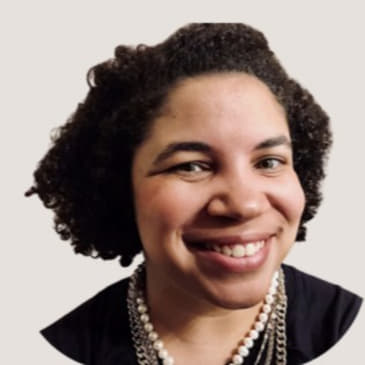
Welcome back everyone. Dr. LaToya Hinton is a multiply Neurodivergent individual who is Eastern Band Cherokee and identifies with several West African communities. LaToya has been working with Umbrella ND to conduct panels of intersectional Neurodivergent communities about healthcare equities.
Please join me as we welcome Dr. LaToya Hinton back to Today’s Autistic Moment.
Philip King-Lowe
LaToya Hinton, welcome back to Today's Autistic Moment. It really is my pleasure to have you back and so welcome.
LaToya Hinton
Thank you for having me back. I'm excited to speak with you on this particular topic of Autistic Women and Health Equity.
Philip King-Lowe
Well, yes, you named it. We're going to talk about Autistic Women Thriving Through Healthcare Equities, how they are getting them, what, how they're not getting them, and how they're thriving, thriving though them, given the realities of what Autistic women are facing with getting those health care equities. What important information can we give to introduce our audience to Autistic Women Thriving Through Healthcare Equities?
LaToya Hinton
So, I think the first piece that I would probably speak about from my own life experience would be having the knowledge to do some of your own self-assessments and things like that. If you think you that you might be Autistic, but haven't had the resources to delve into that topic, because I know that there's a large population of women, I'll say you know, those who have lived in like working class environments or in under resourced environments may not have even had the capital to be able to have a formal diagnosis. And I think that that is actually something to really look at a bit further in the sense of a lot of Autistic women are high masking. I won't say that all are, but I will say that that is a pattern that we see for folks who go undiagnosed for long periods of time. Right. They have the ability to, you know, maybe tell mental health officials, like a therapist, what they want to hear, because they're so good at masking. Right. That definitely was my own personal experience. So I didn't really start to do that critical self-reflection that I even needed to look at Autism seriously until I was in my mid-30s. And I definitely was diagnosed with ADHD before I even started to have any sort of conversations with a therapist about an Autism assessment, and since I was so high masking and maybe ADHD kind of looked like what my therapist was used to seeing with other, you know, feminine presenting clients, patients. I think that may have been why, you know, certain questions were not even asked to me about the possibility of Autism or that I should be assessed and, and this is a huge pattern that happens quite frequently for folks who are AuDHD and are women and, and I think that so, you know, I'm definitely not alone, right in this kind of trajectory of self-discovery, and I would say, self- advocacy. I definitely told my therapist that, you know, I wanted to go deeper and wanted to understand more about Autism and how it may play a role in my life. And then I found Embrace Autism Website, yeah, and I started to take a lot of self-assessments on there the AQ. And the AQ is actually really interesting, because it's designed for folks who are high masking. Right. And so the questions that are asked kind of help you to, you know, you know, maybe get below the surface and kind of understand, you know, your Autistic traits and how they're showing up in your life, and the way that you know you're, you're, somehow, you know, coping and trying to present yourself in a certain way. I think for me, some of the signs were my mental health, you know, early on, no, I, I had a lot of issues with anxiety and depression. Right. And a lot of the anxiety and depression stem from difficulties with building relationships, right, with full right? So like making those connections for myself before I even did any assessments, allowed me that space to consider, you know, how Autism may play a role in just the way that my nervous system is reacting to the world around me. I think there's a lot more understanding, I think, when it comes to the mental health field, in terms of like, how to treat anxiety and depression, right? But there isn't really a whole lot of understanding of what the root causes, right. Anxiety and depression, may you know where they're stemming from. And so I think that maybe a gap for a lot of women who you know are high masking and just don't realize for years out of their life that they should, you know, try to learn more about Autism. I would say other things too, like for me, I had multiple interests in my career. And this is something that a lot of AuDHD people kind of talk about, that it's not just like one special interest or something like that, it's multiples. And then, you know, you find yourself going in lots of different career trajectories for that reason. I think I've always really been good at seeing systems and patterns, and that has been really a benefit for me in my career as well. So it hasn't just been this kind of impulsive you know, just choosing different routes without intention. Right. And so I think for me, that also was sort of a sign that, most likely, you know, I'm AuDHD, is that I always felt like I had a whole lot of intention and like sort of deliberate agency and choosing different routes in my career, but that anxiety and depression was kind of always there in the background, and that made it difficult for me to sometimes be able to describe to people around me who are my mentors in my career. Right. What I was experiencing in terms of overwhelm, or if I felt like I was in that, like the freeze stage, you know, where your amygdala is activated, you know, and you don't feel that you can move forward, right, the decision that you've made. And, you know, being in that emotional state of freeze, I couldn't really explain why I was experiencing that, or why that would you know that anxiety would kind of like maybe loop into a cycle of depression, like I couldn't talk through that. I think mental health is also stigmatized a lot of spaces in our society. And, you know, I was in higher ed, and I didn't feel, you know, there were a lot of mindfulness activities and sort of like initiatives like that, where people could talk about managing mental health symptoms, but nobody was really saying, what are the root causes of my mental health condition? And I think that that's where sort of the missing piece was. And I couldn't really open those conversations because I didn't have somebody in the mental health space who was neuro-affirming and understood Autism or understood ADHD or how they interact with each other. They're just, you know, the knowledge really wasn't there until very recently, and so now I'm starting to see more and more conversations coming from the mental health field that are a lot more neuro-affirming and kind of understanding that anxiety and depression can stem from someone not being diagnosed with Autism. Like, that's kind of now common knowledge, I feel like, in the mental health space. But it ha, you know, it's recent. It's in sort of recent history that that has come about, and those conversations have started to allow more women to come forward and explain, you know, the lack of access to a formal diagnosis as a child, right? And you know how they're, you know, managing Autism. And, you know, I think for me, it opens a lot of awareness in terms of, you know, learning differences as well. You know, I was able to talk quite a bit about dyscalculia and how I kind of felt like I didn't have a lot of options to enter into STEM fields because I didn't have the supports that I needed as a child as well. And so I think a lot about how in the Autism community, dyscalculia. You know, there are a lot more, you know this, there are a lot more people with
dyscalculia in the Autism community and also in the ADHD community, right? And so if I had had some knowledge early on, it wouldn't have been shocking that dyscalculia is part of my experience as well.
Philip King-Lowe
Right. So basically, what we are saying here everybody is that it is difficult for you to get your health equities for things that you don't know what your health equities are, and so because you're not sure what they need to be, that's why you're having problems finding them. And why, and the fact that those healthcare equities aren't out there for you because those are not out there for you, you are not sure what you should be reaching for. And since nobody's giving you those options so you will know what you need to reach for, you're not getting them. You see, it's one of those things where we're saying for Autistic Women, how are you thriving through the healthcare equities you need when you're finding it difficult to show up for those things yourself? Okay, which requires a certain degree of self-knowledge. And if you don't know you're Autistic, you may not be aware of what those needs are, okay? So in effect, of what we're saying is that you know thriving through those health care equities means, do you know what health equities you need because of where you are? And you need help to find what those are, and because the ones that you need to reach for may not be there. You're feeling like there's nothing to really help you. You know what I mean? Does that sound? Does that sound? Does that sound, sound, sound accurate?
LaToya Hinton
It does. It does. And I think one of the things that I realized is having that self-awareness has allowed me to open opportunities that I wouldn't have had previously. So without doing some of these self-assessments, I wouldn't realize what kinds of supports I need to build relationships that are critical for my business to succeed. Right. I wouldn't know that I learn math in a visual manner and that I need certain tools and resources to be able to master specific mathematics concepts in order to be successful as a data analyst and a grant writer. So it's things like that, where, without having access to supports, I think a lot of women kind of just close doors on what could be possible opportunities for advancement in their careers. Right. And then that then filters into kind of everything else. You know, are you able to support your family members, if you are a mother or if you are a caregiver? Because, if you don't have access to, you know, certain career trajectories, then you're, you're kind of frozen, you know, there's no way to sort of advance like you may feel like, you know, I'm never going to be able to go into a leadership position, because I was never given that mentorship that I needed. And I and in order to get that mentorship, I needed to be part of certain social networks, and I was never, never able to be part of those, because I didn't realize I was Autistic, right? So it's like there are all these sort of layers of inaccessibility when you don't have that self-awareness that would prompt you to realize that you need certain supports in order to thrive.
Philip King-Lowe
How are you going to thrive through something you know, because those equity options aren't available to you? You don't know what you're not reaching out for them, because you don't know what those options are. And what we've been seeing right now is, as far as health care, that sort of thing is the options of what's out there, so that people will know, they will know what to what they can reach for that they can actually get is creating the problem for them to have those health care equities. So how do they thrive through something that they're not getting if those supports aren't already out there?
After this next commercial break, LaToya will talk more about what the panel discussions have revealed about Autistic Women finding their way through healthcare equities.
♫ Segment Ending Music ♫
Commercial Break II
♫ Actually Autistic Coach Collective Ad ♫
♫Best Care Ad♫
♫MICC Ad♫
TAM Support Ad
I hope you are enjoying my conversation with LaToya Hinton. Coming up in April we will have our first Autistic Advocacy Month and the two shows Our Boundaries, Our Responsibilities on April 12th and Our Boundaries, The Responsibility of Others on April 26th. We have had 15 responses to the Autistic Advocacy Month Questionnaire. Click on the link in the transcript for Autistic Advocacy Month Questionnaire to participate.
I am continuing to work on making the podcast more interactive with the Autistic community, but I need your financial support for Today’s Autistic Moment to make it all happen.
Support Today’s Autistic Moment in any of the following ways.
· Make a one-time donation through the Ko-fi icon when you tap on Support Today's Autistic Moment on todaysautisticmoment.com
· Subscribe monthly via Patreon.
· Purchase items at Today’s Autistic Moment’s Logo Shop.
· Share Today’s Autistic Moment with your family, friends, coworkers and others through social media and/or by telling others about us.
Donations are not tax-deductible but help keep Today’s Autistic Moment as a safe space.
Thank you for supporting Today’s Autistic Moment.
♫Segment Beginning Music♫
Segment 3
Welcome back. Before the commercial break, LaToya told us about her experience with getting healthcare equities such as having access to get a diagnosis to know that she is AuDHD. We also asked the question how can Autistic women reach for healthcare equities when the opportunities are not available for them to find healthcare equities. Now we are going to talk about what LaToya and the team at Umbrella ND have been learning from their panel discussions.
Philip King-Lowe
It is my understanding that you have been doing a lot of a lot of panel discussions around healthcare, equities. What are you hearing in those conversations?
LaToya Hinton
I'm hearing a lot of women talk about needing holistic supports, especially as they age. Right. I'm hearing a lot of women start to say, you know, when I was in my 20s, I was able to mask really well, and I had a lot of job opportunities, and I was able to get you know my basic needs, but then, as I got you know, into my 30s and my 40s, I had experienced multiple cycles of burnout. And because of the aging process, I was not able to mask as well, or I wasn't able to recover, right? Because for Autistic people, we you know, we can mask all we want, but there's a point in time where we need recovery. So, you know, you can go to a social event and seem like you are really, you know, connecting with lots of people, but it's requiring a lot of energy. It's requiring a lot of energy to be able to get through, you know, say, for instance, a networking event. And then a lot of us will say, after we've gone through that networking event, we need to, sort of like, completely relax and not focus on anything else. And, you know, go through a recovery of our energy, and then kind of be able to come back in and do that again. Well, maybe that, maybe you need a little less rest when you're younger than you do when you're in your 30s and 40s. So it becomes, starts to become a bit more apparent that the masking is less sustainable as you age. Also, I would say women's bodies go through different changes us as we age. So we have a less access to certain hormones that we had when we were younger. If you start to go into perimenopause, which for some women can be like as early as like, mid 30s, you know, could be 36 37 you start to go into this process where you have less estrogen, and then that just kind of continues through throughout your life, and you know, and it fluctuates as you age. But that can affect, you know, how your brain functions. I know for a lot of women who are AuDHD, estrogen even acts as dopamine. And so having less estrogen, you know, you have less dopamine, and so it's difficult. You know, your ADHD symptoms might be amplified for that reason, as you head into perimenopause, and then menopause, when you're a bit older, you know, maybe into your 50s. And so I think that you know, understanding women's bodies and how we age and how, you know we may have access to hormone replacement therapy and how that can affect our nervous system. Like those kinds of conversations are coming out quite a bit in health equity panels that speak with women who are late identified Autistic and late identified AuDHD. Because, you know, I think we're just in the infancy of understanding neuroscience, but then we're also in the infancy of understanding women's health, because not much research funds have gone into women's health over the years. And so we're just now kind of getting to that point where you have a lot of women who are OBGYN who are starting to say, you know, let's do some comprehensive research with our patients and really understand what gaps we have and understanding how the how a woman's body functions. And I think that that's what we're kind of seeing when we're trying to understand what health equity would look like for Autistic women. We have to kind of understand that our body is changing as we age, and then systems that are built for neurotypical people, maybe, you know, work for us when we're younger, and then kind of no longer work for us as we age. And then, what sort of supports do we need? If, if, if that's the case? So those are the kinds of things that I've definitely spoken with other Autistic women and other AuDHD women about, and I think it's I think it's fascinating, because we are in the age of information, and so a lot of this self-awareness comes from being around other people who are self-aware, right, and being able to pinpoint patterns. And it's not just on social media; it's in face to face circumstances as well. We might have the initial awareness from something that we saw online, but then that spurs us to find other women who have had similar experiences to us, and sit down and have deep conversations with them. And I think that's maybe the missing piece that folks don't hear about in the media is that it's actually been social media awareness has kind of created this catalyst for us to, you know, kind of build communities that are aimed at understanding each other better and figuring out what possible solutions there may be. There's also a lot of resources exchange, right? And, you know, if I find a particular accessibility tool that works for me, you know, I share it with other women who have had similar life experiences to me. I want to pay it forward. And I also know that you know what I do to help other people will ultimately help me. Right. And so I think there is that sense of having accountability for, you know, the knowledge that you have and, and how that can affect other people positively. Right. And so I think me like that's maybe a piece of the health equity puzzle that isn't talked about as much is like, what do you do once you have that, that awareness and the science is in its infancy? Well, you have to have that community component in there for folks to then say, okay, what are our next steps now that we have, you know, a little bit of glimmer of light? We have a little bit more knowledge than we had in the past. You know, what can we do with that knowledge in order to make sure that folks have the resources and the sports they need to thrive? And I think for me, it's been just a lot of community building. Yeah, I use social media to help me. I have this Neurodivergent Women Leaders, Creative Mentorship and Support LinkedIn group. I do a poll every week, and sometimes I ask specifically about health equity topics. Sometimes I just talk about leadership. Sometimes they cross over with each other, but I want to create these spaces where we can exchange knowledge, and I think community building is a huge piece of that, so that we can fill in gaps for each other and folks that join that leadership group, some of them are in the mental health space. Some of them are in the mental health space. Some of them are in women's health tech, and so they are, you know, creating these accessibility tools for folks to learn more about how their bodies work or learn more about how to get access to a neuro-affirming therapist. And so I think that that's a huge component, is, how do you get a lot of people together that can support each other, whether that is through tech tools, whether it's through, you know, advice, mentorship, whether it's through just, you know, referring people to services that exist. There's just so many different things that we can do in terms of community building that can help us thrive.
Philip King-Lowe
Right. Absolutely. Yeah.
Where do you see Autistics thriving, not just surviving by through healthcare equities. I know this sounds like we're doing a play on words here, but I return to what I have said in the past. You need to be the expert, not an expert. The expert about your own brand, make and model of Autism. Why? Because if you don't know what your brand make and model of Autism is, you can't advocate for something that you don't even know how to show up for. Okay, you can't advocate something for yourself, if you don't know what it is you need to advocate for. The other part is that you need to be the expert about how you communicate, what being Autistic means for you. And part of the way of doing that. One idea about doing that is you need to tell your stories about what being Autistic means for you, so that others will be able to understand what it is you need. If you can't do that, people are not going to know what being Autistic means for you, so therefore they're not, because they're not putting those out there for you. You're not sure what to reach for you're not sure what story you need to tell. And therefore it's not that you're not, you're telling them, but they're not hearing you. Okay? Basically what this boils down to is, I want to, I want healthcare equities. I just don't know what options are out there to help me get them, because a lot of those options aren't there. You know. Can you know? And this is where you know a lot of our intersectional identities, you know, we are having difficulties finding those healthcare equities, because we don't know what we need yet, you know, because the options that we need are not out there, and so it's difficult for us to understand what we need to reach for if we don't even know what we need to access it. Go ahead and talk about that.
LaToya Hinton
Yeah, I think one of the things that I've realized recently is understanding support needs. It's almost like you have to hear a lot of different Neurodivergent people talk about the structures that they've created for themselves to thrive. It's like you've got to do a deep dive research project into that. Right. And then, as you're doing that, you say to yourself, I've had a similar challenge, or I've had a similar experience, and I haven't chosen that particular solution before. Maybe I should think about trying that out. You kind of have to have that critical thinking of, maybe this could work for me, or this won't work for me in my life circumstance, because XYZ. And you sort of have to be self-motivated in that sense of being open to listening to other people's experiences and then evaluating whether or not what they did would work in your life circumstance, right? And so I'll give an example. I went to a summit for entrepreneurs with ADHD recently. It's digital, and I was just listening to lots of different entrepreneurs, and some of them got on, and they would say, right away, in the very beginning, I'm AuDHD. So what works for me is not going to work for someone who's just, you know, experiencing ADHD, or someone who's just experiencing Autism, like you know, this is going to be a really different life experience, and so the supports that I describe in my business journey are may not apply to what you know the audience needs, right? Like having those kinds of conversations, of just being very transparent, I think, is really, really helpful, because then when your audience is listening, they realize that, you know, they can either say, at that point, well, you know, I don't have the Autistic experience. So maybe this isn't going to be, you know, maybe some of it will be relevant to me, but maybe not all of it will be, or they can, you know, kind of make that decision about, you know, whether certain aspects of what you're saying in terms of advice and mentorship are going to fit with their experience. So that's all to say that I think we need lots of role models of people who are thriving in their lives with our experiences, or at least very similar experiences. And I think then at that point, when you have an example, then you can say, oh, you know, if they talked about having a neuro-affirming therapist, and this is what, you know, they gained from, you know, going to those sessions. Or, you know, this particular person had a business coach, but that business coach was neuro-affirming and understood the, you know, the challenges of Autistic business owners, something along those lines, if you have access to people kind of talking about partaking in particular supports and then getting out into the world and thriving, then you have a blueprint. You have a roadmap at that point of what might work for you. And so I think, like that's kind of one, you know, with the Neurodivergent Creative Mentorship and Support Page for Neurodivergent Women, I think that's where we are creating these spaces where you can see people at different levels of their career and maybe even like different levels of building a family or different levels of community advocacy, right? Like you kind of get to see folks following their calling and what that looked like for them over time. Right. And what supports were necessary at different stages of their life, whether you know, maybe certain, they are able to talk about certain supports that work for them when they were in their teens, in their 20s, versus what works for them now and in their 30s and their 40s, or, you know, and they're folks in that group all the way up to, like, age 70+. So I think like having those role models, folks that, and I'll say it too that there are a lot of late diagnosed people in that group, a lot of late identified people in the group. And I think it's really insightful for them to talk about unmasking and authenticity and what that looks like for them in their lives now, I think especially for young women, to be able to kind of see, oh, you know, I don't have to mask or I, you know, can be my authentic self. And this is, you know, a roadmap or a blueprint for doing that and still being successful in all of these, you know, different areas of focus. I think having that kind of transparency is super inspiring for young people who are, you know, thinking to themselves, I've been given this diagnosis, and I kind of felt like I had constraints on what I was, you know, capable of accomplishing in my life, but now I see all of these role models, and they're giving me these, you know, solutions in terms of support needs and just also, you know, purpose and motivation. I think we need those kinds of examples, so that we kind of have something to launch off of. You know, you don't know what your possibilities are. Don't have any sort of model. So that's my take. Yeah, it's tough. It is really, really tough in the sense that, like I said, neuroscience and women's health are both in their infancy, right? And so, you know, in terms of what we really have, in terms of scientific, scientifically backed, you know, solutions and supports, like, a lot of that is missing, but we may have some social supports that exist. We might have some community supports that exist, you know, in terms of mentorship. And I'm talking about mentorship in like a holistic sense, like mentorship in terms of, well being able to see models of people who you know actually aren't going through chronic burnout, and actually you know have found a bit of a balance in their lives, because they know what their limits are, what their limitations are, but they also, you know, are brave and courageous and are leaning into their strengths at the same time. Like we need to kind of see that kind of example in the Autistic community, so it's not just deficit based, and we don't feel like we're stifled or we're stuck, but we feel like
there is a sustainable way to move forward with our goals and our aspirations, and that has a lot to do with our holistic health.
Philip King-Lowe
In other words, we can't really reach those things if, if they're not out there, because we won't know what those equities are. So what we're having a problem with, you know? And I'm trying to maybe I'm not presenting this in the right light, you know? So here's another way of looking at it. If Autistic women are being sent the message, you don't really exist, because there are no Autistic women, okay? So, therefore we are not going to respect and provide your rights when you show up to be this person. So we are, in fact, discriminating against you, because this is how you are showing up, and this is not what we will tolerate, you know, nor will we maintain the dignity of that you can't or, yes, you know, you know what I mean. Am I? Am I not phrasing this right?
LaToya Hinton
No, I mean, I think that there is something to be said about not being able to self-advocate, because you don't know yourself. Right. I think that there is a layer to this whole conversation, which is about self-discovery, right, to even have the sense that you should be advocating for something different. Absolutely.
Philip King-Lowe
Yeah, Exactly. Yeah.
After this final commercial break, LaToya and I will talk about some resources to help Autistics thrive through healthcare equities. Today’s Autistic Community Bulletin Board will follow.
♫ Segment Ending Music ♫
Commercial Break III
TAM Autistic Consulting Services Ad
There are those who would say that discovering that you are Autistic rewrites your life history. It can put you in a space of reflecting on what has happened throughout your life and start you on a path of self-rediscovery. You can also find yourself trying to manage your life in the here and now, while asking yourself questions like “what do I do with all of this?” Does any of this sound like something you are experiencing? An Autistic, who is a consultant, can help you with what is happening and find resources such as other professionals who can assist you. I can help you through my service TAM Autistic Consulting Services.
Go to todaysautisticmoment.com and read about TAM Autistic Consulting Services. If interested, please fill out the intake form and make an appointment so we can begin working together.
♫ Lisa Morgan Consulting Ad ♫
Future Shows
Today’s Autistic Moment will celebrate Autistic Advocacy Month in April with two excellent shows about boundaries.
On April 12th, Becca Lory Hector and I will present Autistic Advocacy Month: Our Boundaries, Our Responsibilities. What are boundaries? Do Autistics know what boundaries are and how to communicate them? Becca and I will suggest some answers to these and many of the questions that Autistics have about our boundaries and our responsibilities.
On April 26th, Coach Lee Hopkins and I will present the episode Autistic Advocacy Month: Our Boundaries and the Responsibility of Others. Autistics are often stereotyped as not knowing or managing our own boundaries, so others assume that they must take responsibility for our boundaries. Autistics do in fact know what our boundaries are, and we may need some tools for how we communicate what those boundaries are to someone else. What are their responsibilities? Coach Lee Hopkins and I will give you some suggestions as to how Autistics can manage their boundaries and know what the responsibility of others are.
Thank you for listening to Today’s Autistic Moment.
♫Segment Beginning Music♫
Segment 4
Welcome back everyone. In this final part of our conversation with LaToya Hinton, we are going to suggest some resources to help Autistics with thriving through healthcare equities.
Philip King-Lowe
Where can we help Autistic individuals find sources? Especially since you know right now the resources they're being they're being cut back. That's why we were not able to find them. What are some resources that we can find so that we can thrive through those healthcare equities?
LaToya Hinton
I think, a neuro-affirming therapist, I think is a there is a database that you can include in the show notes, where folks can find a neuro-affirming therapist, meaning someone who has a lot more experience with Autism and AuDHD and understanding what actual advice and what actual resources and solutions work? Because I think mental health is a huge, huge piece of thriving as an Autistic person. So I think that's kind of number one, something that I always talk about. I think one of the things that I don't hear a whole lot about, which I would love to hear more about, is occupational therapy and how finding a specialist that is also neuro-affirming and understanding. What kinds of adjustments help lots of Autistic people. We know that, like, once you know one Autistic person, it's you just know that one person. But I think like being able to recognize patterns in terms of like, physical supports as well as the mental side of things, could be a game changer. I had watched a YouTube video of someone who is a writer and was just talking about lots of it was like one of those, A Day in the Life, kinds of videos, right? And she was definitely had access to an occupational therapist and a neuro-affirming, sorry, neuro-affirming therapist, and she walked through how she the things that she does, in terms of mindfulness throughout the day, taking breaks frequently, having the ability to, like, you know, recenter herself, if she you know, she's feeling some sort of overwhelm, even things like being able to sit down on a chair in the bathroom and brush your teeth and take your time and just creating these kinds of accessible environments where you're not putting as much stress on your nervous system and being able to take lots of breaks. There was something about that that looked so sustainable to me, and I think a lot of us are visual learners, and so having being able to see the evidence of someone who has these mental and physical supports and how that's manifesting in their body, you know you can see whether someone is has a lot of stress in their shoulders and their and their neck, or whether you know they're having problems with their digestive system because they're under a lot of stress. Like being able to see people release and look physically calmer because they are taking care of themselves, because they have these supports in place. I think just something about that is so refreshing. And I think from a woman's point of view, you know, like being able to talk about women's health, you know, what does that look like for those that you know are able to talk about the perimenopause process, or going into menopause, and you know, having those kinds of supports that are holistic, there's just something about that that I think you know, allow women to self-reflect and say, you know, I realized that I'm able to live a life that that is a bit more sustainable, and I don't have to constantly think about, you know, how I'm, burning out or going through overwhelm on a regular basis. And so, yeah, so visual representations of what the supports look like, and those supports coming from occupational therapists and also coming from therapists that have worked with Autistic people.
Philip King-Lowe
So, if you can provide what those resources are, I will include them on the Adult Autism Resources Links Page on
todaysautisticmoment.com, and you will be able to find those resources and go to them and see if you can find what you need there. Okay? So basically, we're, we're supplying the resources, and this is what you can you can find, and then, you know, and that sort of thing. So, and if you're looking for something and you're not finding it, we'll have multiple different resources to see if you can find what you really do need. You know that sort of thing.
LaToya Hinton
So, and I'd love to just add I mentioned several times my LinkedIn group that I co own with a friend, Eliana Bravos, who is a co-founder of ND Connect, which is a peer mentorship support platform, so it's outside of LinkedIn, but she and I kind of came together and decided to build Neurodivergent Women Leaders Creative Mentorship and Support, because we felt like there were a lot of women who needed the community's support as well as these kind of health resources. So if you if you are an Autistic woman, and you're listening to this, and you're like, wow, you know, mentorship at different stages of life would be beneficial for me. We definitely invite you to that group. I basically just review. So if you go on to LinkedIn and you go through groups and you search for us, our page will come up, you'll click on it, and then there I will probably be the one to review it and just accept you into the community, and then you have access to so many different women and so many different fields of study. So if you're looking for career support, or you're looking for just well-being resources. You'll definitely find a lot of people with lived experience that can help you.
Philip King-Lowe
LaToya Hinton, thank you so much for being with me on this episode of Today's Autistic Moment, it has been so amazing to have this conversation with you and again, thank you so much, and we look forward to seeing you again.
LaToya Hinton
I appreciate it, Philip, thank you for the invitation, and it was, yeah, a heartwarming talk, as always.
Transcribed by https://otter.ai
In addition to the resources that LaToya mentioned, please go to the transcript and/or The Adult Autism Resources Links Page for the Neurodivergent Practitioners Community.
If you listened to my conversation with LaToya Hinton, and you are thinking, “Hey Philip, I really enjoyed the conversations, but the segmentation, music, and ads were so distracting,” I have a great alternative for you. Sign up for a subscription to Ad Free Interviews on todaysautisticmoment.com. The subscription is only $12.00 a month or $144.00 for a whole year. Once you buy the subscription, you can click on any show where you see the logo for Today’s Autistic Moment Ad Free Interviews to hear only the interview without interruption, segmentation and music. You can listen to all Ad Free Interviews going back to July 2025 and all upcoming episodes.
Today’s Autistic Community Bulletin Board
All these events and many others such as sensory friendly concerts, art activities and museum information links are available on
todaysautisticmoment.com/bulletinboard.
For more than 30 years, The Autism Society of Minnesota has hosted the Minnesota Autism Conference, which brings together Autistic Adults, caregivers, educators, service providers, therapists, and advocates from across Minnesota and beyond. In 2026, AuSM is making a shift to a virtual, two day format. This change helps lower ticket prices and increases access—with no travel, no hotel costs, less time away from work or caregiving, and more flexibility for how and when you participate. Tickets are now on sale for $149.99. AuSM members get $50 off, but there is another way to save even more money. Autistic Minnesotans can request the scholarship rate, which is just $74.99. Since scholarships are funded by AuSM’s donors, they are not available to people outside of Minnesota. The scholarship rate is available to all Minnesotan Autistics including those marginalized by race, gender, sexuality, and more.
The Adult Coffee Club for Autistic Adults in Minnesota are held on the second Tuesday of every month (weather permitting) at Dogwood Coffee located at 2700 University Ave W. Suite 100 in St. Paul, Minnesota. The Zip Code for your GPS is 55114. The Adult Coffee Clubs will begin at 3:00pm to 5:00pm. There will be no Coffee Club in April. Coffee Clubs will resume on May 12th. June 9th. July 14th. August 11th. September 8th. October 13th. November 10th. December 8th.
Understanding Autism virtual classes are offered by The Autism Society of Minnesota. The next classes will be April 13th, 10-11am. May 11th, 12-1pm. June 8th, 6-7pm. July 13th, 10-11am. August 10th, 12-1pm. September 14th, 6-7pm. October12th, 10-11am. November 9th, 12-1pm. December 14th, 6-7pm.
On May 7th, beginning at 6:30pm to 8:30pm, Joyner Emerick will present a workshop at the Autism Society of Minnesota entitled, Autistic House to Home: A Guide to Affirming Home Space.
Save the date May 17th, 2026, beginning at 9am to 12noon for the Steps for Autism. The Steps for Autism will be at The Roc at the St. Louis Park Rec Center located at 3700 Monterey Drive, St. Louis Park, MN 55416. This is an outdoor event in the covered hockey rink behind the Rec Center. There will be fun and inclusive events, a resource fair, a flash dash and sensory walk, costumed characters and community building opportunities.
Go to ausm.org to the Education menu option to download the Summer Programs Catalog 2026 to learn about these and other social and recreational programs, educational events, counseling services and support groups at The Autism Society of Minnesota.
MNeurodivergent is a social club rooted in a vision of bringing Neurodivergent Minnesotans together to build meaningful connections. Its core principle is to foster an environment where all are treated with dignity and respect regardless of ability or preferences. Go to their website mneurodivergent.org for more information, become a member, volunteer and attend their events.
Today’s Autistic Moment is here because of the generosity of supporters and sponsors. Go to todaysautisticmoment.com and select Support Today’s Autistic Moment to donate.
If you have questions about Today’s Autistic Moment, please send an email to todaysautisticmoment@gmail.com.
Thank you for listening to Today’s Autistic Moment: A Podcast for Autistic Adults by An Autistic Adult.
May you have an Autistically Amazing day.
♫ Closing Background Music with credits ♫
All of the guests meet with me on Zoom to record the interviews. The interview transcripts are provided by Otter. The podcast is prepared and edited on WavePad Masters Edition by NCH Software. The podcast is published by Spotify for Podcasters. The music that you hear is licensed to Today’s Autistic Moment by premiumbeat.com
