Go to todaysautisticmoment.com for the transcripts.
After my wonderful recent conversation with Charlotte Bachelor, it feels only fitting to revisit my first discussion with Precious Lesley from the 2023 episode: Black Autistics: Stop the Whitewashing. If you are hearing this for the first time, prepare to be empowered. If you’re listening again, it’s a reminder of why authenticity must remain at the core of the Neurodiversity movement.
Dyslexia Accessible Transcript
Black Autistics: Stop the Whitewashing
Spanish Accessible Transcript
Autistas negros: ¡Alto al blanqueo!
French Accessible Transcript
Schwarze Autisten: Stoppt die Weißwaschung!
Chinese Simplified Accessible Transcript
Transcript
Black Autistics: Stop the Whitewashing
February 22nd, 2026
Introduction and Episode Preview
Welcome to Today’s Autistic Moment: A Podcast for Autistic Adults by An Autistic Adult. My name is Philip King-Lowe. I am the owner, producer and host and I am an Autistic Adult. Thank you so very much for listening.
After my wonderful recent conversation with Charlotte Bachelor, it feels only fitting to revisit my first discussion with Precious Lesley from the 2023 episode: Black Autistics: Stop the Whitewashing. If you are hearing this for the first time, prepare to be empowered. If you’re listening again, it’s a reminder of why authenticity must remain at the core of the Neurodiversity movement.
Come join us as for Black Autistics: Stop the Whitewashing on Today’s Autistic Moment.
♫♫ Opening Theme Music ♫♫
This first segment of Today’s Autistic Moment is sponsored by The Autism Society of Minnesota, known as AuSM throughout Minnesota’s Autism Community. As Minnesota’s First Autism Resource for more than 50 years, AuSM serves the whole state, the whole spectrum for the whole life. Visit AuSM at ausm.org.
In addition to the wonderful guests and conversations on Today’s Autistic Moment, you can find many more resources.
Visit todaysautisticmoment.com to listen to over 120 episodes released since 2021.
Check out the Episode Schedule 2026 to see upcoming topics, guest information, and program descriptions for season 6.
On the website, you can:
· Learn more about Today’s Autistic Moment.
· Read the Guest Bios.
· Explore the Adult Autism Resources Links Page.
· Visit the Autistic Community Bulletin Board.
· Read the blog.
· Find out about TAM Autistic Consulting Services.
· Sign up for a subscription to get Ad Free Interviews.
· Support Today’s Autistic Moment with a donation.
Every episode, including this one, has a transcript. The transcripts are sponsored by Minnesota Independence College & Community.
You can read the transcripts right on the website or download printable versions to help you save ink.
The transcripts use a dyslexia-friendly font that are available in English, Spanish, German, French, and Chinese Simplified.
Want more interaction with Today’s Autistic Moment? Follow Today’s Autistic Moment on Facebook including our Community Group Page, LinkedIn, BlueSky, Instagram and Threads. Also follow us on the YouTube Channel @todaysautisticmoment to watch Autistic Voices Roundtable Discussions. New Episodes will be coming up in 2026.
After this first commercial break, Precious Lesley and I will discuss Black Autistics: Stop the Whitewashing.
♫ Segment Ending Music ♫
Commercial Break I
Podcast Apps
Today’s Autistic Moment can be downloaded and heard on most podcast apps including Apple. Google Play. Breaker. Castbox. Overcast. iHeartRadio. Pocket Casts. RadioPublic. Spotify. TuneIn. Pandora. Amazon Music. Audible. Podcast Addict. Podcast Chaser. If you are looking for the transcripts, go to todaysautisticmoment.com, click on the episode you want to listen to and follow the directions to find the transcripts.
Thank you for listening to Today’s Autistic Moment.
♫The Autistic Coach Collective♫
♫Best Care Ad♫
♫MICC Ad♫
Segment 2
♫Segment Beginning Music♫
Philip King-Lowe
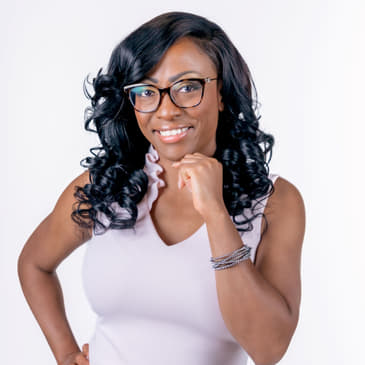
My guest today, Precious Lesley is a Black Autistic and ADHD Adult. Precious is dedicated to providing education and establishing authentic relationships with job seekers and employers. Precious is the Founder and Principal Consultant at Loud Nerd, a team of diverse experts including Marketing & Communication Masterminds, Top-Notch Facilitators and Best-in-Class Consultants. Each member of their team brings unique insights and innovative strategies to ensure tailored solutions for their clients. They serve as the bridge between the wisdom of experience and the innovative strategies of tomorrow, leveraging the insights and creativity that diversity brings to their work. As a Black, Autistic woman, Precious has personal experience with the compounding effects of racism, sexism and ableism and incorporates an intersectional perspective in her work, and encourages other disability advocates to do the same.
Please join me in welcoming Precious Lesley.
Philip King-Lowe
Precious Lesley, thank you for being on this episode of Today's Autistic Moment. It is so great to have you here. Welcome.
Precious Lesley
Thank you very much. I appreciate the offer. And I'm super stoked to be having this conversation with you today, Philip.
Philip King-Lowe
Thank you. Thank you. So Precious. We have started Black History Month. And I have been asking myself this question, to say we need to have some focus on black Autistic people, black Autistic Adults. And as I also mentioned, in my description of this show that the movement for Neurodiversity, like a lot of movements, has our own version of systemic racism. And as with a lot of the other topics that I've covered, I have made Today's Autistic Moment, a safe space to talk about these things, to try to move us in a direction that will address the systemic racism that exists. So, what I want to begin with is What important information do Autistic Adults and our caregivers need to know about as in how is the movement for Neurodiversity? The movement that wants to bring greater inclusion for Autistic people? Where is the white washing? And why do you think it's happening?
Precious Lesley
Yeah, so in the Neurodiversity movement, and more specifically Autistic advocacy, we have this mantra, you know, “nothing about us without us.” That's a very common thing, even in the greater disability rights movement. And yet far too often, the conversation lacks the voices of black Autistics. And it really just lacks in nuance in general. And so when you're looking at the current diagnostic criteria for Autism, in order to be diagnosed, according to what's outlined in the DSM-V, an individual is measured on and on using, quote their words but impairments and social interaction and communication, and their quotes again, restricted, repetitive and stereotyped patterns of behavior. Also, in psychology and sociology, there's definitely an overwhelming consensus that one's culture has a massive impact on social norms, communication styles, behaviors, beliefs, etc. And, yet, you know, the criteria for being diagnosed with Autism is based on how white male Autistic children tend to present. I'm a firm believer in that intersectionality is of the utmost importance when we're discussing human rights in any form. But you can't even start to have a conversation about Autism by its nature without acknowledging the intersectionality piece.
Philip King-Lowe
Exactly. Yeah. Yeah. What does that intersectionality mean for you? How does that what does that look like for you?
Precious Lesley
Yeah, so for me personally, you know, I am a Black Autistic Woman. Each of those aspects are integral parts of my identity, they shape the way that I interact with others and society, they, they shaped the experiences that I have in those interactions and ultimately shaped the way that I perceive the world in my worldview. And I guess it goes both ways, you know, as a Black Autistic or woman, I have experience, you know, sexism, ableism, and racism. And those experiences tend to have a compounding effect on one another. You know, ableism, oftentimes interconnects with or exacerbates racism. And I think that's something that the current conversation, you know, and the Neurodiversity movement is really failing to give enough emphasis on. And it's something that definitely needs to be highlighted a lot more if we're going to see the positive progress that we're all working towards.
Philip King-Lowe
Right, right. Right, right. Um, can you give some examples for our audience about ways that you see that black Autistic adults are not being included? In that movement? Can you give some examples of that for yourself?
Precious Lesley
Yeah, so, I think the movement does a great job of speaking about, you know, barriers and concerns and accommodations in general. But it definitely lacks the nuance of a black person, black Autistic person's experience in particular. And so I'll give you a couple examples. Um, as a black person who grew up in a lower income, predominantly black neighborhood, I had to, you know, not only learn how to communicate within my community, but I also had to learn how to do what's called code switching to speak a version of the dominant English in order to be viewed more favorably in school and then later on in life in the workplace. On top of that, as an Autistic person, I had to learn how to mask to be able to navigate the complex world of education and the workforce. And it's just that that added layer of effort that we have to put in on a daily basis, it's, it leads to more issues with anxiety, more burnout. And it just, it's not even something that I've heard, be brought up. And most conversations about some of the barriers that we face as Autistic individuals.
Philip King-Lowe
Yes, yes. Yes. I mean, I mean, one of the other places where we definitely see white supremacy, existing is like, when there are photographs of Autistic people, children or adults, you know, almost always, they're, they're white or blonde or, you know, redhead or whatever. But, you know, and I think, you know, but you don't really see that many where black Autistic people are represented there. And correct me if I've got this wrong, but if they are there, it's, it's an indirect way of trying to be polite. Yup. So, you know, I'm sure you can kind of expound on some of that, too.
Precious Lesley
Yeah, there's absolutely a, a lack of representation. And, you know, that's not only in the general, you know, American Zyke, guys, but we also see that in the education system and the medical system, and it has a real world impact on individuals. You know, for example, males are four times more likely to be diagnosed as Autistic than females. And that gap widens dramatically when it comes to black females. And we all know how important it is to receive that early diagnosis so that you can get the supports and the therapies that may be needed in order to set you up for success later on in life. And that oftentimes gets overlooked when we're talking about black individuals. And a lot of times that that disparity in diagnostic rates is dismissed. You know, blaming cultural stigmas or lack about access to resources, be it financial or you know, medical resources. However, studies show that black parents do report behavioral concerns at the same rates as white parents do. But the medical community and education systems oftentimes lack the a diversity, and the a diversity, and b don't receive culturally competent assessment, tools and training to be able to understand the impact of cultural culture on how one's Autistic traits are going to present and even be able to, you know, start that conversation that this child might be Autistic.
Philip King-Lowe
Yeah, yeah.
After this next commercial break, Precious Lesley and I will discuss the barriers for Black Autistics to navigate social expectations, and cultural norms, and the tunnel vision when we are unaware of our own privilege when speaking about disabilities, racism and being Autistic.
♫ Segment Ending Music ♫
Commercial Break II
♫ ITI Assistive Technology Ad ♫
♫Lisa Morgan Consulting Ad♫
TAM Support Ad
In 2026 Today’s Autistic Moment will bring you guests who will highlight how Autistics thrive in these challenging times by recognizing the incredible strengths we have to raise the bar through hard conversations and community building. Stand up for Autistics thriving with your assistance to Today’s Autistic Moment.
Support Today’s Autistic Moment in any of the following ways.
· Make a one-time donation through the Ko-fi icon when you tap on Support Today's Autistic Moment on todaysautisticmoment.com
· Subscribe monthly via Patreon.
· Purchase items at Today’s Autistic Moment’s Logo Shop.
· Share Today’s Autistic Moment with your family, friends, coworkers and others through social media and/or by telling others about us.
Donations are not tax-deductible but help keep Today’s Autistic Moment as a safe space.
Thank you for supporting Today’s Autistic Moment.
♫Segment Beginning Music♫
Segment 3
Welcome back. We are talking with Precious Lesley about how her identity as a Black Autistic Women is integrated and have compounding affects with the issues of sexism, racism and ableism. Now we are going to talk about the cultural norms that intersect with the Neurodiversity movement.
Philip King-Lowe
As often happens, we're already talking about barriers as we talk about the basic information, but I still want to explore our boundaries a little bit more with that. You know, what are the these boundaries? And we've named quite a few. I think one of those barriers is just the unspoken attitude, I'm going to use the word of the expectations of blacks versus whites. The expectations of Autistic versus non-autistic, the images of these things create, and what that does to cultures, or groups of people that are trying to find their way to be part of movements like the movement for Neurodiversity. I would guess that those things can really be impacting this whole discussion about what you know, white washing the movement for Neurodiversity?
Precious Lesley
Absolutely. And so, you know, a lot of the people at the forefront of the Neurodiversity movement, you know, are, are white individuals with, you know, a white culture and so and with that comes, you know, those cultural norms and unspoken expectations. And as Autistic Adults, I think we can all relate to our struggles, at times with learning, you know, social expectations, cultural norms, and you know, all those social norms that go with it. But for, you know, someone that is not a member of the dominant culture in that movement, it adds a an added barrier, you know, individuals may have to add on top of everything else, understanding the cultural norms of that dominant culture, that's not theirs. And so just being educating ourselves, being aware of that, and making sure that we're taking steps to ensure that as a movement, we within the movement are being inclusive ourselves, and making sure that we are inviting others and that we're having a more nuanced conversation that is, is taken into account all the different ways that an Autistic person can exist.
Philip King-Lowe
During my 50th show, there were some of my guests who talked about how difficult it is when Autistics are trying to talk about the concerns we have, and either our voices are silenced or spoken over. As we talk about Black Autistic Adults, and we want to talk about the whitewashing. I mean, can you talk a little bit about how those conversations are either being silenced or spoken over? And, you know, you know what some of that might be like for you?
Precious Lesley
Yeah, so I do think sometimes as a community and speaking about the Autistic community, as a marginalized community, we can sometimes forget or be unaware of our own privilege. And when we have the conversation about privilege, we sometimes get that tunnel vision and we see that you know, as a disabled individual, those who are able bodied who live in a society that we lived in that was, you know, designed for able bodied and neurotypical individuals, they have privilege over me. In that situation, however, we will sometimes forget our own privilege. And so, you know, as a white Autistic person recognizing that, that is a privilege, we live in a society where you know, the systems and structures and social norms of the greater American society, we're built on white culture, that puts that individual to privilege. And so just recognizing our own personal privilege, you know, I'm an Autistic person who is speaking. And I'd say, most times, sometimes I don't know, depending on the day, I can be pretty articulate, that is a privilege, I need to recognize that and make sure that I am not speaking for over individuals who don't have the ability or choose not to speak verbally, when it may be more convenient to get their voice out there. And, you know, share thoughts and ideas with others outside the community. And so I think that recognizing our own privilege piece is something that we should really focus on within the community. And that's really going to lead to the more inclusive culture that we're all looking for.
Philip King-Lowe
Yeah. The other thing that I can't help but think about is the fact that in much of our society, that racial bias is still acceptable by some, by many. And that in the last five, six years, we have seen the white supremacy escalating in intensity. And, you know, more and more black people are being marginalized, targeted. You know, I live here in in Edina, Minnesota, not too far from me, back in 2020, is where George Floyd was killed. You know, and the incredible things that we all went through when that occurred. So, you know, and the thing is, is that in the, in the Neurodivergent communities we may have just either not noticed that it that the systemic racism is there, or we may have just not seen it for ourselves or not been aware of it. I don't know if that's, I don't know what that's a proper way. And please forgive me if I'm missing that. But if you want to speak to that matter, go ahead.
Precious Lesley
Yeah. So you, you bring up a very good point, especially, you know, with recent events, something that I've been seeing brought up a lot more often these days within the Neurodivergent community is Autistic people being at risk when interacting with police officers who are not trained on how to a recognize that this individual is Autistic, and how to de-escalate the situation versus escalating it. And so that's a very important conversation that needs to be had. And I'm very excited to see that conversation, you know, out in the forefront of the movement and getting educated individuals on that particular issue. But again, it's one of those topics that lacks nuance, you know, and so, as a black Autistic person, I definitely understand yes, you know, that is a scary situation when encountering police officers. That is just compounded by the fact that I am black and so, you know, if I'm in a situation where I'm pulled over and nobody likes being pulled over, it's a stressful situation. Throughout the country, there are there's a lot of reform needed within law enforcement and I'm very well aware of that. And so yes, I am on edge in that situation. I am likely to stim. I am likely to be slow in my responses because of the emotional elements that go into that, and I'm also aware that that officer, you know, may be more likely to view me in a negative light, because of my appearance, and it's, it just increases the chances of that escalating to a very scary situation. And so that the, that piece, that nuance piece of that conversation, I'm not seeing and not something that we need to be really diving into on, you know, in our particular situation, how ableism and, and racism can really compound one another to make a bad situation worse.
Philip King-Lowe
Yeah, yeah. No, I agree. And thank you for those that answer. Now, I like to move into, into advocacy. What important steps do Autistic Adults and our supporters need to take to advocate for black Autistic Adults? And during this year, this year of 2023, I am focusing on the strengths and achievements of Autistic Adults. Because, to quote, Becca Lory Hector, "nobody wants to spend their life talking about the things that stink." So in this part, if you please, let's talk about the strengths and achievements that you see black Autistic Adults making, and then talk about some ways maybe that you have been advocating that you think had been successful. And I noticed that you do some great work through Loud Nerd, you might want to talk about that work that you're doing to that's part of the work for advocacy. So go ahead and give me your answers to those as you wish.
Precious Lesley
Yeah, absolutely. And so, you know, oftentimes, when we have that conversation about, you know, famous are very accomplished Autistic individuals, the examples that we see are not black individuals. And so that's, that's definitely something that we should strive to be better at. For example, Armani Williams, he is a Detroit base professional NASCAR driver who's had some amazing success, really cool individual that people should check out. I do. And I will actually, I'll send this link to Philip so that you can share it in the show notes. But I want to give a shout out to one of my favorite D IV practitioners. And so Dr. Bernard Grant, he does some amazing work, I'll definitely share that link with you. He's a great resource for individuals who are looking to educate themselves on how Autism and being a black person intersect and the things we can do to as a community to, you know, address that and be more inclusive. And I think it starts there, just really educating ourselves. You know, you can't fix what you don't know. And you know, people don't know what they don't know. And so really seeking out books, podcasts, just you know, that content that's gonna give you a starting place to start doing that internal work and working on our own internal biases. You know, seeking out Autistic, you know, black Autistic speakers, trainers, and things of that nature. And so I think that's really the best place to start. As far as my work. I am the founder and principal consultant of Loud Nerd. And I work with both employers and job seekers. With a major focus on Autistic jobseekers to navigate the sometimes overly complex job search process. All of my services are free for job seekers. And so you know, having practice interviews, updating resumes, just really putting in the work to help that individual have the best chance at landing in a role that's going to fit their needs and then being able to advocate for themselves moving forward. I also provide consulting services. I do workshops with employers on how they can improve their hiring process, their internal processes and just develop a workplace culture that is not only going to attract a diverse workforce, but also create that culture that celebrates diversity, equity, inclusion and accessibility. And we definitely have a conversation about how accessibility is too often left out of that conversation. And so that's the work I do. You can find more information on the website, loudnerd.com. I'm on Facebook, LinkedIn, I probably spend too much time on social.
Philip King-Lowe
Yeah, and just for my listening audience. Loud Nerd is already in my Adult Autism Resources Links page, so that you can go and click there and, and access that information. And it is also included in the guests bio for Precious Lesley. So you can go in there and access that, that website, and you can find all of the incredible information that is there.
After this final commercial break, Precious Lesley is going to talk about the strengths and achievements that Black Autistics are using to build up their tenacity. Today’s Autistic Community Bulletin Board will follow.
♫ Segment Ending Music ♫
Commercial Break III
TAM Autistic Consulting Services Ad
On February 24th, 2011, a psychologist shared the results of an evaluation I did with him and told me that I had Asperger’s Syndrome. I went through a four year period of feeling relieved, confused, happy, grieving and felt totally lost in my life all at the same time. In 2017, I found The Autism Society of Minnesota and it changed my life. I started learning about Autism, meeting other Autistic people, and discovering the local Autism community. Since then, I have accepted that I am Autistic and I am proud to be the person I am.
If you were recently told that you have Autism, you need a consultant who knows how your life is being impacted, so you can connect with the Autistic community to find resources and support.
Go to todaysautisticmoment.com and read about TAM Autistic Consulting Services. If interested, please fill out the intake form and make an appointment so we can begin working together.
♫ Looking Forward Life Coaching Ad ♫
Future Shows
On March 8th, Carolyn Keil will be my guest to talk about Autistic Women Thriving. Carolyn is the host of Beyond 6 Seconds a multi-award-winning podcast that focuses on the intersections of Neurodiversity, race, gender, sexual orientation, disability and more. Carolyn will talk about how Autistic women thrive in these challenging times.
On March 22nd, LaToya Hinton will return to Today’s Autistic Moment to talk about Autistic Women Thriving in Healthcare Equities. LaToya has been conducting some panels with Umbrella ND about healthcare equites for Autistic individuals from all backgrounds. LaToya and I will specifically focus on their findings regarding Autistic women thriving to find healthcare equities.
Please visit the Episode Schedule 2026 on todaysautisticmoment.com for updates as they become available.
Thank you for listening to Today’s Autistic Moment.
♫Segment Beginning Music♫
Segment 4
Welcome back. Precious Lesley is about to talk about the strengths and achievements of Black Autistic Adults.
Philip King-Lowe
What do you think is the strengths and achievements, the ways in which Black Autistic Adults are using their challenges their tremendous challenges to build up their tenacity and, and be and achieve goals that they set for themselves? Go ahead and add your comments to that, if you can.
Precious Lesley
Yeah, I mean, we're, we're definitely out there achieving goals in all industries. You know, we are we're not a monolith. And so we have various interests and goals that we want to achieve, and definitely crushing them. And I will say, you know, there's one thing about facing a lot of adversity in your life, it definitely, when you make it to the other side, provides you with a lot of resiliency. And so it's definitely something that a lot of us do have. And, you know, just speaking for myself, it's, it's given me the ability to be a strong self-advocate. To be able to speak out and advocate for my own needs. And that's, that's been wonderful, you know, just being able to set those boundaries. And you mentioned, you know, speaking over individuals, and I don't know, if that's ever happened to me, I can definitely be heard and so, but yeah, you know, we're out there, achieving nearly anything you can imagine, we're just not getting the attention. And so but, you know, there's some great traction in that way too. And individuals are speaking out more and getting involved more. And that's, that's what definitely compelled me to share more of my experience, and do you know, podcasts and speak out publicly about it. Because there, there does need to be that representation.
Philip King-Lowe
Yeah, yeah, that's all so tremendous. And I thank you for sharing all that information here. Precious, thank you so much for coming on today. And having this conversation with me. And I want to encourage my listeners, encourage you, my audience that you know, the challenges we all face as Autistics and the successes that we are achieving or seeking to achieve. I said this in my introduction is that the only way that the movement for Neurodiversity is really going to be inclusive, is if we listen to the experiences of black Autistic Adults, and we get a feel for their experiences. And we can include their experiences their wishes, into our movement, and that we can going to, I am going to use the word enculturate each other. You know, and so it's a working together, not work not necessarily working on our stuff and their stuff or whatever. It's working together on the things that are challenging us and with that, discrimination, you know, meeting us in the face. And so, I want to encourage all of us to, to do our part to include the diversity that is within or diversity and, and that sort of thing. So, Precious once again, thank you for being on today. It has been a privilege a great privilege to talk with you, and I hope your experience here has been really good.
Precious Lesley
Absolutely. Again, thank you for having me today and talking about a topic that is near and dear to my heart. I appreciate the invite.
Philip King-Lowe
You're welcome.
Transcribed by https://otter.ai
Would you like to listen to this conversation I had with Precious Lesley with no segmentation or ads? Sign up for a subscription to Ad Free Interviews on todaysautisticmoment.com. The subscription is only $12.00 a month or $144.00 for a whole year. Once you buy the subscription, you can click on any show where you see the logo for Today’s Autistic Moment Ad Free Interviews to hear only the interview without interruption, segmentation and music. You can listen to all Ad Free Interviews going back to July 2025 and all upcoming episodes.
Today’s Autistic Community Bulletin Board
All these events and many others such as sensory friendly concerts, art activities and museum information links are available on
todaysautisticmoment.com/bulletinboard.
The Adult Coffee Club for Autistic Adults in Minnesota are held on the second Tuesday of every month (weather permitting) at Dogwood Coffee located at 2700 University Ave W. Suite 100 in St. Paul, Minnesota. The Zip Code for your GPS is 55114. The Adult Coffee Clubs will begin at 4pm to 6pm on March 10th. No Coffee Club in April. May 12th. June 9th.
Understanding Autism virtual classes are offered by The Autism Society of Minnesota. The next classes will be March 9th, 6- 7pm. April 13th, 10-11am. May 11th, 12-1pm. June 8th, 6-7pm.
The Autism Society of Minnesota invites you to Family Fun Day at We Rock the Spectrum on Saturday, February 28th, beginning at 9am to 12pm. The event will be at We Rock the Spectrum located at 1020 Discovery Rd #127 Eagan, MN 55121.
Registration is open to attend the Minnesota Virtual Autism Conference April 15th through the 16th, 2026. Register to get access to all conference keynote and breakout sessions, plus access to session recordings for a full month so you can revisit content on your own schedule.
Save the date May 17th, 2026, for the Steps for Autism.
Go to ausm.org to get more information about these and other social and recreational programs, educational events, counseling services and support groups at The Autism Society of Minnesota.
MNeurodivergent is a social club rooted in a vision of bringing Neurodivergent Minnesotans together to build meaningful connections. Its core principle is to foster an environment where all are treated with dignity and respect regardless of ability or preferences. Go to their website mneurodivergent.org for more information, become a member, volunteer and attend their events.
Today’s Autistic Moment is here because of the generosity of supporters and sponsors. Go to todaysautisticmoment.com and select Support Today’s Autistic Moment to donate.
If you have questions about Today’s Autistic Moment, please send an email to todaysautisticmoment@gmail.com.
Thank you for listening to Today’s Autistic Moment: A Podcast for Autistic Adults by An Autistic Adult.
May you have an Autistically Amazing day.
♫ Closing Background Music with credits ♫
All of the guests meet with me on Zoom to record the interviews. The interview transcripts are provided by Otter. The podcast is prepared and edited on WavePad Masters Edition by NCH Software. The podcast is published by Spotify for Podcasters. The music that you hear is licensed to Today’s Autistic Moment by premiumbeat.com.
