Go to todaysautisticmoment.com for the transcripts.
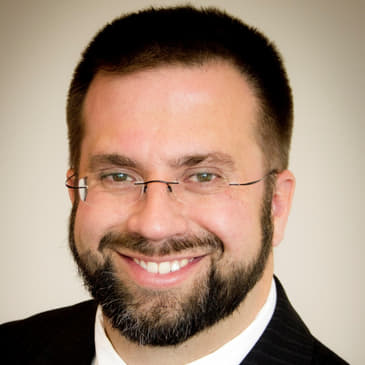
Autistic advocacy is advancing because of the authors who are writing books, blog and news articles to support Autistic people. Dr. Scott Frasard is our guest and an Autistic author and advocate. Scott uses the Socratic method to create community dialogue through which the many different perspectives about Autism can be discussed openly. Join Philip and Scott for an encouraging conversation that can help you write to affect change.
Dyslexic Accessible Transcript
Autistic Advocacy Through Writing
Spanish Accessible Transcript
Defensa del autismo a través de la escritura
German Accessible Transcript
Autistische Interessenvertretung durch Schreiben
French Accessible Transcript
Plaidoyer pour l'autisme par l'écriture
Chinese Simplified Accessible Transcript
Transcript
Autistic Advocacy Through Writing
November 23rd, 2025
Episode Preview
A lot of the progress that brought Autistic advocacy to where we are today is because of the Autistics that are writing. Autistic authors are writing books, blogs, poetry, and news articles that stimulate conversations to portray Autistic individuals as human beings with unique identities and abilities that are limited by the pathological approach to Autism. Dr. Scott Frasard is my guest today and an Autistic author. Scott has a passion for Autistic advocacy, who uses the Socratic method of creating community conversations about the various approaches to the subject of Neurodiversity. Welcome to the episode Autistic Advocacy Through Writing on Today’s Autistic Moment.
Segment 1
♫ Today is Your Day ♫
Today is your day on Today’s Autistic Moment: A Podcast for Autistic Adults by An Autistic Adult. The podcast where Autistic Adults are leading conversations for advocacy, that supports diversity and celebrates our intersectional identities.
This first segment of Today’s Autistic Moment is sponsored by The Autism Society of Minnesota, known as AuSM throughout Minnesota’s Autism Community. As Minnesota’s First Autism Resource for more than 50 years, AuSM serves the whole state, the whole spectrum for the whole life. Visit AuSM at ausm.org. The Autism Society of Minnesota needs your help. Funding cuts threaten vital programs, but together we can rebuild. Donate to The Autism Society of Minnesota on their website to maintain this vital resource for Minnesota’s Autism Community.
Please visit todaysautisticmoment.com where you can listen to more than 100 shows, get transcripts, program updates, and read the guest bios pages. You can also visit the Adult Autism Resources Links Page. Please visit the Future Shows Page to read the titles, guests, and descriptions of all the shows in 2025. The transcripts are sponsored by Minnesota Independence College & Community. There is a link provided to get access to a document form of the transcript without the purple-colored background so that you can print it without using up the ink on your printer. The written document has a font that is accessible for dyslexics. There are additional transcripts available in Spanish, German, French, and Chinese Simplified.
Please follow Today’s Autistic Moment on Facebook, Instagram, LinkedIn, and Blue Sky. If you follow Today’s Autistic Moment on Instagram, please follow us on Threads. Join Today’s Autistic Moment Community Group page on Facebook for conversations and updates. Please subscribe to the YouTube channel @todaysautisticmoment to watch Autistic Voices Roundtable Discussions.
With the holidays coming up, here is some advice for caregivers and Autistic people to help make things less stressful. You can get them on the transcript or go to the blog article Autistics and The Holidays 2025 on todaysautisticmoment.com to share these tips with others if you want.
Caregivers want the best for their Autistic loved ones during the holidays. This year has been especially hard for many Autistic people, with upsetting news and decisions by leaders. Many Autistics are feeling overwhelmed and stressed. If your Autistic loved one wants to spend time alone this holiday, talk to them about how to support their need for a safe space. If they want to join you or be with others, spend time together and invite them to talk about their special interests. If they don’t want to talk about recent events, respect their wishes. If they prefer their comfort foods instead of traditional holiday foods, let them know that that’s okay. If someone in your family brings up beliefs about Autism that are hurtful, try to change the subject to keep things calm. If your Autistic loved one needs a break or wants to leave a busy area, let them do so without judging them. Please don’t talk about your Autistic loved one as if they can’t hear you—they notice. Leaving a crowded place is not being rude; it’s their way to take care of themselves. Let them fidget, stim, and have quiet time if they need it.
Many Autistic people don’t like surprise gifts. Ask them what they would like, tell them your budget, and listen to their choices. Many Autistic people cannot answer open ended questions. If they can’t think of a gift they want, offer them a few options. If they ask for clothing, remember that there may be textures they cannot wear. A wool woven sweater may look beautiful to you, but they can feel like wearing sand paper for many Autistic individuals. You could also ask them if they’d like a donation to an Autistic organization in their name made as your holiday gift to them. If your Autistic loved one isn’t enjoying the holidays, your experience might be less fun too.
For Autistic people, remember you have the right to set boundaries during the holidays. Make note cards or a list of your boundaries to share with others. You can make a “Do Not Disturb” sign for your safe space. If someone upsets you by gaslighting you at a holiday dinner, it’s okay to leave the table and take your plate somewhere else. Have a backup plan in case you need to leave. If you want to talk about tough topics, you can prepare notes on your phone to help. If you are visiting someone else’s home, ask for a quiet space safe room you can use if needed.
If you need more holiday tips about self-care during the holidays, please use the link provided in the transcript to get the Autistic Self-Care Toolkit created by The Autism Society of Minnesota.
After this first commercial break Dr. Scott Frasard will join me to talk about Autistic Advocacy Through Writing on Today’s Autistic Moment.
♫ Segment Ending Music ♫
Commercial Break I
Podcast Apps
Today’s Autistic Moment can be downloaded and heard on most podcast apps including Apple. Google Play. Breaker. Castbox. Overcast. iHeartRadio. Pocket Casts. RadioPublic. Spotify. TuneIn. Pandora. Amazon Music. Audible. Podcast Addict. Podcast Chaser. If you are looking for the transcripts, go to todaysautisticmoment.com, click on the episode you want to listen to and follow the directions to find the transcripts.
Thank you for listening to Today’s Autistic Moment.
♫Lisa Morgan Consulting Ad♫
♫Looking Forward Life Coaching ♫
Segment 2
♫Segment Beginning Music♫
Philip King-Lowe
Dr. Scott Frasard, welcome back to Today's Autistic Moment. It has been a long time since we've seen you. We know that life has been up and down for all of us, including you. So, I'm so glad to see you here. So welcome.
Dr. Scott Frasard
Thank you for having me join you. I really appreciate it, and good to see you again too.
Philip King-Lowe
Yeah, definitely. So, this topic is Autistic Advocacy Through Writing. And writing is near and dear to my heart. I've done a lot of it over my time, and you have been writing books and blogs and things like that, and a lot of materials through your social media work, and I think it's important to highlight that in light of Autistic leadership, and so you know whether someone is into writing books or articles or just notes or that sort of thing. Writing is a very powerful tool, and one can write as much or as little as they wish, and it still does something somewhere. You know, social media involves a lot of writing and that sort of thing. So, I think it's great to have this conversation together about that. So, let's build a foundation for our conversation today. What does Autistic Advocacy Through Writing mean for Autistic Adults to be multidimensional?
Dr. Scott Frasard
So, and I'm not sure this will 100% answer your question, so feel free to rephrase it if it doesn't. But for me, writing is an outlet for me to not only get my thoughts out there for others, but more so really, is to get my thoughts out there so that I can reflect on my own thoughts and take in other people's writings and reflect on my own on my own thoughts that I write. But in doing that other people see the work that I do, and I can't even begin to count how many times somebody has reached out to me through a private message saying how something I wrote, I was meaningful to them, and they appreciate me saying what they feel but can't say or don't feel comfortable saying. So, one thing I've learned is I never knew how impactful writing is for other folks, when really, primarily for me, it's a way of expressing myself, so that I can take a step back and think through my thoughts. If that makes sense.
Philip King-Lowe
Makes perfect sense, you've written a couple of books recently. Talk about both of them and as much a little detail as you wish, and talk about what writing those has meant for you.
Dr. Scott Frasard
Sure, so my first book, and thank you for letting me share about this. My first book was called A Reflective Question to Ponder: 1200 Plus Questions on Autism to Foster Dialog. And this book was a collection of the questions I reflected, questions that I posted online, hence the name over my first year of what I considered truly advocating, and it really epitomizes the way that I advocate, which is through Socratic dialog and really looking at issues surrounding Autism, Autistic people our experiences through questions to find out how other people see things. I truly believe that all perspectives are valid. And in order for us to understand and find common ground, or at least a common starting point to build upon, we have to hear different perspectives, just like we want people to hear our perspectives. So, it's it goes both ways. And so, this book is a collection of those questions as well as and it's divided up into roughly or six chapters of roughly related questions. And the beginning of each chapter, I have my own narrative that I talk about things to kind of set the stage. I also talk about my experiences, and then I've got a few chapters dedicated to my own perspectives. So that was my first book in 2024. And this year I wrote about and the title is Autistic Advocacy Unleashed: A Socratic Journey to Social Justice. And here I embraced my inner Socrates, if you will. And instead of telling people, here's how you can advocate using Socratic dialog, I actually wrote the entire book as a Socratic dialog that follows two main characters, Socrates and advocates as they go on this journey, and over throughout the journey, they meet new people and engage in dialog with them. And there's lots of questions, obviously, but each person or each sometimes there are a pair of people or individuals, but each of those people brings a different issue to light. Whether it's like a margin additional marginalities, such as a people of color, nontraditional relationships, a speaking, non-speaking, whatever these different issues are that we face. Experience with health care, experience with mental health, in particular, Socrates and diet and advocate have a dialog with these people to bring those things out so you're seeing how to advocate with Socratic dialog by reading this journey, just like you're reading anything else about Socrates.
Philip King-Lowe
For those who may not know what we mean by Socratic, besides the individual named Socrates. Can we please give as best as possible a concise definition of what we mean when we say Socratic?
Dr. Scott Frasard
Yeah, so Socratic dialog. Instead of somebody saying, here is what you need to know about x, whatever x is. A Socratic approach is to introduce a topic and ask people, What do you know? Ask, start asking questions. What do you know about this? How do you feel about this? Why do you feel that way? How did you come to learn this? And then also in true Socratic method, there's also this, a questioning assumptions, challenging assumptions, asking clarification and calling out inconsistencies. So, like, okay, I heard you say this. Um, early on, but just a moment ago, you said this, and that seems really different. Help me understand why that's different. And so, it really takes an inquiry approach versus just purely a unilateral here's what you need to know and why. Why you need to know it.
Philip King-Lowe
Thanks a lot. It's been a while since I took my philosophy classes.
Dr. Scott Frasard
Anyway. I'm sure there's a better definition, but I want to keep it kind of light.
Philip King-Lowe
Yeah, definitely, yeah, no, yeah, philosophy is fun, but going through the details of it, it can be quite the head exercise, to say the very least. Anyway, in light of the topic or focus about multidimensional Autistic leadership, that sort of thing. How do you see your writing, or how can others think of their writing as multidimensional leadership? And this may take some digging, but let's start with that.
Dr. Scott Frasard
So, if we think about leadership in general, or at least the way I think about it, leaders typically have some sort of vision for the future, or some sort of vision for where a future state will be, or how it should be. And they rally the troops, so to speak, by helping them understand what that vision is, helping them see a what the end result should be, or that desired future state should be. And then they help enable others to achieve that. So instead of doing it all yourself, themselves. They're empowering others to join forces and to help the collective get to that future state. And so, where I see writing in that process is being able to get messages out to a large audience, whether that's through blogs. Lately, I've been doing a lot of memes, which are popular books, of course, questions, whatever the case may be, it's helping to get stuff information out there for people to act upon or to take action as a result of. And it also helps to be a dialog starter. Just like with this question is, let's get something out there. Let's start talking about it and see where it evolves. And that leader will help get them to that point. And that's why, like in my advocacy by addressing a wide range, and nothing is too taboo for me to address by addressing a wide range, my vision is to have a future state where Autistic people are not marginalized, we are seen as equal at every single level, regardless of support needs, as any other human, and by getting people to talk about this stuff that I'm writing about will help us, get us to that place I believe.
Philip King-Lowe
Well, one of my understandings of leadership is that it looks at where we are in the here and now and starts asking the questions, how do we start building our way towards the future? Many of my guests throughout this year have given their definitions and ideas of leadership, especially as Autistic people. Carole Jean Whittington, earlier this year, remarked that Autistic leadership is nonhierarchical and as collaborative in nature. It is not based on how much money someone makes. It is not even based on a position. It's based on what brings you joy, what holds you in place, what gives you a sense of safety, but also basically brings others into recognizing where their gifts and their abilities can be best used. And whether it's used to take care of yourself in the here and here and now, which we all must do, whether it's to again, speak out when something is said that is not true or correct, however that gets defined, and that sort of thing. But you know, writing is a way of supporting that kind of a leadership style. Go ahead Scott.
Dr. Scott Frasard
I was gonna say, and that falls right in line with my views of leadership as well, and one element in particular, one strategy in particular, that I'm particularly fond of comes from the organizational development world. A scholar named David Cooper, writer came up with something called appreciative inquiry. And what Appreciative Inquiry really is, is energizing people to kind of take what's working and we start from there and build this new reality, what can be in the future. So, we're very similar in that respect.
Philip King-Lowe
Yeah, very much so, you know, and you know, throughout this very difficult year, we have seen Autistics just utilizing everything that's going on with them, and doing their writing, doing their advocacy work, approaching it from their particular perspective, and that kind of thing. And it goes without saying that the Autistic communities have been degraded and that and that and that sort of thing. But with all that going on and with all the advocates finding each other on various social media networks, I think we've all been really speaking out and making our voices and our what's in our minds heard, and I don't know about you, but I'm encouraged to see a little bit more acceptance and appreciation of us than we would have seen before all this really started, do you agree?
Dr. Scott Frasard
Yes, you know, I think about when RFK Jr and our president had their press conference and talked about, hey, we found the cause of Autism. I think that's really lit some fires that maybe they weren't anticipating. And you know, from us Autistic advocates, especially, I think had that happened during April, maybe things wouldn't be as inflamed in the best of ways, whereas when it happened now we've got a few months still, even you know what, six, five or six months still, that when April does hit us, advocates are going to come out blazing. And you know, we have that time to that pause to go, Okay, let's collect our strategy. Let's get it right. Let's make it powerful, so that when Autism is back in the limelight in April. We can come at it and really do it justice.
Philip King-Lowe
Definitely. Yeah, yeah. You know, for my listeners here, please go back to my Special Edition: What We Have to Say, which I produced as a result of the statements that were made in April. Because I was at the Minnesota Autism Conference when the announcement about an Autism registry came out, and I remember it was Thursday of that week, and I just felt this mood shift in that entire space that would just like the brutal, brutal gut punch it was. And it was just like, you know, it was, it was frightening, and it was, it was a difficult day, and yet, I mean, we were all there and that, at that Autism conference to support Autistic people, to talk about Autistic people, to talk about topics related to us. And yet, there was this heaviness in that space that just was like, I don't believe it. You know that sort of thing. One of those things I hadn't anticipated, but it was powerful.
Dr. Scott Frasard
Yeah, you know, we see it or hear it firsthand, and know that they're talking about me, they're talking about others that I love, and this is unconscionable.
After this next commercial break, Scott and I will talk about how Autistics are writing as part of their work for social justice, helps them live authentically, and brings them together to create systemic change.
♫ Segment Ending Music ♫
Commercial Break II
♫ ITI Assistive Technology Ad ♫
♫Best Care Ad♫
♫MICC Ad♫
TAM Support Ad
Give a great holiday gift to yourself or someone you care about. Make a donation to help Today’s Autistic Moment. The podcast features Autistic people who share their experiences with advocacy, leadership, and overcoming challenges, especially in a year filled with untrue information and harmful actions. Your donation helps Autistic Adults keep this podcast going, which shows them that they are important and valued just as they are.
Support Today’s Autistic Moment in any of the following ways.
· Make a one-time donation through the Ko-fi icon when you tap on Support Today's Autistic Moment on todaysautisticmoment.com
· Subscribe monthly via Patreon.
· Purchase items at Today’s Autistic Moment’s Logo Shop.
· Share Today’s Autistic Moment with your family, friends, coworkers and others through social media and/or by telling others about us.
Donations are not tax-deductible but help keep Today’s Autistic Moment as a safe space.
Thank you for supporting Today’s Autistic Moment.
♫Segment Beginning Music♫
Segment 3
Philip King-Lowe
We know that Autistics are engaging with a lot of writing, and one of the things that we are engaging in is that is creating the environments to affect change, which involves changing the rules. And I've been seeing, I think we've been seeing a lot of that this year. And, you know, I know some Autistics don't like to word resilience, but I have seen the resilience this year. And you know, it comes from just Autistics writing things like this is really frightening. Or, you know, will these people please learn some truths here, or, you know, just the extensive writing we've seen from ASAN that has been, you know, saying how dangerous or how wrong this all is. So, I mean, a lot of your writing in the blogs that you've been writing has been, has been very much about that.
Dr. Scott Frasard
Yes, and I think one of the things that I really aim to bring to light, whether it's about a people, systems, or just mental models about Autism is really what I really try to bring out a central point and be able to talk about through a number of different ways, and that is asking ourselves whose comfort is being prioritized. And you know, if we think about things like ABA, and don't get me started on that, because we'll be here forever, but all too often, these things are built to ease the comfort of the non-autistic people, while the Autistics are expected to bend, to mask, to sacrifice, and it's not about us, it's about them. So, a lot of the writing that I do, I really calls to question and asks people to critically think about, okay, here's this particular issue, who is the beneficiary, the true beneficiary of this? And if we really think about what it's going to take to bring about change, we got to start looking at those underlying systems that perpetuates us being marginalized.
Philip King-Lowe
You and I were talking a bit before we started our interview today, but I want to bring back a little bit of that too. This is where we are already engaging. Earlier this year, you heard Dr. Devon Price on the 100th show called call attention, that through our pathological demand avoidance, Autistic people are very social justice minded, and we are among the first people to say, no, I will not be used as someone's tool of oppression. We may not do it through our words. We may not even write the words. We may just be what we're actually avoiding, and it may just be something that we've said to one person or several different people, but we are the first to say something is not right, and we are joined by many of our intersectional communities. The LGBTQ communities have been engaged in, in in a justice movement for decades now. The people of color have been engaged in calling for social change for decades as well. We've got many groups of people that are part of the Autistic communities who are calling for some kind of systemic change. And I firmly believe that among the reasons that we're seeing what's happening is an effort to, for lack of a better word, disqualify our actions, our activities and our positions. To make it look like, Oh, we're so deformed or so much of a deficit that our actions are to somehow be minimized into something that's less than important or less than credible. And you know, it takes people in very powerful positions with really small minds, quite frankly, to really do those kinds of things. So, Autistics have been engaging in these things for years, and part of what is being done is to silence those voices, silence and delegitimize those actions by simply further degrading us. And that's why, you know, writing is one of those places where many of us are actively saying, no, this is not right. We are not going to be used this way. What do you think of that?
Dr. Scott Frasard
I completely agree. And I'll even add to that. By writing it, not only are we helping to bring about that change that you just described really well, but we are also documenting this journey. And just like when we when sociologists and anthropologists study previous civilizations, ancient groups of people, that sort of thing, they look at any sort of artifacts that really talk about or allude to the plights, the day to day, lives, all that sort of stuff. And by us documenting or not only living in the now, but we're setting ourselves up for future generations to understand what we're going at going through, and with the hopes that, you know, hey, maybe we'll learn something from it, and to help a when we do bring about change, truly understand why that change came about. So, that we don't slip back towards and find ourselves going in a different direction. At least that's the hope.
Philip King-Lowe
Yeah, exactly, you know. And I've also said on in a previous space that the more that we continue to engage ourselves in this work of changing the rules, the more absurd their findings are.
Dr. Scott Frasard
You know, you brought up a moment ago about PDA, pathological demand avoidance. You know, if we reframe that to something like persistent dignity assertion, where that avoidance is really just drawing the line of you know what? This is no longer acceptable. I am asserting my autonomy, regardless of who it is. It's not just Autistic people, but really reframing it as this the problem, and I'm not going to take it anymore.
Philip King-Lowe
Right. Yeah, absolutely, you know, and you know, I am still going to frame my life and live my life in a way that I'm true to who I am. And you know, one of the things that a lot of Neurodivergent people have done is that through masking in various points of our lives is we've traded our authenticity for someone else's judgment. And I know that you especially like to talk about, you know, living authentically.
Dr. Scott Frasard
Live life authentically. Because, you know, when it comes down to it, even when, if we have a nuclear family or, you know, a lot of close friends, there's only one person that each individual has to live for, and that's for themselves. And that's not at the exclusion of other people, mind you, but if, if we're not living for ourselves, if we're living for other people, then what's the purpose? Why do we do that for other people's benefits. Where do we get our own benefit? And I think that's at the heart of self-love. And you know, loving who you are as an individual, as yourself. And I don't know that that could be a whole philosophical debate in and of itself. Maybe make for a good show in the future. I know what I said maybe sounds selfish, but I think there absolutely is a place for everyone to be selfish in certain ways and to certain degrees and all that sort of stuff.
Philip King-Lowe
Yeah, well, that's where self-care comes in. If you don't do your self-care, nobody's going to do it for you. And I want to say something, and I don't mind repeating this one really, is that you owe it to yourself as an Autistic person to live into who you are, be proud of who you are, and develop your life in a way that you find fulfilling. And I know that's very difficult right now because of a lot of the social and political pressures we're experiencing. But you know, don't let them take the joy of life away from you without you putting up your own fight, if you will, from your inside to the outside. You don't owe them anything, and you certainly don't have to give in to this atmosphere of negativity and transmit it to yourself. You can do your own personal resistance and find joy in who you are. Scott and I both share a feeling that when you do accept yourself and you live into who you are, and you do it in a way that being Autistic isn't your problem as much as it is that joyful part of yourself that that gives you energy every day, it really is empowering and it changes your life. I know I've experienced that, and I know that you have too Scott.
Dr. Scott Frasard
Yeah, and I think everything you just said is applicable regardless of support needs. Whether it's somebody who lives independently or somebody who is completely dependent on others that level of self-care, that level of self-fulfillment, absolutely is there and should be there, even if I were I did not have the ability to speak verbally dependent upon others for all of my activities of daily living, I can still have a good life. It's not defined maybe the same way as others, but there's no reason why that can't happen.
Philip King-Lowe
And now we are going to bring into the part about interdependence, because and the point is this is where the Autistic communities have been showing a great amount of interdependence this year. You know, part of this is, is being proactive and being responsive leaders. So, I'm anxious to hear what the writing that you're doing can definitely be helpful in that.
Dr. Scott Frasard
Yeah, so I've just started the writing process from a thought, so I'm just in the outlining phase, but the title of it is going to be The Unforgivable Sin of Needing Help: How Society Dehumanizes Autistic Dependence. And in it, I talk about independence as a false idol. And you're talking about, a moment ago, about interdependence, and I think that's that should be more the focus than independence. I talk about this double standard that exists where, let's say, later on, or at any point in somebody's life, they acquire dependency, like if you if you're involved in accidents and you're laid up in a hospital bed for months at a time, there's a difference around how people view dependency there, versus something that's congenital or long life. Or just, you know how neurologically we're wired, there's, there's this double standard in how dependency is viewed, which I can be really dehumanizing, that those with high support needs their entire life are viewed one way, and somebody who has the exact same high support needs as through an acquired process is viewed a different way. So, I really talk about what this disdain that people have for dependence really reveals, and what harm that does not only to the individual, but to the community as a whole, and using that as a fulcrum to really reframe interdependence as a human norm, this is how as humans we're meant to be.
Philip King-Lowe
You know, and interdependence doesn't dismiss dependence, nor does it dismiss independence. And basically, sees them as you know, makes them connected, interconnected with each other. You know. You know, if you think about, you know, making a recipe, farmers and workers and whatever they've all contributed to the ingredients that you're putting into that recipe. Somebody put them on a store shelf. Somebody helped you buy them. And somebody
Dr. Scott Frasard
helped somebody, you know, somebody grew them or right, produced them somehow.
Philip King-Lowe
Right and so, you know, none of us are completely independent, and none of us are really completely dependent. Now maybe be your support needs are such that you need a little more dependence. You know, maybe you need to be more independent because of how you process sensory stuff. And that's, there's nothing wrong with that. But in the end, we all, we all interdepend, you know, pretty much. And you know, the Autistic community has shown a tremendous strength this year in being interdependent. We've seen it on LinkedIn as each somebody's going to share something, and you know, somebody's doing a podcast, someone's doing going to do a roundtable talk. Someone's going to, you know, do a special about something, you know, and so everybody's doing something, pitching in. And it's all, it's all interdependence. Because, as we've said many times there are different perspectives and there are different ways of approaching something. And so, everybody basically pitches in and does their thing from their point. And somehow it all comes together to say various things, to enter information into the argument, or to, you know, basically, get some people to think or even to react, but also to, you know, maybe, you know, start those conversations and see where they lead. Eric Garcia has reminded us that often times with social media. Social media posts are really the beginning of conversations. They are not the total of. So, therefore, it's important to remember that those conversations are begun and it's up to the readers and stuff to basically take from those and continue those conversations again. That's a perfect example of interdependence.
Dr. Scott Frasard
Yes, and thinking about that through the change management background that I have is, and this is also part of why I use Socratic dialog as my advocacy. A strategy of choice is just by merely asking a question, in and of itself, brings about change, because you ask something, there's going to be people that will think about it and reflect on their worldview in light of that and make some adjustments in their world because of that. We may not be able to perceive it immediately or only in a small amount, but it does, in and of itself, bring about change. And the more we're talking about things like you just described from Eric, the more we're talking about things, posting about things. It's just the start. There's a ripple effect.
Scott and I will conclude our conversation after this final commercial break along with Today’s Autistic Community Bulletin Board.
♫ Segment Ending Music ♫
Commercial Break III
♫ Autistic Coach Collective Ad ♫
Future Shows
The final episode for 2025 will be on December 14th. Eric Garcia, the journalist and author of We’re Not Broken: Changing the Autism Conversation will be my guest for the episode: Bringing Closure for Autistics in 2025. Our conversation will recap what 2025 has been for Autistics and our intersectional communities, including but not limited to the recent change in the CDC website that now reads that Autism is caused by vaccines. We will bring 2025 to a close by taking a look at the tenacity of the Autistic communities this year and find some happiness in the holiday season.
Season 6 of Today’s Autistic Moment will begin on January 11th using the theme Autistics Thriving Not Just Surviving. Topics will include Autistics Thriving Through Crises and Black Autistics Thriving in Urban Settings.
Thank you for listening to Today’s Autistic Moment.
♫ Segment Beginning Music ♫
Segment 4
Philip King-Lowe
I think one of the reasons why a lot of us are on LinkedIn is partially because one of the things you don't really see on LinkedIn is you don't see the flood of attack comments that you'll see on Facebook or even some of the other networks. They're generally pretty good about, about not creating too much of a set of arguments that are only politically leading. And you can always sort of limit those as much as you like. But I don't think we see as many of them there than that as you would say in other platforms, but you know, and so on and so forth.
Dr. Scott Frasard
Yeah, I see it as a double edged sword. That's my primary that and sub stack are my primary platforms. And I agree with you wholeheartedly, there's less of that drama, if you will, on LinkedIn than other platforms. But at the same time, one of the criticisms that I hear as an advocate is that it appears that we're advocating for only one type, and I use that word broadly, one type of Autistic person, that somebody who's a professional, who is an adult, who can, and I hate this word as well, "function" in today's world, because they're on this platform. And it doesn't matter how much I tried to say, the things that I talk about, write about, applies to every single Autistic person, regardless of support needs. So, we get kind of an unfair shake in that respect. I don't know how, how that translates to other platforms, simply because a lot of that just gets drowned out with the with the drama.
Philip King-Lowe
Yeah, well, I think that I hear what you're saying. I think there's a tendency to focus on professionalism, but there's also, even still those who are doing advocacy from more of a hobby space. They're doing it from their perspective. Side note, you got me thinking a lot here.
Dr. Scott Frasard
It's working. What we were just talking about, is working.
Philip King-Lowe
Well, Scott Frasard, thank you so much for spending this time with us today, and I can't wait to see what we come up with in the upcoming year. It's very important that we all kind of stick together, listen to one another. That's true. But you know, we have to start somewhere. And if you are writing, continue to do it. And I do as much as I can, too, but we repeat what we said all throughout this year, you have to do your self-care, which means withdrawing is okay if you absolutely must. And you know, spending some time doing those things that you really love to do that's important too. And to kind of be looking after your needs and those around you and investing in that. But another thing, another part of self-care, is to be investing in your own sense of truth so that you can find some freedom and, and build up your interior armor, if you will, that sort of thing. So, thank you so much again, Scott and of course, you and I will be seeing each other and that sort of thing. So, thank you so much, my friend.
Dr. Scott Frasard
You're welcome, Philip. I really appreciate it. Great conversation.
Philip King-Lowe
Thanks
Transcribed by https://otter.ai
If you enjoyed this episode today, and want to hear the complete interview without the other segments and no ads, go to todaysautisticmoment.com and subscribe to the Ad Free & Complete Interview Plan. The subscription is only $12.00 a month or $144.00 for a year. You can hear the full interviews without interruption from July through now and all episodes coming up.
Today’s Autistic Community Bulletin Board
All these events and many others such as sensory friendly concerts, art activities and museum information links are available on
todaysautisticmoment.com/bulletinboard.
The Adult Coffee Club for Autistic Adults in Minnesota are held on the second Tuesday of every month (weather permitting) at Dogwood Coffee located at 2700 University Ave W. Suite 100 in St. Paul, Minnesota. The Zip Code for your GPS is 55114. The Adult Coffee Clubs will begin at 4pm to 6pm on December 9th. January 13th. February 10th. March 10th.
Understanding Autism virtual classes are offered by The Autism Society of Minnesota. The next classes will be December 14th, 6-7pm. January 12th, 10-11am.
On December 4th, beginning at 9am to 12pm there will be a workshop at The Autism Society of Minnesota entitled: Eating Disorders and Autism: Understanding the Overlap and Supporting Recovery.
On February 5th, 2026, Sara Lahti will present a workshop at The Autism Society of Minnesota entitled: PTSD and ASD: Double Neurodivergence.
Go to ausm.org to get more information about these and other social and recreational programs, educational events, counseling services and support groups at The Autism Society of Minnesota.
MNeurodivergent is a social club rooted in a vision of bringing Neurodivergent Minnesotans together to build meaningful connections. Its core principle is to foster an environment where all are treated with dignity and respect regardless of ability or preferences. Go to their website mneurodivergent.org for more information, become a member, volunteer and attend their events.
Today’s Autistic Moment is here because of the generosity of supporters and sponsors. Go to todaysautisticmoment.com and select Support Today’s Autistic Moment to donate.
If you have questions about Today’s Autistic Moment, please send an email to todaysautisticmoment@gmail.com.
Thank you for listening to Today’s Autistic Moment: A Podcast for Autistic Adults by An Autistic Adult.
May you have an Autistically Amazing day.
♫ Closing Background Music with credits ♫
All of the guests meet with me on Zoom to record the interviews. The interview transcripts are provided by Otter. The podcast is prepared and edited on WavePad Masters Edition by NCH Software. The podcast is published by Spotify for Podcasters. The music that you hear is licensed to Today’s Autistic Moment by premiumbeat.com.
