Go to todaysautisticmoment.com for a detailed transcript.
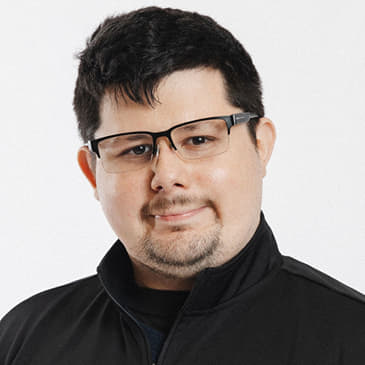
This episode recognizes October as Disability Employment Month. In segment one, Philip will talk in more detail as to why Disability Employment Month is so important. In segments 2 through 4 Wally Glascoff, a graduate from Minnesota Independence College & Community will talk with Philip about how he discovered his passion and now works as a pharmacy technician at a hospital. Wally will talk about how he discovered pharmacy work as his special interest, what he does at work, like setting up IV's, and managing his AuDHD needs.
Dyslexia Accessible Transcript in English
Spanish Accessible Transcript
Audiología y Discapacidad Intelectual en el Ámbito Laboral
German Accessible Transcript
French Accessible Transcript
Chinese Simplified Accessible Transcript
Transcript
AuDHD in the Workplace
October 11th, 2026
Episode Introduction & Preview
Welcome to Today’s Autistic Moment: A Podcast for Autistic Adults by An Autistic Adult. My name is Philip King-Lowe my pronouns are he/him. I am the owner, producer and host and I am an Autistic Adult. Thank you so very much for listening.
October is Disability Employment Month. Disabled people are often expected to live in poverty to obtain benefits. Disability benefits are below minimum wage. Many Autistic, AuDHD and disabled people are considered unemployable, because of the odds that are stacked against us. On this episode you are going to hear Wally Glascoff tell us about his work as a pharmacy technician at a hospital. Wally prepares IVs, insulin and pills that save people’s lives. Wally will share how he manages his AuDHD needs in a positive work environment with many tasks and expectations at his workplace.
Come join us for the episode AuDHD in the Workplace on Today’s Autistic Moment.
♫♫ Opening Theme Music ♫♫
Segment 1
This first segment of Today’s Autistic Moment is sponsored by The Autism Society of Minnesota, known as AuSM throughout Minnesota’s Autism Community. As Minnesota’s First Autism Resource for more than 50 years, AuSM serves the whole state, the whole spectrum for the whole life. Visit AuSM at ausm.org.
Visit todaysautisticmoment.com to listen to over 120 episodes released since 2021.
Check out the Episode Schedule 2026 to read about upcoming shows, topics, guest information, and program descriptions for season 6.
On the website, you can:
· Learn more about Today’s Autistic Moment.
· Read the guest bios pages.
· Explore the Adult Autism Resources Links Page.
· Visit the Autistic Community Bulletin Board.
· Read the blog.
· Find out about TAM Autistic Consulting Services.
· Sign up for a subscription to get Ad Free Interviews.
· Support Today’s Autistic Moment with a donation.
Every episode, including this one, has a transcript. The transcripts are sponsored by Minnesota Independence College & Community.
You can also read the transcripts right on the website with each episode or download printable versions to help you save ink.
The transcripts have hyperlinks in them for names, organizations and other resources named throughout the show.
The transcripts use a dyslexia-friendly font that are available in English, Spanish, German, French, and Chinese Simplified.
Want more interactions with Today’s Autistic Moment? Follow Today’s Autistic Moment on Facebook including our Community Group Page, LinkedIn, BlueSky, Instagram and Threads. Also follow us on the YouTube Channel @todaysautisticmoment to listen to new episodes of Today’s Autistic Moment and watch Autistic Voices Roundtable Discussions.
October is National Disability Employment Month. Yet disabled people face major barriers to employment and financial security. The U.S. Department of Labor reports that people with disabilities participate in the workforce at much lower rates and experience higher unemployment than people without disabilities.
Discriminatory hiring, inaccessible job requirements, and subminimum wages limit opportunities. Cuts to disability services, vocational rehabilitation, and inclusion programs can make finding work and career training even harder.
Restrictive benefit rules can also leave disabled people trapped: earning more may mean losing support without earning enough to cover basic needs and disability-related care. Too many must choose between rent, food, utilities, and health services.
Meanwhile, people often question someone’s disability when they own a home, drive, walk short distances, or work. These assumptions ignore both the complexity of disability and the barriers to finding accessible employment. Disabled people should not have to prove their struggles to deserve support and dignity.
When you vote this year, remember disabled people. Demand that elected leaders protect essential services and advance fairness in employment, housing, health care, and financial security.
Coming up after the first commercial break, Wally Glascoff will join me to share his experience of AuDHD in the Workplace.
♫ Segment Ending Music ♫
Commercial Break I
Podcast Apps
Today’s Autistic Moment can be downloaded and heard on most podcast apps including Apple. Google Play. Breaker. Castbox. Overcast. iHeartRadio. Pocket Casts. RadioPublic. Spotify. TuneIn. Pandora. Amazon Music. Audible. Podcast Addict. Podcast Chaser. If you are looking for the transcripts, go to todaysautisticmoment.com, click on the episode you want to listen to and follow the directions to find the transcripts.
Thank you for listening to Today’s Autistic Moment.
♫ ITI Assistive Technology Ad ♫
♫Best Care Ad♫
♫MICC Ad♫
♫Segment Beginning Music♫
Segment 2
Philip King-Lowe
Welcome back.
On the last episode Thriving Autistic Entrepreneurship, Jonathan Domsky and I talked about how he developed his business so that it was more accessible for diverse groups of people. Imagine how the statistics I mentioned in the last segment could change if more people organized their businesses so that the workplace was a better environment. In this episode Wally Glascoff a graduate from Minnesota Independence College & Community is going to tell you about his personal discovery and success as a pharmacy technician.
Please join me as I welcome Wally Glascoff.
Philip King-Lowe
Wally Glasskop, welcome to Today's Autistic Moment. Thank you for taking time out of your schedule to join us today. Welcome.
Wally Glascoff
Thank you. Thank you for having me.
Philip King-Lowe
You're welcome. Wally is a graduate from Minnesota Independence College and Community, and works as a pharmacist in a hospital. This show is going to highlight ADHD, AuDHD, as well as this is also for Disability Employment Month, where we're talking about AuDHD people, disabled people who are employed. So, Wally and I are going to share with you some of his story of being a pharmacy tech, and I know that this is going to be very good. Wally, please tell us a little bit more about yourself and the work you do, and maybe a little bit about how Minnesota Independence College and Community has prepared you to do this work.
Wally Glascoff
Yeah, so I started working at Walgreens through MICC. I started at an internship through them, working on the sales floor, stocking shelves, helping customers, and eventually I had moved to working in a management position Where I had started to integrate myself into pharmacy as part of the requirement for the job position. And I had sort of found a passion in that, where just helping people and learning about the medications and learning about how the logistics of pharmacy works kind of fell. I fell in love with that. So over the years, I had started to integrate more and more into pharmacy, and in 2024, I had officially become a pharmacy technician at Walgreens, and I. It was a great day for me because I was a full-time pharmacy technician. I was learning about all the medications and what they do and how they affect people. And in October of that year, I had become a certified pharmacy technician, which gives me more opportunities outside of Walgreens, and in about a year a year from today, I said I would be October 6, 2025. I had gotten a job as an inpatient pharmacy technician because I had felt that the opportunities at Walgreens for me personally, have exhausted themselves, and such that I felt like I learned everything I could, and there was no more opportunities for me. So, getting a job as an inpatient pharmacy technician had more opportunities that I can have more. I can help people more in the sense that I'm not just filling people's medications every day. I'm actually saving people's lives, and I'm making a better impact on people's lives. And I feel like ever since I've had that job, I've learned much more, and not just the medical field, but learning about, you know, how different drugs work, and learning about new medications. And I started learning about a big part of my role is working in the clean room hood, so making IV medications. So that was definitely a new thing for me. But I'm, I think that that was definitely a new a new experience with new opportunities that I absolutely fell in love with, and that's kind of where I am now.
Philip King-Lowe
That's wonderful. And I imagine the hospital is quite a bit more fast-paced than even Walgreens is. So, what has that transition been like for you?
Wally Glascoff
No, it's actually funny you say that because my hospital I work at is a slower hospital, so next to going from a much faster pace to a much slower pace. But on the on the other end, you get a lot of more. They call them stat orders. Do I need them right away?
Philip King-Lowe
Yeah.
Wally Glascoff
So you get more you get more of those, but you get more of instead of let's say a stat blood pressure medication that someone needs, it's more of a stat antibiotic for someone who's in emergency room, or stat anti bleeding medication or a stat stroke medication. So, on that note, it's sort of like it's not it's slower pace, but you get more of those stat medications.
Philip King-Lowe
And how do you manage when you've got multiple stat medications in front of you? I mean, obviously, if it's that, it means someone's life is in danger. That's got to. That's got to be. To me, that sounds like it must be a lot of pressure.
Wally Glascoff
You know what? It would seem like that, but I form what I call the triage method, and that triage method in my mind is you take the most you know like they do in the emergency room they take the most serious patients first and they take the less serious patients after them. So thinking about that method, that triage method in the I in the IV hood would be taking, let's say, a stroke medication, which is the top priority. That comes first, and then let's say an internal bleeding medication would come up to that, and then just a regular stat IV would come after that. So it's sort of learning to prioritize, and as I as I call it, the triaging method of those IVs.
Philip King-Lowe
And yet one of the hardest things in medicine is that for a person who may have, I don't know, a blood matter. I mean, obviously, for them that's an emergency. But for you know, when it comes to someone who's having a heart attack or stroke or something like that. That's far more urgent. So, like I say, you know, that's got to be a lot of demand here and now. And so, you know, what is it like to prepare these IVs? I mean, we know we know a little bit about what they do. I mean, these are medications that have to be administered to keep a patient's, you know, life going. Some are just a matter of delivering more water, more salt, or I'm sorry, more sodium for certain things, and other is just making sure they're, you know, they've got they're lubricated inside, you know, that sort of thing, and so on and so forth. Can you talk a little bit about that?
Wally Glascoff
Yeah. So there's a couple different IVs. There's some that are antibiotics, which is I feel like the most that we do, miss a matter of taking the medication and putting it into the bag and off it goes. Some of them we have to maybe do a few different medications in the bag. We refer that as to a cocktail. Cocktail means two or more different medications together. So we'll make a cocktail IV, and same things. Put them into the bag and send them off. I feel like it gets more difficult when you have sometimes you have to take liquid out of the bag, so you gotta know how much to take out. Let's say you have to take out 100 mils, and then you have to put 100 100 mils in. Yeah. But it's just a few different types of IVs, and but a few and a few a few different types of IVs, and just learning what they do, and the most part is just putting medication in the bag and sending it off.
Philip King-Lowe
There's filling the medications such as pills, and then there's the IVs, things like insulin too, and you know, and atropine, for example. Am I? I don't even know if I make any sense right now. So, or do you know what I'm talking about?
Wally Glascoff
I don't just do IVs. That's a big part of my job. But I do. We do everything. I do filling pills. I do filling insulins.
Philip King-Lowe
And I'm sure you have to deal with the lovely insurance stuff.
Wally Glascoff
Actually, no. That's I don't want to deal with it anymore. Thank goodness. That's all in the billing department.
Philip King-Lowe
I use Walgreens for my medications, and I don't know how they do that. Anyway, yeah. Anyway, can you talk a bit about how you being AuDHD, what managing all this is like. For some AuDHD people, they actually work best when the adrenaline rush is on. You know, when they got to do something on the spot, ready to go, no warning, and all the rest. And then for some they need some time to process and that sort of thing. Can you talk a little bit about what that's like for you?
Wally Glascoff
Yeah, I'm definitely a ready-to-go person. I'm if they say there's a someone having a stroke. I'm ready. I'm ready to go. I got the adrenaline going. I don’t really need time to process it because you really I mean you got to be in there. So it's not. It's you know just like it's kind of get you know gives you a rush you know. That's the way I feel it you know it's fun for me it's um it's um like I said pharmacy is a passion for me so every time I get to go back there it's a great experience.
Coming up after this next commercial break, Wally will share more about how he manages his AuDHD needs to do his job in those moments that are not so certain.
♫ Segment Ending Music ♫
Commercial Break II
♫ Lisa Morgan Consulting Ad ♫
♫ Looking Forward Life Coaching Ad ♫
♫ Just Walk With Me ♫
TAM Support Ad
Today’s Autistic Moment is a podcast where Autistic Adults from all walks of life come together to talk, share experiences, and support one another. Every guest is an Autistic Adult sharing thoughts, challenges, accomplishments, and perspectives that reflect what many of us are feeling right now.
Our message is simple: You are perfect as you are. You do not need to change who you are, and you do not need to be cured. What Autistic Adults need is to hear from other Autistic people who are living full, meaningful, and thriving lives.
Your contribution helps made these conversations possible. With your support, Today’s Autistic Moment can continue bringing Autistic voices, stories and community to listeners everywhere.
Support Today’s Autistic Moment in any of the following ways.
· Make a one-time donation through the Ko-fi icon when you tap on Support Today's Autistic Moment on todaysautisticmoment.com
· Subscribe monthly via Patreon.
· Purchase items from Today’s Autistic Moment’s Logo Shop.
· Share Today’s Autistic Moment with your family, friends, coworkers and others through social media and/or by telling others about us.
· If you own a business and/or work with an organization that supports Autistic intersectional individuals by encouraging them to live with pride in who they are, advertising opportunities to support Today’s Autistic Moment and your business or organization are available. Please send an email to todaysautisticmoment@gmail.com for more information.
Donations are not tax-deductible but help keep Today’s Autistic Moment as a safe space.
Thank you for supporting Today’s Autistic Moment.
♫Segment Beginning Music♫
Segment 3
Philip King-Lowe
Welcome back. Wally is going to pick up from where we left off from the last segment by talking about how he looks after his AuDHD needs throughout his work day.
Philip King-Lowe
Let's say something isn't quite what it should be. How do you work with that?
Wally Glascoff
I probably go wait. This doesn't feel right. Try to kind of take a second, kind of analyze what I'm doing, and go. Okay, I kind of did this before this. If you're doing something out of order when you're making IVs, sometimes you have to restart. Like if you put some medication in before another, not a big deal. But if you if you're supposed to take stuff out and you put the medication in before, you gotta restart, so you really have to be conscious about what steps about what steps you're taking, and what order.
Philip King-Lowe
Yeah, how do you manage your ADHD, your attention span stuff when that's going on?
Wally Glascoff
Well, it can be hard. But I just there's a switch that kind of just turns off when I'm in there because I know I know I can't be fidgety I know I can't be like my mind can't wander so like it's this sort of instinct that I've I learned I learned to have my brain just shut off while I'm in there, because, like I said, you can't have your brain wander while you're doing stuff, because you could stab yourself, you could stab the bag, you could completely mess up, and that's a wasted 10 minutes that you maybe you don't even have.
Philip King-Lowe
Right. Yeah.
Wally Glascoff
I think part of that too is I'm just so focused. I'm not realizing that I'm not thinking about you know all the random thoughts I'm having. I'm just laser focused about what I'm doing.
Philip King-Lowe
It's almost like the rest of the world is switched off at that moment. Because you're so hyper focused on it, and because it's a special interest of yours, it's like you got to get this done, or something is not right.
Wally Glascoff
Exactly. Same thing when I'm driving too. When I'm driving, I'm laser focused because I know I have to be laser focused when I'm driving. If I take my eyes off for five seconds, I could crash.
Philip King-Lowe
So in those moments when you really can't fidget or stim, and then you know, and that kind of thing?
Wally Glascoff
I don't really think about it because my high fidget is my hand moving. So when I'm in a hurry, my hands are moving. So like I don't need the fidget. So if you want to think about it like this way, the ADHD part of my brain just shut off for those few minutes because it essentially needs to be. I don't even think about it.
Philip King-Lowe
Right. Well, is it possible that the ADHD is actually helping you?
Wally Glascoff
It could be, yeah. I don't know. I mean, there are times where it kind of it kicks in, and what I to do is I'll just kind of take a second and just like refocus myself and get back to what I'm doing. But in sense that it's helping it, you know, I'm. Yeah, I would say that no, with ADHD, it's I think that's part of the hand motion thing. You know why I'm so fidgety, but if you kind of take that into play with you know me like pushing syringes and you know doing all this stuff, it satisfies like that craving for that hand motion.
Philip King-Lowe
Yeah, and even if you can't do your hand motions, you can always like move your leg or just kind of move another part of your body that kind of helps push that energy back into your system. You know, do you feel like you're masking a lot?
Wally Glascoff
I don't think so.
Philip King-Lowe
So, when you're doing all this work, and you know that you're saving people's lives. What does that feel like for you?
Wally Glascoff
Feels incredible. Feels like you know you save someone from a stroke, so or save someone from internal bleeding or something, so just like this great feeling.
Philip King-Lowe
Where do you see yourself as an Autistic ADHD person thriving in this environment that you're in? Give us some examples, some detailed examples, if you can, about how you see yourself thriving in this work that you do.
Wally Glascoff
Yeah, I think, like you mentioned before, the feeling of just being able to get up on a moment's notice and have that adrenaline rush whenever something needs to be done is definitely a big part of it. But I think also being able to multitask is another advantage of having ADHD in a workplace like this, because sometimes you need to be able, especially in a medical field, I feel like multitasking is definitely an advantage. Having that advantage is definitely a plus. And I feel like in terms of the Autism, I feel like that's you know that special interest of pharmacy is being able to hyper fixate on it and learn everything about it has gotten me exactly where I wanted to be in life. So no, I'm I feel like that that the only the Autism is the Autism in this in this case is playing a huge part in that way.
Philip King-Lowe
Did some of the community activities at MICC? Did some of the, you know, the classes And you know, when as you're doing the work you're doing, as you're thinking about where you are, are there any specific classes that you took at MICC? Are there any community activities that you took part in that you might say to yourself, "If I hadn't learned this at MICC, I might not be able to do what I'm doing today."
Wally Glascoff
I keep bringing up the Walgreens one. I think you know I got the I got the job through from Walgreens through MICC, but I had these other internships through them too. There was a house housekeeping one, and there was also a dog biscuit one, and MSCC helped get me those internships as well.
Philip King-Lowe
What kind of training did you go through to prepare you to be a pharmacy tech?
Wally Glascoff
So I had to be licensed through the state. I had to do on-the-job training, and had to get my certified pharmacy technician license. So that's a course through that's nationally certified, and it lets you work pretty much beyond retail.
Philip King-Lowe
Coming up after this final commercial break, Wally will talk about the good energy he gets working in a positive workplace. Today’s Autistic Community Bulletin Board will follow.
♫ Segment Ending Music ♫
Commercial Break III
TAM Autistic Consulting Services Ad
TAM Autistic Consulting Services offers Autistic Adults a supportive opportunity to meet with me, ask questions, learn more about Autism and the Autistic community, and explore resources that may be helpful.
As an Autistic person myself, I understand how overwhelming it can feel to need support while navigating a world that is often not designed with Autistic people in mind. These consultations provide a space to speak with someone who has shared lived experience and can provide information, understanding, and practical resource guidance.
TAM Autistic Consulting Services is not therapy, mental-health treatment, or legal advice.
To learn more, visit todaysautisticmoment.com. If interested, please fill out the intake form and make an appointment so we can begin working together.
♫ Actually Autistic Coach Collective Ad ♫
♫Segment Beginning Music♫
Segment 4
Philip King-Lowe
Before we finish the conversation with Wally, I want to tell all of you about the next three shows coming up.
On October 25th, another graduate from Minnesota Independence College & Community named Speckles Bruder will be with us to talk about Autistics Thriving Though Transitions. Speckles is going to talk about the experience of transitioning from high school to college, and the transition from graduating from college to having a job, renting a home and all that life can bring about.
On November 15th, I have a very special guest Dr. Mel Houser, an AuDHD medical doctor and family physician and the founder of All Brains Belong, VT. Dr. Houser from Vermont is going to bring some very important information to all of you about Thriving Autistic Healthcare. The kind of healthcare that we will talk about is a holistic approach that acknowledges what many of us have known for a long time, but cannot find physicians to accept. Being Autistic is physical. The Autistic and/or ADHD body is different that the Allistic or neurotypical body. Dr. Houser and I are going to talk about how many doctors over diagnose problems like migraine headaches, fibromyalgia, and miss other issues because they do not look at the entire person. What kind of sleep are Autistic and ADHD people getting? What is their blood like? What kinds of medications are they on, and what affect does it have on their whole body health? This show will be spectacular, and I am sure everyone will find something you may have mentioned to a doctor, but they didn’t believe you, or they didn’t think to look for.
On November 29th, Elizabeth Duffy will be with us to talk about Thriving Occupational Therapy for Autistics.
Now back to our conversation with Wally Glascoff who will talk about the positive energy he gets in his workplace.
Philip King-Lowe
We've got ADHD people out there who might be trying to think of what kind of a career they might want to do. You know, I just had a had a show with Jonathan Domsky, who's an Autistic Entrepreneur who took on the task of doing their own business and that sort of thing, Someone wants to find a career that's the fit for them. What advice might you give them?
Wally Glascoff
Look at what you're good at. Look at what your special interests are. Look at what you're passionate about. I mentioned before I'm passionate about pharmacy. It's something I love. It's something I look forward to every day, and I've been able to get a job in that. So you know, look at what you what you're passionate about, what you love to do, and find a job in that. And sure, there's something for everyone.
Philip King-Lowe
When you take your breaks, do you find yourself doing a lot of stim? A lot of things to regulate yourself after the fact. Do you find yourself needing to do some other things that really help you feel grounded? Things that kind of bring you back to your back. You know, help you regulate after you've been, you know, having to sort of suppress some of your stimming and all that?
Wally Glascoff
You know during my breaks, I'll sort of stim. I will stim because it you know it helps to release some of that, I guess, social tension because I know we talked about masking. I guess just like this this just being able to stim kind of helps relieve some of that I guess pressure of just being around people. So giving a half hour break, just kind of doing that while watching a video was kind of nice, and also in terms of breaks too, I want to bring up my schedule here if that's okay, because I have my schedule that I think is pretty nice. It's one week on, one week off. And in terms of breaks, I get travel, so that kind of nice to kind of reset the system a little bit. Have that week off, and then being able to travel some sometimes is nice too.
Philip King-Lowe
Do you feel like you're totally exhausted after doing your job?
Wally Glascoff
No, I don't.
Philip King-Lowe
Yeah. Because one of the things that can really be that can impact AuDHD people is the environments that they're in. Those environments give positive energy or negative energy. Those environments can, in fact, you know, affect your overall health. They can be part of the holistic picture of what may be happening. So yeah, can talk about you know. I mean, what's it like being in in an environment where you're in a positive environment? Nobody's challenging you or telling you should have been different. Whatever. I mean, that's got to give you a lot of great energy to do what you do.
Wally Glascoff
Yeah, that that is it's very good, and especially with the people I work with, everyone's very supportive. Everyone is very nice. It's so like a small family, and I feel like everyone is more or less kind of keeps themselves. Is also kind of helps me, you know, me being on the spectrum. I don't know to feel like I have to constantly talk to people. I kind of you know talk when I need to, and that's definitely a big plus of working with this group of people, which I absolutely love them.
Philip King-Lowe
Yeah, that's great. For a lot of us who are late identified, like I was not identified as Autistic until I was 43, after I had spent some careers and stuff with issues, and then when I discovered that I'm Autistic and ADHD, then that answered a whole lot of questions. The downside of that is I had a lot of life behind me, so I had to kind of catch up or bring myself to where I am now. And the other part is that it also comes with age, aging and experience. You know, there is a saying that goes like this: When you're in your 20s, you know, you think everything that happens to you must be because you did something wrong. As you get into your 30s, you start to realize you probably weren't the only one that contributed to whatever else was going on, and you start to realize, you know, this wasn't just me. This was them. And sometimes you almost shift to it was all them, and you know they were just you know causing me trauma. When you get into your 40s, you're somewhere in between, and when you get into your 50s, like me, then you realize it had absolutely nothing to do with you. You know, because you start to get that sense of no, it was just the way the world was and that kind of thing. But you know, and then the other part is that you know this is where I'm actually envious of younger people who know that they're AuDHD because the sooner they know that the better of a future they can have, especially with resources like MICC around the Autism Society of Minnesota and other resources like that, where you get to learn as much as you can about yourself and others like you. Those were things that were not available to me when I was where you are now. So I think this is a great place to just tell people that the sooner you learn that you are Autistic, ADHD, AuDHD, the better your outcome will be. And most importantly, you know, if you're a parent out there and your child or someone has been diagnosed, tell them as soon as possible, because delaying that can cause significant trauma and life lifelong mental health issues. I know some that they weren't told until after they graduated from high school. I've known some that aren't told until after they've had significant problems, and that can really impact a person's life long more than anybody knows. Wally Glascoff, thank you so much for joining us on Today's Autistic Moment and sharing your story. And we wish you all the very best with the future that you have. And please continue the work and making a difference out there, and really giving some great voice to the Autistic and ADHD communities. So thank you for being here today.
Wally Glascoff
Thank you for having me.
Transcribed by https://otter.ai
Sign up for a subscription to Ad Free Interviews on todaysautisticmoment.com. The subscription is only $12.00 a month or $144.00 for a whole year. Once you buy the subscription, you can click on any show where you see the logo for Today’s Autistic Moment Ad Free Interviews to hear only the interview without interruption, segmentation and music. You can listen to all Ad Free Interviews going back to July 2025 and all upcoming shows.
Today’s Autistic Community Bulletin Board
All these events and many others such as sensory friendly concerts, art activities and museum information links are available on
todaysautisticmoment.com/bulletinboard.
The Adult Coffee Club for Autistic Adults in Minnesota are held on the second Tuesday of every month (weather permitting) at Dogwood Coffee located at 2700 University Ave W. Suite 100 in St. Paul, Minnesota. The Zip Code for your GPS is 55114. The Adult Coffee Clubs will begin at 3:00pm to 5:00pm on October 13th. November 10th. December 8th.
Understanding Autism virtual classes are offered by The Autism Society of Minnesota. The next classes will be on October 12th, 10-11am. November 9th, 12-1pm. December 14th, 6-7pm.
RSVP for a Rooted Workshop Series, entitled Conversations Centering on Black Families and Autism. Rooted is a four part workshop series designed to create a welcoming space where Black parents and caregivers of Autistic children can connect, learn, and grow together. Through meaningful conversations led by Black parents, professionals, and community leaders, the series explores the experiences of raising an Autistic child while navigating the intersection of race, culture and disability. Go to AuSM’s website for more details.
Register now to attend The Autistic Community Summit on November 7th, beginning at 9:30am to 3:00pm at Inver Hills Community College or Online. The college is located at 2500 8th, St. E. Inver Grove Heights, MN. The zip code for your GPS is 55076.
AuSM is accepting applications for speakers now through November 6th for the Annual Minnesota Autism Conference in 2027. They are seeking speakers for subjects like AAC and Communication. Ableism. Aging. AuDHD. Current climate for disability issues. Dating. Executive Functioning. Guardianship. Grief. Gender. LGBTQIA, and more.
Go to ausm.org to learn about these and other social and recreational programs, educational events, counseling services and support groups at The Autism Society of Minnesota.
MNeurodivergent is a social club rooted in a vision of bringing Neurodivergent Minnesotans together to build meaningful connections. Its core principle is to foster an environment where all are treated with dignity and respect regardless of ability or preferences. Go to their website mneurodivergent.org for more information, become a member, volunteer and attend their events.
Be sure to check out the events at Queermunity. Events include finding out about local LGBTQIA+ resources for those who have relocated to the Twin Cities on the 4th Wednesday of every month. Trans Health Insurance Enrollment. Fruit Salad Queer Open Mic on the fourth Thursday of every month. Crafting and Game Night on Fridays at 4pm to 8pm. Beats and Breath Yoga Based Movement Class every Saturday at 11am. Go to their website at queermunitymn.com to learn more about Queermunity and their many events.
Today’s Autistic Moment is here because of the generosity of supporters and sponsors. Go to todaysautisticmoment.com and select Support Today’s Autistic Moment to donate.
If you have questions about Today’s Autistic Moment, please send an email to todaysautisticmoment@gmail.com.
Thank you for listening to Today’s Autistic Moment: A Podcast for Autistic Adults by An Autistic Adult.
May you have an Autistically Amazing day.
♫ Closing Background Music with credits ♫
All of the guests meet with me on Zoom to record the interviews. The interview transcripts are provided by Otter. The podcast is prepared and edited on WavePad Masters Edition by NCH Software. The podcast is published by Spotify for Podcasters. The music that you hear is licensed to Today’s Autistic Moment by premiumbeat.com
