Go to todaysautisticmoment.com for the transcripts.
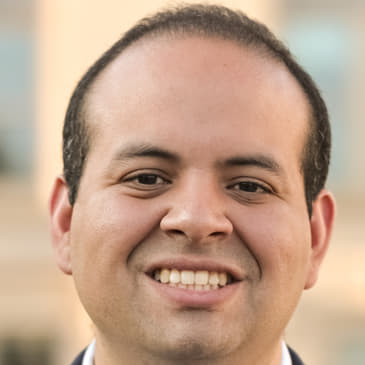
Eric Garcia and Philip King-Lowe talk about what the year 2025 has been like for Autistics. Eric and Philip will be honest about the setbacks, while celebrating the robust Autistic advocacy infrastructure that the past 20 years has built to tell the truth in this time of misinformation. We will give some thoughts about how to make the holidays more enjoyable. Philip ends the episode with a dedication to the guests, sponsors and donors to the work of Today's Autistic Moment in 2025.
Click on the Links Below for the Accessible Transcripts
Dyslexic Accessible Transcript
Bringing Closure for Autistics in 2025
Spanish Accessible Transcript
Brindando consuelo a los autistas en 2025
German Accessible Transcript
Abschluss für Autisten im Jahr 2025
French Accessible Transcript
Offrir une conclusion aux personnes autistes en 2025
Chinese Simplified Accessible Transcript
Scroll Down to Follow the Transcript
Transcript
Bringing Closure for Autistics in 2025
December 14th, 2025
Episode Preview
Eric Garcia is here to help us take a look at what has been taking place for Autistics in 2025. Eric and I are going to talk about the setbacks by our leaders and the incredible robust advocacy that Autistics have been achieving. Welcome to the episode Bringing Closure for Autistics in 2025 on Today’s Autistic Moment.
Segment 1
♫ Today is Your Day ♫
Today is your day on Today’s Autistic Moment: A Podcast for Autistic Adults by An Autistic Adult. The podcast where Autistic Adults are leading conversations for advocacy, that supports diversity and celebrates our intersectional identities.
This first segment of Today’s Autistic Moment is sponsored by The Autism Society of Minnesota, known as AuSM throughout Minnesota’s Autism Community. As Minnesota’s First Autism Resource for more than 50 years, AuSM serves the whole state, the whole spectrum for the whole life. Visit AuSM at ausm.org. The Autism Society of Minnesota needs your help. Funding cuts threaten vital programs, but together we can rebuild. Donate to The Autism Society of Minnesota on their website to maintain this vital resource for Minnesota’s Autism Community.
Please visit todaysautisticmoment.com where you can listen to more than 100 shows, get transcripts, program updates, and read the guest bios pages. You can also visit the Adult Autism Resources Links Page. Please visit the Future Shows Page to read the titles, guests, and descriptions of all the shows in 2025. The transcripts are sponsored by Minnesota Independence College & Community. There is a link provided to get access to a document form of the transcript without the purple-colored background so that you can print it without using up the ink on your printer. The written document has a font that is accessible for dyslexics. There are additional transcripts available in Spanish, German, French, and Chinese Simplified.
Please follow Today’s Autistic Moment on Facebook, Instagram, LinkedIn, and Blue Sky. If you follow Today’s Autistic Moment on Instagram, please follow us on Threads. Join Today’s Autistic Moment Community Group page on Facebook for conversations and updates. Please subscribe to the YouTube channel @todaysautisticmoment to watch Autistic Voices Roundtable Discussions.
Go to the blog article Autistics and The Holidays 2025 on todaysautisticmoment.com to read about some tips for caregivers and Autistics to navigate the holidays. These tips show caregivers how to support Autistic loved ones following a year of increased misinformation and disinformation. There are tips for Autistics to assist them with setting your boundaries, some steps you can take to protect your own peace and consider some possibilities should you decide to advocate for yourself.
After this first commercial break, Eric Garcia will be my guest to talk about Bringing Closure for Autistics in 2025.
♫ Segment Ending Music ♫
Commercial Break I
Podcast Apps
Today’s Autistic Moment can be downloaded and heard on most podcast apps including Apple. Google Play. Breaker. Castbox. Overcast. iHeartRadio. Pocket Casts. RadioPublic. Spotify. TuneIn. Pandora. Amazon Music. Audible. Podcast Addict. Podcast Chaser. If you are looking for the transcripts, go to todaysautisticmoment.com, click on the episode you want to listen to and follow the directions to find the transcripts.
Thank you for listening to Today’s Autistic Moment.
♫Lisa Morgan Consulting Ad♫
♫Looking Forward Life Coaching ♫
Segment 2
♫Segment Beginning Music♫
Philip King-Lowe
Eric Garcia, welcome to Today's Autistic Moment. And we know that we've all been very, very busy this year keeping track of everything going on with the Autistic community. And so, thank you so much for visiting with us today. And you know I'm so glad you're here.
Eric Garcia
Glad to be here. Thank you.
Philip King-Lowe
All right. This episode is about Bringing Closure for Autistics in 2025. It goes without saying that this has been a year of massive heartaches, and hits below the belt, and I wanted to close this year out for my season about Navigating the Future of Multidimensional Autistic Leadership by you and I recapping this year what it's been like. And you know, talk about the obvious, and also to take a look at some things, to celebrate some things that you know, in spite of the year we've had, we were actually still ahead of the game, rather than behind. At the same time, we're going to be brutally honest here about what this year has been like. So, let's recap what 2025 has been like for Autistic people this year.
Eric Garcia
Yeah, let's just be completely honest. You know, a friend of mine, who's British, uses a term, and I don't know if it's okay to use this, but there's a saying, "you can't polish a turd, but you can put glitter on it." Yes. And I feel like that's the perfect encapsulation of 2025, you just got to, kind of, you just kind of got to roll with it. I think the thing that we could talk about it, we could be as honest as possible, and we should be as honest as possible. This was a very difficult year, not just for the obvious reason of Secretary Kennedy becoming HHS Secretary, the resurfacing of Autism epidemic language, the kind of dehumanizing language, the peddling of misinformation and disinformation. But I also think that it's also important to recognize that this is also a time when social services are being cut, when grants to help Autistic people find work are being got the business end of DOGE. I think that it's important to remember that a lot of federal research, a lot of university researchers and academics saw their research funding freeze for some really, you know, important projects. So, I think that's if I could be honest, I feel like RFK, Jr. is the big flashing marquee, but there's a lot of other red flags along the road. But at the same time, I think what we see now and I and not being, you know, you know me, Phil, you know, I'm not somebody who sugar coats anything. I do think the difference between now versus the 1990s and the 2000s is there is a more robust infrastructure to push back on disinformation. I think that now there is a generation of Autistic Self Advocates who not only are vocal, but know how to win in the "court of public opinion," and are able to have a media strategy. I think one of the positive developments and thinking, seeing about thinking about it on my end as a reporter is now. I see the New York Times quoting people from the Autistic Self Advocacy Network. I see the Washington Post quoting people from the Autistic Self Advocacy Network. I see the people the Minneapolis start Minneapolis Star Tribune calling the Autism Society of Minnesota. You know, I think that is a positive development. I think the other positive development is that. So, for example, we're talking we're doing this now on November 26, 2025, last week, Secretary Kennedy, personally, according to The New York Times, told the CDC to change the website on, you know, saying that the term vaccines don't cause Autism is not a scientific claim. Immediately, almost every newspaper and news outlet said, this is not true. This has been, this has been established by science, so that much is good. And I think the other thing is, as I said, the infrastructure not only exists now, but it also is more robust. A lot of it in the 2000s was very new and very nascent, and now I think it is much more established. In the same token, though, I think it's hard to it's hard to overstate how much of a beating the disability rights movement took, not just with the administration, but with COVID. A lot of important Disability Rights disability rights activists died during COVID. There was, I think there were a lot of schisms within the disability rights movement in the aftermath of COVID, and I think that is going to be very, very difficult. So, on one end, I think that the infrastructure exists in a way to refute this information in a way that it didn't in the 2000s. The other end, I think it is very difficult. It is very easy to see that the disability rights movement isn't as organized. And I think, to be completely honest, it is impossible to compete with the average Americans for you page. Look, I mean, look, you, and I can have these great discussions, and we, you know, I'm grateful you invited me, but I can't compete with the algorithm. You and I can't compete with the algorithm. You just can't.
Philip King-Lowe
Well, yes, you know, when I did the Special Edition: What We Have to Say back in July, and this is the show where I had five Autistic individuals who shared their reactions, concerns and thoughts for advocacy following the announcements that were made in April about the Autism epidemic, the thought of an Autistic registry, and also, you know, those kinds of things. Myself and Jillian Nelson expressed our concerns that we're now going back to that time of having to defend our Autism, and that was because, and that's why I'm really wanting us to talk about recapping, because we know that there are Autistic individuals from many of our intersectional communities who are undoubtedly encountering family this time of year, who have been listening and giving credit to these things, who are going to hit them with remarks, questions and that sort of thing, and that may not have been quite this, quite that way before we started 2025. And you know, and the thing is, is that I've been very concerned as to how we can help Autistics with those conversations. You know, I mentioned back in July about, you know, imagine there's an Autistic who's in a workplace. Let's say they're washing dishes in a restaurant, and they finally have to walk to the restroom, and they go through the dining room, and they can hear someone having this conversation, you know, "Oh, isn't it great that we finally will get an Autism registry" and all that, and the person who's walking through there has to hear that and what that does to them, you know, that has been one of my principal concerns this year. You know, maybe you can give some examples about how you deal with that kind of thing, because you've been on the forefront of all of this for a long time. So maybe give your thoughts about that.
Eric Garcia
So, like, two weeks ago, yeah, two weeks ago, I was flying to Asheville, North Carolina to interview someone for my second book. Literally, as I'm getting off the plane in Asheville Regional Airport, I'm getting off the plane. For those who don't know, Asheville Regional Airport is a very small airport, hence why it's a regional airport. And as I'm getting off, you know, that little tube from like the airplane to the airport, you know, who do I see in front of me but RFK, Jr?” And immediately my reporter instinct comes out, and I whip out my phone, and I should have said, I'm a reporter. I just I said, Secretary Kennedy, what are your thoughts about the British Medical Journal saying acetaminophen doesn't cause Autism? And then just was like, no, no, no, no, I shouldn't. Hindsight said, “I’m a reporter, you know. But you know is what it is.” What was funny is that this is okay. This is Asheville, so very liberal area, and somebody walked past him and says, quack, you know, yeah, so, you know, I think on one end, I think that there is this, I think that there is this recognition that Robert F. Kennedy Jr, I think most people recognize that Robert F. Kennedy Jr does not know what he is talking about, and that's good. We should be, you know, it's good that everybody you know that a lot of people say that at the same time, what you're seeing is that there was an Annenberg policy poll, I think, that showed that, like, something like 67% of Americans think that the claim that MMR vaccines don't cause Autism is false, but that's actually down from like the 70s, like even just four years ago. So, what I've always said is that you don't need a majority of people to believe what RFK, Jr. is saying. You don't. You just need a very sizable and loud minority to kind of flood the zone with disinformation. And I think that, you know, like I was obviously at the press conference when RFK Jr made his whole claim about Autism destroys families. I think, you know, it's funny, because I was telling, like, my friends who are reporters, when I we were getting ready for the press conference, they're like, oh, yeah, of course you're here. Like, you should be covering this, you know, which is good, you know? I think that's cool, that like, now I have an established presence as a reporter who writes about the stuff, and my friends in the Washington press corps are like, yeah, Eric, should be writing, should be writing about this. That's good, but then they were, but like, my friends were texting me when that happened, like, I'm sorry. And like, it was really hard, you know, because, like, I remember my hands started shaking when RFK Jr was doing that, like, I got a question in the press conference. But afterward, and that was funny, because afterward, my colleague at the indie called me. He's like, man, that's really terrible at RFK Jr, said. And I was like, oh, yeah, the stuff that he talks about with that's with the epidemic, I said, That's really bad. He's like, No, the stuff about Autism destroyed families, and then they're playing baseball and, like, it's funny, and I'm actually going to be a little contrarian. I don't know, I don't know that's okay with you, but like, it's funny, because that whole stuff where he talked about Autistic people can't get a job or play baseball or things like that, initially, that didn't phase me initially, because I've heard so many people say that stuff for so many years. You know, it wasn't I think that, and so I think that for the NTs, it was kind of surprising to hear somebody, to hear the Secretary of Health and Human Services say that the neurotypicals, but it didn't really phase me, because I've been here like it's easy to pick on RFK, Jr, there's a lot of people who say that in daily life. You know. The difference is that it's being amplified by the Secretary of Health and Human Services. So, I don't want to just lay the blame on RFK Jr, or the White House or whoever. He wouldn't have purchasing power if a lot of people didn't already believe what he believes. I don't know if that makes sense, so I think that's how I go about it, and I approach it is that, look, eventually he won't be Secretary of Health and Human Services. We'll get a new administration. We'll get a lot of the people, but there's still going to be a lot of people who believe this. And I think what the job of the press is to do, and what the job of everybody who knows better is to do is to immediately say this is not true. Just immediately, like just outright, say, up front, this is not true. It's funny, one of my best friends right now is expecting really happy for her, one of my best friends from college, and literally the day that the Secretary and the people that the Secretary work for trying to keep get you out of trouble right now, made their claims about acetaminophen. And her doctor said this is not like sent out an email to all of his patients saying, this is not true, this is not real. So that's good. That's good that there is a robust information infrastructure to push back on that. So, I think that's where I think is good. The fact that I can go on CNN and respond to that, the fact that I can go on public radio and respond to it, the fact that I can do that now. And also, it's not just me, you know, there's Sarah Luterman, who's also an Autistic reporter. The fact that people like Zach Burdick are out there, the fact that there are so many Autistic writers out there and journalists and people in the media, I think is something we didn't see in the past.
Philip King-Lowe
One of the things we saw this year is really a great testimony, if you will, to the work of Autistic advocates. Yes, that all of this stuff has come out, and organizations and associations that approach Autism very differently all came out together with their individual statements and said that this is completely incorrect. Yes. I mean, over the past week since the CDC made that statement about the connection of Autism and vaccines, I have seen state health departments. I have seen, we saw the American, American Psychiatric Association, the American Psychology Association. We have seen, I think it's the American is it the Academy of Pediatrics? Academy of Pediatrics, yes. We saw them all come out and with a very strong statement, you know, and talk about how dangerous this sort of is, and that's along with the Autistic Self-Advocacy Network and the Autistic Women and Nonbinary Network, along with all of the all of them, they all came out and said, this information is not true. It is very dangerous, and it is further stigmatizing Autistic individuals. And like I say, I think we had that because of the good advocacy work we have done in the last 15 to 20 years.
Eric Garcia
I would agree on a large level. And I think the fact that now not only that, but that these statements received attention in the media, I think, is also a sign that Autistic advocates have gotten have "gotten smart." Not only have they gotten smart, but now they can't be ignored. That's a really good thing. The fact that medical groups are now working with Autistic people, and academics are collaborating with Autistic people. That's not something we saw even 10 years ago. So, I don't want to, I don't want to get people false hope. I don't, no, I'm not in the business of that. But I think again that kind of ability to unite varying factions that often disagree with each other, right to be completely honest, kind of hate each other. Yeah, yes. We can air our dirty laundry. We can air our dirty laundry. The fact that these disparate groups can unite and say, Okay, this is just not part of the discussion at all, right, I think that's good. I think that's progress. With that being said, it is still very, very difficult when peddlers of disinformation have the biggest bullhorn in the world, which is the federal government, and if we are being completely honest, the United States really does lead the way when it comes to Autism policy and disability policy. And as goes America, as goes the rest of the world. So, I would almost kind of say to advocates around the rest of the world right now, for the time being, is do your own thing, and don't follow what the what's going on in The United States. In fact, build your own infrastructure. But to answer your question, yeah, like those are positive developments. And I think that creates almost kind of, it almost creates kind of institutional knowledge, so that when there are these moments where the government is not telling the truth or being credible, there are these banks of information and institutional knowledge that hold on to it for the time being. That is almost like a backup file or an external hard drive. Yeah, that's good. What I worry about is that there will be pockets that adopt what the federal government is saying. And there will be pockets that do not. So, for example, The New York Times just reported that Ralph Abraham is going to be the second command at the CDC. He's, you know, opposed Maxine guidance in the past. He was a member of Congress for a while. I remember when he was a member of Congress, so that so there are going to be a lot of states that listen to him. So, I think that a place like Minnesota, which has a very robust Autism advocacy infrastructure, your guy’s governor is, is really great on disability advocacy. They'll follow the science. I'm worried about Autistic people in places like Alabama and Mississippi and Louisiana and Kentucky and Nebraska, if that makes sense.
Philip King-Lowe
After this next commercial break, we will take a look at how our Autistic intersectional communities have been engaged in excellent advocacy work. We will talk about Autistics doing self-care, and some work we can do in the coming year to pave the way forward for Autistics to thrive not just survive.
♫ Segment Ending Music ♫
Commercial Break II
♫ ITI Assistive Technology Ad ♫
♫Best Care Ad♫
♫MICC Ad♫
TAM Support Ad
Give a great holiday gift to yourself or someone you care about. Make a donation to help Today’s Autistic Moment. The podcast features Autistic people who share their experiences with advocacy, leadership, and overcoming challenges, especially in a year filled with untrue information and harmful actions. Your donation helps Autistic Adults keep this podcast going, which shows them that they are important and valued just as they are.
Support Today’s Autistic Moment in any of the following ways.
· Make a one-time donation through the Ko-fi icon when you tap on Support Today's Autistic Moment on todaysautisticmoment.com
· Subscribe monthly via Patreon.
· Purchase items at Today’s Autistic Moment’s Logo Shop.
· Share Today’s Autistic Moment with your family, friends, coworkers and others through social media and/or by telling others about us.
Donations are not tax-deductible but help keep Today’s Autistic Moment as a safe space.
Thank you for supporting Today’s Autistic Moment.
♫Segment Beginning Music♫
Segment 3
Philip King-Lowe
In a year when Autistics have been further stigmatized, how have you seen Autistic Adults leading in terms of advocacy and community building? Before you answer that question, this is another point that I have been making throughout 2025 there's a couple things here. Number one, at the very beginning of this year for my 100th show, Dr. Devon Price made a brilliant comment that I think is true, and that is, Autistic people are among the first to be very strong in social justice, which means we are probably the very first group of people to say, "No, I will not be used to someone's tool of oppression." Along that line, I think personally and please add your thoughts to this. Among the reasons that they are doing this is because they know that Autistic people are very social justice minded. We are the first to avoid things like this, number one, number two, we have a strong drive towards what is right, what is inclusive, and that kind of thing. So, I tend to think, among the reasons they're doing this has to do with that, if they can find ways to make our work and our voices sound a little bit more, "illegitimate," like they have no bearing and therefore they're "too sick" or too "disordered," that they can just simply get people to believe and therefore, you know, basically what we're doing is pointless. Number two, the overlap of the Autistic and the LGBTQ communities has everything to do with this, everything because both of those communities and together, we form a strong social justice movement together. And I do believe that what is happening is that Autistic Adults have been leading in terms of advocacy and community building along these, these lines, and that's why I believe a lot of this is even happening at all.
Eric Garcia
So, I will, I will say on the LGBTQ stuff, I think that's absolutely true. I think that we are seeing is that in states like Georgia, it seems like Missouri, they're specifically trying to prevent trans youth from receiving gender affirming care, right, and using Autism as a rational for that that's absolutely true. You can read the legislation or the executive orders like that. Executive Orders like that's just that. I would caution a little bit. And Devon is one of my best friends, and that is a blessing that I do not take lightly. I think I almost want to say that we think that we we're assuming that these people are smarter than they are. I don't think they think about it that way. No. I think that they legitimately believe that Autism is a malady, that it is something that is life destroying. I think that they are people who have listened too much to what my good friend Shannon Des Roches Rosa says, calls the "Autism grievance parent industrial complex." Yes. I recommend everybody read Shannon's piece about that. I don't, and I would also caution that all Autistic people are social justice minded, because I know, because there are a lot of Autistic people on the far right, a lot. A sense of justice in right and wrong is not inherent. It's really dependent on how you're brought up and what you're taught is right and wrong. I genuinely think that, you know, someone like Secretary Kennedy really started saying this, or we had an understanding of, like, sense of social justice and things like that, and right and wrong and things like that. I genuinely just think that they're just conspiracy theorists more than anything. Yes, I agree with that. I don't think I need to read that Atlantic interview that the Secretary did over the weekend. I'm going to read it. I have it pulled up. I don't want to give them too much credit.
Philip King-Lowe
No, no, but no. But Eric. The thing is, is that I, over this past year, I have had so many Autistic advocates on Today's Autistic Moment and many more that I've watched on LinkedIn and other places that have been extremely engaged in this. And you know, the thing is, is that some of the strongest advocates I've seen, and you know, they've really been writing, they have been posting, they have been doing their podcasts, they have been doing their statements. They have, you know, really spoken out very strongly. And like I say, if they can find a way through their misinformation to basically plant that small, little belief that somehow, you know, we just don't know what we're talking about, or we're thinking through the lens of something that is, again, misinformed because of our disability, or whatever it happens to be. I think that's got everything to do with why they're doing what they're doing.
Eric Garcia
Yeah, I get what you're saying. That I agree with.
Philip King-Lowe
Yeah, no, no, I agree that there's people on both sides again, you know? I mean, I've done shows this year about Black Autistics Leading in a Time of DEI Erasure, and that's a subject of itself. And by I mean, even in the face of things like that, however evil they are, the thing is, is that, you know, people are saying, you know, there have been people who have been saying they have been depressed and burnt out just from everything, just from once a day, if not once a week. But the thing is, they're still engaged in there with their social justice work, whatever that work happens to be.
Eric Garcia
Yeah, yeah, definitely good for them. Absolutely.
Philip King-Lowe
Yeah, absolutely, you know, and that's why I wanted to do that focus on Navigating the Future of Multidimensional Autistic Leadership, because we've been talking about how Autistics are multidimensional. And, you know, we put a lot of emphasis this year on self-care, because we've had to remind everybody you can turn off your social media. You don't have to follow every news blog. It's okay to say no, not today, whatever. But we also want to say that it's important that you know they discover and look after what they can control rather than what they cannot control. And you know, generally, Autistics have been doing a lot of that this year. And I share with them the concern. It has been very it's difficult because some days it's so much so fast, and it's difficult. We don't want to sugarcoat that, but at the same time, I am proud of this Autistic community for having done what they've needed to do.
Eric Garcia
Absolutely same, yeah, and I think that it's going to be much more important now, what I would say also is that the people who can afford to or who are able to be vocal are going to be it's going to be even more important now, because there's going to be a lot of people. My one of my really good friends, his wife, is a doctor, and now pediatrician, and now when they go in to take their kids, and they're talking about shots and Autism things like that. Like, there's going to be a lot of people who don't want to get their kids screened for Autism, like, just, that's just truth. So, it's going to be much more necessary for the people who can and who are able to speak out, to speak out.
Philip King-Lowe
Yeah, absolutely. And you know, it's important to be careful of where you're getting your information from. Believe me when I say, if you know, obviously our government is now become the place where we do not want to get a whole lot of information from. We still have, like, I say, the Autistic Self-Advocacy Network that puts out the correct information, and lots of other organizations that are doing that too.
Eric Garcia
Yeah. And there are a lot of great and there are a lot of great academics who are doing great research, and who are doing the research, even in time of lean federal funding, who are doing more with less. And we gotta give credit to them too.
Philip King-Lowe
Yeah, absolutely. But I mean, I mean, you know, one of the, one of the themes that I have been thinking on, like I say that the incredible work Autistics have done, and, you know, continue to do that kind of thing.
Eric Garcia
Yeah, it really is fantastic. And it, I think that's what I would say, is the big difference now is that those of us who remember, who are, who remember a time before all this, are going to be really, really important to say that, no, this isn't just how it is for a lot of people who come to this in between these next few years. You know? Right Yeah. Like our institute, again, I use the term institutional knowledge. That's why you have institutional knowledge. What? That's why it's so necessary.
Philip King-Lowe
Yeah, well, I can talk about something that that I and several others are going to be working on. During this year, I, along with a lot of folks from Umbrella ND that is being led by my good friend AJ Locashio, we started An Autistic and Allies Grassroots Movement by which we are collecting some information, and we are going to be working on ways that we can encourage good advocacy for the Autistic community. The project that we are undertaking the from now through April, we are going to be looking to changing April into Autistic Advocacy Month. Because what we want to do is we want to help Autistic people become proactive, so that they're actually doing some things in April, rather than waiting around for the next set of hits that we know are going to come, but to actually be engaged in a work to bring about some kind of systemic change, by Autistics leading that effort. Yeah. So, you know, you can all be looking forward to that as we roll from December into January. And if you want information about that. But you want to go, you want to look for AAU Autistic and Allies Grassroots Movement, and so you can look forward to that.
Eric Garcia
I look forward to it man.
Philip King-Lowe
After this final commercial break, Eric and I will talk about what is coming up on Today’s Autistic Moment in 2026 followed by the final show in 2025 appreciation and dedication.
♫ Segment Ending Music ♫
Commercial Break III
♫ Autistic Coach Collective Ad ♫
Future Shows
Season 6 of Today’s Autistic Moment will begin on January 11th. Matthew Lawrence will be my guest as we introduce to you the theme for 2026, Autistics Thriving, Not Just Surviving.
Other shows coming up next season include topics such as Autistics Thriving through Crises. Black Autistics Thriving in Urban Settings. Black Autistics Thriving in Rural Settings and Healthcare Equity.
Guest spots for season 6 are available. Please go to todaysautisticmoment.com to the Be My Guest Page to fill out the new Guest Intake Form. The 2026 Program Schedule Page will be made available soon.
Thank you for listening to Today’s Autistic Moment.
♫ Segment Beginning Music ♫
Segment 4
Philip King-Lowe
All right for Eric and everybody, next season, I plan to use the theme Autistics Thriving, Not Just Surviving. You know, and how do we think Autistics have been and will continue to thrive as we move from 2025 to 2026. And that I'm going to start, and then Eric will let him answer. First thing I want to say is use this holiday season as best you can to get some rest. You know, take some rest and spend some time looking after yourself, by all means. But one of the things I want us to really think about is that during this year, 2025, Autistics really have been thriving in many, many ways, and so I think we need to continue to do that as we walk into 2026. So, in a way, you can look at 2025 it's a rehearsal, and now 2026 is going to be time for the real thing. Go ahead, Eric.
Eric Garcia
Yeah, the thing that I would just say is that, as I said before, there really is an infrastructure that didn't exist even a decade ago. I tell the story frequently, when I was a student at UNC, when I was in college in 2020, 2011 you know, you know, for those who've been to college, you know, that first week when, like, you sign up for every club. Like, you know, it was funny. I joined an Autism Advocacy Club, you know, like, I signed my name on the thing, and then I realized, like, oh, it was a bunch of I thought, Oh, this is cool. There's got to be some other Autistic people there. And then I went, and then it was really just kind of like a charity thing to, like, help Autistic people. And I was, Oh, this isn't like, you know, this isn't like, you know, like a group of Autistic people to hang out. Now there are groups like that. Now there's campus inclusion networks. Now there's, you know, Autistic professors. Now there's internet chat rooms. Now there's Discord pages. Now there's, like, all these other things that otherwise didn't exist when I was at a so what I would just say is, like, find those groups and find those people, because those slices out there do exist, and I think that that's going to be much more necessary in the coming years.
Philip King-Lowe
Yeah, I totally agree, you know, I totally agree with that, you know. And just side note, it was my friend Matthew Lawrence the #actuallyautistic coach who is allowing me to use his words, Autistic Thriving, Not Just Surviving. That's what Matthew does through his coaching groups. And so, there's going to be some great stuff coming. I've got Charlotte Bachelor coming back next February to talk about Black Autistics Thriving in Urban Settings. So, I've got some great stuff coming up about how they're actually doing their thriving. But the what Eric said. Yes, there are groups now out there in many, many cases, and you you'll want to invest in that. You know, you'll want to, you know, in this day and age, if you don't find what you're looking for, most social media networks will let us make our own okay. So, by all means, take a look at that. Eric, a few years ago, when you spoke at the Autism Conference. The Minnesota Autism conference, you said something that I that has stuck with me to remember that social media is the place where we begin conversations, not necessarily where they end. Can you talk a little bit about a little more about that too?
Eric Garcia
Yeah, yeah, absolutely. I mean, the thing that I think is that a lot of people social media can be a good gateway. It can be a way for you to connect with people or be exposed to ideas that you previously had, that you previously hadn't been exposed to. But it is not insane. The same thing that makes social media, it makes the internet so fantastic, which is that there are no gatekeepers. It's also the thing that makes it not a definitive source for gospel. Is that there are no gatekeepers. There's no way to verify everything. So just because something makes you feel good, like it's good to be seen. But don't just take something just because it makes you feel good. Like, actually, you still have to do the homework. You still have to do the rigorous research and understanding. Not, you know, "do your own research," but like, follow the actual people who have done the research. Follow the people who actually know what they're talking about, consult with people who actually know things. My friend Sarah Luterman, says this all the time, and really does stick with me, which is that tweeting doesn't make you an expert. You still have to do the work. You know, yeah, I wrote a book about Autism, but like that took me five years to write. You know, it took me interviewing a lot of people and reading a lot and interviewing everybody who actually knows stuff. It's funny that when I, when I, when I call, you know, professors or researchers, I say, Hey, can I talk with you a little bit like, oh, you're a Garcia. I want to talk with you like, you know. So much so I'm like, Dude, I'm calling because I want to know more from you, you know. So actually, so yes, it can expose you to do things, new ideas, but you have to have some kind of sense of judgment and discernment what you're being exposed to do things, because there are no gatekeepers. That what I would say.
Philip King-Lowe
Yeah, and I want to remind people, because you heard me say this a lot, when you tell your stories about what being Autistic means for you, it may feel like nobody's listening, but somewhere someone is hearing you. Yeah. So, one of the best tools that Autistic people have is to, you know the you know how certain things affect you as an Autistic person, when from you, maybe it's not the person that you're living with, and sorry, we can't help you more with that, but we will try. But point is, is that you can tell your story and someone will hear you, and sometimes someone will hear you and will disagree, which basically my response, well, my lived experience is quite different from your opinion. But the thing is, is that you have power in the stories from your own life's life experience. So don't be afraid to tell those where you can. Obviously, you don't want to dive into somebody you don't know and give them more information than they need to have. But you know, if you know, like a lot of us, have had multiple jobs because of problems, well, tell people about that, and you know, do your best to be careful, but at the same time, make sure enough people are hearing that, you know, because this is a way of how we thrive. And you know, it is so important that people hear. Know that this happened to me, and that is how I felt. We have lots of Autistic advocates who are saying, you know, on social media posts saying, “This is what happened to me, and this is how I feel,” you know. And sometimes, when somebody says that someone else says, oh, you know what that happened to me too.
Eric Garcia
Yes, yes. And that is a very, very powerful tool. In the same way that, just like if someone's listening and they can relate to you, also recognize that there are huge consequences for what you say. And I think that, you know, post responsibly be a good net, is it? You know, right? There are so many. There's such an incentive to be a jerk on the internet. God knows, I've done that way too many times.
Philip King-Lowe
I've thought of you. I've thought of you getting that stuff over the year, Eric, so all I'll say is God bless you for what you put up with.
Eric Garcia
God bless you. But be recognize that that ability right you have. That that ability right you have, yeah, and try to be a good medicine. And when you are wrong, be upfront and say, Look. Or when you were or you break decorum, say, yeah, that was kind of not cool, yeah, you know.
Philip King-Lowe
And don't forget, you have the mighty block button. Or you don't have to listen to everybody who tells you anything, nor do you have to continue to allow them to comment on your posts.
Eric Garcia
Yeah, I mean, in some ways, in some ways, blocking is the charitable thing to do, because then it's better than me. Yeah, after you or me, you know, now I have a lot of followers on social media. Like, if I do respond to somebody, that leads to a lot of people respond to them and giving them a hard time. Sometimes the block button is the most charitable thing you can do.
Philip King-Lowe
Right. Yeah, no, unfortunately, the events of this past year, they've actually given people who make some make a living and some don't make a living out of posting nasty comments on social media posts. It's basically become their life's hobby or whatever. But the thing is, like I say, you don't have to let that run your life. You can say, No, I'm not going to tolerate this and so on and so forth. So just Yes. So Well, thank you so much, Eric for this, and thank you to all of my great advocates this year. We're closing this year realize, you know, being bluntly honest about what it's been like, but we're also giving you some hope and that sort of thing. One more question, Eric, as we go into this holiday season, do you have anything that you might add that can really help us all to kind of enjoy the holidays and not be completely weighed down by all of this?
Eric Garcia
Yeah, I think, I think the holidays are a time where you get to be around, where you get to talk to what you were for better, for worse than however hokey it might be, really, is the time where you get to reach out to people you love. It really is a time where you hopefully it can bring out the best in people. Hopefully it is a time and it's a reminder that people who you love you love, you don't always get to talk to or you always get to do it, to reach out and tell them you love them. And I think that's really important now, is to focus on people who love you and who and who you love.
Philip King-Lowe
Right. Yeah, absolutely. It's also a time that you know this is a good time to start creating your support, social support networks, creating them, participating in them, and just, you know, being candid, but also, you know, just listening too. And we know that many family connections are not what we want them to be, but we have others in there who are definitely in our corner, and so we want to invest in those relationships and well, the ones that don't you do the best you can that sort of thing. Yes, absolutely, yeah, Eric, thank you so much for this time, and we wish you happy holidays as best we can. But you know, definitely.
Eric Garcia
Be safe. Everybody. Enjoy your holidays, and we will see each other in the next year.
Transcribed by https://otter.ai
If you enjoyed this episode today, and want to hear the complete interview without the other segments and no ads, go to todaysautisticmoment.com and subscribe to the Ad Free & Complete Interview Plan. The subscription is only $12.00 a month or $144.00 for a year. You can hear the full interviews without interruption from July through now and all episodes coming up. A subscription to the Ad Free & Complete Interview Plan would be a perfect holiday gift.
Season 5 End of the Year Dedication
Today’s Autistic Moment, our guests and audience have come through the year 2025 together successfully. We have all had our moments of grief and heartbreak, not to mention the harm to our mental health and sense of safety. All of the intersectional communities have experienced the pain of having those spaces that were made to protect our human rights exploited and erased. Yet, the tenacity of our Autistic intersectional communities have risen to the challenges and guarded our own sense of integrity without reproach. Contrary to the opinions of those who have attempted to denigrate Autistics, we have, each in our unique ways shown that Autistics are stronger and more committed to upholding the dignity of others through blunt honesty and excellent problem solving skills. Autistics are multidimensional leaders who are navigating through the times we are in, and will continue to thrive as we move forward.
I have worked very hard this year to deliver a sense of hope through the work of Today’s Autistic Moment. I am sure that there are those who may have felt that we did not help you enough. To those who feel that way, I apologize whole heartedly and will continue to improve in the future.
The work of Today’s Autistic Moment has been successful because of our amazing guests in 2025.
Daren Howard. Dr. Devon Price. Sara Swan. Matthew Lawrence. A.J. Locashio. Jessica Jahns. Shalese Heard. Kala Allen Omeiza. Carole Jean-Whittington. Becca Lory Hector. Jenna Olson. Emily Goldberg. Anna Voight. David Gray-Hammond. Jillian Nelson. Jax Bayne. Lee-Anne Reuber. Sam Farmer. Michael Fuell. Joyner Emerick. Michelle Markman. Lisa Morgan. Charlotte Bachelor. Dr. Adam Hazlette. Michael Goldgerger. Tyler Hackner. LaToya Hinton. Dr. Scott Frasard. Eric Garcia.
I also want to recognize the generosity of our sponsors. The Autism Society of Minnesota. Minnesota Independence College & Community. Best Care. Looking Forward Life Coaching. The Actually Autistic Coach Collective. ITI Assistive Technologies. Lisa Morgan.
I also want to say thank you to those of you who have generously donated to the work of Today’s Autistic Moment in 2025. Today’s Autistic Moment is here for the Autistic community because your contributions made the difference. Thank you.
Finally, Today’s Autistic Moment owes our biggest thanks for all of you in the listening audience. You are the reason Today’s Autistic Moment is here and continues the work we are doing. You can depend on the podcast being here through those who continue to support the Autistic Adult community.
On behalf of myself and the network, we wish you all a happy holiday season and the very best for the New Year.
May you all have an Autistically amazing day.
♫ Closing Background Music with credits ♫
All of the guests meet with me on Zoom to record the interviews. The interview transcripts are provided by Otter. The podcast is prepared and edited on WavePad Masters Edition by NCH Software. The podcast is published by Spotify for Podcasters. The music that you hear is licensed to Today’s Autistic Moment by premiumbeat.com.
