Go to todaysautisticmoment.com for the transcripts.
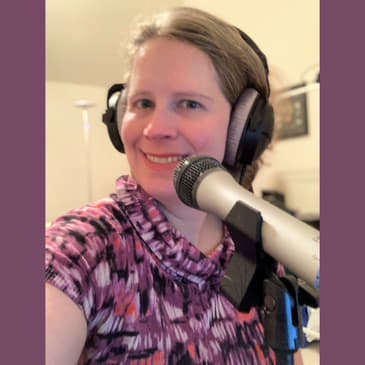
Carolyn Kiel is an Autistic woman who is thriving through her work in instructional design, and her podcast Beyond 6 Seconds. Carolyn will tell us more about her accomplishments and those of other Autistic women who are changing the rules by establishing their own businesses that serve the needs of people with disabilities and create communities for diverse Autistic people to thrive.
Later in the show, Philip will talk about some improvements to Today's Autistic Moment to make the podcast more interactive for the audience to participate in upcoming shows.
Dyslexia Accessible Transcript
Spanish Accessible Transcript
German Accessible Transcript
Autistische Frauen, die sich prächtig entwickeln
French Accessible Transcript
Chinese Simplified Accessible Transcript
Transcript
Autistic Women Thriving
March 8th, 2026
Introduction and Episode Preview
Welcome to Today’s Autistic Moment: A Podcast for Autistic Adults by An Autistic Adult. My name is Philip King-Lowe. I am the owner, producer and host and I am an Autistic Adult. Thank you so very much for listening.
Carolyn Kiel is an Autistic woman who is thriving through her work in instructional design, and her podcast Beyond 6 Seconds. Carolyn will tell us more about her accomplishments and those of other Autistic women who are changing the rules by establishing their own businesses that serve the needs of people with disabilities and create communities for diverse Autistic people to thrive.
Come join us for Autistic Women Thriving on Today’s Autistic Moment.
♫♫ Opening Theme Music ♫♫
This first segment of Today’s Autistic Moment is sponsored by The Autism Society of Minnesota, known as AuSM throughout Minnesota’s Autism Community. As Minnesota’s First Autism Resource for more than 50 years, AuSM serves the whole state, the whole spectrum for the whole life. Visit AuSM at ausm.org.
In addition to the wonderful guests and conversations on Today’s Autistic Moment, you can find many more resources.
Visit todaysautisticmoment.com to listen to over 120 episodes released since 2021.
Check out the Episode Schedule 2026 to see upcoming topics, guest information, and program descriptions for season 6.
On the website, you can:
· Learn more about Today’s Autistic Moment.
· Read the Guest Bios pages.
· Explore the Adult Autism Resources Links Page.
· Visit the Autistic Community Bulletin Board.
· Read the blog.
· Find out about TAM Autistic Consulting Services.
· Sign up for a subscription to get Ad Free Interviews.
· Support Today’s Autistic Moment with a donation.
Every episode, including this one, has a transcript. The transcripts are sponsored by Minnesota Independence College & Community.
You can read the transcripts right on the website or download printable versions to help you save ink.
The transcripts have hyperlinks in them for names, organizations and other resources mentioned throughout the show that you can access to see if they are helpful to you.
The transcripts use a dyslexia-friendly font that are available in English, Spanish, German, French, and Chinese Simplified.
Want more interaction with Today’s Autistic Moment? Follow Today’s Autistic Moment on Facebook including our Community Group Page, LinkedIn, BlueSky, Instagram and Threads. Also follow us on the YouTube Channel @todaysautisticmoment to watch Autistic Voices Roundtable Discussions. New Episodes will be coming up in 2026.
You are going to want to stay around for the upcoming interview with Carolyn Kiel in segments 2 and 3, to hear about some exciting updates that will be happening on Today’s Autistic Moment in segment 4.
Podcast Dedication
At the conclusion of this first segment before the commercial break, I would like to dedicate the song Brighter, Brighter performed by Beza to all Autistic and Neurodivergent people out there who are going through burnout because they were trying to please everyone else. This song is to validate your decision to do your self-care. This song and dedication is your confirmation because you are creating, maintaining and respecting the boundary you have created and are maintaining around yourself. Stop trying to show up for everyone else by masking and pretending to be someone you are not, that is why you are burned out. Let others take care of themselves, they will make it through and support you in any way they can, provided that you continue taking care of yourself. Now is the time for you to show up for yourself, and make yourself happy by just being who you really are.
And now I am going to play the song Brighter, Brighter performed by Beza then go in to our first commercial break. After the break Carolyn Keil will talk about Autistic Women Thriving.
♫ Brighter, Brighter ♫
Commercial Break I
Podcast Apps
Today’s Autistic Moment can be downloaded and heard on most podcast apps including Apple. Google Play. Breaker. Castbox. Overcast. iHeartRadio. Pocket Casts. RadioPublic. Spotify. TuneIn. Pandora. Amazon Music. Audible. Podcast Addict. Podcast Chaser. If you are looking for the transcripts, go to todaysautisticmoment.com, click on the episode you want to listen to and follow the directions to find the transcripts.
Thank you for listening to Today’s Autistic Moment.
♫The Autistic Coach Collective♫
♫Best Care Ad♫
♫MICC Ad♫
Segment 2
Welcome back. Carolyn Kiel is the host of the podcast Beyond 6 Seconds, a multi-award winning Neurodiversity podcast. Carolyn started her podcast in 2018 as a general interview show, but in 2022 she shifted it to focus on Neurodiversity after being late identified in her mid-40s. Carolyn interviews Neurodivergent people from around the world about their lives, identities, passions, with a focus on the intersections between Neurodivergence and race, gender, sexual orientation, disability and more. Carolyn has a Bachelor of Arts degree in psychology and a Master of Arts in industrial/organizational psychology.
Please join me as I welcome Carolyn Keil to Today’s Autistic Moment.
Philip King-Lowe
Carolyn Kiel, welcome to Today's Autistic Moment. It is my pleasure to have you here and so excited to talk with you. So welcome, Carolyn.
Carolyn Kiel
Thank you. Thank you, Philip, for having me on your podcast.
Philip King-Lowe
You're welcome. My pleasure to have you here.
So I'm really excited to talk about this particular topic, because my focus for 2026 is Autistics thriving, not just surviving. And once again, to remind my audience that Autistics thrive by finding joy, you know, through hard conversations special interests and you know, community building. And so Autistics thrive through resisting systemic oppression and working our way for social justice with our intersectional identities. And so as we roll into March Women's History Month, and my audience knows that I always focus this time on Autistic Women, who are often underrepresented in many circles. So I like to take this opportunity to bring the subject of Autistic Women Thriving, and this is going to be a great conversation because of the work that Carolyn does. So let’s begin, what important information can we give our audience about Autistic Women Thriving?
Carolyn Kiel
Gosh, well, I think there's so many different ways to thrive as an Autistic Woman, and you mentioned several of them in your intro. One thing that I noticed when I interview Autistic Women on my podcast Beyond 6 Seconds is that there's really a lot of different ways that women either express the talents and the gifts that they have in whether it's through their content creation or other ways. And also, I've seen a lot of Autistic Women starting their own businesses or organizations or nonprofits, so that those are the sort of the two things that really stood out to me there, of course, are many other ways that I've seen Autistic Women thrive, either watching their own content or talking with them on my podcast.
Philip King-Lowe
Well, I've had some very exciting Autistic Women on Today's Autistic Moment. One, of course, is our good friend Carole Jean-Whittington, whom I'm sure you know as Becca Lory Hector, and so many other great Autistic Women you know. And the thing is, is that Carole Jean's work centers around Autistic Women and burnout, a topic that's near and dear to her heart, and so many other ways that Carole does what she does. So if you feel comfortable, talk about how this topic of Autistic women thriving has affected your life. Please feel free to give some actual examples of how you've seen yourself thrive as an Autistic Woman and maybe some other people that you interact with.
Carolyn Kiel
Yeah, absolutely. So in my own life, I am late diagnosed as Autistic. I found out, I think, about four and a half years ago, so it's been a couple years now, but obviously I've been Autistic all my life, so looking back as part of that identification process. It is interesting to see how I kind of have been able to shift and build my career around jobs where I have been able to thrive and more. It wasn't always an easy journey. I've been, you know, in plenty of roles where they weren't ideal and or not, everything was perfect about it, and I had to kind of adjust as things went on, but I was always moving forward with the purpose of really finding something that fit well for who I am as an Autistic person and as well as my talents. So I mentioned at the beginning that I do have a podcast. I interview a lot of Neurodivergent people from all around the world. But my full time job is in instructional design and learning and development. So the role I have now is something that's basically, I work from home. I have the job as a combination of working with a lot of different people from all around the country through online or virtual meetings, and then kind of going back and doing solo work, so creating, designing training, and then going back and getting approvals and discussions and making sure that everybody has you know that we're addressing the business need of what's needed for that training, and also meeting the needs of what people who are taking the training, what they need to know about it. So I don't know that I purposely went into this particular type of work because I'm Autistic. I mean, I didn't know for most of my life, but it is interesting for me to look and see just how really the current structure of my job is really very supportive of me. So I get to be creative. I get to work from home most of the time. I get to plan a lot of my scheduled projects come in and are prioritized based on who on the team has time for it, and so I never have to worry about getting completely overwhelmed, because I have other people on the team who are helping me and we can sort of divide work among them. So these sound like very basic things, but for a lot of my career, I've had plenty of jobs where it's just completely overwhelming. There's no structure, or minimal structure, because a lot of times we're building it. It's a brand new thing. And I didn't realize until I was in this type of job that I'm in now just how, just how much better this works for my whole Neurotype and brain to have, like, at least a basic structure. Like, certainly, there's change all the time and that that can be challenging, but there's always this consistent structure of this is how we take projects in. This is how we assign them. This is generally how we do them. You know, we change things as technology and other things evolve, but there's at least some basic expectations for the job. Because, yeah, I've had, I've had other roles where we were kind of making up a lot of things as we were going along, because it was a brand new function. And, yeah, so looking back, I feel like I can thrive a lot more in the type of work I am now, with a basic structure, but still plenty of room for creativity, you know, some working with people, but a lot of working by myself too, and sort of guiding and coaching others along the way. So it's a nice blend. And I kind of, you know, it's interesting to see how I wound up in this, this kind of work without even realizing that I was Autistic through the process. Yeah. Yeah. And
Philip King-Lowe
Can you talk about some ways that you have also seen other Autistic Women thrive? Maybe some people from your podcast, maybe some people in real you know, people in your daily life and work, perhaps you've you know, come across more. Can you talk about some examples of how you have seen Autistic Women thrive?
Carolyn Kiel
Sure. So a lot of people I would mention are people that I've had as guests on my podcast. So as I mentioned, I've seen a lot of Autistic Women starting their own organizations or projects or sort of creative ventures, and that really allows them to, you know, whether it's giving back to the community or using their talents in new ways to create new things and just sort of share and contribute to conversations about Autism and disability and all kinds of social and, you know, any kind of issues at all that interest them. So one woman I interviewed a couple years ago now is Marissa Hamamoto. She is the founder of Infinite Flow Dance, and she is a dancer. She's a trained ballet dancer, but she does other types of dance as well. She's also late diagnosed Autistic, but she before she realized she was Autistic. She had a disability. She had actually had a stroke very early on in her life, and had to kind of recover from that. And then I talked to her about her whole journey of, how do you recover from something that was physically disabling at the time and then return to dance? And she talked about trying to be part of the dance world in sort of the old traditional ways, or fitting into what the concepts of ballet demand or other types of dance. And she never really quite fit, you know. And she talks about this from one like, just her, you know, her the way that she looked, and in her ethnicity, she's Japanese, American, and just the way the style that she used. So she wound up starting her own dance company that integrates disabled, more disabled dancers. So people with disabilities who are physical, some who have no apparent disabilities, and really started showcasing that as just saying that really dance is for everyone. So I want to share my love of dance and have these showcases and really share that and also educate people about the power of dance. So I think that was one way that she had this amazing dance talent. It didn't fit neatly into the boxes and the pre-defined rules of dance and the current what was currently available. So she started her own thing, and is incredibly successful, and now showcases other dancers with disabilities, and their choreography and their performances are really amazing. So I know that was one example that really stayed with me, and there's plenty of others too. That's just one.
Philip King-Lowe
So what you see is Autistic women thriving through initiatives, things that they're initiating to really bring a change to the culture that basically wants to pretend they're not there. You know?
Carolyn Kiel
Yeah, that's a Yeah. That's a really big way that I see that, and probably because, as since I host my own podcast, a lot of people are out talking about the ways that they're making change. So that's how I identify a lot of those stories.
Philip King-Lowe
Yeah, yeah. Well, I've had the same experience on Today's Autistic Moment. My guests are absolutely phenomenal because of all the different ways that they're doing their advocacy work or personal work and that sort of thing. There are so many of the people that are part of my network and part of everything that they are really they're not waiting around for the world to get better. They're just taking that initiative to make it better for themselves and other Autistic people. You know, we know that we can't change the world, obviously, but we can change how we see ourselves and how we interact with that world on our own terms. And a lot of the Autistic Women that I have been interviewing ever since I started this podcast, they are just so incredible with the initiatives they're taking to make the world accessible for them, and to just you know, and to just bring in this wonderful new environment that's changing, changing everything. The other part that I would like to tell my audience about is that over the past six years, since this podcast has started, the majority of my Autistic guests have been Autistic women. It's one of those things where, just like in the LGBT movements, we saw women stepping up to really make the movement move towards a really great social justice movement. And I see all the time Autistic women, and there are certainly some fantastic Autistic men and Autistic nonbinary people and that sort of thing, and that sort of thing. But I also see so much of what the Autistic women are doing is they're taking charge of their own lives, and they're really showing how they are, not just thriving. In other words, they're thriving, not just surviving, which is going to be the next question that I launch into.
After this next commercial break, I will ask about how Autistic women with intersectional identities are thriving. Today’s Autistic Moment and Beyond 6 Seconds focuses on the diversity of Neurodivergents. Carolyn will talk about what she has been doing to introduce the world to how that diversity shows a thriving Autistic community.
♫ Segment Ending Music ♫
Commercial Break II
♫ ITI Assistive Technology Ad ♫
♫Lisa Morgan Consulting Ad♫
TAM Support Ad
I hope you are enjoying my conversation with Carolyn Keil. The next show coming up on March 22nd is with LaToya Hinton to talk about Autistic Women Thriving Through Healthcare Equities. April will begin the first ever Autistic Advocacy Month where we will be talking about boundaries to start saying goodbye to Autism Acceptance Month.
After we conclude our conversation with Carolyn Keil in the next segment, stay around for segment 4 when I will talk more about what is going on behind the scenes at Today’s Autistic Moment. I am looking to make updates so that the podcast becomes more interactive where the Autistic Community can contribute to upcoming shows through new opportunities like participating in a questionnaire where your answers are anonymous, for the guest and I to talk about.
Today’s Autistic Moment needs your financial support so that the podcast can continue to work on exciting improvements that can help you build community.
Support Today’s Autistic Moment in any of the following ways.
· Make a one-time donation through the Ko-fi icon when you tap on Support Today's Autistic Moment on todaysautisticmoment.com
· Subscribe monthly via Patreon.
· Purchase items at Today’s Autistic Moment’s Logo Shop.
· Share Today’s Autistic Moment with your family, friends, coworkers and others through social media and/or by telling others about us.
Donations are not tax-deductible but help keep Today’s Autistic Moment as a safe space.
Thank you for supporting Today’s Autistic Moment.
♫Segment Beginning Music♫
Segment 3
Philip King-Lowe
Welcome back. Before the commercial break, Carolyn Kiel and I began talking about Autistic Women Thriving. Carolyn shared with us her journey of being late identified as an Autistic woman, how it helped her career in instructional design, start her podcast Beyond 6 Seconds, and some of the exciting Autistic women Carolyn has interviewed. Continuing with that theme, next we are going to talk about more Autistic women with intersectional identities who are really making a difference with the algorithms that are currently in place to not only survive, but are thriving. Please join us as we continue our conversation.
Philip King-Lowe
This is where we bring some of this positive energy that that Carolyn and I have already been talking about. We're seeing Autistic women taking initiatives. We are seeing Autistic women speaking out, building careers for themselves, building careers successfully in working for other employers and that sort of thing. And yet, there are these intersectional identities that include everything from race, sexual orientation, gender identity and multiply Neurodivergent individuals. And I was especially interested, Carolyn, when I read the description of your podcast that how important diversity is on the and how that focus, the focus is on those intersectional identities. And Today's Autistic Moment has been doing a lot of that. Talk about some of what that means for you, and especially in light of Autistic women, you can talk about that, please?
Carolyn Kiel
Sure. So I when I really started my podcast or refocused it to focus on Neurodivergents that was, I think, at the beginning of 2022, I really wanted to get as broad and full a picture of what the Autistic experience feels like, looks like, what kinds of challenges we face, and you know what, what kind of things help us thrive. So if I, you know, if I just look at my social media algorithm, and certainly it was like this when I was first understanding or realizing that I might be Autistic, and through diagnosis, a lot of my feed was Autistic white women, because we that's what the algorithm tends to promote. And especially, you know, the algorithm figured out that I'm an Autistic white woman, so that's what it presents to me. But I really wanted to be mindful and say, like there are so many other experiences besides just echoing back what my own experience is back to me, like, I want to know what else is going on. It's, I know it's not. This is not the singular experience of Autism. Like it's, it's awesome that I was hearing from more women, but I knew that there were more experiences out there. So my podcast, before it focused on Neurodivergent, I always had a focus on diversity and just hearing a variety of stories from people from different backgrounds, whether they live in different countries, you know are have are from different ethnicities, and, you know, different just different gender identities, like all of that. I really wanted to continue that as I went on to focus on Neurodivergence. So, yeah, for me, I am always very mindful of, you know, what kinds of stories I want to tell on the show. So I'm always trying to platform people who are have identities that are different from mine. The focus is Neurodivergents. Probably about half my guests wind up being Autistic. That's, you know, I haven't measured exactly, but that's sort of what it seems like as I put my episodes out. But I'm also interested in other people's experiences, and if they have other types of Neurodivergence as well.
Philip King-Lowe
Yeah, yeah, we are focused on Autistics, but I have been incorporating the multiple, multiply Neurodivergent individuals, because we need to understand that, that that the Neurodivergent umbrella is a term I like to use. It's really expanding all the time, and I jokingly say that we're discovering that the LGBTQ communities aren't the only communities of alphabet soup. You know, ours is also the Neurodivergent communities are also going in the same direction. It's just getting becoming a wider and wider, diverse group of individuals. And so, I mean, what we do know is that when it comes to multiply Neurodivergent individuals, they all overlap with so many of the other communities that they're part of. You know, they do intersect with, you know, I just had that focus in February about Black Autistics Thriving. I had Charlotte Batchelor on, who, you know, spoke about Black Autistics Thriving in Urban Settings. And you know that she's had to face the racism that's always been there. It's always been there for her and for others and the challenges of being Autistic. You know how those intersectional identities really cross each other, but they also find their own spaces of resistance as well, even within their own communities. You know, the other thing that I think we should talk about, about how Autistic women are thriving and not just surviving, is in the amazing work that so many Autistic women are doing with community building with other Autistic individuals, with other Neurodivergent with other with other intersectional identities. Could you talk a little bit about that?
Carolyn Kiel
Yeah, well, I guess there are a lot of different ways that Autistic women do community building. One in some sense, can be through starting a podcast. So one of my former guests, Ayana Davis. She goes by Phenomenally Autistic on social media. She recently started a podcast, I think it's called Black Girl Diagnosed, and she interviews other black women about their experiences being diagnosed with Autism and what their lives are like and what kind of challenges they face. And I'm always just so happy to see more representation and more conversations about Autistic women who are racialized and what their experiences are, because it's not because, as you said before, from your conversation earlier, with I think with Charlotte, is that, you know, it's the like, race and neurotype disability and all of our other identities are always intersecting together. So you can't really, like, pull them apart, and it means that you just have a different experience than, say, like a white a white, Autistic woman would, and it's important to platform those and for people to understand that anytime, you know, anytime you're on social media and you hear some sort of like absolute that's being shared by someone about, like, oh, you know, all Autistic people do this, or all Autistic people should, their goal should be to unmask and be free and, but there's implications like that makes sense or is very easy for certain people from certain backgrounds and identities to do, and maybe potentially more dangerous and not advantageous for other Autistic people to do. So it's interesting. It's important to have those conversations and to bring in those actual voices from people who are having those experiences, those lived experiences, to really share with that. So I mean, podcasting is one way to build that community and understanding. I also had on my show Maria Davis Pierre, she started an organization called Autism in Black, and that really caters to Autistic people who are black and their children, like if they're parents and they have Autistic children, it's really a way to just kind of bring people together. I know she has a podcast. She also has a conference once a year to bring together speakers to really talk about the experience and what it means to be Black and Autistic. She herself is Autistic. She has Autistic children, so it's all sort of a mixture of lived experience, but she builds that community virtually and also physically through her conference and through her coach coaching, and I think therapy work because she's licensed as a therapist as well, and that's a really big part of it. And then, yeah, and then I have, my friend Diane started an online platform that's like a separate it's not on social media. It's a separate, I think it's like on mighty networks or something like that called Autastic, where she brings people off of, you know, away from the algorithm. But mostly it's late diagnosed Autistic people of color. It tends to be a lot of women and nonbinary people who join up and share in there, but it's just another way to build community and talk about common experiences and get support and talk about things that you may not be comfortable talking about in other venues. So that's another way of building community as well. So there's a lot of different examples, but those are just a few off the top of my head.
Philip King-Lowe
Yeah, and Charlotte Batchelor has been a speaker at many of those conferences. Charlotte was just talking about that organization and the wonderful people who are part of that in early February, yeah, yeah. And I'm so grateful to be hearing about things like that. They're so very important. Carolyn, where can we help Autistic women to find resources about Autistic women thriving?
Carolyn Kiel
Well, it was interesting because I was looking to see what kind of resources I I've used or looked at or was aware of to prepare for this interview. And a lot of a lot of the story sharing tends to, you know, we don't, we don't get to see a lot of thriving. Unfortunately, there is a lot of, you know, struggle, and because that is sort of part of the story. But I really wanted to focus on certain resources that might be helpful and interesting for people. So I know there is an organization called the Autistic Women and Nonbinary Network. So they, you know, they have a website, I think they have net they have either virtual get togethers, they have blogs and resources. So that is then that's dedicated to the experience of Autistic women and non-binary people. So that is one way to sort of learn about how, you know, how people are thriving, and what kind of stories that they want to share through that. And, yeah, there's also another resource. It's not specific to Autistic women. It's very broad in terms of all kinds of disability, and it's global, and it's related to all genders. But one of my former guests is she was based in India. Her name is Aditi Gangrade, and she has her own like, it's like a media company called Much, Much Spectrum. And I see their posts a lot on Instagram and other social media, but they really go, and she's Autistic herself, and she goes and films and interviews and puts together small like documentaries and film clips of people with disabilities who are sharing their own stories. So a lot of it is raising awareness of certain types of issues that might impact people with disabilities, but it also shares a lot of, really, I have to say, inspiring stories, but positive stories that are told from the perspective of the person who has the disability. So they're not like, sort of, you know, they're not overly saccharin, they're very realistic, and it's what the person wants to share about their story. So it's and it's global, so it's a really great community, and there's a lot available on their website to just watch and share with others. So that's another resource I found really helpful as well.
Philip King-Lowe
Yeah, yeah. Those are really great. I know of the Autistic Women and Nonbinary Network, also called AWN is their name, and they are a marvelous organization. And what I especially appreciate is that AWN is open to many cultures. The BIPOC community, they assist a lot of Autistic women with resources if they need it, if they need the help for them and so AWN is indeed an outstanding organization, and there's so much that they do. You know, there's a lot of resources available on the Autistic there's a lot of resources available on the Adult Autism Resources Links Page on todaysautisticmoment.com, many resources from Autistic Women, and, you know, a variety of resources and that sort of thing. So I do encourage everybody to check that out. And I also want to take this opportunity to also do give a plug for beyond6seconds.com. I am looking at Carolyn's website here, and it is really marvelous with all of the awards that it's won. And also just the list of episodes, there's a big there's quite the variety there, and some guests that I am going to have to look up, and that sort of thing, because I see some marvelous names that I haven't met before, but we're actually, we are, in fact, going to be doing some of that. Awesome. Yeah, definitely. And I'm so grateful for this opportunity that we've had.
Philip King-Lowe
So Carolyn Kiel, thank you so much for being on this episode of Today's Autistic Moment, it has been a delight to talk with you and to hear your story and stories of how you are seeing Autistic Women thrive. And thank you so very much for this, and I can't wait to have you on again sometime.
Carolyn Kiel
Thank you, Philip. It's been great being on your podcast, and thank you for all of the great work that you do to amplify and share Autistic voices from all kinds of backgrounds. So thank you for that.
Philip King-Lowe
Thank you.
Transcribed by https://otter.ai
Would you like to listen to this conversation I had with Carolyn with no segmentation or ads? Sign up for a subscription to Ad Free Interviews on todaysautisticmoment.com. The subscription is only $12.00 a month or $144.00 for a whole year. Once you buy the subscription, you can click on any show where you see the logo for Today’s Autistic Moment Ad Free Interviews to hear only the interview without interruption, segmentation and music. You can listen to all Ad Free Interviews going back to July 2025 and all upcoming episodes.
After this brief commercial break, during segment 4, I will talk about the shows coming up, and introduce you all to Autistic Advocacy Month that will start in April. I will also tell you more about the episodes in April, with some exciting improvements as to where Today’s Autistic Moment is going so that Autistics in my audience can be interactive. Following that will be Today’s Autistic Community Bulletin Board.
♫ Segment Ending Music ♫
Commercial Break III
TAM Autistic Consulting Services Ad
On February 24th, 2011, a psychologist shared the results of an evaluation I did with him and told me that I had Asperger’s Syndrome. I went through a four year period of feeling relieved, confused, happy, grieving and felt totally lost in my life all at the same time. In 2017, I found The Autism Society of Minnesota and it changed my life. I started learning about Autism, meeting other Autistic people, and discovering the local Autism community. Since then, I have accepted that I am Autistic and I am proud to be the person I am.
If you were recently told that you have Autism, you need a consultant who knows how your life is being impacted, so you can connect with the Autistic community to find resources and support.
Go to todaysautisticmoment.com and read about TAM Autistic Consulting Services. If interested, please fill out the intake form and make an appointment so we can begin working together.
♫ Looking Forward Life Coaching Ad ♫
♫Segment Beginning Music♫
Segment 4
Welcome back. LaToya Hinton will be returning to Today’s Autistic Moment on March 22nd, for the episode Autistic Women Thriving in Healthcare Equities. LaToya has been working with Umbrella ND to hold panels with Autistic people from all backgrounds to collect information about healthcare equities. LaToya and I will talk about the healthcare equities Autistic women are not getting because of a system that is not making those equities accessible. LoToya will share why it helps Autistic women to know what their needs are, especially or for those who may not have access to getting a diagnosis, which in turn affects their mental health as Autistic women age to receive community supports such as mentors, occupational therapy, to get pictures and visuals to show good ways to succeed.
Last May, following the horrible events that took place during Autism Month, a group of people and myself started Autistic Advocates United: An Autistic & Allies Grassroots Movement. The movement is being led in partnership of Today’s Autistic Moment and Umbrella ND. We want to help Autistics and our Allies work to begin saying goodbye to April as Autism Awareness, or Acceptance Month, and start saying hello to Autistic Advocacy Month.
What are we doing?
For too long, April has been about “acceptance” –asking the world to simply tolerate Autistic people. While acceptance is an important first step, it’s not enough anymore. Acceptance is passive. Advocacy is active. Acceptance says, “put up with us.” Advocacy says, “listen to us, include us, and change the systems that harm us.” Acceptance asks for tolerance. Advocacy demands justice. As Autistic people, we know what we need better than anyone else. We’ve been advocating for ourselves and our community for decades. It’s time the month of April to reflect that power and expertise. We’re not waiting for others to accept us anymore. We’re advocating for the world we deserve. Go to the website autisticadvocacy.com for more information.
Today’s Autistic Moment is going to celebrate Autistic Advocacy Month with two great shows about the importance of boundaries.
On April 12th, Becca Lory Hector will be my guest for the show, Autistic Advocacy Month: Our Boundaries, Our Responsibility. During this episode Becca and I will give you a definition of what boundaries are. We will talk together about what we mean when we say our boundaries, our responsibility. This will include how we design, develop and maintain our boundaries, what our responsibilities are and are not, how we tell the world how we want to be treated, and who do we create our boundaries for.
On April 26th, will be the episode, Autistic Advocacy Month: Our Boundaries, and The Responsibility of Others. The guest for this episode is yet to be announced. Knowing our boundaries, communicating them with others, especially but not limited to another Autistic and/or Neurodivergent person, and their responsibilities require trust and a sense of what to do should our boundaries get crossed.
We want to invite you to participate in these conversations by participating in a questionnaire. Click on the link provided in the transcript entitled: Autistic Advocacy Month Questionnaire. You can also go to the Episode Schedule 2026 on todaysautisticmoment.com and click on the Autistic Advocacy Month Episode Questionnaire with the episodes in April.
I am seeking new sponsors to help me implement these improvements which will require more hours, equipment upkeep and more money to facilitate the updates. If you are involved in a business and/or organization that supports Autistic and Neurodivergent people, please check out the Do’s & Don’t’s Page on todaysautisticmoment.com. If you agree to work with us based on what you read there, please send an email to todaysautisticmoment@gmail.com to get more information about being a sponsor.
Today’s Autistic Community Bulletin Board
All these events and many others such as sensory friendly concerts, art activities and museum information links are available on
todaysautisticmoment.com/bulletinboard.
Today’s Autistic Moment is sponsored in part by The Autism Society of Minnesota. For more than 30 years, AuSM has hosted the Minnesota Autism Conference, which brings together Autistic Adults, caregivers, educators, service providers, therapists, and advocates from across Minnesota and beyond. In 2026, AuSM is making a thoughtful shift to a virtual, two day format. This change helps lower ticket prices and increase access—with no travel, no hotel costs, less time away from work or caregiving, and more flexibility for how and when you participate. Tickets are now on sale for $149.99. AuSM members get $50 off, but there is another way to save even more money. Autistic Minnesotans can request the scholarship rate, which is just $74.99. Requesting a scholarship is easy; it’s available to all Minnesota residents who identify as Autistic. Since scholarships are funded by AuSM’s donors, they are not available to people outside of Minnesota, but the scholarship rate is also available to Minnesotans marginalized by race, gender, sexuality, and more.
The Adult Coffee Club for Autistic Adults in Minnesota are held on the second Tuesday of every month (weather permitting) at Dogwood Coffee located at 2700 University Ave W. Suite 100 in St. Paul, Minnesota. The Zip Code for your GPS is 55114. The Adult Coffee Clubs will begin at 4pm to 6pm on March 10th. No Coffee Club in April. May 12th. June 9th.
Understanding Autism virtual classes are offered by The Autism Society of Minnesota. The next classes will be March 9th, 6- 7pm. April 13th, 10-11am. May 11th, 12-1pm. June 8th, 6-7pm.
On May 7th, beginning at 6:30pm to 8:30pm, Joyner Emerick will present a workshop at the Autism Society of Minnesota entitled, Autistic House to Home: A Guide to Affirming Home Space.
Save the date May 17th, 2026, for the Steps for Autism. More information is forthcoming.
Go to ausm.org to get more information about these and other social and recreational programs, educational events, counseling services and support groups at The Autism Society of Minnesota.
MNeurodivergent is a social club rooted in a vision of bringing Neurodivergent Minnesotans together to build meaningful connections. Its core principle is to foster an environment where all are treated with dignity and respect regardless of ability or preferences. Go to their website mneurodivergent.org for more information, become a member, volunteer and attend their events.
Today’s Autistic Moment is here because of the generosity of supporters and sponsors. Go to todaysautisticmoment.com and select Support Today’s Autistic Moment to donate.
If you have questions about Today’s Autistic Moment, please send an email to todaysautisticmoment@gmail.com.
Thank you for listening to Today’s Autistic Moment: A Podcast for Autistic Adults by An Autistic Adult.
May you have an Autistically Amazing day.
♫ Closing Background Music with credits ♫
All of the guests meet with me on Zoom to record the interviews. The interview transcripts are provided by Otter. The podcast is prepared and edited on WavePad Masters Edition by NCH Software. The podcast is published by Spotify for Podcasters. The music that you hear is licensed to Today’s Autistic Moment by premiumbeat.com.
