Go to todaysautisticmoment.com for the transcripts.
Philip and Charlotte discuss goal setting for Autistic Adults, emphasizing flexibility and personalized approaches. Charlotte is a late-identified Autistic, and ADHD with bipolar II who shares her journey to become a self-advocate. Charlotte will highlight long-term and short-term goals, adapting to routine changes and leveraging community support. Charlotte also discusses the impact of socio-political circumstances on intersectional communities, advocating for community-centered efforts and the documentary "Autistic Out Loud," which focuses on black Autistic individuals.
Dylexic Accessible Transcript
Spanish Accessible Transcript
Establecimiento de metas para autistas
German Accessible Transcript
French Accessible Transcript
Établissement d'objectifs autistiques
Chinese Simplified Accessible Transcript
Scroll Down to Read the Transcript from Here.
Transcript
Autistic Goal Setting
September 14th, 2025
Episode Preview
Have you set goals for yourself then discovered that you cannot maintain them because of the routine change? Did you set a goal for yourself to reach within a certain time frame, then you found yourself burned out, then blamed yourself because you weren’t able to reach your goal? Charlotte Bachelor will join me in segments two, three and four to share her story of setting goals for herself. Charlotte will offer you advice to meet your Autistic goals that fit your needs in a way that meets you where you are. Welcome to the episode Autistic Goal Setting on Today’s Autistic Moment.
Segment 1
♫ Today’s Autistic Moment’s Theme Song, Today is Your Day ♫
Today is your day on Today’s Autistic Moment: A Podcast for Autistic Adults by An Autistic Adult. Where Autistic Adults are distinguished by using our voices and special qualities to inform and celebrate Neurodiversity. Leave the stress of the dominate Neurotypical culture behind for a while and be proud of who you are.
This first segment of Today’s Autistic Moment is sponsored by The Autism Society of Minnesota, known as AuSM throughout Minnesota’s Autism Community. As Minnesota’s First Autism Resource for more than 50 years, AuSM serves the whole state, the whole spectrum for the whole life. Visit AuSM at ausm.org.
Please visit todaysautisticmoment.com where you can listen to more than 100 shows, get transcripts, program updates, and read the guest bios pages. You can also visit the Adult Autism Resources Links Page. Please visit the Future Shows Page to read the titles, guests, and descriptions of all the shows in 2025. The transcripts are sponsored by Minnesota Independence College & Community. There is a link provided to get access to a document form of the transcript without the purple-colored background so that you can print it without using up the ink on your printer. The written document has a font that is accessible for dyslexics. There are additional transcripts available in Spanish, German, French, and Chinese Simplified.
Please follow Today’s Autistic Moment on Facebook, Instagram, LinkedIn, and Blue Sky. If you follow Today’s Autistic Moment on Instagram, please follow us on Threads. Join Today’s Autistic Moment Community Group page on Facebook for conversations and updates. Please subscribe to the YouTube channel @todaysautisticmoment to watch Autistic Voices Roundtable Discussions.
I want to direct your attention to an episode of Autistic Voices Roundtable Discussions that occurred three years ago. The Dangers of Medical Myths. The panelists talked about the myths about vaccines causing Autism, and that pregnant women who have taken Acetaminophen risk giving birth to Autistic children and ADHD children. They are all fruits of the same poisonous tree, a lack of credible information about Autistic people. Robert F. Kennedy Jr. has been in the news again supporting these medical myths suggesting that they are the cause of the “Autism epidemic.” There is no credible research to back up these claims. It is important to get your facts about Autistic people from the experts, Autistic individuals. Go to the YouTube channel @todaysautisticmoment to watch Autistic Voices Roundtable Discussions: The Dangers of Medical Myths. Get your facts from the people who are most affected by these myths. Don’t just talk about Autistic people, listen to Autistics tell you what we have to say.
After the first commercial break we will welcome Charlotte Bachelor to talk about Autistic Goal Setting.
♫ Segment Ending Music ♫
Commercial Break I
Podcast Apps
Today’s Autistic Moment can be downloaded and heard on most podcast apps including Apple. Google Play. Breaker. Castbox. Overcast. iHeartRadio. Pocket Casts. RadioPublic. Spotify. TuneIn. Pandora. Amazon Music. Audible. Podcast Addict. Podcast Chaser. If you are looking for transcripts, go to todaysautisticmoment.com, click on the episode you want to listen to and follow the directions to find the transcripts.
♫Looking Forward Life Coaching Ad♫
♫ ITI Assistive Technology Ad ♫
Segment 2
♫Segment Beginning Music♫
Philip King-Lowe
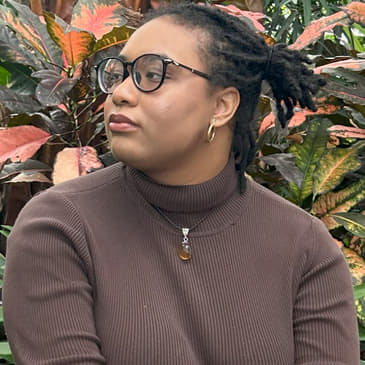
Charlotte Bachelor is a late-diagnosed Autistic/ADHD writer and speaker from Detroit, Michigan. Charlotte began documenting her diagnostic journey as a student at Michigan State University where she earned a Bachelor of Arts degree in Professional and Public Writing with a minor in African American and African Studies. Charolette’s work focuses on uplifting the experiences of Black Disabled Women and Girls. Additionally, Charlotte completed the Disability EmpowHer Expressions Group and is a long-term Trainee with the MI-Lend program. Through Charlotte’s powerful storytelling, she shares her unique perspectives to illuminate underrepresented stories and experiences. Please join me now as I welcome Charlotte Bachelor to Today’s Autistic Moment.
Philip King-Lowe
Charlotte Bachelor, it is my privilege to welcome you to Today's Autistic Moment, and this is your first time with us today. So, thank you so much for taking time from your busy schedule to spend time with us today.
Charlotte Bachelor
Thank you so much for having me. I'm happy to be here.
Philip King-Lowe
Thank you. Well, this is quite a great topic, as we're starting the Fall and into the Fall season, that sort of thing. And I think it's a great idea to talk about some goal setting. That's what we've gotten together to talk about setting goals. And in particular goals in a year, at a time when there's so much happening around Autistic people and many, many intersectional communities, many of whom are underrepresented. Let's build a foundation for our conversation today. You know, what does goal setting mean for Autistic Adults to be multidimensional?
Charlotte Bachelor
Yeah, so I think so just a little bit about myself. My name is Charlotte Bachelor again. I am a late diagnosed Autistic Adult. I have ADHD. I have bipolar II and a couple other diagnosis. I did not come into my disabilities, or my disabilities didn't really make themselves present until I was 18. I was diagnosed with bipolar II at 18 in the middle of my freshman year at Michigan State University, and I kind of had to step away from school, move back home and really re analyze what I wanted my life to be and what goals would be possible for me, because I'm dealing with this dual diagnosis. I'm dealing with these, you know, emotions and feelings that are, you know, exasperated by the condition, and also dealing with a little bit of burnout and all of those sorts of things that come with a big life transition. So, I think if I could go back and tell my 18-year-old self-something, it would be it's okay to have goals, but it's important to be flexible about them. As long as you accomplish them, how you get there isn't as important as reaching the destination, in my opinion. So, I decided, after that experience, that I wanted to be a self-advocate. So, I started working with disability rights organizations here in Michigan. I got on social media, started sharing my story, started writing for different publications, and um, that kind of um, got me where I am today. I'm the type of person that loves a framework or a kind of guideline. You know, being an Autistic person, I don't want to say I always deal in absolutes, but I need, sometimes to make things less abstract, very clear and obvious. Of how are we going to finish this project, or how am I going to get there? So, goal setting has always been important to me for big things, for small things. On the small end, it could be like, Okay, I this year, said I wanted to travel, and I went on seven different trips this year, goal accomplished. I didn't have a set number in mind, but I said, Okay, I want to travel for work. So, I got to go to Autism and Black conference. I want to travel visited a friend for her birthday. I wanted time to spend it with my family, went on a cruise. So, goals can be something like that. It could be, you know, building a skill set, like I want to take my supplements every day, or I want to go to bed at a certain time, because I know when I go to bed at a certain time, I feel better and my mind works better, and I'm not burnt out and anxious and irritable. So, I think goal setting is important, because not to say we'll be perfect people, but there are always ways as adults, we could improve, and especially as you move into your late 20s and out of your 20s, the goals you have at 18 might be different than the goals you have at 25 when your life circumstances are different. You could be having a partner; you could be dealing with changes in your living situation or your family. So, I think it's kind of nice to use flexible goals as a way to acknowledge the progress that we've made and where we want to go. And I also think that it's important for us to keep goals or keep striving for things, especially in the times we live in now, to kind of give ourselves something to anchor onto, and to give us that little bit of hope when things seem challenging or pressure just seems so insurmountable.
Philip King-Lowe
I'm interested to know what your thoughts are about setting goals and dealing with your routine changes that are often inside those goals. Because we know a lot of Autistics that change of routine is a real challenge. And I mean, sometimes we get into that routine and then we fall back, which I think is we just need some grace to exercise there. And then there are those things that happen in life that are just plain old, not expected, that change our goals and change our routines. Do you have anything to talk about with those kinds of things?
Charlotte Bachelor
I think for the expected changes. So, I'll call these cyclical changes. So, let's say you're a college student, or you're someone like me that works in higher education. I know between the months of May and July, my work schedule, really, but once September hits and Labor Day comes, I know, okay, I have to switch back into focus mood. I have this meeting. I have that meeting. I'm on this committee. So, I think, when possible, using that pattern recognition and understanding certain times of year, certain seasons, maybe there might be routines I need to bring back up. And it could be as simple as, okay, I'm back in school or back in work or whatever you have going on, and just writing them out and understanding what does my day to day look like, and what do I need to do to have a successful or good day? It can be as small as, what time do you get up, brushing your teeth, what do you eat for breakfast? What are you going to eat for dinner? When are you going to do chores or have self-care time? So, I think with those goals, I can say, okay, for me, I'm in a I'm a Michigan Lend, long term trainee right now, and I can say, I want to spend less time on social media. In my studies and meeting my curriculum hours. So, in order to achieve that goal, I'm going to take Instagram off of my home screen and really try to limit Instagram just for use to do my advocacy work or for work because I work in marketing. So, identifying those patterns is important. But then I also think that I think they say it takes, like, three weeks to build a good habit. So, recognize the streaks, even if you make it four days in a row and maybe you fall off the wagon. That doesn't mean you failed at the routine. It just means you're human and you are exercising that change muscle and change can be hard to adapt to. Now, to get to your second point about unexpected change, I think that it can take a little bit longer. And the goal, the what's what I'm looking for with unexpected change, you can't just immediately, okay, I'm going to be in my notes, new routine, and it's just going to be like, boom, I'm in this new routine. It's making everything feel better.
Philip King-Lowe
Especially when those changes often knock you off those goals.
Charlotte Bachelor
Yeah.
Philip King-Lowe
You know and there's a tendency to feel like we failed something when that's not what's happened at all. Go ahead. Continue.
Charlotte Bachelor
Yeah. So, for example, in 2024 I ended up leaving my job and I said, okay, this is the job I've had since I've graduated college, good money, good benefits. I'm going to look for another job. Now, if you know, or the audience knows anything about the state of finding full-time gainful employment. It's kind of a hot mess express right now. So, what went to oh, I'm just going to be out of work for a month turned into six months and not really having the structure of this is what I do during my work day at 7am to 7pm most of the days I was, you know, caught up with the day-to-day task of work. So now, presented with all of this free and unstructured time, I had to kind of relearn, okay, the first month I took, just because I was in severe Autistic burnout, because of this job I had to take just to decompress, just to come back to my body, just to know what it feels like to live and exist without all of this, like pressure and all of this, you know, intense anxiety. And then probably about month two, I said, 0kay, I have a freelance writing client now, so let me build a schedule around writing, and that's also getting to a schedule of looking for work, but not obsessing over it to the point where I feel burnout. Let's maybe do three applications a day, or four applications a day, and now let's add in time to do creative projects or to talk to a family member or to talk to my therapist about the change or to network. So, I think in that, you know, it was, I thought I was going to be in that job a lot longer, and it just was not a good fit for me and my disabilities. So, I think in that unexpected change, you know, sometimes you don't know how long this change is going to last. It could be permanent. Like, oh, my partner got a new job out of state, so now I'm moving halfway across the country. Or it could be temporary. So, I think you can set goals, and goals don't have to be, like, on a five-year plan. Like, people think three, five, ten-year plan. You can make a goal just for that week. Like, this is how I'm going to survive this week, and then maybe look out a little bit longer, and also just course correcting, because a lot of times, everyone goes through change. That is the one certainty about life, is that there is uncertainty. So, you know, learning to kind of build small routines or keep up the smallest pieces of self-care are really important during times like that, and it's where I found like, Hey, I like creating Instagram content. People care about what I have to say. People like that I'm sharing my stories, and I'm not so alone in the world. So, when you can lean into those more positive coping mechanisms during those times and just try and remember those when the next unexpected change comes. I think that's super important too.
Philip King-Lowe
Yeah, and sometimes your goal setting can be just the goals you set for a single day. I mean, sometimes you really do have to do that. You know, based on, let's say you, you found yourself with a cold, and your goals are going to change that day, because our first priority is to look after your health at that point, you know, and to and that sort of thing, which can be very hard. And I am somebody who has a physical disability, and I've got, like, a goal for things I might do in a single day that I you know, and sometimes those goals are going to be it's going to be necessary to cut a little here, but add a little there that sort of thing. So, you know, how do you how do you measure routine, or what I let me try this again. How do we measure keeping something and letting go of another. And if you need an example, please ask.
Charlotte Bachelor
Okay, yeah, so kind of like seeing the efficacy of your routine and when to kind of change things up. I think that's also deeply personal. And like you said, depending on the day, I'm also someone with chronic illnesses, so the goals I have set, I'm not having a pots flare up, or I'm not having a four-day migraine episode are very different. On a day like today, where the sun is shining, I'm feeling good. I'm fresh off of Labor Day weekend. I feel like I can be a little bit more. I can add more on my plate today to kind of lessen the burden later on. Um, and I think it's just like it’s; it's strategically knowing how to meet your daily support needs or your access needs as they come every day. So, I'll use the example for my full-time job. I have a full-time job that has a very generous work from home policy. So, some days I need to go in the office. I need both of my monitors. I need my whiteboard, or maybe it's a collaborative project, and I need that face-to-face communication and not an endless email stream. Or other days are like, Hey, I'm feeling a little under the weather. I don't necessarily need to call off. But if I were to get dressed, go all the way downtown, fight with traffic, that would be more of a detriment to me, like getting work done. So, some days I say, okay, the tradeoff for today is I'm going to work from home so that if I'm not feeling good, I can pause, take that breather and be in the comfort of my own home, versus being in an office and being uncomfortable, not feeling myself, maybe getting someone else sick. So, with that, I think it's important. And again, no one's going to get mad at me if I'm not coming into the office. You know, that's just a me thing. I have to, you know, I'm not going to feel I'm not going to make myself feel ashamed because I needed a day to myself because I woke up with a migraine or sinus infection or I'm having a flare up, and don't want to risk having to, you know, leave the house and accidentally have a fall or something like that. Um, so it's important that that flexibility has different in the goal setting and deciding that not everything is a one-to-one situation. Sometimes there are those, there are exceptions to the rule where you will have to cater yourself. So, for example, like, if you're like me, I'm a writer, you might spend racking your brain. You might spend all day working on a writing project to get nowhere and think, Oh, if I just stay up for two more hours, I am I want to meet my goal of writing 300 words today, so I'm just going to force myself to stay up past midnight and write. Well, more than likely, you didn't get anything done. You don't feel good about yourself, and you feel irritable. So, in that case, it's kind of knowing when to kind of put the brakes on, or knowing when to stop and knowing when to pivot. I also think are you know, important aspects in the goal setting, especially when you know your energy levels or how much you're able to give to a project or give to a certain task might be very dynamic as I shift day to day.
Philip King-Lowe
Can we give a little bit of some ideas for Autistics who have just been informed. They were just identified. You know, and which means whatever goals they may have set before, they just don't exist anymore. Basically, you know, there's a process that we go through after we've been informed, or after we've been identified, diagnosed, whichever word you use, you use. But there is a process that goes on and I'm going to start with the fact that when you just heard that you're Autistic, you're going to go through a lot of emotions, you already know that. But there's and there's also going to be a lot of getting to know yourself all over again, and getting to know your life all over again, the people you've known that sort of thing, setting, you know, in the moments like that, when it's so difficult to set goals because of things that you don't really know. What are some, what are some pieces of advice you might give in that?
Charlotte Bachelor
I think that's a really good question and a really good point, because again, you might feel relieved, you might feel sad, you might feel grief for the child you were, or the lack of resources held to you, or how you were treated as a child. So, I think the first goal, or the first order of business, is to give yourself room to feel those feelings and not to say, okay, I just got diagnosed. Now. I need to sign up ten different podcasts, nine support groups. I need to find a new therapist. I need to do all those things. I think being present in that moment and just taking it all in is important, and then deciding what do you want to do with this diagnosis now? Because no one can tell you what to do with it, except yourself, they're not going to put an article in the paper saying, “Hey, Joe Smith is Autistic. Everybody. Look, here's his neuro psych eval results.” Now in my case, my practitioner did provide like, hey, you know, you should continue seeing your therapist. I think talk therapy is helpful. Here are some young adult support groups in Michigan. Here are some other groups that do you know, volunteering work and connecting, you know, young Autistic Adults. So, it really depends on what kind of way you want to go towards you might want to learn more about Autism. So, in that case, you can listen to podcasts like this, other podcasts. People on LinkedIn, Instagram, YouTube. You can do that. You can maybe spend time doing just journaling to yourself, what has worked for you in the past, and what have you found out you struggle with? So, if you're someone who has sensory sensitivities or sensory differences, you might find okay, I need to invest in a good pair of noise canceling headphones, or I need a fidget that helps me focus, that has a certain texture or lack of certain texture. If you're someone like me, I found out the second or last semester I was in college, I worked with if you're in school or have access to this I worked with an accessibility specialist at my school's Resource Center for Persons with Disabilities, and she kind of helped me find those goal setting in terms of not over extending, in terms of asking for clarification, and really the baseline level of advocacy I would need to finish out my classes at school and then be able to carry on in the workplace. So I think it really is important for you to sit down and feel your feelings, but then make a list of what do you think would be most helpful, what has been most helpful in the past, and what you have find, what have you have found unhelpful, or maybe things you don't repeat and you just apply it to any area of your life, of friendships, romantic partnerships, the workplace, education, and I think for me, hearing from other Autistic voices, hearing from other especially black, Autistic women, has been very crucial in helping me identify and meet those needs I have, and being able to communicate them, really, without fear of judgment and just more of a very matter of fact, this is what I need to make this space equitable, be equitable for me to participate so my needs can be met, or they're not going to get met, or I might have to go be friends with someone else or be in be in a different social group. But that really was kind of my baseline thinking, or thinking that I think would be helpful for other people. And there's no timeline on this discovery. Either you can process for a month and then go look for resources, or you can get your you can get your diagnosis on Wednesday and by Monday morning, you are already planning how to your self-accommodations, and, you know, things like that. So, I think really understanding that it's a deeply personal process, and that, like anything with goal setting, there's trial and error, so just continuing to give yourself grace and the flexibility to change your mind set about things, or change how you approach accommodating yourself.
Philip King-Lowe
Yeah, those are excellent, excellent answers and suggestions.
After this next commercial break, Charlotte will talk about how her race and disability have always created challenges with being accepted and respected, with advice of how you can set goals when you are in those situations and tell you about the project she is engaged in for the Black Autistic Community.
♫ Segment Ending Music ♫
Commercial Break II
♫Best Care Ad♫
♫MICC Ad♫
♫ Autistic Coach Collective Ad ♫
TAM Support Ad
There is no greater assistance you can give right now to the Autistic Communities than supporting the podcast that is bringing the quality of conversations and guests to help Autistics find and use their many strengths.
Your contribution helps the podcast continue connecting and empowering Autistic Adults.
Here are some ways you can support Today’s Autistic Moment.
· Make a one-time donation through the Ko-fi icon when you tap on Support Today's Autistic Moment on todaysautisticmoment.com
· Subscribe monthly via Patreon.
· Purchase items at Today’s Autistic Moment’s Logo Shop.
· Share Today’s Autistic Moment with your family, friends, coworkers and others through social media and/or by telling others about us.
Donations are not tax-deductible but help keep Today’s Autistic Moment a safe space.
Thank you for supporting Today’s Autistic Moment.
♫Segment Beginning Music♫
Segment 3
Philip King-Lowe
I want us to turn to my second question. We know that Autistics are engaging with goal setting. But earlier in this conversation, you brought up you are a Black Autistic Woman, that you are also bipolar and did you say ADHD?
Charlotte Bachelor
Yeah.
Philip King-Lowe
Okay. And so, I have a great concern this year with what's happening for many of our intersectional communities. I am gay and I am of so very worried for our trans community. I can't say enough about that this year, and many of whom are Autistic and even so. I mean, we have these, these actions being taken around so many of our intersectional communities right now that are adding burdens, deeper burdens, in some cases, that's affecting jobs. It's affecting their overall life quality. You know, whether they feel safe, maybe you can talk a little bit about how the socio-political circumstances around our intersectional communities, how you have been dealing with that? With goal setting, and then maybe give some of our others, maybe some ideas about some good goal setting with all this going on?
Charlotte Bachelor
I think in my case, you know, like I said, I'm a disabled black woman, that pressure has always been there, just because who I am, and when I show up in the room that my race is one of the most identifiable, identifiable things about me. So, it, you know, it enters the room before me, before I have a chance to speak or share my story. So, for me, I have felt that underlying pressure since I was a child. I don't want to say it's something you get used to, but it's something you quickly learn to work with. And quickly learn that I can't let the opinions of others about my gender, about my race, about my disability, keep me from doing what I feel called to do, or keep me from like, keep me from doing the work I was meant to do, or keep me from feeling the need to speak out. So, for me, this year, I wanted more opportunities to work with organizations uplifting that black, disabled individuals, and that is something I've been able to check off my list, as a conference speaker, as a podcast guest, as a project coordinator on an upcoming documentary focusing on the Black Autistic community. I think for me, rooting the work experiences and where I and whose platforms I share, being rooted in doing justice to my communities and giving back to my communities has kept me focused, because if it wasn't for my community, I wouldn't be there. So really leaning on other people, other platforms to speak out, to share the joy, to share the rage, to share. You know, all of the in-between feelings has been very crucial to me. I think even more so now in the threat of what is going on in the reimagining or rewriting of history or of certain experiences, I have found it important to surround myself with community members, friends, people I have business relationships with, who share similar values and who are look looking to do the work in spite of what is going on. I know people's livelihood have been impacted funding things like that, but finding even those small ways to continue to do the work, even if it's just me getting on Instagram and speaking about my experience, or connecting people in my community to other resources, or being a listening ear for someone, or, you know, holding space for people in my community to come and share or, you know, ask questions. I think that has really kept me grounded in what's going on, because I think we've always relied on community, but now in this season of what's going on, I think it's, you know, more important than ever to you know, my liberation is rooted in the next black, disabled woman's liberation. So, seeing this as a community effort, or not being so siloed in my efforts has been nice, because I have found so many like-minded people, in so many other people doing the work I want to do and continue to do so that has been, like, the biggest thing that's been the most helpful for me.
Philip King-Lowe
Yeah. You spoke about a documentary. Can you talk a little bit more about that? That sounds really exciting.
Charlotte Bachelor
Yes, so the documentary is not out yet. We're still in pre-production, but I have been working with a long term mentor and friend of mine, Tameka Citchen-Spruce, who has been a disability justice advocate here in Detroit, Michigan and a documentary filmmaker, and she is working and with her co-executive producer, Juliet Romeo, who works with the Slamdance Film Festival, are working on a documentary called hashtag Autistic Out Loud, which follows the threads of several different black, disabled, black, Autistic individuals and their families and caregivers as they navigate the world. So not only are we talking about young children and young adults, but we also have people who were late realized in their 50s and 60s. So really showing the dynamic and the diversity of the spectrum even within a certain racial demographic. So, we recently just wrapped up kind of our pre promotional informational webinars where we talked about health equity accesses to service and safety, education and employment. We had to meet the cast. Those are all on. All on the YouTube page, hashtag, Autistic Out Loud, they are also on there's an Instagram page. I was the project coordinator for that so finding Black Autistic voices, parents, caregivers, to come and share their experiences. I got to help put that together, which was a really cool project and a dream come true. But definitely, if you're looking to support, they are now in their fundraising stage, and, you know, soliciting more stories to kind of build this out, since this is such a large project. But once it comes together, I think it'll be something like we've never seen before, and something that is so desperately needed, especially in the black community, where there is a lot of misinformation and a lot of stigma and a lot of still working on the Autism Awareness part in tandem with the Autism Acceptance. So that's how I spent my spring and summer. It was a great project. Shout out to Tameka and Juliet. Great, wonderful advocates to work with, whom I have learned a lot of and whom I'm thankful for. They entrusted their vision and let me execute it for them.
Philip King-Lowe
I want to invite you, and you and some others I am working with several people from Umbrella ND AJ Locashio and formed Autistic Advocates United. It's An Autistic & Allies Grassroots Movement. We are talking a lot about changing April to Autistic Advocacy Month to deal with some of the challenges of people trying to find an "Autism epidemic" and all that right now, and we're looking to, We are looking at trying to help Autistics and our Allies to actually do some advocacy during that month, rather than just being passively awaiting the next crunch to come. So, we're definitely doing some work there. So, I'll be happy to give you some information about that, Charlotte, but that sounds very exciting. And you know, I'll be looking forward to hearing how that comes out. That sounds like a fantastic project, and I'm so glad that you're all working on that. I have had a few guests in the past. I don't know if you know who Precious Lesley is. They've been on before, and Shalese Heard has been on here, and they've been talking a lot about the circumstances around Black Autistic people. So that sounds very, very exciting.
After this final commercial break, Charlotte will tell us what interdependence means for her with some online resources that you may be interested in. Today’s Autistic Community Bulletin Board will follow.
♫ Segment Ending Music ♫
Commercial Break III
♫Lisa Morgan Consulting Ad♫
Future Shows
On September 28th Dr. Adam Hazlett, an Autistic tenured professor of humanities at Henry Ford College will be here to discuss the concept of Autistic Joy. Dr. Hazlett discovered that research shows 94% of Autistic individuals find joy integral to their identity. We will explore strategies for finding joy by revisiting past interests and trying new experiences. We will talk about the challenges of finding joy in caregiving situations and the importance of interdependence with the Autistic Community.
Students from Minnesota Independence College & Community will be my guests in October to talk about Disability Employment Month and Autistic and ADHD topics.
Thank you for listening to Today’s Autistic Moment.
♫ Segment Beginning Music ♫
Segment 4
Philip King-Lowe
What we're talking about is interdependence. Interdependence is how we're all interconnected. And it goes along with the idea of, there's independence, which is important, and then there's dependence, which is also important, but it's actually important that we find that interdependence, that interconnection as another word to say it, you know. And this especially goes for a lot of our intersectional communities. You know. One of the things that that you know, the Autistic Advocacy Movements and all that, is that we need one another. We need to be engaged in this work, you know, with people of color, with white people, with straight, gay, lesbian, bisexual, transgender, we all need to pull our stuff together and work together to bring about real systemic change. And that involves some goal setting. What do you have any ideas about what goal setting might be for some good interdependence? What do you think you could add to that?
Charlotte Bachelor
Yeah, so I think, for me, in terms of interdependence, I think, is realizing that I don't have all of the answers and that there are people in this community I can rely on. Again, I did not start really this advocacy work when I this Autism advocacy work went until I was 22 and so up until then, like I knew about Autism. I knew people were Autistic. I knew it was, you know, it was here. I believed in it. I knew it was a real thing, but I didn't really understand what it looked like to be black and Autistic, or how Autism is viewed and seen in my community. Or the struggle for accesses equitable resources and health care and education for Autistic people and their families, especially in the metro Detroit area. So, for me, I learned from people who have been doing the work before. Special education teachers, IEP, non-attorney advocates, the parents of, you know, young children who are having to go, you know, to schools and deal with, you know, teachers that aren’t understanding or, you know, all of that comes with learning as being a parent, having a child in a community that's still Autism isn't always recognized or fully understood. So, for me, I try to seek out as many opportunities to learn and to educate and to share stories with other people. I think just being very when I talk on social media, I'm very transparent about my experiences, and I think that's what people seem to enjoy. Because I'm not here to lecture anybody about my experience. I'm not here to tell anyone their experience is lesser than mine or not as valuable. But if I can put all my cards on the table and be honest, and someone is willing for to do that with me, then I'm like, Okay, this is someone I can work with in the future. This is a resource I can share to someone. This is someone I can go to for questions, or when there are certain opportunities for funding, or whatever I can definitely, you know, recommend that person. So, for me, interdependence has been a lot of like co-creating spaces and places where Black Autistic voices have been uplifted, and also, you know, allowing spaces to be reimagined, or holding spaces for, you know, other Black Autistic Women. That is the number one demographic I try to uplift in my work, because I don't want another young black girl to feel the way I feel growing up, to feel out of place, to feel like I'm out of sync with everyone else, and not knowing you know why, or not understanding myself fully. So that is what I keep in mind. Are that there are scores of other young women and girls like me who are going through what I have gone through, or who are going to go through something similar? So, if I can co create within my community and share wisdom, I think that is the biggest thing in goal setting.
Philip King-Lowe
That was that was very well done. Before we close this out, would you once more share with us some of those resources you were talking about? And also, if you don't mind, after we conclude our interview, would you please send those links to me, and I'll add them to my Adult Autism Resources Links Page.
Charlotte Bachelor
So, for the documentary, hashtag, Autistic Out Loud, documentary on YouTube, on Instagram, if you want to follow the work of the executive producers, Tameka Citchen-Spruce, she has a website. She's also on LinkedIn, local advocacy legend. She's been my mentor. I worked for her in college. And Juliet Romeo, based out of Miami, Florida, who does a lot of work with the sickle cell community. Both great advocates in their own right. If you want to see the work they're doing, or hear you know, straight from their voices, I'll send links to their LinkedIn in terms of the biggest platform for black Autistics, or Black Autistic Women, Autism in Black. That is actually where I found out about Shalese Heard was at the conference. It would have been last year or the year before, run founded by Maria Davis Pierre, who was a late, diagnosed Black Autistic woman and Lance's Marriage and Family Therapist. So great mix of lived experience and also, you know, clinical background. So, they have a conference every year in April, in October, they're hosting their second annual Women and Girls Summit, which is free and virtual. I've had the chance to speak from that like I say, brings parents, educators, IEP advocates, self-advocates. It really brings everyone to the table. And it's a great time for storytelling, for exchanging of information, for resources. Their conference in April is in person in West Palm Beach. It is a very small, intimate group, but it's also streamed virtually. So, I would say, if you're looking for like, a big resource or a big podcast list, or don't know where to start, I think those two groups would are fantastic resources and resources. I've been a part of the Autism Black Conference. I've been a part of their podcast most recently, so it's an organization that's near and dear to my heart and that I'm thankful that has allowed me to kind of become the self-advocate I am today.
Philip King-Lowe
Wonderful, wonderful, wonderful. Well, yeah, Charlotte Bachelor, thank you so much for joining us on Today's Autistic Moment. Just repeating, I'm going to make those resources available on the Adult Autism Resources Links Page, and it's great to know that we are both acquainted with Shalese Heard and many others that you will be hearing from. So, thank you so much again for sharing this time with us and the amazing information you've given. And we certainly wish you well with your projects, because they sound really, really amazing. So, thank you.
Charlotte Heard
Thank you.
Transcribed by https://otter.ai
Did you enjoy my interview with Charlotte Bachelor? Would you like to listen to the complete interview without the music, the first segment and no ads? Go to todaysautisticmoment.com create an account and subscribe to the new Ad Free & Complete Interview Plan. The subscription is only $12.00 a month or $144.00 for a whole year. You can listen to the shows from July through this and all future episodes. Look for the logo Today’s Autistic Moment Ad Free Interviews.
Today’s Autistic Community Bulletin Board
All these events and many others not mentioned here with their links are available on
todaysautisticmoment.com/bulletinboard.
The Adult Coffee Club for Autistic Adults in Minnesota are held on the second Tuesday of every month (weather permitting) at Dogwood Coffee located at 2700 University Ave W. Suite 100 in St. Paul, Minnesota. The Zip Code for your GPS is 55114. The Adult Coffee Clubs will begin at 4pm to 6pm on October 14th. December 9th. January 13th. February 10th. March 10th.
Understanding Autism virtual classes are offered by The Autism Society of Minnesota. The next classes will be on October 12th 10-11am. November 9th, 12-1pm. December 14th, 6-7pm. January 12th, 10-11am. Classes are free of charge, but you must register to attend.
On Thursday, October 9th beginning at 8am to 12pm Beth Pitchford will present a workshop at The Autism Society of Minnesota entitled Now and Venn: AuDHD and Overlapping Neurodivergence. Learn the basics of what AuDHD is as well as the strengths, challenges, and idiosyncrasies of being doubly Neurodivergent in this virtual workshop.
On December 4th, beginning at 9am to 12pm there will be a workshop at The Autism Society of Minnesota entitled: Eating Disorders and Autism: Understanding the Overlap and Supporting Recovery.
Go to ausm.org to download the Fall Programs Guide with information about these and other social and recreational programs, educational events, counseling services and support groups at The Autism Society of Minnesota.
MNeurodivergent is a social club rooted in a vision of bringing Neurodivergent Minnesotans together to build meaningful connections. Its core principle is to foster an environment where all are treated with dignity and respect regardless of ability or preferences. Go to their website mneurodivergent.org for more information, become a member, volunteer and attend their events.
Register for MICC’s 8th Annual Independence 5K run/1-Mile Walk on October 4th at Donaldson Park in Richfield, Minnesota. This is more than a race—it’s a powerful community gathering to support MICC’s mission to educate and guide Autistic and Neurodivergent Adults in creating and sustaining the lives they want to live. From competitive runners to casual walkers, enthusiastic cheerleaders to dedicated volunteers, everyone plays a vital part in this family-friendly event. Whether you’re racing for a personal best or cheering from the sidelines, your involvement helps amplify Autistic and Neurodivergent voices, foster acceptance, and support lifelong independence. Bring your friends and families, lace up your sneakers, and be part of this most impactful MICC Independence 5K yet. Learn more and sign up at micc.org. Donaldson Park is located at 7434 Humbolt Ave S, Richfield, MN 55423. Check in is at 9:00am. The race begins at 10:00am. Regular registration is $40.00 September 6th through October 2nd. Registration on October 4th is $45.00.
Today’s Autistic Moment is here because of the generosity of supporters and sponsors. Go to todaysautisticmoment.com and select Support Today’s Autistic Moment to donate.
If you have questions about Today’s Autistic Moment, please send an email to todaysautisticmoment@gmail.com.
Thank you for listening to Today’s Autistic Moment: A Podcast for Autistic Adults by An Autistic Adult.
May you have an Autistically Amazing day.
♫ Closing Background Music with credits ♫
All of the guests meet with me on Zoom to record the interviews. The interview transcripts are provided by Otter. The podcast is prepared and edited on WavePad Masters Edition by NCH Software. The podcast is published by Spotify for Podcasters. The music that you hear is licensed to Today’s Autistic Moment by premiumbeat.com.
