Go to todaysautisticmoment.com for the transcripts.
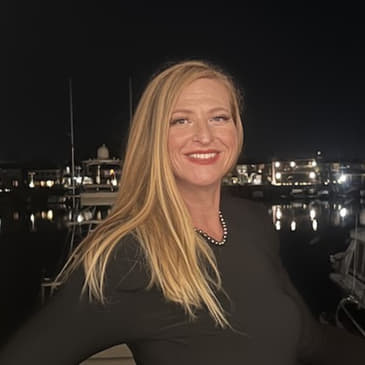
Have you every asked yourself "What in the world are boundaries?" Many Autistics have asked that question. How do we take care of ourselves with a holistic approach? Carole Jean-Whittington and I talk with Michelle Markman who will give you some suggestions about what boundaries are, and how to create them for you to feel safe. We stress the importance of saying no to others, and yes to yourself. Come listen to the conversation with three Autistics that have our own experiences that you may recognize. It may help you explore options that work for you.
Look for the transcript that is best accessible for you. The regular transcript is found as you scroll down to read it.
Dyslexic Accessible Transcript
Self-Care: Boundaries & Holistic Wellness
Spanish Accessible Transcript
Autocuidado: límites y bienestar holístico
German Accessible Transcript
Selbstfürsorge: Grenzen und ganzheitliches Wohlbefinden
French Accessible Transcript
Soins personnels : limites et bien-être holistique
Chinese Simplified Accessible Transcript
Transcript
Self-Care: Boundaries & Holistic Wellness
August 10th, 2025
Episode Preview
Are you an Autistic who has asked the question “What are boundaries?” “Where do I begin to set boundaries?” Have you been looking for opportunities to take care of yourself from a holistic approach to personal wellness? If this sounds like you, you are listening to the right show. In segments two, three and four, Carole Jean-Whittington and I will talk with Michelle Markman about Self-Care: Boundaries & Holistic Wellness. Only on Today’s Autistic Moment.
Segment 1
♫ Today’s Autistic Moment’s Theme Song, Today is Your Day ♫
Today is your day on Today’s Autistic Moment: A Podcast for Autistic Adults by An Autistic Adult. Where Autistic Adults get to be yourselves in a space that is safe and made especially for you. While listening to this podcast, you stim, and fidget all you like.
This first segment of Today’s Autistic Moment is sponsored by The Autism Society of Minnesota, known as AuSM throughout Minnesota’s Autism Community. As Minnesota’s First Autism Resource for more than 50 years, AuSM serves the whole state, the whole spectrum for the whole life. Visit AuSM at ausm.org.
Please visit todaysautisticmoment.com where you can listen to more than 100 shows, get transcripts, program updates, and read the guest bios pages. You can also visit the Adult Autism Resources Links Page. Please visit the Future Shows Page to read the titles, guests, and descriptions of all the shows in 2025. The transcripts are sponsored by Minnesota Independence College & Community. There is a link provided to get access to a document form of the transcript without the purple-colored background so that you can print it without using up the ink on your printer. The written document has a font that is accessible for dyslexics. There are additional transcripts available in Spanish, German, French, and Chinese Simplified.
Please follow Today’s Autistic Moment on Facebook, Instagram, LinkedIn, and Blue Sky. If you follow Today’s Autistic Moment on Instagram, please follow us on Threads. Join Today’s Autistic Moment Community Group page on Facebook for conversations and updates. Please subscribe to the YouTube channel @todaysautisticmoment to watch Autistic Voices Roundtable Discussions.
Lastly, I am still planning shows for the Fall. I want to work on shows about housing, the BIPOC Autistic communities, and I am open to other suggestions. I have created a new Guest Intake Form that you can find on todaysautisticmoment.com on the Be My Guest page. Fill out a form and send me your information. Please remember that I am Autistic myself and if it takes a while for me to reply, it is because I am doing my own self-care. Your interest and patience are appreciated.
After the first commercial break Carole Jean-Whittington and I will talk with Michelle Markman about Self-Care: Boundaries & Holistic Wellness.
♫Segment Ending Music ♫
Commercial Break I
Podcast Apps
Today’s Autistic Moment can be downloaded and heard on most podcast apps including Apple. Google Play. Breaker. Castbox. Overcast. iHeartRadio. Pocket Casts. RadioPublic. Spotify. TuneIn. Pandora. Amazon Music. Audible. Podcast Addict. Podcast Chaser. If you are looking for transcripts, go to todaysautisticmoment.com, click on the episode you want to listen to and follow the directions to find the transcripts.
Thank you for listening to Today’s Autistic Moment
♫ ITI Assistive Technology Ad ♫
♫MICC Ad♫
♫Best Care Ad♫
Segment 2
♫Segment Beginning Music♫
Philip King-Lowe
Michelle Markman, welcome back to Today's Autistic Moment. I'm always grateful when you take time to talk with us, and so now you're here with me and Carole Jean, so welcome.
Michelle Markman
Thank you. Always happy to be a guest.
Philip King-Lowe
Yeah, Carole Jean, there you are. How are we today?
Carole Jean Whittington, Beyond Chronic Burnout Podcast
Oh, doing great. I love getting to see Michelle. It's been way too long, Michelle, so I'm excited about our conversation today.
Michelle Markman
Me too.
Philip King-Lowe
Well, this is a good summer because we had that show with Le-Anne in July about Wellness for all Autistic Bodies. And I think this topic is so suited to follow that even after my Special Edition here. So, I think this is a great thing to kind of connect one to the other with so good stuff. So, let's build a foundation for this conversation. You know, what does this topic of Self-Care with Boundaries and Holistic Wellness mean for Autistic Adults, as we are, multi-dimensional? Go ahead.
Michelle Markman
You think it's quite complex and layered. There's a lot that goes into self-care. I mean, it's very multi-faceted. It involves our nutrition, our exercise, our emotional well-being, the relationships that we have, the boundaries that we have in those relationships, our mental health and how we speak to ourselves, how we treat and think about ourselves, and how we speak to ourselves as well, and how much empathy and patience we give to not only others, but also to ourselves.
Philip King-Lowe
Yeah, and sometimes we take care of everybody else but ourselves, so sometimes having that compassion on ourselves, it can be a little feel like it's a little out of place, almost. Yes. You know, we're looking out for ourselves, especially this year, in light of the hard, hardness of what's happening around Autistic Adults and everybody else. But the thing is, is that self-compassion? That's a term that actually I had not heard until Carole Jean used it earlier this year. So, you know, Carole, why don't you take off on that, and then we'll let Michelle kind of fill in somewhere.
Carole Jean Whittington, Beyond Chronic Burnout Podcast
Everything Michelle listed off is such a critical foundational component to our overall wellbeing as Autistics. But I think the two of you have really tied into one point that I think is really important is, you know, we have that self-care, and we extend that compassion to ourselves, especially how we think. And you know, a lot of us have experienced life through a lens where it didn't feel safe to care for ourselves or to put ourselves anywhere at the top of the list. I mean, we were lucky if we took care of everybody else, and then once we knew why everybody else was okay, then if we have just a little speck left, we might commit to ourselves, but most of the time, we didn't have anything left for us. So, then we're continuing to keep giving and giving from this depleted tank. And so, I think that the self-compassion piece really begins with our internal emotional safety and self-trust.
Michelle Markman
Yeah, yeah, and the nervous system too, how well our nervous system is regulated and that all comes back to how safe we feel, how much we feel like we can trust ourselves and how much compassion we've really cultivated for our own selves. Because, like you're saying Carole Jean, everything, we spend our whole lives taking care of other people, and it's not until we do the work that we realize, oh, wow, I have to take care of myself before I can really take care of other people.
Philip King-Lowe
Yeah, and you spoke of exercise and that sort of thing earlier, and you and I have one very real commonality in that we both live with chronic pain and what that can be like for setting boundaries for ourselves, and also for setting boundaries with others, but also, you know, for what you're talking about. You know, what some people don't understand I feel is that, you know, living with pain, any kind of pain, really does change your life. It really changes how you move. It changes how you want to move. I'm not going to tell you that it can change. You know what kind of movements you feel like you can make, because there's a pain somewhere. And the thing is, if you're like me, like I have my chronic back pain, and I know Michelle, you do as well, from our previous discussions, that there's always that back pain, and then there's usually another little pain here, another little pain there. And you're trying to work your entire sensory self around the pain, around what your sensory is going through in a day. And I think we need to say very carefully that pain can really change your sensory threshold as to what you can take in and what you can put out. And feel free to talk more about this. Michelle, but some days you plan a whole bunch of things out, and your pain can so easily change your schedule, you know, and so that's where the self-care is so very important. Michelle, can you talk more about that please?
Michelle Markman
Yeah, absolutely. So, I used to have really debilitating chronic pain, and I used to find that it very much impacted my day-to-day functioning and everything in my life, and in the last three years, I have changed everything in my life, how I take care of myself, the relationships that I have, the way that I eat, the way that I exercise. I've started seeing a functional medicine doctor and really just flipping how I care for myself upside down on its head. So, I've made huge gains in my pain management through doing this functional medicine protocols that I've been doing, which is largely diet, and then also I take a specific medication that is for systemic inflammation, and it's been really helpful, but I know previously, before I was doing that, I was absolutely debilitated by the pain. I couldn't really function because I felt like I couldn't have a rich life with pain. So, there was a time that I had to process through accepting that pain was part of my life, and that yes, I could be in pain, and yes, I could still have a full and rich life. So I went through that process, and I was able to accept being in pain. And for a while I just I lived with pain, and I did really manage things around the pain. I used to take really strong opioid medication to manage my pain for a long time, and it just wasn't sustainable. So, I got off the medication, and then did, did have pain for quite a while, until really recently, when I started doing all these self-care protocols and changing my diet and everything. And now the pain that I have is so much less that I find that it almost really doesn't impact my ability to do things. If anything, it's more energy that impacts my ability to do things. So, I've started being more conscious of when I have a high energy or a low energy day, and that's really more impactful than pain at this point is really just, how's my energy?
Carole Jean Whittington, Beyond Chronic Burnout Podcast
Yeah, that's such a powerful question, Michelle, and that's one that, you know, I for myself ask, because I'm co-occurring health conditions. And I did something very similar to you, you know, went through everything and changed all of it, especially when I learned that I have MCAS. So that made such a huge difference. And then, of course, you know, I'm 51 and last year, perimenopause showed up, and all of the pain, things that I had completely like, gotten control of, and it was no longer present in my life. All of a sudden, the inflammation in different ways from hormonal changes, and how that impacts co-occurring health conditions. For me as a woman, Autistic woman, started to show up again, and so I had to really like, okay, I'm gonna hit pause for just a sec. And the biggest thing that I do, and I so relate to what you just said around energy, is I check in with myself more regularly. And one of the things that we were talking about in this small group that I'm in just this week was the thing that I'm really focused on right now is alignment harmony, not that everything is balanced or equal, but that I'm with intention, looking at my day and going equal amounts of harmonized activity and work with rest and restoration and just pleasure and finding those moments, but pausing to check in with myself and go, Hey, what do I need? And this week, I knew that I needed a day of rest, and I was like, I know that if I try and do anything today, it's gonna be a complete mess. I'm gonna have to redo it tomorrow, so I'm just not going to and I'm okay, you know, and I don't have that shame storm anymore that used to come with those types of days. And then I woke up the next day and I'm like, nope, still not feeling it. I'm gonna take one more day. And it was interesting, because when I woke up the third morning, I'm like, I'm good now I can tackle the things, and I did. But then I also said, okay, throughout the day, kept checking in with, is there something that I need in this moment? Do I need a pause? Am I good to go for a little bit more? And that just really being able to like, recognize those things was so huge, because I had spent decades, and I don't know if you two like relate to this, I think you will, but I powered through the pain and have pushed myself to my limit and maxed out my energy. I was living in a state of chronic burnout without knowing it, and so I had no reference point to know what it even felt like to not be in pain and exhausted. What are y'all thoughts on that? Or how does it tie in for you?
Philip King-Lowe
Well, my, my experience is a little different than both of yours. Mine was, you know, the thing that really changed my pain experience was aquatic therapy. That did absolute marvels for me. I actually had done some back in 2019 before the pandemic, and I since done some since then, after the pandemic. Excuse me. But the thing is, is that what was discovered is that the muscles that were contributing needed to be strengthened, but to do it, and to do it in an aquatic way, in a pool that's, you know, very comfortable to be in. It took all the weight off of those muscles so that I could properly exercise them and build back some of my mobility. And so now this is not going to work for all Autistics, because I know some just water, no way, and that's fine. But I'm saying for myself that you know, being in that water and finding ways to actually strengthen those muscles again, that was a game changer for me. And the other thing though has been is just, you know, I say the words a lot, give yourself permission. It was difficult to give myself permission to say there are just certain things I cannot do. It's just not going to happen that way, even to the point of saying to my husband, I need you to do several tasks for me, because they are things I simply cannot do. I cannot, you know, I have a I can stand, but only for a little while, maybe 10 minutes. It depends on what kind of a day I'm having. Some days it's less, some days it's a little bit more. But I also have my wheelchair that is custom designed so that when I sit in that chair, it, it supports my back, my hip, everything. And so that's actually what I sit in in our living room when we're watching TV in the evenings. Because, because one thing, it's higher up from the floor than the couch, and secondly, it's designed to support my back and my hip and all that and my shoulders. So that has provided a lot of relief. And so, with each person who needs to work through it, perhaps what Carole does will work for them. Perhaps what Michelle does will work for them. Perhaps what I do will work for them. And if none of these works for you, that's fine. It's perfectly fine. You have to find what works for you. Go ahead and talk a little bit more about that Michelle.
Michelle Markman
Yeah. I mean, I have this. I wanted to circle back a little bit to what Carole Jean said about finding time for rest and finding time for joy or pleasure, because I think that is so important, and it's just been spinning around in my head about how important that is, and I think that especially for us as Autistic individuals, we get so wrapped up in the minutia of life, of just getting things done, of surviving, of meeting everyone else's needs, that we lose track of what makes us happy, what gives us pleasure. How do we rest? What does rest look like? And for me, I love doing horizontal breaks, like I lay down in bed and just relax that way. So, I just, I just had to circle back and bring that up while I was thinking about it. Philip, can you remind me what you asked?
Philip King-Lowe
Sure. What I was talking about people finding the way their own way of self-care, because what you're talking about works for you. And yes, rest is important. And about a year ago, I had a conversation with our friend Becca Lory Hector about rest, who highlighted things like rest is not just sleep. Rest is giving yourself the space to refocus yourself however you refocus yourself, doing that thing that you like to do, splurge on it if you must, because it's okay. You know that you have to do these things because self-care is about how you look after what you can control while acknowledging what you cannot control. So, but I am asking, let me try again. But you know, can you talk about how each of us will have different ways of doing our self-care?
Michelle Markman
That's a great question. I think that it is very individual. Figuring out what self-care looks like for you. The beginning is finding out what brings you joy, what makes you happy, and if you don't even know what that is, then going back and thinking about your childhood, thinking about things that you really loved to do when you were a kid. And I think especially for a lot of Autistics, sometimes we still love the same things that we loved when we were kids, and it's giving yourself permission to love that stuff still. I love the Barbie movie. I have a Barbie purse. I still think Barbie's awesome. So, I give myself permission to still love that. I love hiking, I love getting outdoors, and I've loved that since I was a child. And so, rediscovering what brought you joy when you were a little kid a lot of the time is a good place to start. And if you can't come up with that, then starting to dabble and play with different forms of active, rest or recreation, trying out different things, like, maybe you go golfing one day, or, you know, just you get a golfing set from the 99 cent store, and you practice putting and see if that's something that you like to do, or go for a walk, try hiking, just try different things and see what really just helps you feel joy, helps you feel happy.
Philip King-Lowe
And I have to ask this question of you, because this is still a point of my interest in you. Was climbing Kilimanjaro, one of those things that brought you joy that really helped you with your self-care?
Michelle Markman
Yes, now I have loved being outdoors since I was a baby. I mean, since I can remember, I've always been outside. Since I could get outside by myself. I was outside. I've spent most of my life in the great outdoors, whether it was in my backyard or on some adventure somewhere. And when I found out about Kilimanjaro, it was something that I felt like was just beyond my reach. I had recently found out about a woman who has or was working on climbing Everest. She was fundraising and writing her PhD about climbing Everest and I went to a talk. And she said to us, “What is your Everest?” And for me, my Everest was Kilimanjaro at the time. So, when I found Kilimanjaro, I just committed to it. And I said, this is this is something that I'm going to do. It scares me. People die on this mountain, but I know I can do it, and I want to do it, and I love being outdoors. So, the whole experience was just magical, terrifying and magical, and I would do it again in a heartbeat.
Carole Jean Whittington, Beyond Chronic Burnout Podcast
Yeah, I love that. I call that the magical messy middle,
Michelle Markman
Yeah.
Philip King-Lowe
Self-care is like a messy middle somewhere, you know?
Carole Jean Whittington, Beyond Chronic Burnout Podcast
I love how you said to go back to your childhood, because I think that's for me, when I look back being like identified, you know, I was right at 40, and it I was such a serious child, you know, I didn't really play. I didn't give myself permission or allow that. You know, there was just like this seriousness that I had. And so, for me, yes, some of those things I found were my joy that I went back to, like my husband. I went and bought swings, like last year, because we both love to swing growing up, and I was like, I want to swing. We've got these great trees, and I've got a hammock, so I love to get out my hammock, and I'm like, you, I'm an outdoor girl. And it was so fun because that sort of unlocked what it felt like for me to have, like, that joy, that freedom, that release of play and laughter without like the agenda of what I'm doing it for, right? I'm doing it just for the heck of it, and just finding that one thing was sort of like the thread that I could then say, oh, that's what it feels like. So, then I could get compassionately curious and try a bunch of things that hadn't given myself permission to. So, I sort of reclaimed my childhood and my adulthood to play. And so, I love how you brought that in as a way to start exploring self-care. Thank you for that.
Philip King-Lowe
No, definitely. Yeah. See, for See, I appreciate that too, because, for example, there were, there were shows on TV that I loved back then, and now I can get them on DVDs or on some stream, stream sort of thing. So now I just enjoy them. I just enjoy them to the hilts, you know. So, I do appreciate that.
After this next commercial break, Carole Jean, Michelle and I will answer the question what are boundaries? How do we define and create them in a way that makes us feel safe? We will also talk about relationships that are interconnected with our self-care.
♫ Segment Ending Music ♫
Commercial Break II
♫ Autistic Coach Collective Ad ♫
♫Lisa Morgan Ad♫
TAM Support Ad
An Autistic listener recently wrote to tell me that Today’s Autistic Moment’s conversations and guests offer them the strength to hold on during these difficult times. If you are Autistic or the caregiver of an Autistic person, there is no greater assistance you can give right now than supporting the podcast that is looking out for them.
Your contribution helps the podcast continue connecting and empowering Autistic Adults.
Here are some ways you can support Today’s Autistic Moment.
· Make a one-time donation through the Ko-fi icon when you tap on Support Today's Autistic Moment on todaysautisticmoment.com
· Subscribe monthly via Patreon.
· Purchase items at Today’s Autistic Moment’s Logo Shop.
· Share Today’s Autistic Moment with your family, friends, coworkers and others through social media and/or by telling others about us.
Donations are not tax-deductible but help keep Today’s Autistic Moment as a safe space.
Thank you for supporting Today’s Autistic Moment
♫Segment Beginning Music♫
Segment 3
Philip King-Lowe
I want to launch into my second question, which I like to say is, you know, Autistics are engaged in the work of boundaries and holistic wellness of self-care. You know, this year has been so very challenging for Autistics because of the political and social climates right now, and in particular the LGBTQIA+ communities, and I don't see it letting up anytime soon. But the thing is, is that when we are under this kind of stresses, you know, it's all the more important that we engage in this work of self-care. We've talked a lot about, you know, um, about, you know, examples of holistic wellness, and I want us to keep doing that. But let's also talk a little bit more about our boundaries, because I feel like it's a good thing for us Autistics to be reminded that our boundaries are important with the with the holistic wellness. Go ahead, Michelle or Carole, take off from that please.
Carole Jean Whittington, Beyond Chronic Burnout Podcast
Michelle, I really want you to dive into, if you don't mind, the approach boundaries from a from the practice of self-care. Like, where do you even begin? I don't know, for y'all, but for me, I didn't even know boundaries existed, or what the hell they were, until about eight or nine years ago. So, there was this big learning curve that there's something called boundaries to start with. So, like, if somebody's listening today, and they're like me and they're like, I don't even know what you're talking about. I know the word boundary, but what do we really mean here? Where do we even start to define this Michelle, especially from like that holistic approach?
Michelle Markman
Yeah, so boundaries, I think, are really tricky, especially for Autistic people. We've spent very much of our lives, if not our whole lives, making other people feel comfortable, making other people feel safe, helping other people feel regulated while we are dysregulated and in chaos and struggling but appearing to be absolutely fine, because we have to make other people be comfortable for them to feel safe. Because if they feel safe, that's socially acceptable. So, I was like, you Carole Jean, I was like, what's a boundary? I've heard of boundaries. Boundaries are walls that separate your neighbor's house from yours, right? That's a boundary. Boundaries are the lines between countries right now. So, boundaries are a thing, and it's a complicated thing to learn about, but I like to kind of break it down into really simple terms, which are just that boundaries are something that you put in place to make sure that you feel safe and that you feel comfortable. So, boundaries are how we allow other people to treat us. They're how we teach other people to interact with us and to treat us. And if we don't have boundaries in place, then people are just going to treat us however they want, and that's not going to be a great experience. So, my favorite example is someone is yelling at you, and you have a boundary that you don't interact with people when they're yelling at you. So, you would say, “I I’m sorry I can't hear you when you're yelling. I would love to hear what you have to say. We can revisit this conversation when we're both calm. I'm going to step outside and take a break, and I'll be back in an hour or two, and then we can have this conversation.” So, you're setting a boundary by saying, “I don’t allow this behavior,” and then you're enforcing it by having an enforcing behavior or some sort of an enforcing act. And the enforcing act is that you are physically removing yourself from the environment. So really figuring out what your boundaries are is a process. And I've done a lot of reading on what boundaries are and how to understand boundaries and boundary work. And I do this with my clients also, you know? And it's, it's sort of recognizing when your body goes, Oh, this doesn't really feel right. That's probably a place that you need a boundary. And it can be as simple as you know how close someone stands to you that's a physical boundary, if you need, you know, 12 inches between you and another person. That's your comfort zone of a physical boundary, and it can be as complex as you know, how people relate to you, if, if someone is not being respectful in a conversation, and you're picking up on that, but you can't really identify exactly what it is that's disrespectful. You can say to them, “Did you mean to say that? Or can you repeat yourself?” And a lot of the time if you get that funny feeling, but you're not really sure why. And you ask someone to repeat themselves, or if they meant to say something, it will make them circle back and think about what they've said, and a lot of the time that you can redirect any sort of unsavory behaviors from people that way. But I think one of the biggest challenge that many Autistics face is that we don't recognize when a boundary is being crossed until later, because of our delayed processing, which is so funny, it's not really delayed. We process twice the information of neurotypical so it's really just for processing more information. But we call it delayed processing still. So sometimes it takes us longer to realize, hey, a boundary was crossed. But it's absolutely okay to circle back and say, you know, yesterday, three days ago, when this happened, that made me feel uncomfortable, and I need this instead. That's okay. You know, recognizing that maybe it takes you a little bit longer to realize what your boundaries are, but you still have every right to set those boundaries and enforce them, and you'll have better relationships when you do.
Philip King-Lowe
Yeah, and you have the right to change them in ways that work best for you. The other thing is that yeah and the other thing, there's two phrases that one of my previous guests gave that is good. It's remembering that a boundary is a line that you determine you basically a boundary is a line that you cannot cross and that you or someone else cannot cross for you unless you give them permission to. Here's one of those tricky pieces for Autistics, and feel free to chime in. We often give away our boundaries, our limitations, without real, without really, actually giving permission, and that unfortunately gets received by the other person as it's my it's my way I can step past this boundary line, because they may have engaged us in a way that we don't realize that that's what we're surrendering. But the thing is, is that we do have the right to give our boundaries and redesign them as we wish. For example, I am somebody that I do not like when somebody just extends a hand as soon as I've met them, because I don't know how they're going to shake my hand. I don't know whether my skin and their skin are going to meet and be satisfied, okay? I have issues with shaking the hand of someone whose hands feel like sandpaper, okay? And I also have an issue with someone who shakes my hand and squeezes away okay, because my mood might be no that's not something I want them to do. So, one of my boundaries is before someone puts forward the gesture, I want them to first ask me, may I shake your hand? Because if they extend the hand first, that makes me feel like I'm obligated. You know, like I kind of have to, but I've also been training myself to say, if you don't want to, you don't have to, you know. And the same thing. You know, there are some people who are just huggers, and believe me, I spent a lot of my time as a hugger, and that's okay, but I've even learned to say some people, please don't make the gesture of offering a hug unless you've asked me first. Because if you know, and if you do that, I may say yes, and I may say no. And I you know, the thing is, is that I do that, and in part for myself, but I also do that thinking about the number of Autistic youth who made the mistake of misunderstanding a gesture, a gift or a gesture, and took that to mean a desire for something more intimate, and discovered how wrong they were. How many of our Autistic youth are now forever listed as a sex offender because they misunderstood a gesture, because nobody told them what that gesture was, or whether what was socially appropriate or inappropriate? And so, what I like to say is, that's my example of setting boundaries. It is a matter of, what do you feel most comfortable with, and if something someone else does is not comfortable for you, yes, you have the right to say that does not feel comfortable for me. And, no, I don't want you to do that.
Carole Jean Whittington, Beyond Chronic Burnout Podcast
It's really what both of you have shared is really powerful, and I will, I'll speak from my experience here when it comes to boundaries. Dr. Faith Harper said boundaries are where we end and another person begins. And when I was reading her book years ago at this point, I remember thinking, I don't even know where I begin, much less where I end. So, I didn't start with boundaries with other people. I started with internal boundaries, with defining and starting to discover what my space really is. You know, where are the things that matter to me? Where does my body respond to something? Because I'd spent so long, you know, through survival and trauma and burnout just ignoring all of the signs that my body was screaming, going, no, no, no, no, no, we don't like that, you know, like, please don't shake my hand or hug me, because I love a hug. I don't mind shaking hands, but I have to know that you're not gonna physically hurt me when you do it, because I'm very tender, you know, or when my back was hurting, please don't do that. That's the worst thing. They'll hug you like bear hug you, and my whole back is now popping out. And I didn't even know what those things were, because I had become so permeable. I had no defined space for myself. So, for me, I started with boundaries, with discovering, exploring and getting compassionately curious, to begin to identify what even wasn't the dang space. What did I like, what I did, what did I not like, what mattered to me, what really didn't matter to me. And like, physical stuff was easy to start with, you know, with seven types of boundaries. Feel like physical was like, I can see this is my physical space. You know, with my material stuff was like, that's my book. I'm not lending it because I don't want people writing it and all like you dog earing my pages or breaking the spine, you know, you'll borrow the book, and I will get it back. So, like, those things were more tangible. So I started with the things I could see that were concrete, and then I moved on, as I got more comfortable, to things like emotional, mental, you know, time boundaries, those types of things with timeline, that's still a challenge, so that's sort of how I approach it, because then once I got a little better understanding of like, where I began and where I ended, then it was easier to sort of begin with a boundary of other people, where they began and where we sort of had to navigate flexibility and boundaries together in how we navigate relationships. And it was like, also, do I give a damn enough about another person that I even want a boundary with you? Or do you just need to go?
Carole Jean Whittington, Beyond Chronic Burnout Podcast
So, what's an example of maybe one or two of those self-care boundaries that you have with yourself Michelle? I'd love to know.
Michelle Markman
Oh, yeah. So, I have quite a few. So I am on autoimmune protocol, or autoimmune paleo, which is very sort of strict autoimmune diet. So, my boundaries around food are pretty strict, either certain foods that I do eat and certain foods that I don't eat. And when it comes to exercise, I have a minimum exercise requirement, which is 30 minutes a day, unless I'm having a really off day, then it's 15 minutes. But 15 minutes is survival, survival mode exercise. So typically, I'm exercising 30 minutes or more a day. And really my self-talk is something that I've been working on a lot lately, and that is if I get an intrusive thought that comes in and says, I'm worthless or I screwed that up. I like to flip the script on it and go, I'm worth it. I can do this. I have 100% success rate. I can handle this. So just whatever those thoughts are that come in, flipping the script on them and just saying the opposite, and it's part of practicing self-compassion.
Philip King-Lowe
Yeah, I like to say that self-care and boundaries, because you started with it. Michelle has started this show, this particular show, I like to think of it as we say yes to a lot of things, you know and we do live in a society, a society of neurotypicals who say yes to everything, okay? And a lot of us Autistics, we say, we tend to say yes to everything, yes to everybody else and no to ourselves. Self-care is finally saying no to everybody else and saying the yes to ourselves. Whatever that, yes is, okay? It has it's about saying yes, I am going to spend 10- or 15-minutes fidgeting because that's what makes me feel like I can contribute to something important. It means saying yes, I am going to eat at this particular time. I think I, you know, I know sometimes I will be working, say, on a script or a show, whatever, and I'll realize I've been going for, say, an hour 45 minutes, and I'll say, you know, it's about time you say yes to a break, because you know damn well that you just can't keep going like this. You gotta stop and take a sip of soda or go do something, take a walk outside or do something. You know, those self-care and that boundary, those sorry, that self-care and those boundaries are about saying yes to yourself and finally, no to other people and other things, and sometimes a boundary is as simple as you know, say you're in a conversation with someone and something is affecting you and you're feeling really overwhelmed, that's when I will say I'm done. Just those words I'm done, because that tells a person that it's over done, because I'm one of those people that if I don't do that, I will get further and further into the conversation. I'll be out of control, and then I won't make sense to them or me. So that's my example of, you know, of that sort of thing.
Carole Jean Whittington, Beyond Chronic Burnout Podcast
Philip, I love that one. You know my husband and I have sort of a code that we've agreed to because I have auditory processing delay. And so, there are certain times where I cannot process the words anymore. I might want to hear what you say, but if it's after two o'clock in the afternoon, forget it. It's just harder for me. And there's sometimes where, like, just the emotional processing of something is just, I need a little space to do it. So, we think we talk about it this way, we'll say, my cup is full. It's like, you know, if you've got a little small one cup, and you've got a gallon jug, and you're pouring a gallon into the cup. The cup's overflowing. It so ours is. My cup's full. And we know that that means, hey, it's time to take a break, and let's circle back when maybe I'm in a better place to hear you, or you're in a better place to process too. And that totally is, like one of those boundary things. And I love that you shared that, Philip.
Philip King-Lowe
Well, I think what we're already talking about, which is always my third point before we, you know, start to wrap this up, is that we're talking about interdependence. Because I put this into my subject of Navigating the Future of Multidimensional Autistic Leadership. Let me also say that a lot of what we're talking about with self-care to do with boundaries and holistic wellness is about looking after your multidimensional self. Because Autistics, we are social, neurological, physical, you know, accepting and so many other things that we are. And self-care is about honoring that multi-dimensional existence, because we really haven't talked a lot about the wholeness part, and that's where I want you to kind of go holistic. We could be, Michelle, I want you to go into the holistic approach, because I think that's where interdependence sort of lies. You know, if we're not looking after our whole selves, and really, you know, focusing on that wellness for our whole selves, we really do kind of become, well, we risk becoming disconnected from various parts of who we are.
Michelle Markman
Yeah, so we are very multidimensional, and I think, as we were talking about in the beginning of the show. It's so easy for us to get wrapped up in just getting by on a daily basis, on just completing all of the never-ending to do list tasks that are on our to do lists and just everything that's required of us to exist. So, I think it can be sometimes we lose track of what self-care is and how to do it. And I think it's one of the first things that tends to go when we get busy so really having in place strong boundaries with yourself, like we were talking about earlier, around what your sort of bare minimum requirements are for your self-care. So, for example, I always work with my clients to develop a 15-minute exercise routine that they can do every day. And when I say exercise, I mean any kind of moving your body, dancing, jumping, walking, skipping, whatever makes you happy, something that is going to move your body, because it's proven by positive psychology, the science of happiness, that if you move your body for 15 minutes a day, every day, your happiness will increase. And then nutrition, I mean, we talk about eating a well-balanced diet, which I think is really challenging for a lot of Neurodivergent and Autistic individuals because of sensory issues, but that's something that I encourage my clients to do, is eat whole foods that grow as a primary basis and finding ways to eat the foods that you maybe don't like as much. So, for example, you can put vegetables in pasta sauce if you can eat pasta sauce, and you can kind of hide them that way. So really finding hacks to get the nutrition that you need. So, nutrition exercise, and then working on, you know, self-compassion, how you're talking to yourself, how much patience you give yourself. And then relationships, whether are you actively cultivating your relationships? Because whatever we don't care for dies, it really does. So, we have to take the time to give to the things that matter to us. So, if we have relationships that are important to us, we have to take the time to cultivate those relationships. And when I say relationships, I mean with others, but also with ourselves, because our primary relationship, the one that we will always have and that is guaranteed, is the relationship with ourselves.
Carole Jean Whittington, Beyond Chronic Burnout Podcast
I love how you brought this in, because I think one of the things that I didn't recognize and didn't allow like it was the big, scary, hairy, there was no way I was going to rely or be interdependent on someone else, but in my self-care and in this process of reclaiming my own space, my own personal power, my own boundaries, you know, defining what is me and what is someone else, there became this sort of organic emergence of how I can depend on other people, how I'm interdependent, you know, so part of that for me has been that I have a group of girlfriends, and we actively check in with one another. Hey, I know this was going on in your life. How are you doing today? How's your heart? We don't say. How are you doing? What do you have? What have What have you done on your list? Really? How's your heart today? That's been huge.
Stay with us after we conclude our interview with Carole Jean- and Michelle Markman to hear about a new offer from Today’s Autistic Moment. Today’s Autistic Community Bulletin Board will follow.
♫ Segment Ending Music ♫
Commercial Break III
♫Looking Forward Life Coaching Ad♫
Future Shows
On August 24th, Carole Jean-Whittington and I will talk with Lisa Morgan about Strength Based Self-Care in a Medical Deficit Culture. Lisa will discuss the importance of recognizing and addressing crises in the Autism community. Autistic strengths include our routines, attention to details and creative problem-solving. Lisa will emphasize the importance of creating safe mental spaces, maintaining sensory comfort and advocating for ourselves. Lisa will also share the many resources including for our transgender Autistic individuals.
Thank you for listening to Today’s Autistic Moment.
♫ Segment Beginning Music ♫
Segment 4
Philip King-Lowe
You know, the more we do take care of ourselves, and the more we give ourselves those permissions, the better our reaction, our sorry, our relationship with the world around us can be. At the end of June, I had a fantastic show with Jax Bayne where we talked about Autistic Nonbinary Leadership, and what we spent time talking about, is he said that binary thinking tends to be either or, whereas nonbinary thinking is both and. And the thing is, is that interdependence is actually about both and. You know, we work with others, but we look after ourselves, you know, both and. And the thing is, is that a lot of this black and white thinking. And we know Autistics, we have these issues with that, because we have the things that we think they either are they are not. And believe me, I know, yet one of the more important things is that we become aware of our both, and if you will, we have a need to be isolated, but we also have a need to be social with our other Autistic friends, you know. And this is where I like to say that our relationship with ourselves is important because we as the Autistic community, we really do need each other right now. You know, there's so many things going on, and the thing is, we have to do things together in ways that work for us individually. So, I think, I think self-care has a lot to do with the both and approach. Carole Jean and Michelle Markman, thank you so much for this excellent episode and this excellent conversation. I feel like we've given our audience a lot to think and talk about. So, with that, I'm going to say thank you both again, and I can't wait to talk to you both again soon.
Michelle Markman
Absolutely thank you.
Transcribed by https://otter.ai
Did you enjoy this conversation with Carole Jean-Whittington and Michelle Markman? Would you like to listen to the complete interview without the music, the first segment and no ads? Go to todaysautisticmoment.com create an account and subscribe to the new Ad Free & Complete Interview Plan. The subscription is only $12.00 a month or $144.00 for a whole year. You can hear the first show in July with Lee-Anne Reuber Self-Care: Wellness for All Autistic Bodies. You can hear the complete interviews with each of the speakers for the Special Edition: What We Have to Say. You can also listen to this interview and the shows coming up once they are published. Look for the logo Today’s Autistic Moment Ad Free Interviews.
Today’s Autistic Community Bulletin Board
All these events and many others not mentioned here with their links are available on
todaysautisticmoment.com/bulletinboard.
The Adult Coffee Club for Autistic Adults in Minnesota are held on the second Tuesday of every month (weather permitting) at Dogwood Coffee located at 2700 University Ave W. Suite 100 in St. Paul, Minnesota. The Zip Code for your GPS is 55114. The Adult Coffee Clubs will begin at 4pm to 6pm on August 12th. September 9th. October 14th and December 9th.
Understanding Autism virtual classes are offered by The Autism Society of Minnesota. The next classes will be on August 11th, 12-1pm. September 8th, 6-7pm. October 12th 10-11am. November 9th, 12-1pm. December 14th, 6-7pm. Classes are free of charge, but you must register to attend.
The Summer Autism Certification Virtual Class at The Autism Society of Minnesota will be on Friday August 22nd, 29th, and September 5th beginning at 9:30am to 12:30pm. The objectives are understanding Autism Spectrum Disorder and how it can affect communications, relationships, and behaviors. Each session is limited to 15 participants. Register early to attend.
The Annual Jigsaw Puzzle Competition will take place in person at the Mall of America Huntington Bank Rotunda or virtually on Zoom on September 27th, 8:30am to 3:30pm. Competition groups are filling up quickly, so hurry up and register.
Go to ausm.org to get more information about these and other social and recreational programs, educational events, counseling services and support groups at The Autism Society of Minnesota.
MNeurodivergent is a social club rooted in a vision of bringing Neurodivergent Minnesotans together to build meaningful connections. Its core principle is to foster an environment where all are treated with dignity and respect regardless of ability or preferences. Go to their website mneurodivergent.org for more information, become a member, volunteer and attend their events.
Register for MICC’s 8th Annual Independence 5K run/1-Mile Walk on October 4th at Donaldson Park in Richfield, Minnesota. This is more than a race—it’s a powerful community gathering to support MICC’s mission to educate and guide Autistic and Neurodivergent Adults in creating and sustaining the lives they want to live. From competitive runners to casual walkers, enthusiastic cheerleaders to dedicated volunteers, everyone plays a vital part in this family-friendly event. Whether you’re racing for a personal best or cheering from the sidelines, your involvement helps amplify Autistic and Neurodivergent voices, foster acceptance, and support lifelong independence. Bring your friends and families, lace up your sneakers, and be part of this the most impactful MICC Independence 5K yet. Learn more and sign up at micc.org. Donaldson Park is located at 7434 Humbolt Ave S, Richfield, MN 55423. Check in is at 9:00am. The race begins at 10:00am. Early registration is $30.00 now through September 5th. Regular registration is $40.00 September 6th through October 2nd. Registration on October 4th is $45.00.
Today’s Autistic Moment is here because of the generosity of supporters and sponsors. Go to todaysautisticmoment.com and select Support Today’s Autistic Moment to donate.
If you have questions about Today’s Autistic Moment, please send an email to todaysautisticmoment@gmail.com.
Thank you for listening to Today’s Autistic Moment: A Podcast for Autistic Adults by An Autistic Adult.
May you have an Autistically Amazing day.
♫ Closing Background Music with credits ♫
All of the guests meet with me on Zoom to record the interviews. The interview transcripts are provided by Otter. The podcast is prepared and edited on WavePad Masters Edition by NCH Software. The podcast is published by Spotify for Podcasters. The music that you hear is licensed to Today’s Autistic Moment by premiumbeat.com.
