Go to todaysautisticmoment.com for the transcripts.
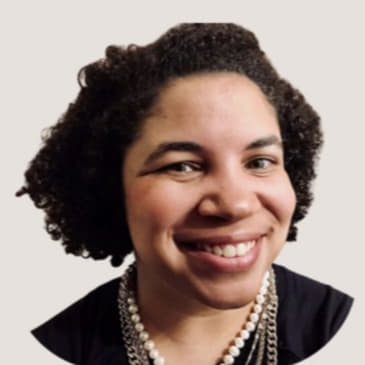
Today's Autistic Moment recognizes November as Indigenous Heritage Month with LaToya Hinton. LaToya and Philip will talk about LaToya's journey of self-awareness through her multiple Neurodivergence and intersectional identities. LaToya will talk about the work she is doing on health equities panels with Umbrella ND to address the missing pieces in the discussion about health care or lack thereof for underrepresented communities.
Dyslexic Accessible Transcript
Spanish Accessible Transcript
German Accessible Transcript
Autistische BIPOC-Führungskräfte
French Accessible Transcript
Chinese Simplified Accessible Transcript
Transcript
Autistic BIPOC Leadership
November 9th, 2025
Episode Preview
November is Indigenous Heritage Month. Autistic BIPOC individuals are one of the intersectional identities that are underrepresented in the Neurodivergent movement. Dr. LaToya Hinton is a multiply Neurodivergent individual. LaToya is Eastern Band Cherokee and identifies with several West African communities. LaToya will share her personal journey of developing a respect for her many intersectional identities and her work of self-acceptance and self-validation. Welcome to the episode Autistic BIPOC Leadership on Today’s Autistic Moment.
Segment 1
♫ Today is Your Day ♫
Today is your day on Today’s Autistic Moment: A Podcast for Autistic Adults by An Autistic Adult. Where Autistic Adults are distinguished by using our voices and special qualities to inform and celebrate Neurodiversity. Leave the stress of the dominate Neurotypical culture behind for a while and be proud of who you are.
This first segment of Today’s Autistic Moment is sponsored by The Autism Society of Minnesota, known as AuSM throughout Minnesota’s Autism Community. As Minnesota’s First Autism Resource for more than 50 years, AuSM serves the whole state, the whole spectrum for the whole life. Visit AuSM at ausm.org. The Autism Society of Minnesota needs your help. Funding cuts threaten vital programs, but together we can rebuild. Make your donations to AuSM on Give to the Max Day on November 20th, where all contributions are doubled. Go to givemn.org/gtmd to make your double impact for AuSM’s programs.
Please visit todaysautisticmoment.com where you can listen to more than 100 shows, get transcripts, program updates, and read the guest bios pages. You can also visit the Adult Autism Resources Links Page. Please visit the Future Shows Page to read the titles, guests, and descriptions of all the shows in 2025. The transcripts are sponsored by Minnesota Independence College & Community. There is a link provided to get access to a document form of the transcript without the purple-colored background so that you can print it without using up the ink on your printer. The written document has a font that is accessible for dyslexics. There are additional transcripts available in Spanish, German, French, and Chinese Simplified.
Please follow Today’s Autistic Moment on Facebook, Instagram, LinkedIn, and Blue Sky. If you follow Today’s Autistic Moment on Instagram, please follow us on Threads. Join Today’s Autistic Moment Community Group page on Facebook for conversations and updates. Please subscribe to the YouTube channel @todaysautisticmoment to watch Autistic Voices Roundtable Discussions.
After this first commercial break, LaToya Hinton will join me to talk about Autistic BIPOC Leadership.
♫ Segment Ending Music ♫
Commercial Break I
Podcast Apps
Today’s Autistic Moment can be downloaded and heard on most podcast apps including Apple. Google Play. Breaker. Castbox. Overcast. iHeartRadio. Pocket Casts. RadioPublic. Spotify. TuneIn. Pandora. Amazon Music. Audible. Podcast Addict. Podcast Chaser. If you are looking for transcripts, go to todaysautisticmoment.com, click on the episode you want to listen to and follow the directions to find the transcripts.
Thank you for listening to Today’s Autistic Moment.
♫Lisa Morgan Consulting Ad♫
♫Looking Forward Life Coaching Ad♫
Show your support for Looking Forward Life Coaching on November 20th for Give to the Max Day. All donations on Give to the Max Day are doubled to support Minnesota nonprofits. Go to givemn.org/gtmd to make your contribution.
Segment 2
♫Segment Beginning Music♫
Philip King-Lowe
LaToya Hinton, welcome to Today's Autistic Moment. I am so excited that you are taking time from your busy schedule to be with us today. So welcome.
LaToya Hinton
Thank you. I am excited to chat with you. I have so much to say, so I'm excited to get started.
Philip King-Lowe
Yeah. I'm so excited about this particular topic today, about Autistic BIPOC Leadership. There's a lot going on with the BIPOC Autistic communities these days, and I think we just need to talk about how those communities are really leading us in Autistic advocacy and advocacy on behalf of racial populations. So, I think this is going to be a great conversation, especially in light of the focus of Today's Autistic Moment, Navigating the Future of Multidimensional Autistic Leadership. So, LaToya, let's build a foundation for our conversation today. What does this topic of Autistic BIPOC leadership mean for Autistic Adults to be multidimensional?
LaToya Hinton
Yeah, so when I think about multidimensional, I think about and I'd love to hear your feedback on this, but I think quite a bit about self I would say not just self-advocacy, but also self-validation. And when we think about that, everyone's, you know, identity is constantly evolving. And I'll just kind of give an example. I grew up not really knowing too much about my African heritage. I also didn't really learn all that much about my indigenous heritage. And so, as a mixed race individual, I think for me, I've definitely gone on a journey of self-discovery when it comes to cultural identity. And I would also say as far as Neurodivergence goes, and specifically Autism, I feel like that is an ongoing sort of evolution of identity as well. I really only started like self-identifying very recently, and I think it's because I didn't really have access to any sort of assessments or evaluations, or I really didn't even have much access to mental health care as I was growing up. I really only got access to mental health and even a diagnosis for anxiety and depression, like in my 20s, and so I was well into graduate school. I was in, like a master's program by the time I even saw a therapist for the first time. So, I think. When we talk about BIPOC folks and multidimensional aspects of their lives, I think you have to talk about under diagnosis. You have to talk about access to mental health care and lack thereof. And you have to kind of talk about a lot of health inequities. So, I think that that's kind of part of what a lot of BIPOC people are facing in the Neurodivergent community, and I'd also say that we have to kind of grapple with a lot of I'd say intersectional pushback, because within our own cultural communities, there might not be a whole lot of information about Autism and or I should say these credible information based on other Autistics lived experiences, right? There might not be a lot of that. And so, we kind of talk about multidimensionality. We have to talk about intersectional identity, and then the kind of compounded issues of like erasure and silencing from different cultural communities and that, you know, kind of looks different, and it isn't really uniform across the board. But then on the flip side of that, I would say that there's quite a bit of as far as leadership goes and folks that are inspirational in BIPOC communities, I think there's a lot of respect and there's ways in which folks are, you know, coveted for their, you know, unique strengths in leadership and advocacy for their communities. So, I think that a lot of that is also happening, but we just maybe don't see a whole lot of it, because maybe the mass media, you know, isn't really writing from those cultural lenses. And so, we might not see that flip side. We may see the silencing and the erasure, but we might not see where, you know Autistic people, especially those in leadership, are, you know, held in high regard. So, I guess that's what I have to say about that. I know that was kind of a roundabout way to kind of talk about multidimensionality, but, but I think there's, there's a lot to be said about creating more awareness, but then at the same time, recognizing what, what awareness kind of already exists. But you know, it might be seen, you know, in a different light, because it's coming from a different cultural framework.
Philip King-Lowe
Yeah, and you've already named a number of the ideas that I've been using regarding how Autistics are multi-dimensional, and that we are neurological, we are physical, we are cultural. You've mentioned cultural now, awareness, avoidance, through masking, seeking, relational, personal, social and engaging. Those are just a few examples, and they are not by any means exclusive. But you know you mentioned so beautifully about the intersectional identities and how they all meet together, but they also conflict with each other. There have been guests, other guests on Today's Autistic Moment, who have expressed the difficulties with evaluations and identifications, health career, sorry, health care, you know, and that sort of thing. And so, a lot of this is cultural integration. Yeah, many of those cultures don't really meet together, necessarily. And you know, the Autistic identity is part of all of them, and yet it also interacts with the communities that aren't really meeting each other in the same space. I have heard plenty a few of our guests who have commented on, for example, black Autistics who are not finding connections with other black people in their communities. And you know, because you know they talk louder than maybe the other black folks and that do. And you know, there's lots of things like that. And you know, I can imagine that. You know you yourself, see a lot of cultural tensions within all of those places. So definitely, yeah, so you want to talk a little bit more about that?
LaToya Hinton
Sure. I definitely, I'll give a little bit of context when I'm kind of reminiscing on forming long term bonds with people in the African American community or within various indigenous communities. You know, it's, it's kind of like hard to sometimes put your finger on where the disconnect is. But then, as you delve a little bit deeper into the way that your nervous system operates, you kind of realize why some of that can be a little bit difficult. I think for me, growing up, I was pretty minoritized. I would say, like in elementary school, in middle school, it got a little bit better. In high school, it got a little bit better, I think because maybe it was a slightly larger population of students in middle school and high school, and those students were coming from different parts of my city, so I think for that reason, I had a little bit more exposure to different cultures, kind of like as I got older, and it's really interesting, because I would say, like, my city, Fresno, California, that I grew up in, was, like, very multicultural, but you would have just, like, throughout the United States, kind of like pockets that are a little bit more segregated than others. And so, I would say, when I was in middle school, you know, I was just kind of one of maybe, like a maximum of five black students at my elementary school. And so, we were already kind of standing out for that reason, just because we physically look different. And so, I think that there was this sense of racial conformity, right, like you kind of had to, you know, try not to stand out even more, because that would, you know, cause, you know, bullying and, like, a lot of pushback and probably even more exclusion. So, I think a certain amount of assimilation kind of takes place, like as a survival mechanism, like just to, you know, avoid conflict, or, you know, avoid disciplinary action. I really do feel like that was the case for me and my brother when, when we were growing up, and this was like in the early 90s. And so, I think for that reason, the folks that were African American in my school as a child. Like they were all kind of family friends of ours. And so, we kind of built we tried to build bonds. It was almost like more of a family kind of environment for that reason. Like we tried to really connect with each other, and a lot of those people were actually still family friends with to this day, and so I think there was a lot of kind of camaraderie. Just because we were minoritized, we were sort of the odd ones out. So, I think I had that sense of community early on, but then I also felt a little bit like it was manual. It felt very manual to, like, constantly reach out to people. And I think because I didn't grow up in, like, a majority African American community, the cultural cues were sort of tough for me to learn. Like, it's almost like I had to learn them within my immediate family, like my brother, my mom, my dad. Like, I kind of had to learn a lot of cultural cues from them. They were sort of my only reference points. And I think I felt like it was really tough for me to reach out to other people, you know, like, say, outside of that group of students that I had met in elementary school, it seemed difficult to kind of constantly reach out to people that I wasn't familiar with, or people that I didn't feel like I knew very well, or didn't feel like I could trust really well, and so I then kind of carried that throughout my life to tell the honest truth, like that was like my conditioning was that I only knew a few people, and I was really kind of only close to a few people, and maybe those were my family members or close family friends, and, like, kind of outside of that little circle, I didn't really associate with a lot of African American people. It really took me until I was like in college, to really start to form relationships with people who looked like me and had, you know, similar cultural experiences to me. And when that happened in college, it was really refreshing. And I remember kind of taking a deep dive into my cultural identities plural. In college, I took a lot of African American and an African Studies courses, and then in those courses, I met a whole bunch of people that were super friendly and who were either very much aware of their cultural identity and familial ties, or they were like reconnecting. So, I've met a lot of folks from Nigeria, and a lot of them were really friendly, and definitely told me that I was like family to them, and I learned a lot from them, inside and outside of the classroom. So, I think that, um, because I was in the education system for so long, like a lot of and I don't know if a lot of other Autistics kind of talk about this, but a lot of our socialization takes place in school and so, and maybe lack thereof, right? Because a lot of exclusionary practices take place in schools as well. And so, it was kind of a mixed bag for me, you know, kind of learning who I was on a cultural level took some time and some trial and error, and I did have moments of feeling really lost, and also kind of feeling like, wow, this is really manual. Like, this is really and when I say manual, it's like, this is taking a lot of effort, a lot of energy and a lot of brain power for me to kind of figure out, you know, how to sustain relationships with people. And I would say that, like, not just for people within, like, my cultural communities, but like, just with people in general, right? Like for me, like building long term relationships is quite challenging, and it just there's just a lot of reasons for that, and a lot of my friends that I've spoken with recently in the Neurodivergent community, a lot of AuDHD people like talk About having issues with working memory and issues with object permanence. Like, not if I don't see a picture of one of my friends or one of my colleagues that I'm working with on a regular basis, like, literally, if I don't have a visual, I kind of forget about them. And. So I have to really work hard to create, like, some kind of scaffold for me and for my brain to kind of like, you know, make sense of that vital part of relationship building that you kind of, you have to be consistent, you have to show up, you have to communicate. And so, I have to, you know, like, use my calendar, for instance, and set up regular meetings with people and then set reminders and things like that, because otherwise I will just lose touch. And I kind of like ghost people, not intentionally, but just by the way that my nervous system works. So, I'd say, in general, building long term relationships is tricky, and I need certain supports in order to be successful there. And then I would say, like within cultural communities, it's been kind of a mixed bag. I've definitely been invited and welcomed in to various indigenous communities and various African communities and African American communities. But I think for me, like, a lot of that exposure happened through the school system and didn't really happen outside of school. And I think that if I maybe was allistic, like, a lot of things would be happening, probably, like, outside of school, and I'd be, you know, in lots of circles, networking, and that would be an advantage for me, so I have to really, like, critically, self-reflect on that, like, the absence of that level of networking and, you know, building long term relationships with folks that are in the same cultural communities as me.
Philip King-Lowe
Yeah, that was a lot of great information.
After this next commercial break LaToya will give some examples of Autistic BIPOC individuals leading and tell you about her work with Health Equities.
♫ Segment Ending Music ♫
Commercial Break II
♫ ITI Assistive Technology Ad ♫
♫Best Care Ad♫
♫MICC Ad♫
Support Minnesota Independence College & Community on Give to the Max Day on November 20th when all donations will be doubled. Go to givemn.org/gtmd to make your contribution today.
TAM Support Ad
Make your impact by supporting Today’s Autistic Moment that is bringing intersectional Autistic Adults to you to share gifts, information, and solidarity. Through the work of Today’s Autistic Moment Autistic Adults are finding each other to network and share resources that build community through lifelong friendships.
Here are some ways you can support Today’s Autistic Moment.
· Make a one-time donation through the Ko-fi icon when you tap on Support Today's Autistic Moment on todaysautisticmoment.com
· Subscribe monthly via Patreon.
· Purchase items at Today’s Autistic Moment’s Logo Shop.
· Share Today’s Autistic Moment with your family, friends, coworkers and others through social media and/or by telling others about us.
Donations are not tax-deductible but help keep Today’s Autistic Moment as a safe space.
Thank you for supporting Today’s Autistic Moment.
♫Segment Beginning Music♫
Segment 3
Philip King-Lowe
Can you give any examples of places or moments that you have been able to lead or other Autistic BIPOC People have led? Or other Autistic BIPOC people have led you?
LaToya Hinton
Oh, definitely. So as far as my own space for leadership, so I was trained to be an educator, and so I had a lot of moments where I had to lead like training workshops for like other faculty members. That was like a huge part of my job when I was an instructional designer. So, like, building trainings is, like, a huge thing that a lot of folks in leadership either they have exposure to that or they don't, you know, maybe they seek out, you know, like pre made trainings or something like that, if they don't have experience building them themselves. But that is one, one area that I got, you know, a ton of experience and education in, and then I would say I was director of UX research and communications at a startup company a few years ago. And so, in that situation, I led two teams, and there were quite a few deadlines that we had to meet because it was a very fast paced environment. And so, we were really, you know, organizing a full UX research project for every two weeks. And so that was challenging, but also like really exciting, because communications, we were able to take the information that we learned from research and automatically implement it into, like a content creation strategy for multiple audiences. So, there were, like, all of these direct connections to, you know, developing the business, and then I would say, you know, I definitely led with a lot of integrity. I was really like human centered in my approaches. I led with a lot of flexibility, a lot of transparency. And. There were times where I was able to mention, you know, the Neurodivergent community, because it was like a mental health app. So, we were really concerned about meeting the needs of Neurodivergent people for that reason. So, a lot of the research questions surrounded the Neurodivergent community, and I felt that I could, you know, set a good example for folks that were on my team and other leaders and we had a lot in common, I would say, as far as being led by other BIPOC leaders, especially those that are Autistic, I think I had colleagues who kind of, like, reached out to me and talked about their journey of, like, getting a diagnosis. And I found it to be kind of interesting. I don't remember really having too many role models, like as advisors and people like that when I was in academia, but I do remember having kind of informal peer mentors that I met like in the workplace, and sometimes we were, like, placed together, almost, because maybe people were kind of like, you're the outspoken one that asked a lot of questions, or something like that. And then we kind of just got placed together, and then just the topic of Neurodivergence came up, and we're able to kind of explore those identities together, but like, kind of ripping back to one of the things that you had mentioned earlier about, you know, being too loud like that is something that, you know, there's, like, a lot of kind of racial implications there. Remember when I was growing up, my mother had an African American friend who was really loud, and I remember my mother telling me, you know, you should, like, lower your volume. You shouldn't, you know, be loud all of the time. And then we found out later on. And I think my mother told me this, like, in terms of protection, really, right? Like, it's kind of a survival mechanism if you're in environments where, you know, being loud as like a black woman would be seen as a negative and you might experience some sort of, you know, push back for that behavior. I think her advice was really coming from a space of trying to protect me. Right. But we found out years later that this woman who was a friend of hers, actually was hearing impaired. And for me, that felt so awful, because it was like we just didn't know that. We didn't know that that she was hearing impaired. We didn't know that was the reason why she was loud. And so, you know, it kind of made me think after word like, you know, it's really not good to judge people, especially don't understand the, you know, their abilities and in an in so it's just something to kind of pay attention to that there's a lot of societal pressure to kind of fit into, you know, acceptable boxes. And a lot of it is racially informed, and a lot of it is internalized racism or some form of survival or protection mechanism.
Philip King-Lowe
Right. Definitely. Yeah, well, and you know, many Autistic people do have different tones that they use, and, you know, and that kind of thing. November is recognizing our Indigenous communities. Can you talk a little bit about what it was like for you to get into that part of your identity for you, and how has discovering that you're Autistic impacted that?
LaToya Hinton
Oh, I have so much to say about this. So, I actually, for my master's degree is actually in Native American linguistics. And I studied my indigenous language, Cherokee from western North Carolina, and I had the chance to actually go back to my father's grandfather's hometown. So, in this process of like reclaiming the Cherokee language. And as an Autistic person, I found that it was really easy for me to study Cherokee because I'm really good at pattern recognition and so in kind of like the linguistic space, and especially just language learning in general, for me, I felt like it was pretty easy for me to kind of pick up on grammar that was like, not following any of the patterns of English, and it allowed me to kind of embrace a lot of cultural knowledge that I felt like was lost in some ways, or kind of like translated through English. And so, for me, you know, that happened for me in my early 20s. I had just graduated from the University of Georgia with my degree in cultural anthropology, so I was already, kind of like primed to study my own culture for that reason. And then I got accepted into a program that was specifically for language revitalization and reclamation, and it was a really small cohort of other indigenous scholars. And then I kind of continued that through when I was in my PhD program in education, multilingual education and Indigenous education were a couple of my specialty areas. And I kind of wanted to, like, do a deeper dive, like, take my master's dissertation, which was all about the Cherokee language, and, like, make it larger, but, um, I didn't really have like, a ton of social connections in my ancestral, let's say my ancestral homeland, in western North Carolina. I definitely have family members that live there, but I grew up away from them in California, and so it was kind of tricky to, you know, sort of all of a sudden say, you know, I've gone to a couple of family reunions, and I know a few people, but I'm going to, like, now, You know, expand my master's thesis. I had some folks that worked on revitalizing the Cherokee language and worked in museums in that area of North Carolina that probably would have worked with me if I had kind of reached out to them, but because I had established those relationships. But outside of that, it was a little bit sort of tricky on relationship side. I actually had stronger relationships with people that were working in Nicaragua in various capacities, also indigenous language reclamation and indigenous culture reclamation work. And so, I ended up collaborating with a lot of indigenous people in Nicaragua, and then I did my dissertation research there.
Philip King-Lowe
We know there are a lot of BIPOC, Autistic people who are very engaging in this work of leadership, and we've already been talking about the multidimensional and also intersectional communities. What are the relationships like within the communities that you interact with, with regards to people with disabilities or LGBTQI+ and you know, in this day when the misinformation about Autism is worse than it's been for a long time now, how are those, all those identities intersecting to be engaged in the action of leadership here?
LaToya Hinton
Yeah, I one of the things that I've been seeing pop up quite a bit in circles is this recognition that PTSD and complex PTSD is something that a lot of BIPOC leaders have experienced. Yeah. And it could be because of a lot of discrimination in general, and kind of trying to navigate systems that may not celebrate their strengths, or may not totally accept them, or, you know, create environments where they really do feel like they belong. I think that it's really interesting. There are a lot of people sort of doing restorative justice work in that space, kind of helping folks to heal from complex trauma. And that's where I see, sort of, like a lot of crossover with the Autistic community, because a lot of Autistic people as well, have you know, had traumatic experiences throughout their lives. Right. You know, trying to fit into systems that were not built for them, or not, finding a whole lot of authentic spaces for belonging. And so, there's, there's a lot of crossover there. And I see BIPOC leaders really kind of like stepping up to help out that population of people. And so, I feel like there's, there's this space for unity, where, you know why, where we can come together, you know, and share, you know, similar experiences in that way. And I find that a lot of BIPOC leaders might not use the word Neurodivergent, or might not know what the word Neurodivergent means they might not realize all of the mental health implications implied, or like, you know, or that, like how large the umbrella is, or that even PTSD or CPTSD is even under the umbrella. And so, I think it's a great space to talk about, you know, how we can create more holistic tools to help folks heal and help them tackle, you know, mental health issues that they're encountering. And I think it's a great space for folks that have, like intersectional identities in the Autistic community to forge those bonds and build community, because I do think that it's, it's a huge space for crossover, where we really can be helping each other.
Philip King-Lowe
Yeah, I know that you're also doing some work with Umbrella ND and my good friend AJ Locashio, can you talk a little bit about your work with that?
LaToya Hinton
Yeah, definitely. So, in the process of working with Umbrella ND I have been coordinating a series of health equity panels, and AJ and a couple of the other folks on the board of directors actually have given me recommendations for like reaching out to leaders in the Neurodivergent community to talk about health equity, and we've had so many different themes. The theme for this month is women's health equity, but in the past, we've done like BIPOC health and advocacy. We've done like Workplace Health and advocacy. We've done holistic health; we have had a lot of really interesting themes. And I think in total, we have seven, seven panels, and so we're like on panel six this month. So, we've been working hard at this since May of this year, and it's just been a really great opportunity to bring in a lot of intersectional experiences. And like I since I have this LinkedIn group. It's called Neurodivergent Women Leaders: Creative Mentorship and Support within that particular group on LinkedIn, there's been a lot of buy in for folks that want you know to speak on panels specifically about health equity. Actually, in November too, we have a theme for specifically for men's health. And so, I actually went and found a lot of men in the Neurodivergent community who have intersectional cultural identities and religious identities, and those that are part of the LGBTQ+ community as well. And so, we kind of were really strategic about making sure that we created these open spaces for people to kind of talk about, you know, this, you know, holistic sense of health and why we have to kind of work on healthcare reform in the United States, and then also, like, globally, when we're talking about Neurodivergent people, there's just a lot of work to be done. So, I didn't really like limit it to, like, just a United States audience, per se. And I also, when I was looking for speakers, if folks were international, I definitely encourage them to kind of ally with us as well.
Philip King-Lowe
Yeah, what you're what you're engaged in is, is changing the rules about what BIPOC leadership looks like. It's not just sitting back and being passive and taking everything in, but also engaging in your strengths, your abilities to basically create new environments where there is acceptance and there is room for your input. You know, there's room to tell your stories. There's room to have your stories validated where they might once have been completely invalidated or shut down, spoken over or just stopped all together. You know, I know, you know, AJ and I work closely together, and what we're saying is that the voices of Autistic people are important, and so what Umbrella ND is doing is helping you and other BIPOC Autistic people to actually, you know, amplify your voices that sound right?
LaToya Hinton
Yeah, definitely. And I want to say AJ Locashio and broadly the board of directors at Umbrella ND have been really explicit about that mission and vision. They really want to not only just create awareness in terms of lots of intersecting marginalized identities and life experiences, but they also want to create some solutions and ways that we can unify to help each other. And so, I think in this process of building out the seven panels, I've learned a great deal about crossovers that I didn't realize existed, and I've learned about a lot of people who have life experiences very different from my own. But then there's also been a lot of camaraderie and a lot of community building and community care that I also, you know, didn't realize was possible before. You know, really getting out there and doing this advocacy work.
Philip King-Lowe
And this is a great way to bridge into that we're talking about interdependence and the work that Umbrella ND does, and what we're all talking about here is how we're interdependent.
LaToya Hinton
Definitely, I mentioned that phrase Community Care several times, and I think that that definitely reflects a level of interdependency. We hear a lot about, like self-advocacy and that kind of stuff floating around, you know, as advice for Neurodivergent people. And I think it's great to have that level of agency and to, you know, feel that you can speak on your behalf as just a multi-faceted human being. But then there's also this flip side of like you should have other people that have your back right that are advocating for you, you know, on your behalf at all times. And so, I think that's something that a lot of Autistic people miss, because, as I mentioned, in my own personal experience, like building long-term relationships, can feel really manual, and it can feel like there's a lot of energy, you know, that has to be expended in order to do that. It just looks really different than allistic people. And so, when you have you know, a community that is going out of their way to, you know, advocate for you and help you and support you. That's kind of like the missing link, yeah, and so it's critical, the interdependence and community care is critical for us.
After this final commercial break, LaToya will share her online resources so you can get more information about her work. Today’s Autistic Community Bulletin Board will follow.
♫ Segment Ending Music ♫
Commercial Break III
♫ Autistic Coach Collective Ad ♫
Future Shows
On November 23rd, Dr. Scott Frasard will be my guest to talk about Autistic Advocacy Through Writing. Scott and I will talk about the two books he has published using the Socratic method to help people begin dialoguing about the different approaches to Autistic advocacy. Scott will highlight the importance of writing as a tool for self-reflection and community engagement. We will explore the concept of multidimensional leadership, interdependence and the need for authenticity in Autistic Advocacy. The conversation will underscore the significance of writing in documenting and driving social change.
The final episode for 2025 will be on December 14th. Eric Garcia, the journalist and author of We’re Not Broken: Changing the Autism Conversation will be my guest for the episode: Bringing Closure for Autistics in 2025. Our conversation will recap what 2025 has been for Autistics and our intersectional communities. We will bring 2025 to a close by finding things to celebrate and find strength and to find some happiness in the holiday season.
Season 6 of Today’s Autistic Moment will begin on January 11th using the theme Autistics Thriving Not Just Surviving.
Thank you for listening to Today’s Autistic Moment.
♫ Segment Beginning Music ♫
Segment 4
Philip King-Lowe
In these days when, like I say, our intersectional communities are really being further stigmatized, more than they have in many, many decades now, what do you think are the needs of the Autistic BIPOC communities that maybe we're just not taking time to think about?
LaToya Hinton
I mentioned a couple of times when I was speaking about the health equity panel series that this topic of like holistic health has come up. And I think specifically for BIPOC people who are reclaiming cultural traditions, there is this sense that the medical care system has maybe invalidated their knowledge system. And so, there is this sense of how recon with that, how to resolve that. And I see a lot of folks that are doing alternative healing methods, and they are, you know, focusing in on trauma recovery and really talking about how the reaction to stress and sort of the survival mode that your body goes into when it's experiencing high levels of stress. You know, what does that look like when you're trying to heal long term, and I've heard people say things like, rest is resistance, right? I've seen people talk about that in the Autistic community and also just in BIPOC communities, right? There's like, a lot of kind of crossover there people kind of recognizing that living and working in high stress environments may not be sustainable for their nervous system. And so, there is a lot of talk about, can we make life changes that will allow us a greater quality of life in terms of physical and mental health? I see a lot of talk about that in BIPOC communities and in the Autistic community, and then sort of the crossover for folks who have those intersectional identities. And I think it's, it's just awesome, because I think we have a lot to add, you know, when we're talking about health reform and what direction we should be going in. I always had heard from my father growing up that one of the things that's kind of missing in the western healthcare model is preventative care. Yeah. And one of the things that he talked about a lot was, like paying attention to, like, where your food comes from, and like growing your own food. He taught me a lot of, like, gardening techniques that was in California. I'm not sure if I'm able to make that work where I'm located now, in Connecticut, but I think that at the same time, I really value that knowledge. And when I was in the process of learning quite a bit about Eastern Band Cherokee culture in general. They're really, really high, you know, values and a high degree of respect for people who, you know, could live off of the land and like, take care of themselves and their families and so that was really health, right? And sort of the balance that I think a lot, and I can probably speak for a lot of indigenous people, kind of have those as value sets in terms of, like sustainability and like making sure that your community and your society, you know, survives into the future. And I know I'm going down rabbit holes here, but I do think that a lot of traditional ecological knowledge is something that a lot of BIPOC communities are kind of trying to reconnect with if they’ve lost it, and that factors into holistic health. And preventative care is a huge part of that. So, I think it is about recognition of different knowledge systems, and you know, the value of those in our everyday lives. I think that is a lot of what people are kind of talking about together, and, you know, collaborating on together. I see a lot of indigenous people like opening up their own restaurants now and kind of showcasing their you know, food ways. And that was something that I never saw when I was growing up. So, I think that's a huge step in the right direction. And there's a lot of, like YouTube birds that like, teach you about, like foraging and like traditional gardening techniques. And there are, you know, 1000s of viewers of that content. So, I think that there's a lot of awareness with the age of information in terms of like, how to reclaim cultural knowledge systems and how that can benefit your health overall.
Philip King-Lowe
Do you have any resources you might recommend that people can find to help them with Autistic BIPOC individuals?
LaToya Hinton
Yeah, so I guess I definitely want to plug our Health Equity Series that, like I said, started in May, and it will be concluding next month. But all of those panels are actually recorded and they're on YouTube, so I'd love to plug that Umbrella Opens Doors is where people can actually find that on YouTube, like, if they just type in Umbrella Opens Doors with the at sign, they will see it pop up and it's under Brainbow Media, because there are a lot of like I said, community leaders and advocates that are featured in those panels, and all of their you know information, all of their websites are available. There are a lot of holistic healers, and then folks that are in the medical field. We had quite a few therapists and quite a few MDs that, and then also, like PhDs, folks that are thought leaders as well, that were involved in that series. So, I definitely want to mention that I want to also mention my own work outside of Umbrella ND. I have a company called Toy Bird Positive Impact Funding, and I'm a grant writer, and I specifically like to work with companies that are advocating for Neurodivergent people and BIPOC folks. I've worked with nonprofits and for profit companies and so if you're if you consider yourself to be a social impact organization or a social enterprise, I definitely love to help with long term financial consulting, and, you know, helping you to find external funding if you are a company that is in need of that kind of assistance. And I'm actually going to start having a couple of, like, a series of workshops. First, they're going to be face to face in my local area of Hartford, Connecticut, but it's going to be about financial trauma recovery and also transformational leadership. And of course, focus on that long term, you know, creating financial stability for your organization. I'm going to try to touch on a lot of those different topics in a holistic way, and eventually, after I cohost those workshops in my local community, I'm going to then make them virtual. And so, look for that coming out of my work specifically. But I also want to continue to help Umbrella ND with their vision and mission when it comes to, you know, doing this super powerful community care work that is intersectional with the Autistic community and the BIPOC community, and for those who you know identify with both.
Philip King-Lowe
LaToya, thank you so much for this excellent discussion and for talking about those resources. And we look forward to seeing you again in the future, and thank you so much for the work you do. So, thank you.
LaToya Hinton
Awesome. Thank you so much. It was a pleasure speaking with you today.
Philip King-Lowe
Thank you.
Transcribed by https://otter.ai
If you enjoyed this episode today, and want to hear the complete interview without the other segments and no ads, go to todaysautisticmoment.com and subscribe to the Ad Free & Complete Interview Plan. The subscription is only $12.00 a month or $144.00 for a year. You can hear the full interviews without interruption from July through now and all episodes coming up.
Today’s Autistic Community Bulletin Board
All these events and many others not mentioned here with their links are available on
todaysautisticmoment.com/bulletinboard.
The Adult Coffee Club for Autistic Adults in Minnesota are held on the second Tuesday of every month (weather permitting) at Dogwood Coffee located at 2700 University Ave W. Suite 100 in St. Paul, Minnesota. The Zip Code for your GPS is 55114. There will be no Adult Coffee Club on Tuesday, November 11th. The Adult Coffee Clubs will begin at 4pm to 6pm on December 9th. January 13th. February 10th. March 10th.
Understanding Autism virtual classes are offered by The Autism Society of Minnesota. The next classes will be November 10th 12 to 1pm. December 14th, 6-7pm. January 12th, 10-11am.
On December 4th, beginning at 9am to 12pm there will be a workshop at The Autism Society of Minnesota entitled: Eating Disorders and Autism: Understanding the Overlap and Supporting Recovery. The presenters are Dr. Heather Gallivan, Dr. Andrea Zuellig, and Zephyr James. This workshop is co-presented by The Autism Society of Minnesota and Melrose Center. The workshop will explore the intersection of Autism and eating disorders through research, lived experience, and clinical insight. We’ll examine the why eating disorders and Autism frequently co-occur, how Autistic traits can shape the presentation of eating disorders, and why many conventional treatment models fall short for this population.
Go to ausm.org to download the Fall Programs Guide with information about these and other social and recreational programs, educational events, counseling services and support groups at The Autism Society of Minnesota.
MNeurodivergent is a social club rooted in a vision of bringing Neurodivergent Minnesotans together to build meaningful connections. Its core principle is to foster an environment where all are treated with dignity and respect regardless of ability or preferences. Go to their website mneurodivergent.org for more information, become a member, volunteer and attend their events.
Today’s Autistic Moment is here because of the generosity of supporters and sponsors. Go to todaysautisticmoment.com and select Support Today’s Autistic Moment to donate.
If you have questions about Today’s Autistic Moment, please send an email to todaysautisticmoment@gmail.com.
Thank you for listening to Today’s Autistic Moment: A Podcast for Autistic Adults by An Autistic Adult.
May you have an Autistically Amazing day.
♫ Closing Background Music with credits ♫
All of the guests meet with me on Zoom to record the interviews. The interview transcripts are provided by Otter. The podcast is prepared and edited on WavePad Masters Edition by NCH Software. The podcast is published by Spotify for Podcasters. The music that you hear is licensed to Today’s Autistic Moment by premiumbeat.com.
