Go to todaysautisticmoment.com for the transcripts.
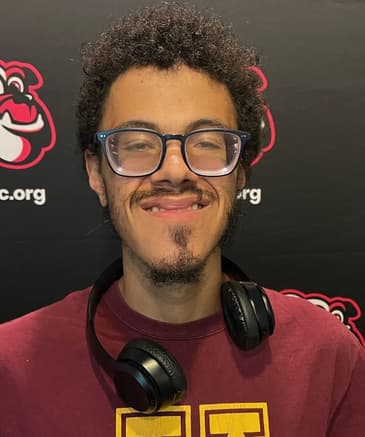
October is ADHD Awareness Month. Today's Autistic Moment in partnership with Minnesota Independence College & Community bring you a conversation with Tyler Hackner. Tyler is a student at MICC who is AuDHD. Tyler will tell you about himself, what learning about his AuDHD identity is, and his interests in the arts and worldly affairs. Tyler will also mention how MICC has provided opportunities for him to meet the challenges of being biracial. In Segment 4, Philip will give a commentary and tell you about the final shows in 2025.
Dyslexic Accessible Transcript
Spanish Accessible Transcript
Fortalezas y desafíos del Trastorno por Déficit de Atención e Hiperactividad (TDAH)
German Accessible Transcript
Stärken und Herausforderungen von AuDHD
French Accessible Transcript
Chinese Simplified Accessible Transcript
Transcript
AuDHD Strengths & Challenges
October 26th, 2025
Episode Preview
Many Autistics like me are AuDHD which stands for Autistic and ADHD. October is ADHD Awareness Month, and it is a great time to talk with someone who is both. Tyler Hackner is a student at Minnesota Independence College & Community who is Autistic and ADHD. Tyler will tell you what discovering his Neurodivergence was like. Tyler will talk about how MICC helped him to develop his sense of self-awareness. Welcome to the episode AuDHD Strengths & Challenges on Today’s Autistic Moment.
Segment 1
♫ Today is Your Day ♫
Today is your day on Today’s Autistic Moment: A Podcast for Autistic Adults by An Autistic Adult. Where Autistic Adults are distinguished by using our voices and special qualities to inform and celebrate Neurodiversity. Leave the stress of the dominate Neurotypical culture behind for a while and be proud of who you are.
This first segment of Today’s Autistic Moment is sponsored by The Autism Society of Minnesota, known as AuSM throughout Minnesota’s Autism Community. As Minnesota’s First Autism Resource for more than 50 years, AuSM serves the whole state, the whole spectrum for the whole life. Visit AuSM at ausm.org. The Autism Society of Minnesota needs your help. Funding cuts threaten vital programs, but together we can rebuild. Make your donation to AuSM on Give to the Max Day on November 20th, where all contributions are doubled. Go to givemn.org/gtmd to make your double impact for AuSM’s programs.
Please visit todaysautisticmoment.com where you can listen to more than 100 shows, get transcripts, program updates, and read the guest bios pages. You can also visit the Adult Autism Resources Links Page. Please visit the Future Shows Page to read the titles, guests, and descriptions of all the shows in 2025. The transcripts are sponsored by Minnesota Independence College & Community. There is a link provided to get access to a document form of the transcript without the purple-colored background so that you can print it without using up the ink on your printer. The written document has a font that is accessible for dyslexics. There are additional transcripts available in Spanish, German, French, and Chinese Simplified.
Please follow Today’s Autistic Moment on Facebook, Instagram, LinkedIn, and Blue Sky. If you follow Today’s Autistic Moment on Instagram, please follow us on Threads. Join Today’s Autistic Moment Community Group page on Facebook for conversations and updates. Please subscribe to the YouTube channel @todaysautisticmoment to watch Autistic Voices Roundtable Discussions.
In late August, Carole Jean-Whittington and I talked with Lisa Morgan about Strength Based Self-Care in a Medical Deficit Culture. Lisa mentioned that she was part of a team that were working on creating a resource. I am happy to inform you that the resource is now available. Go to the Adult Autism Resources Links Page on todaysautisticmoment.com. Scroll down and click on AUTISTIC LGBTQ INDIVIDUALS IN CRISIS the title is all in caps. It is a resource for providers by the Autism and Suicide Prevention Workgroup. The resource includes an overview of suicidality in the Autistic LGBTQ+ population, how to support Autistic LGBTQ in active and passive ideation. It has common terms, myths and experiences of Autistic LGBTQ people. It also lists organizations, web addresses and phone numbers for Autistic LGBTQ+ people to find support in crisis situations. Add this resource to your library. Read it and keep it handy.
After this first commercial break, Tyler Hackner will join me to talk about AuDHD Strengths & Challenges.
♫ Segment Ending Music ♫
Commercial Break I
Podcast Apps
Today’s Autistic Moment can be downloaded and heard on most podcast apps including Apple. Google Play. Breaker. Castbox. Overcast. iHeartRadio. Pocket Casts. RadioPublic. Spotify. TuneIn. Pandora. Amazon Music. Audible. Podcast Addict. Podcast Chaser. If you are looking for transcripts, go to todaysautisticmoment.com, click on the episode you want to listen to and follow the directions to find the transcripts.
♫Looking Forward Life Coaching Ad♫
Show your support for Looking Forward Life Coaching on November 20th for Give to the Max Day. All donations on Give to the Max Day are doubled to support Minnesota nonprofits. Go to givemn.org/gtmd to make your contribution.
♫ ITI Assistive Technology Ad ♫
Segment 2
♫Segment Beginning Music♫
Philip King-Lowe
Tyler Hackner, welcome to Today's Autistic Moment. It is my pleasure to introduce you to our audience. So welcome. Thank you for being here today.
Tyler Hackner
Oh, thank you. Thank you for having me.
Philip King-Lowe
You're welcome. You're welcome. So, October, of course, is ADHD Awareness Month, and so we are going to talk about Autistic and ADHD and our strengths and challenges. And I'm grateful to you and to Minnesota Independence College & Community for their participation in this conversation today. So, Tyler, I'm going to ask you to tell us a little bit about yourself, and also to tell us about what being Autistic and ADHD means for you, so that we can build our conversation for this topic today.
Tyler Hackner
Absolutely well. I'm Tyler Hackner. I, I'm 23 years old. I'm currently at MICC, and I have a lot a lot of interests about a lot of a lot of things that kind of make me unique and make me like who I am. I'm very interested in the arts, very interested in current events and world affairs, and trying to like, make the world a better place or make it more to what I would want it to be. I'm very, very passionate about being creative and being in creative spaces as well. Maybe that contributes to my Autism. But, yeah, I do see, I do see it as more of a more of a strength than anything I know. I know it's long been stigmatized, stigmatized as a weakness. But I do think my uniqueness, or unique ways of delving from interest to interest, or delving into like many different things, allows me to just talk about anything, or almost anything anyway, because there's some, because there are, there are plenty of things that I don't know. But yeah,
Philip King-Lowe
What was it like for you to discover that you were Autistic and ADHD?
Tyler Hackner
To be honest, it wasn't, I mean, it wasn't necessarily like a shock. I just it, but it was, but it was something that it took a little time for me to just to accept, mainly because it has been long seen as a stigma, or long been seen as like a as like well, not Well, yeah, a bad thing, or at least something that's a negative or seen as weird, doing air quotes. Yeah, it's long been seen as weird and just not very I guess. What's the word fashionable, or something like that? Yeah, I don't know, just in right, like, like, or normal, that sort of thing. So, I took me a little time to really accept that that's who I really was. But once I did, I just, I guess, embraced it, or at least, or at least, I used it as like, a positive to like, help me, like, express myself.
Philip King-Lowe
What do you feel are the positives of being both Autistic and ADHD, and how has that affected your, your understanding of yourself and both your abilities and your character?
Tyler Hackner
Well, I see it as positive in that I'm not like everybody else, and I'm not the type of person who is like is just boxed into one thing or bought or boxed into just one kind of archetype or stereotype of somebody, or whatever you think somebody is like, you don't always have to be that. And that's what I that's what I've learned. Like whatever, whatever you expect somebody else to be, or whatever you expect yourself to be, you don't always have to be, that you can create your own expectations of what you want to be and how and how you want to go about life and come across to people and that It's good to be unique. It's good to be you. Your own person have an identity.
Philip King-Lowe
Well, I know for myself that I knew about the ADHD before I knew I was Autistic, and over the years that I've learned to accept that and also not to see it as a deficit, but actually as the as what makes me who I am. I know that for me, going through that process has helped me to gain a lot of self-confidence. It's gain it's allowed me to learn who my community really is. It's helped me to not to run from it, but to embrace it and to let it be what energizes me, what makes me enjoy my life, what you know, in spite of stigma and in spite of you know the things that are being said these days that you know the fact that I'm AuDHD helps me to appreciate my life and all the ways that it makes me who I am. Would you say that's the same kind of thing for you?
Tyler Hackner
Yeah, I would definitely say that. There have been times in the past where I've struggled to find my footing, or struggled to find a group of people that I'm necessarily close to, because they may not embrace all of my eccentricities or my like, my quirks or my interests or whatever, what have you. But once I found that group, or once I found a group of people that could do that or that were of similar kind of kind of background and circumstance, or any of that to me. I felt validated. I felt like I had people that I could connect with. I know that there. I still know that there's, there's challenges that I'm that I'm facing. I know that there's things that I'm that get me like distracted, or like or make me feel like, oh, oh. This is, this is something that I need to work on, but I know that I'm working through it right now, and I have people in my corner that understand that and they sympathize, and they understand, and they help me through it.
Philip King-Lowe
Yeah. And Minnesota Independence College & Community is a school that allows you to invest in the best of who you are and how has that shaped your self-perception and your confidence and your drive to really thrive?
Tyler Hackner
Well, I'd, I'd say the school just, but just by virtue of the fact that that it has a lot of people that are similar to me and that it has people who understand me and understand what, what I what I'm about, and what I'm, not just what, not just what my challenges are about what my strengths are, and they help me to understand all of myself, that that is and to help me understand like how well rounded all of us are as people. I think that's a that's a very gratifying thing. I think that I think the fact that they're helping us to learn to like take care of ourselves as we grow into adulthood, as we grow into being on our own and being by ourselves and with ourselves and understanding how to how to exist and function in the world as ourselves. I think that. I think that's very again, I keep saying this word, but very validating, very, very important, because if we don't have those tools, if we don't have the people around us encouraging us, we wouldn't really have anything. And I think having those people around us helps to guide us to just go off into the world and be and be ourselves and understand ourselves and just advocate for ourselves, that sort of thing.
Philip King-Lowe
Yeah, it helps you to gain a sense of what your values are and how you're going to invest in those values. Does that sound accurate?
Tyler Hackner
Absolutely, oh, sorry. Oh, well, and, and, and, as someone who has deeply held values, and was raised to have, raised to have a lot of a lot of deeply held beliefs about things, or at least, treat people the way that you want to want to be treated. I think that's very important for anyone to recognize. I mentioned in my opening statement that that I that I was very I mentioned in my opening statement that I was very into like current events and like world affairs and like in trying to add do, like advocacy work and charity work and stuff like that and that and that is something that I've taken to heart and to and taken With me to it to MICC campus, and, and apply that to my everyday life. I want to I want to make sure like the values that I hold are reflected in in what I do and how I interact with people.
Philip King-Lowe
Those are great answers. Very good.
After the next commercial break, Tyler will talk about his cultural identities, special interests and how MICC is helping him with job placement.
♫ Segment Ending Music ♫
Commercial Break II
♫Best Care Ad♫
♫MICC Ad♫
Support Minnesota Independence College & Community on Give to the Max Day on November 20th when all donations will be doubled. Go to givemn.org/gtmd to make your contribution today.
♫ Autistic Coach Collective Ad ♫
TAM Support Ad
Make your impact by supporting Today’s Autistic Moment that is bringing intersectional Autistic Adults to you to share gifts, information, and solidarity. Through the work of Today’s Autistic Moment Autistic Adults are finding each other to network and share resources that build community through lifelong friendships.
Here are some ways you can support Today’s Autistic Moment.
· Make a one-time donation through the Ko-fi icon when you tap on Support Today's Autistic Moment on todaysautisticmoment.com
· Subscribe monthly via Patreon.
· Purchase items at Today’s Autistic Moment’s Logo Shop.
· Share Today’s Autistic Moment with your family, friends, coworkers and others through social media and/or by telling others about us.
Donations are not tax-deductible but help keep Today’s Autistic Moment as a safe space.
Thank you for supporting Today’s Autistic Moment.
♫Segment Beginning Music♫
Segment 3
Philip King-Lowe
I want to move to my second question, and you know that Autistics are engaged in the strengths and challenges of being Autistic and ADHD, and you know, you represent a wide diversity as an individual. Both in being multiply Neurodivergent and the other cultures that you represent. Maybe, can you talk about how engaging Minnesota Independence College & Community is in helping you be engaged in a sense of your abilities and how to meet your challenges and that kind of thing?
Tyler Hackner
Well, I think having people with and being with people and meeting people with all kinds of backgrounds, all kinds of cultures, all kinds of different interests, sometimes competing, sometimes melding together. I think that's helps me to recognize and be friends with a lot of people that I wouldn't normally have or wouldn't have thought of really connecting with. There are people that say, like anime, or like, or say like music, like I do, or like, like the arts in general. There's, there's a lot of people who you know, like, just all kinds of things and are interested in all kinds of different cultures, different, different things to be engaged in, I will say, as I am also biracial as well. So, like I, I will say, I don't really see that many, I guess, people, people of color or people in well, like minority spaces or marginalized spaces and also like Neurodivergence in the in and Autistic people being advocated for in the same way as maybe some of their white peers. That's not like a knock on anybody. It's just, I think that is that that is kind of the nature of the environment that that that I do, that I find myself in. I do think my experience is unique in that I well, I mean, I grew up with, like, a white father and black, white, Jewish father and black mother and I, I've learned to embrace both sides of my family, both cultures, and I do think that that also makes me unique, and that beyond my Autistic and Neurodivergence, like diagnosis that sort of ADHD diagnosis. It also kind of makes me unique in that I was born as someone that that is like that has just different perspectives and varying perspectives on like on culture and on, on things that that not many people have. And I think MICC embraces that, even, even if, even if it's, I guess, I guess not, not as
Philip King-Lowe
Take your time.
Tyler Hackner
Yeah, sorry, even if it's like not as known as other groups.
Philip King-Lowe
Tell us about the arts that you are so interested in that has me intrigued.
Tyler Hackner
Yeah, thank you. Well, my parents grew up with a lot of music around the house. My mom played it, played acoustic guitar in college, and then she gave it up, but, but she was, she was interested in doing that for a bit. I was raised. I was raised with parents who listened to a lot of music growing up, and they played it, played it, played it a lot around the house. And I've took that and did things like going to like music centers and music therapy and that sort of thing. And I even joined a band. MICC has its own rock bands that I'm a part of as well. Excellent, yeah, it's very it's very fun. I and I think it I; I think that I think that I think my interest in the arts just allows me to express myself in ways that I otherwise wouldn't know if I wasn't interested. I think, I think that's what makes me unique.
Philip King-Lowe
Yeah, yeah. I mean, yeah, yeah, it's the joy of being Neurodivergent in that the things that we enjoy as our special interests, we enjoy them in a way that really only Neurodivergent people can. Because whenever we take an interest in something, we really put our whole heart, our whole person, into that interest.
Tyler Hackner
Absolutely, you focus in on it. You make it who you are as fundamentally. I think, I think that's important. If you're, if you're really gonna delve into something, if you're really going to be interested in something, might as well just go full throttle in it.
Philip King-Lowe
Let's talk a little bit about interdependence, which is an important part of leadership, in the sense that you know, Autistic ADHD and the environments that we're in, we're kind of interdependent on all of these things. Can you talk about some examples of how you have been learning interdependence?
Tyler Hackner
Well, I've been learning how to, like just advocate for myself and not just have other people. Have other people decide for me what, what I'm supposed to be doing or have other people make choices for me. As I grow older, or as I grow in into myself as an adult, I know that I'm going to have to make choices myself and I have to talk with People that I haven't really talked to before. I haven't or like, I have to, you know, just be with people that I wouldn't, I wouldn't usually be with. I have, I have to make choices myself and be firm in it and just stick with something. If, even if, even if something gets hard, I know I have to just power through it and just be myself while I'm doing it.
Philip King-Lowe
Can you think of one, one incident that you had to learn how to advocate for yourself about, and maybe how you learned some interdependence through doing so?
Tyler Hackner
I would say even, like right now, like when it comes to like, job hunting and when it comes to doing, doing things for like, finding a job and find and finding, a finding at finding avenues beyond MICC that they're helping us with. I think that there are times where I've had to advocate for myself in that I don't. I didn't know where, like where I would necessarily be. I didn't, I didn't think I, I didn't even think I would be at MICC at some point, and I didn't think I would be sticking with it for as long as I did. And so now, now it's just, where do I go from here and then that, that has been a challenge as of late. But, yeah, but we're working through it, and we have people in our corner, all of us as students, willing to help us through it, I would say. I would also say, like, I do have, I do have some kind of anger management issue so that I have been working through. I didn't say this in my initial statement, but there are times where, like, I think about, like, oh, is this really worth getting upset over, or is this really worth, like, really talking about, like, in like, a bad way. Like, sometimes you just got to deal with things as they come and work through it in a way that's helpful and not destructive, because there are times where I have flown off the handle, but I'm not gonna let it like get me down that sort of thing, or not let it consume your life.
Philip King-Lowe
Yeah. Yeah. That's important.
Tyler Hackner
I hope these answers make sense, by the way
Philip King-Lowe
They do. Yep, they do. I mean, sometimes I know for myself that there are things that may occur that may affect me, but I've learned over time that I just can't invest that much energy into whatever that thing may be, because it's just going to drain me of any sense of we want to call it fulfillment, or just rob me of my, my feeling of My, my self-worth, or anything like that. So, there are moments when we have to kind of look at something and say, Do I really have the energy, or do I really want to invest my energy in that? And many times, the answer is no, it's just not worth my time. And the best thing for me to do is to invest myself in things that build me up and help me to feel like I'm part of the part of something bigger than whatever that thing is.
Tyler Hackner
Absolutely.
Philip King-Lowe
Yeah, exactly, exactly, yeah.
Tyler Hackner
It's always better. It's always better, like getting invested in something that you actually care about, and something that you that you know, that you know is bigger than yourself.
Philip King-Lowe
Right. Yeah, you know, I've been thinking a lot these days about the fact that you know, while there's all this negativity around us right now, that if I can spend that time in bringing forth the best of my Autistic ADHD self, then that really shows just how absurd the stigma really is, absolutely yeah.
Tyler Hackner
I mean, we're just people like everybody else.
Philip King-Lowe
Yeah, definitely.
Philip King-Lowe
Well, Tyler, this has been a great conversation, and good for you. For You, know, taking time of your life and to get as much as you can out of your experience and time at Minnesota Independence College & Community. I can personally say for myself that in my days of being in college and stuff like that, I wish I had had something like that in my day, because that sort of thing didn't really exist where I was living anyway. And so, it's great to hear that younger generations now have a resource like this that it can actually, you know, work with, work within, and find, find tools that can be very helpful. So, Tyler, thank you for your time today, and we wish you well in all that you are working for and with. And thank you very much.
Tyler Hackner
You're welcome. Thank you for having this conversation.
Philip King-Lowe
You're welcome.
Transcribed by https://otter.ai
After this short and final commercial break, I will give some commentary about the news and events of the past year and a look at what is coming up as we end the 5th Season of Today’s Autistic Moment. Today’s Autistic Community Bulletin Board will follow.
♫ Segment Ending Music ♫
Commercial Break III
♫Lisa Morgan Consulting Ad♫
♫ Segment Beginning Music ♫
Segment 4
Philip King-Lowe
Throughout season five of Today’s Autistic Moment, we have heard about Navigating the Future of Multidimensional Autistic Leadership. The guests and I have defined Autistic leadership as nonhierarchical and collaborative in nature. We have emphasized self-care through holistic wellness in ways that meet the needs of all bodies while finding joy in our special interests. Autistic individuals have said that Autistic Adults are driven to achieve social justice through our intersectional identities. So, why has the administration been buying into the myths that Autism is caused by vaccines and Acetaminophen? Why stress the notion that Autism is some horrible nightmare that must be cured? I would suggest that their goal is to create and sustain a culture where leadership is defined by a hierarchical nature, that is driven by a limited number of people who are wealthy, binary and gain power by making the demand avoidance of Autistic and Neurodivergent intersectional communities look like we are some tragic accident. The purpose is to invalidate our voices and competence. Autistics are counter cultural in accepting and fostering diversity with endless possibilities. I encourage all of you to continue to resist the systemic oppression in whatever way that works for you. We are making a difference. Our work for an inclusive society where being disabled is not bad or wrong, is just another way of being. Now more than ever, Autistic individuals must continue our resistance through our individual and collective advocacy, through self-knowledge by living into who we are.
On November 9th, Latoya Hinton will be my guest for the episode Autistic BIPOC Leadership. Latoya will discuss the intersectional identities and challenges faced by BIPOC individuals in the Neurodivergent communities, including under-diagnosis and lack of mental health care. Latoya will highlight the importance of self-advocacy and self-validation. Latoya will share her personal journey of self-discovery, cultural identity, and leadership experiences, such as leading a training workshop and UX research projects. Latoya will tell you about her studies in Native American linguistics and Cherokee language.
On November 23rd, Dr. Scott Frasard will be my guest to talk about Autistic Advocacy Through Writing. Scott and I will talk about the two books he has published using the Socratic method to help people begin dialoguing about the different approaches to Autistic advocacy. Scott will highlight the importance of writing as a tool for self-reflection and community engagement. We will explore the concept of multidimensional leadership, interdependence and the need for authenticity in Autistic Advocacy. The conversation will underscore the significance of writing in documenting and driving social change.
The final episode for 2025 will be on December 14th. Eric Garcia, the journalist and author of We’re Not Broken: Changing the Autism Conversation will be my guest for the episode: Bringing Closure for Autistics in 2025. Our conversation will recap what 2025 has been for Autistics and our intersectional communities. We will bring 2025 to a close by finding things to celebrate and find strength and to find some happiness in the holiday season.
Season 6 of Today’s Autistic Moment will begin on January 11th using the theme Autistics Thriving Not Just Surviving. I am still developing this theme, but want to show how Autistics are thriving in a medical deficit culture. I will have more details to tell you about in the next couple of months.
If you enjoyed this episode today, and want to hear the complete interview without the other segments and no ads, go to todaysautisticmoment.com and subscribe to the Ad Free & Complete Interview Plan. The subscription is only $12.00 a month or $144.00 for a year. You can hear the full interviews without interruption from July through now and all episodes coming up.
Today’s Autistic Community Bulletin Board
All these events and many others not mentioned here with their links are available on
todaysautisticmoment.com/bulletinboard.
The Adult Coffee Club for Autistic Adults in Minnesota are held on the second Tuesday of every month (weather permitting) at Dogwood Coffee located at 2700 University Ave W. Suite 100 in St. Paul, Minnesota. The Zip Code for your GPS is 55114. There will be no Adult Coffee Club on Tuesday, November 11th. The Adult Coffee Clubs will begin at 4pm to 6pm on December 9th. January 13th. February 10th. March 10th.
Understanding Autism virtual classes are offered by The Autism Society of Minnesota. The next classes will be November 10th 12 to 1pm. December 14th, 6-7pm. January 12th, 10-11am.
The Autistic Community Summit will be held on Saturday, November 8th at Dakota County Technical College located at 1300 145th Street East in Rosemount, MN 55068. Created and led by Autistic people, the Autistic Community Summit is a day build for us-by us. The event will have group sessions in two tracks: Advocacy and Community. You are welcome to move between the tracks to create the experience that fits your needs best. Register today to attend the event where we’ll create a space that is neurodiversity-affirming, community-centered, and full of possibilities.
On December 4th, beginning at 9am to 12pm there will be a workshop at The Autism Society of Minnesota entitled: Eating Disorders and Autism: Understanding the Overlap and Supporting Recovery.
Go to ausm.org to download the Fall Programs Guide with information about these and other social and recreational programs, educational events, counseling services and support groups at The Autism Society of Minnesota.
MNeurodivergent is a social club rooted in a vision of bringing Neurodivergent Minnesotans together to build meaningful connections. Its core principle is to foster an environment where all are treated with dignity and respect regardless of ability or preferences. Go to their website mneurodivergent.org for more information, become a member, volunteer and attend their events.
Today’s Autistic Moment is here because of the generosity of supporters and sponsors. Go to todaysautisticmoment.com and select Support Today’s Autistic Moment to donate.
If you have questions about Today’s Autistic Moment, please send an email to todaysautisticmoment@gmail.com.
Thank you for listening to Today’s Autistic Moment: A Podcast for Autistic Adults by An Autistic Adult.
May you have an Autistically Amazing day.
♫ Closing Background Music with credits ♫
All of the guests meet with me on Zoom to record the interviews. The interview transcripts are provided by Otter. The podcast is prepared and edited on WavePad Masters Edition by NCH Software. The podcast is published by Spotify for Podcasters. The music that you hear is licensed to Today’s Autistic Moment by premiumbeat.com.
